
 Worksheets
Ecology Review
Total questions: 60
Worksheet time: 1hrs 22mins
Name
Class
Date
1.
An organism that produces its own food supply from inorganic compounds is called a(an)
a)
heterotroph
b)
consumer
c)
detritivore
d)
autotroph
2.
What is the original source of almost all energy in most ecosystems?
a)
carbohydrates
b)
sunlight
c)
water
d)
carbon
3.

Which type of symbiotic relationship is this?
a)
parasitism
b)
mutualism
c)
commensalism
d)
nonalism
4.

A symbiotic relationship in which both organisms benefit
a)
competition
b)
Mutualism
c)
nitrogen fixation
d)
energy pyramid
5.

A symbiotic relationship between two species in which one organism is harmed is called...
a)
mutualism
b)
commensalism
c)
parasitism
d)
niche
6.

What does a food web represent?
a)
All connections of energy flow throughout all organisms in a habitat.
b)
The specific ways that mutualism is carried out.
c)
A single pathway or energy flow between organisms.
d)
How carnivores get their food.
7.

The image provided is an example of a(n):
a)
Carnivore
b)
Herbivore
c)
Producer
d)
Autotroph
8.

The image provided is an example of a(n):
a)
Producer
b)
Autotroph
c)
Consumer
d)
Insect
9.
The amount of energy that usually transfers from one trophic level to the next...
a)
10%
b)
20%
c)
80%
d)
50%
10.
Which of the following would be the definition of a detritivore?
a)
Animals that eat insects.
b)
Organisms that feed on rocks, recycling the nutrients back into the ground.
c)
Organisms that eat only pants
d)
Things that feed on dead organisms, recycling the nutrients back into the ground.
11.
An illustration that uses arrows to show the many possible directions in which matter and energy can pass through the organisms in an ecosystem.
a)
Food chain
b)
Food web
c)
Energy Pyramid
d)
Succession Map
12.
The nonliving aspects of an ecosystem.
a)
Abiotic factors
b)
Biotic factors
13.
The living portions of the ecosystem.
a)
Biotic factors
b)
Abiotic factors
14.
Water temperature would be an example of ...
a)
A biotic factor
b)
An abiotic factor
15.
A collection of organisms that belong to different populations but all live in the same area and interact with one another.
a)
Population
b)
Ecosystem
c)
Community
d)
Ecosphere
16.
A place where an organism lives.
a)
Terrain
b)
Habitat
c)
Community
d)
Population
17.
Organisms that can capture energy from inorganic, nonliving sources.
a)
Producers
b)
Consumers
c)
Detritivores
d)
Carnivores
18.
Organisms that feed on both living producers and other consumers.
a)
Carnivores
b)
Omnivores
c)
Herbivores
d)
Detritivores
19.
The general name for organisms like animals and fungi that get their energy from eating other organisms.
a)
Producers
b)
Consumers
c)
Detritivores
d)
Carnivores
20.
Where an organism lives
a)
habitat
b)
niche
c)
heterotrogh
d)
biosphere
21.

A pond ecosystem is shown in the diagram below. Which statement describes an interaction that helps maintain the dynamic equilibrium of this ecosystem?
Which statement describes an interaction that helps maintain the dynamic equilibrium of this ecosystem?
Which statement describes an interaction that helps maintain the dynamic equilibrium of this ecosystem?
a)
The frogs make energy available to this ecosystem through the process of photosynthesis.
b)
The algae directly provide food for both the rotifers and the catfish.
c)
The green-backed heron provides energy for the mosquito larvae.
d)
The catfish population helps control the populations of water boatman and waterfleas.
22.

In the energy pyramid here, which organisms have the most energy available?
a)
Producers
b)
Carnivores
c)
Herbivores
d)
Top Predator
23.

If there is 1000 Kcal available in the producers in trophic level 1, how much energy is available in the herbivores in trophic level 2?
a)
10 Kcal
b)
1 Kcal
c)
100 Kcal
d)
1000 Kcal
24.
In parasitism
a)
Both species benefit
b)
One species is harmed
c)
Species fight for something
d)
One species is unaffected
25.
In commensalism
a)
Both species fight for something
b)
Both species benefit
c)
One species is killed
d)
One species is unaffected
26.
In mutualism
a)
both species benefit
b)
one species is killed
c)
both species fight for something
d)
one species is unaffected
27.
Which type of symbiosis is beneficial for both species involved?
a)
Predation
b)
Mutualism
c)
Competition
d)
Commensalism
28.
Which symbols best describe parasitism?
a)
+,+
b)
+,-
c)
+,0
d)
-,0
29.
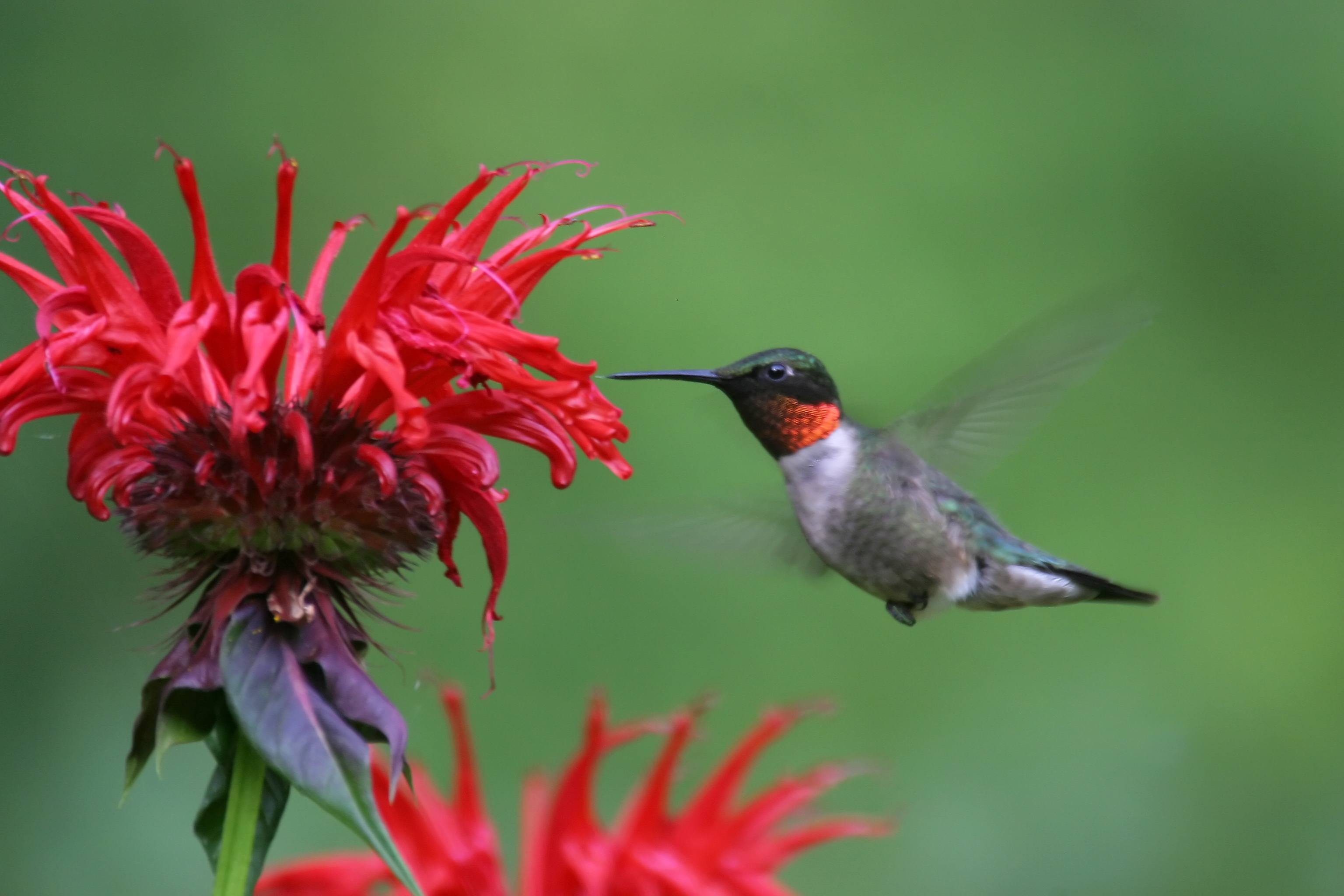
What type of symbiosis? Hummingbirds feed on nectar from flowers. The flowers are pollinated by hummingbirds as they move from flower to flower.
a)
commensalism
b)
mutualism
c)
parasitism
d)
predation
30.

Cattle egrets forage (feed) in fields among cattle. The egret gets easy access to flying insects stirred up by the cattle, and the cattle don't care if they are there or not.
a)
mutualism
b)
commensalism
c)
competition
d)
parasitism
31.
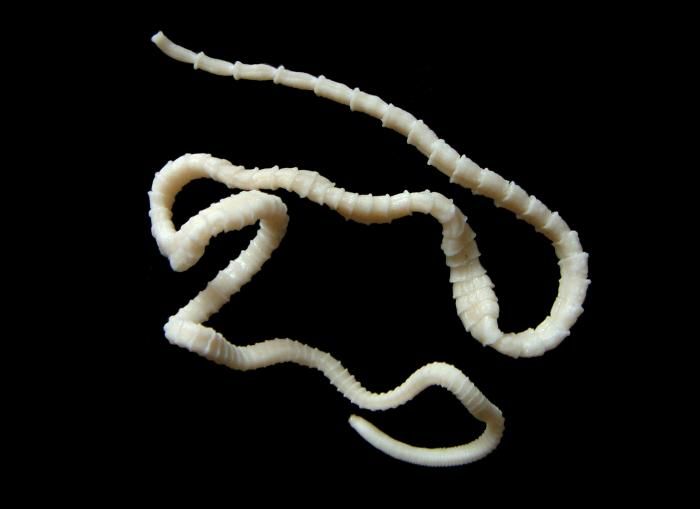
A tapeworm and a cat have this type of relationship.
a)
mutualism
b)
parasitism
c)
commensalism
d)
competition
32.

Based on the food web, which shows correctly the one way that energy flows?
a)
Plant -->Rat -->Owl
b)
Plant <--Rat <-- Owl
33.
The amount of energy that usually transfers from one trophic level to the next...
a)
10%
b)
20%
c)
80%
d)
50%
34.
Autotrophs make up the _______ level in all ecosystems.
a)
First
b)
Second
c)
Third
d)
Fourth
35.

The biome known for trees with broad leaves that fall off the trees in the winter.
a)
Coniferous Forests
b)
Deciduous Forests
c)
Deserts
d)
Tropical Rain Forests
36.
All the individuals of the same species in a certain area are termed a(n)
a)
species
b)
population
c)
community
d)
ecosystem
37.
All the populations that live together in an area make up a
a)
species
b)
population
c)
community
d)
ecosystem
38.
Which of the following is an EXAMPLE of a limiting factor?
a)
Water
b)
the color of the sky
c)
Migration
d)
Thick fur
39.
A tree blocks the light from the grass below. This is an example of _________.
a)
mutualism
b)
commensalism
c)
competition
d)
parasitism
40.
Food, water, sunlight, air, soil are resources that are often __________.
a)
limiting factors
b)
wet
c)
messy
d)
found in rocks
41.

The number of individuals a habitat can sustain with the resources it has available
a)
Carrying capacity
b)
Limiting factors
c)
Resources
d)
Population
42.

A group of ecosystems with the same climate and communities (desert, grassland, rainforest)
a)
Biosphere
b)
Ecosystem
c)
Biome
d)
Community
43.

If the amount of food or resources available increases, the carrying capacity for an animal:
a)
Stays the same
b)
Increases
c)
Decreases
d)
Fluctuates
44.
Starts with BARE ROCK followed by lichen
a)
primary succession
b)
secondary succession
c)
both types of succession
45.

The picture shows what type of succession?
a)
primary
b)
secondary
c)
tertiary
d)
quadanary
46.
The final stable community of plants and animals is called:
a)
pioneer community
b)
farmland
c)
climax community
d)
old field
47.
The first organisms that appear in an ecological community
a)
ecological succession
b)
primary succession
c)
secondary succession
d)
pioneer species
48.
What will happen if all of the frogs in a population die?
a)
The frogs' predators will decrease and the frogs' prey will increase
b)
The frogs' predators will increase and the frogs' prey will decrease
c)
The frogs' predators will increase and they frogs' prey in increase.
d)
We better all pray because there isn't anymore frogs.
49.

What would happen if the population of hawks suddenly increased? How would it affect the other organisms in the ecosystem?
a)
The snakes would decrease due to more hawks eating them
b)
All of the population of organisms would increase
c)
The biotic factors in the ecosystem would increase
d)
The hawks predators would decrease
50.
Limiting factors are sometimes helpful because they can keep the population from getting too large.
a)
True
b)
False
51.

What type of growth is represented behind?
a)
exponential
b)
logistics
c)
a good kind
d)
representative
52.
An environmental factor such as predation, disease, and competition that depends on the number of members in a population per unit
a)
dispersion
b)
density- independent factor
c)
density- dependent factor
d)
population growth rate
53.
An environmental factor such as storms and extreme heat or cold that affects population regardless of their density
a)
density- dependent factor
b)
population density
c)
dispersion
d)
density- independent factor
54.
Which limiting factor is independent of the number of individuals in a population?
a)
competition
b)
parasitism/disease
c)
stress
d)
natural disasters
55.
What do you call a period of rapid growth?
a)
exponential growth
b)
logistic growth
c)
emigration
d)
predator-prey cycle
56.
Type of growth that occurs when disease and parasites are present...
a)
exponential
b)
J-shaped
c)
predator-prey
d)
logistic
57.
What kind of factor: flood?
a)
density-independent
b)
density-dependent
58.
What kind of factor: predation?
a)
density-independent
b)
density-dependent
59.
When a population has reached carrying capacity
a)
Growth & Immigration are equal to Death & emigration
b)
Growth & Immigration are less than Death & emigration
c)
Growth & Immigration are greater than Death & emigration
d)
Growth is exponential
60.
Which of the following is an EXAMPLE of a density-dependent limiting factor?
a)
Water
b)
Major flood.
c)
Migration
d)
Thick fur
100 %

