wayground logo

Free Printable Worksheets

NEW

Font size

S
M
L
XL
Worksheets

S1 Life End of Unit Test

Total questions: 63

Worksheet time: 2hrs 59mins

Name
Class
Date
1.

Which one of these is not a part of an animal cell?

a)

Nucleus

b)

Cytoplasm

c)

Cell wall

d)

Cell membrane

2.
A cell is...
a)
the basic unit of structure and function in living organism
b)
an organism
c)
a basic part of everything that we see
d)
found only in animals, not plants
3.
The nucleus is like the ____________ of the cell.
a)
foot
b)
hand
c)
stomach
d)
brain
4.
What do vacuoles do? 
a)
They actually do not have an important role
b)
They protect the cell
c)
They are the brain of the cell
d)
storage area for cells; water storage in plants 
5.

Which part helps plants with the process of photosynthesis?

a)

Vacuole

b)

Nucleus

c)

Cytoplasm

d)

Chloroplast

6.

If you were some bad guy trying to sneak into an animal cell, who would be there to stop you?

a)

nucleus

b)

Cytoplasm

c)

cell membrane

d)

cell wall

7.
Which of the following, found ONLY in plant cells, provides structure?
a)
cell wall
b)
chloroplast
c)
mitochondria
d)
vacuole
8.
1.What cells carry electrical signals?
a)
Red blood cells
b)
Nerve cells
c)
Sperm cells
9.
What cells have NO nucleus?
a)
Leaf cells
b)
Animal cells
c)
Red blood cells
d)
egg cells
10.
What cell carries the father’s genetic information?
a)
Sperm cell
b)
Egg cell
c)
Leaf cell
d)
Red blood cell
11.
An independent variable is
a)
What I change
b)
What stays the same
c)
is the control
12.

What type of cells contain a nucleus?

a)

Just plant cells

b)

Just bacteria cells

c)

Only animal cells

d)

Both animal and plant cells

13.

What is the job of a cell membrane?

a)

To give them a strong shape

b)

To make food

c)

To control the entry and exit of substances

d)

To release energy

14.
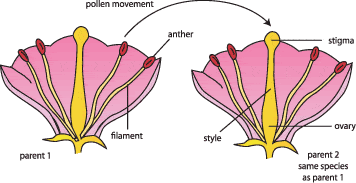
What is the sticky part of the flower that catches pollen?
a)
style
b)
stigma
c)
ovary
d)
petal
15.
What part of the flower will turn into a seed if fertilized by a pollen grain?
a)
ovary
b)
anther
c)
ovule
d)
filament
16.
The part of a flower that produces the male reproductive cells (pollen).
a)
anther
b)
style
c)
stigma
d)
filament
17.

This part of a flower turns into fruit around a fertilized seed.

a)

ovule

b)

ovary

c)

stamen

18.
Transfer of pollen from anther to stigma is called _________
a)
germination
b)
transpiration
c)
photosynthesis
d)
pollination
19.
The colorful flower structure that attracts pollinators.
a)
sepals
b)
pistils
c)
anthers
d)
petals
20.
How do dandelions spread their seeds?
a)
water
b)
earth
c)
fire
d)
wind
21.
Pollination can occur between flowers of the same plant. 
a)
True 
b)
False 
22.
Pollination can occur between flowers of the different plants of the same species. 
a)
True 
b)
False 
23.
Which best describes what a food chain shows you?
a)
Energy flow through an ecosystem
b)
Food flowing through an ecosystem
c)
Consumers going into other consumers
d)
Who eats who
24.
What are animals called in a food chain?
a)
Producers
b)
Consumers
c)
Decomposers
d)
Plants
25.
What are the organisms that break down dead stuff?
a)
Producers
b)
Consumers
c)
Decomposers
d)
Organisms
26.
Where does the energy start in this food chain?
a)
Plant
b)
Sun
c)
Deer
d)
Wolf
27.
What is the role of a producer?
a)
Use sunlight to make food
b)
Gain energy from eating other organisms
c)
Keep other species from overpopulating
d)
Breaking down dead stuff 
28.
What's the role of consumers in a food chain?
a)
Use sunlight to make food 
b)
Eat other species and keep them from overpopulating
c)
Break down dead stuff
d)
Add nutrients to the soil
29.
Which of these organisms would receive energy from the snake?
a)
Plant
b)
Rabbit
c)
Mouse
d)
Hawk
30.
Which type of consumer eats plants only?
a)
Herbivores
b)
Omnivores
c)
Carnivores
d)
Scavengers
31.
Which type of consumer eats meat only?
a)
Producers
b)
Herbivores
c)
Carnivores
d)
Omnivores
32.
Which type of consumer eats meat and plants?
a)
Herbivores
b)
Carnivores
c)
Omnivores
d)
Plants
33.
Which is the correct food chain order?
a)
Plant-->1st Consumer--> 2nd Consumer 
b)
Plant <-- 1st Consumer <-- 2nd Consumer
c)
2nd consumer     --> 1st consumer  --> Plant
d)
1st Consumer      --> 2nd consumer --> Plant
34.
Which of the following is a producer?
a)
Maple tree
b)
Sunfish
c)
Bunny
d)
Bear
35.

In this energy pyramid, which organism would most likely be in level 2?

a)

bird

b)

fox

c)

caterpillar

d)

tree

36.

The diagram shows part of an aquatic food web for a stable lake ecosystem in Connecticut. What is the source of energy for the algae?

a)

waves

b)

sunlight

c)

bacteria

d)

rotifers, water fleas and tadpoles

37.

The diagram provided shows a marine food chain. In this food chain, the zooplankton are

a)

primary producers.

b)

primary consumers.

c)

secondary consumers.

d)

tertiary consumers.

38.

Which of these organisms would most likely be found at the top of an energy pyramid?

a)

clams

b)

sardines

c)

sharks

d)

kelp (seaweed)

39.

Which of these organisms would most likely be found at the bottom of a biomass pyramid?

a)

giant squids

b)

sand sharks

c)

sea cucumbers

d)

green algae

40.

What is a suitable way to sample plants in a field?

a)

Counting Random Plants

b)

Using Quadrats

c)

Using Pooters

d)

Using Pitfall traps

41.

What is a suitable way to sample small invertebrates living on the ground.

a)

Quadrats

b)

Sweep nets

c)

Pitfall traps

d)

Water Sampling

42.

When sampling daisies how will amount of light affect them?

a)

Less Light = More Daisies

b)

More Light = Less Daisies

c)

More Light = More Daisies

d)

Less Light = More Grass

43.

What is a square called that we use to sample populations?

a)

grid

b)

quadrat

c)

cube

d)

quarter

44.

What type of population would you ESTIMATE using a quadrat?

a)
b)
c)
d)
45.

Limpets were found in 25 out of 50 quadrats. What percentage of quadrats contained limpets?

a)

100%

b)

25%

c)

50%

d)

75%

46.

Which organism can be measured with a quadrat?

a)

lion

b)

flies

c)

rat

d)

dandelion plants

e)

fish

47.

Which organism can be measured with a quadrat?

a)

deer

b)

butterfly

c)

mouse

d)

snail

e)

fish

48.

Abiotic means

a)

living

b)

nonliving

49.

What is a example of a abiotic factor?

a)

Panda

b)

Bacteria

c)

Butterfly

d)

Weather

50.
Temperature, light, air, water, and soil are all  _____  parts of the environment
a)
alive
b)
biotic 
c)
abiotic
d)
living
51.

Temperature is an example of what kind of factor?

a)

biotic

b)

abiotic

c)

dead

d)

living

52.

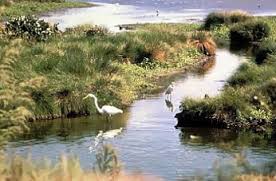
What are the abiotic factors in this image?

a)

water, sunlight, dirt, air

b)

birds, trees, and sunlight

c)

water, trees, and birds

53.

Which of the following is an abiotic factor?

a)

mushroom

b)

air

c)

elephant

d)

coyote

54.
An inactive state during which normal body activities slow. 
a)
instinct
b)
camouflage
c)
migration
d)
hibernation
55.
The loss of a kind of living thing
a)
extinction
b)
hibernation
c)
migration
d)
instinct
56.
An adaptation that helps an animal hide from predators
a)
migration
b)
camouflage
c)
hibernation
d)
extinction
57.
What adaptation does a musk ox have that allows it to survive in a cold climate. 
a)
claws
b)
horns
c)
round eyes
d)
fur
58.
Arctic foxes are white in the winter to blend in with the snow. What adaptation is this?
a)
behavioral adaptation
b)
camouflage
c)
migration
d)
hibernation
59.
Horse's teeth are adapted for what activity?
a)
to tear meat
b)
to tear meat and grind plants
c)
to slurp water
d)
to grind and chew grass
60.
A lion's teeth are adapted for what activity?
a)
to grind and chew plants
b)
to  tear meat
c)
to slurp water 
d)
to grind plants and tear meat
61.
There are few bald eagles in the world. Bald eagles are ...
a)
extinct
b)
endangered
c)
hibernation
d)
migrating
62.
What organism is NOT extinct?
a)
Dinosaurs
b)
Saber tooth tigers
c)
Florida Panthers
d)
Woolly mammoths
63.
Which is an example of a behavioral adaptation?
a)
claws
b)
beak
c)
thumb
d)
migration