
 Worksheets
Electricity
Total questions: 64
Worksheet time: 34mins
A material that does not allow electricity to flow through it
Conductor
Insulator
Resistor
A material that allows electricity to flow through it easily
conductor
insulator
resistor
An electric current is made up of _____ charged electrons
neutral
positive
negative
balanced
Batteries and power plants are examples of ______________.
energy conduction
energy source
energy transformation
energy discharge
Metals such as copper and aluminum are good ______________.
insulators
circuits
conductors
charges
A circuit with only one path for the current to flow is a __________________.
parallel circuit
device
series circuit
mini circuit
Circuits often include a _____________ to control the flow of current.
switch
voltage
conductor
current

This symbol represents a
electric cell (battery)
wire
bulb
power station
If a positive terminal of one cell is connected to the negative terminal of the next cell it is known as
electric current
element
battery
fuse

This symbol stands for
resistor
Rehostat
cell
buzzer

Tasha made this model. In her model the bulb is not lit.
Which of these statements best explains why the bulb is not lit?
The wires are connected to the wrong battery terminals.
The bulb is burned out.
The switch is open.
A wire is missing.
Alicia turned on a light switch. What does turning a switch on do?
open a circuit, allowing electricity to flow
close a circuit, allowing electricity to flow
open a circuit, stopping electricity from flowing
Close a circuit, stopping electricity from flowing
Electric current is defined as
detect electric current
negative terminal to positive terminal
positive terminal to negative terminal
the flow rate of electric charges through a conductor
Electrons flows from
detect electric current
negative terminal to positive terminal
positive terminal to negative terminal
the flow rate of electric charges through a conductor
How are ammeter and voltmeter connected in a circuit?
Ammeter : Series
Voltmeter: Parallel
Ammeter : Parallel
Voltmeter: Parallel
Ammeter : Series
Voltmeter: Series
Ammeter : Parallel
Voltmeter: Series
What physical quantity does voltmeter measures?
Power
Voltage
Current
Resistance
What physical quantity does ammeter measures?
Voltage
Current
Resistance
Power
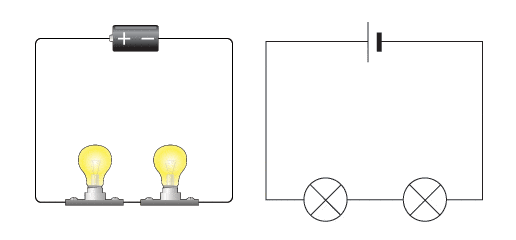

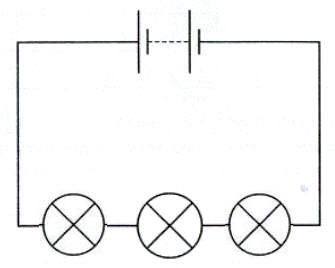
The buildup of electrical charges is called ______________________.
neutral
discharge
open circuit
static electricity
______________________ is the fast movement of a charge.
Neutral
Discharge
Circuit
Electricity
Like charges ______________.
repel
discharge
attract
don't attract or repel
Opposite charges ______________.
attract
contract
repel
neither attract or repel
A type of static electricity that occurs in storms is _________________________.
clouds
rain
thunder
lightning
Matter is made up of tiny particles called ______________.
atoms
pieces
repels
negatives
The three subatomic particles are
proton, neutron, electron
proton, nucleus, electron
protein, neutron, electricity
proton, neutral, electives
Electrons are
negative
positive
neutral
Protons are
negative
positive
neutral
Neutrons are
negative
positive
neutral
What is the nucleus of an atom made of?
Protons & neutrons
Electrons
Protons & electrons
Electrons & neutrons
Which particle has almost no mass?
Protons
Neutrons
Electrons
Magnetic Field lines
go out from south pole
go out from north pole
come in to the north pole
come in to the south pole
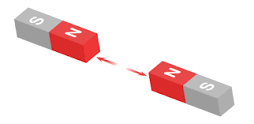
What will happen when these magnets are brought close together?
They will attract each other.
They will repel each other.
They will stay the same.

What will happen when these magnets are brought near each other?
They will repel each other.
They will attract each other.
They will stay at the same position.
Which of the following materials will be attached to a magnet?
Gold
Silver
Copper
Iron
What must happen for an electromagnet to have a magnetic field?
A. It must be heated.
B. It has to be touching another magnet.
C. It must be lined up with Earth’s magnetic field.
D. It must be connected to an electrical source.
What is our best evidence that Earth has a magnetic field?
A. All things fall toward Earth’s center.
B. A compass needle lines up with it.
C. Winds blow from east to west.
D. Earth’s oceans all have currents.

The drawing shows an electromagnet. The strength of an electromagnet can be changed
How can we increase the strength of the electromagnet? Choose 3 answers.
Increase the current flowing through the wires.
Add more coils
Spread the coils out more
Use a wooden core
Use an iron core

Which diagram shows the shape of the magnetic field of a bar magnet
A
B
C
D

In a closed circuit, how does battery voltage affect current?
As voltage increases, current increases.
As voltage increases, current decreases.
Voltage has no affect on current.
If voltage exceeds current, a short circuit circuit will develop.


How many light bulbs would be ON with this complete circuit?
1
3
2
4

How many light bulbs would be ON if the wire of this circuit was cut where the scissors are?
1
3
2
0

How many light bulbs would be ON if the wire of this circuit was cut where the scissors are?
1
3
2
0


Will the bulbs light?
Yes
No

