
 Worksheets
Senior 3 - Blood and Circulation
Total questions: 60
Worksheet time: 1hrs 11mins
What makes up around 55% of the blood?
Plasma
Red Blood Cells
White Blood Cells
Platelets
What causes the blood to be the distinct red colour?
Heamaglobin
Glucose
Hormones
Oxygen
How many different types of blood vessels are in our bodies?
1
5
3
2
What is the function (job) of the platelets?
To form clots (i.e. scabs) when you have cuts and grazes.
To transport oxygen to the muscles
To carry dissolved sugars.
To produce antibodies
What is the function (job) of the plasma?
To release antibodies to fight infections.
To transport oxygen around the body.
To carry dissolved nutrients and sugars.
To transport oxygen around the body.

What are the 3 main functions of blood? (select ALL that apply)
Protection
Secretion
Regulation
Transportation
Dilation
Blood is made of 2 components:
plasma and formed elements
plasma and antibodies
formed elements and antigens
none of the above are true
Another name for RBC's:
Erythrocytes
Leukocytes
Thrombocytes
Another name for WBC's:
Erythrocytes
Leukocytes
Thrombocytes
Oxyhemoglobin:
a combination of CO2 and hemoglobin carried by RBC's
a combination of O2 and hemoglobin carried by RBC's
The largest blood vessel that carries oxygenated blood away from the heart:
Arteries
Veins
Capillaries
Medium blood vessels that carry deoxygenated blood back to the heart:
Arteries
Veins
Capillaries
Smallest blood vessel allows the exchange of O2, nutrients, and waste (CO2) from surrounding cells/tissues:
Arteries
Veins
Capillaries
Which blood vessel contains valves?
Artery
Capillary
Vein
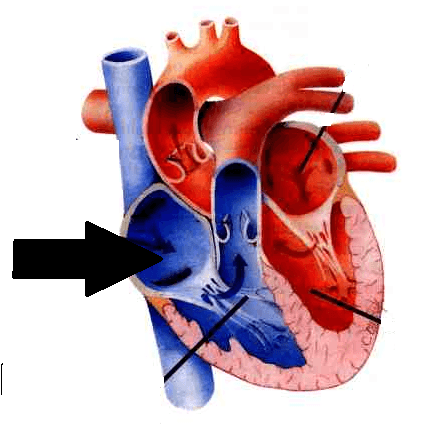
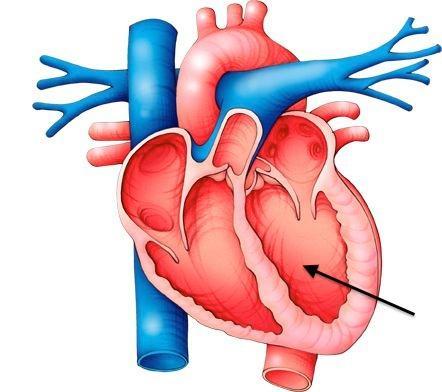
The mammalian heart has ___ chambers.
1
2
3
4
This chamber of the heart RECEIVES blood returning from the lung
Right Atrium
Right Ventricle
Left Atrium
Left Ventricle
True or false:
Arteries always carry oxygenated blood.
True
False
Arteries have thicker walls in proportion to their lumen.
True
False
What is the best description of a red blood cell?
Discs
Cubes
Spheres
Circles
Where are most blood cells made?
Bone marrow
Liver
Heart
Spleen
What is the main function of white blood cells?
Defence and immunity
Protection and clotting
Regulation of waste
Regulation of hormones
What is plasma made of?
Broken down acid
A mix of alkaline solutions
Mainly water and a mix of salts, amino acids, waste material, hormones
Water and oils
What is the function of platelets?
Breakdown of waste material
Building resistance to infection
Forming links wit capillaries
Clotting

Pumps blood to the body
Pumps blood to the lungs
Receives blood from the body
Receives blood from the lungs

Pumps blood to the body
Pumps blood to the lungs
Receives blood from the body
Receives blood from the lungs
Type of circulation that brings blood from the aorta to the heart muscles and back to the right atrium
Cardiopulmonary Circulation
Coronary Circulation
Fetal Circulation
Portal Circulation
The left side of the heart is high in
O2
CO2
N
H
What best describes a capillary?
Large blood vessels
Blood vessels only found in the skin
Single celled, thin walled vessels
Vessels that only flow one way

Deoxygenated blood from the inferior portion of the body enters the right atrium through the
inferior vena cava
superior vena cava
pulmonary veins
aorta

What valve separates the left ventricle from the aorta?
tricuspid
bicuspid
mitral
aortic semilunar
_____ are thick walled vessels designed to withstand high pressure.
Veins
venuoles
capillaries
arteries
Which of the following is found in blood plasma (check as many choices as you need)
water
protiens
salts
hemoglobin
Which white blood cell produces antibodies
lymphocyte
monocyte
neutrophil
eosinophil
What structure ensures that blood flows in one direction through the heart?
Ventricles
Atria
Arteries
Valves
The heart is located in the...
Abdominal Cavity
Pelvic Cavity
Spinal Cavity
Thoracic Cavity
The blood that travels through the left side of the heart is being sent to the...
Lungs
Brain
Entire body
Directly to the right side of the heart

What role do capillaries play in the circulatory system? (Select all that apply)
The exchange between the arterioles and venules
Where deoxygenated blood becomes oxygenated blood
Transfer oxygen and other nutrients to tissues
Collect materials to be delivered back to the heart
Where is the bicuspid valve located?
Between the left atrium and left ventricle
Between the right atrium and right ventricle
Between the right ventricle and pulmonary artery
Between the left ventricle and the aorta

What is this structure?
Base
Apex
Vessel
Septum

What is this structure?
Aorta
Vena Cavas
Pulmonary artery
Pulmonary vein

What is this structure?
Pulmonary Valve
Aortic Valve
Bicuspid Valve
Tricuspid Vlave
A ventricular septum defect would be an issue because...
Blood would flow back into the left atrium
The vena cavas would have to work harder in order to deliver blood
A blood clot would build in the pulmonary artery
Oxygenated and deoxygenated blood would mix between the ventricles


