wayground logo

Free Printable Worksheets

Font size

S
M
L
XL
Worksheets

Biology Final Exam Review

Total questions: 60

Worksheet time: 1hrs 27mins

Name
Class
Date
1.
A cell is...
a)
the basic unit of structure and function in living organism
b)
an organism
c)
a basic part of everything that we see
d)
found only in animals, not plants
2.
Which cell structure is found in plant and animals cells and controls what can come into or leave a cell?
a)
cell membrane
b)
cytoplasm
c)
nucleus
d)
vacuole
3.
What do the following terms have in common?
-diffusion
-osmosis
-facilitated diffusion
a)
They require energy to move materials
b)
They move from a low concentration to a high concentration
c)
They move move materials DOWN the concentration gradient
d)
They require ATP
4.
Which direction will the dots (solute) move without the use of energy?
a)
into the cell
b)
out of the cell
5.
The  movement of water from a high concentration to a low concentration is called
a)
diffusion
b)
osmosis
c)
facilitated diffusion
d)
active transport
6.
Which form of transport is being shown in the diagram.
a)
diffusion
b)
osmosis
c)
facilitated diffusion
d)
active transport
7.

Which CELL contains MORE particles than are found in the surrounding solution?

a)

Left

b)

Center

c)

Right

8.

The reactants of photosynthesis

a)

CO2

b)

CO2, H2O

c)

CO2, H2O, Sunlight

d)

none of the above

9.

The products of cellular respiration

a)

CO2

b)

CO2, H2O

c)

CO2, H2O, glucose

d)

CO2, H2O, ATP

10.

Occurs in plants

a)

photosynthesis only

b)

cellular respiration only

c)

photosynthesis and cell respiration

d)

all of the above

11.

Occurs in animals

a)

photosynthesis only

b)

cellular respiration only

c)

cellular respiration and photosynthesis

d)

all of the above

12.

The reactants of cellular respiration

a)

CO2, H2O, sunlight

b)

O2, glucose

c)

CO2, glucose

d)

H2O, sunlight

13.

The products of photosynthesis

a)

CO2, H2O, sunlight

b)

CO2, H2O, ATP

c)

O2, Glucose

d)

CO2, Glucose

14.

Location for photosynthesis

a)

mitochondria

b)

chloroplasts

c)

cytoplasm

d)

vesicle

15.

Select the balanced equation that represents cellular respiration.

a)

C6H12O6 + 6O2 −−> 6CO2 + 6H2O + Energy

b)

2C6H12O6 + 4O2 −−> 4CO2 + 6H2O + Energy

c)

6CO2 + 6H2O + sunlight --> C6H12O6 + 6O2
16.
The sugar organisms need to convert to energy is called
a)
sucrose
b)
glucose
17.

Enzymes speed up reaction rates by lowering:

a)

Activation Energy

b)

pH

c)

Hydrogen Bonds

d)

Kinetic Energy

18.

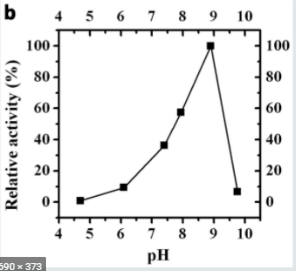
What is the optimal pH for this enzyme?

a)

6

b)

10

c)

9

d)

7

19.

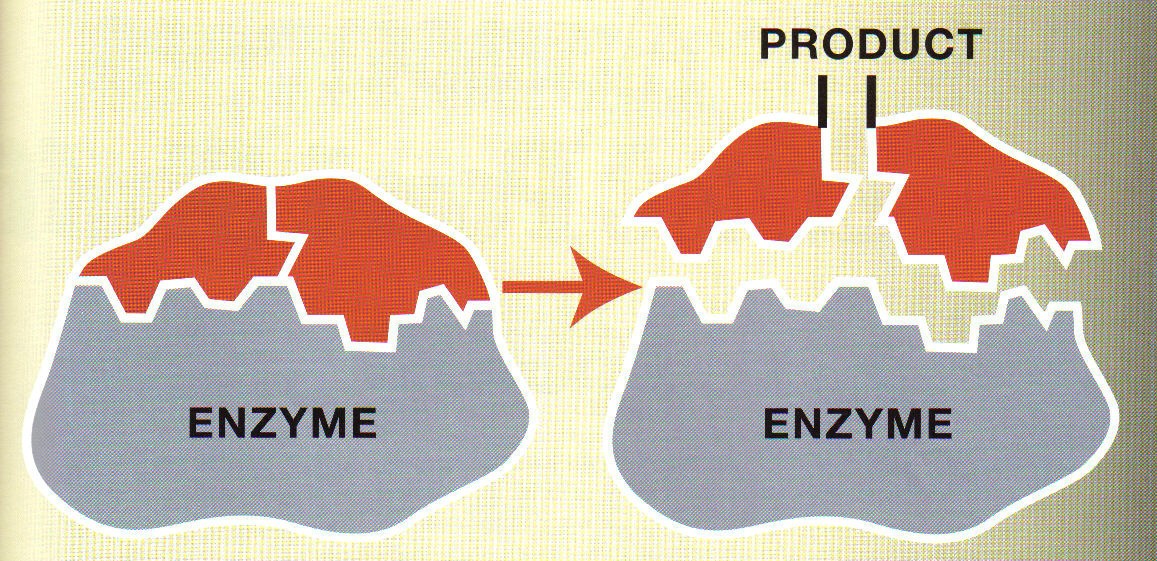
The ____________________ model describes how each substrate must fit into the enzyme.

a)

lock and key

b)

hammer and nail

c)

jigsaw puzzle

d)

seesaw

20.

Which of the following levels of organization BEST represents the sequence from smallest to largest?

a)

Cell, tissue, organism, organ

b)

Cell, organism, organ, tissue

c)

Cell, tissue, organ, organ system

d)

Cell, organism, tissue, organ system

21.
How many daughter cells are produced in mitosis?
a)
1
b)
2
c)
4
d)
6
22.

Which of these are part of Mitosis?

a)

Metaphase

b)

Prophase

c)

Anaphase

d)

Telophase

e)

Interphase

23.

Which of these are part of the Cell Cycle?

a)

Mitosis

b)

Interphase

c)

teraphase

d)

lunaphase

e)

Cytokinesis

24.

During what phase of Mitosis do the chromosomes line up in the Middle

a)

Metaphase

b)

Prophase

c)

Telophase

d)

Anaphase

25.

Which stage of the Life Cycle of the cell is this cell in (look close-the DNA hasn't formed Chromosomes (X) yet)

a)

Interphase

b)

Prophase

c)

Anaphase

d)

Telophase

26.

PMAT helps us remember the correct order of the phases of Mitosis. Which of the following has the phases of Mitosis in the correct Order

a)

Interphase, Mitosis, Cytokinesis

b)

Prophase, Metaphase, Anaphase, Prophase

c)

Anaphase, Telophase, Prophase, Telophase

d)

Prophase, Metaphase, Anaphase, Telophase

27.

Which of the following is the correct order of the Cell Cycle?

a)

Interphase, Mitosis, Cytokinesis

b)

Mitosis, Cytokinesis, Mitosis, Interphase

c)

Prophase, Metaphase, Anaphase, Telophase

d)

Interphase, Prohase, Cytokinesis

28.

What is the purpose of Mitosis?

a)

Growth of an organism and Repair of damaged tissue

b)

To help the body get rid of extra cells

c)

To increase the amount of classwork you have to do

d)

To get rid of the nucleus

29.

In which phase of Mitosis do the Chromosomes pull Apart

a)

Metaphase

b)

Prophase

c)

Anaphase

d)

Telophase

30.
Which biomolecule has sugars and starches?
a)
Lipids
b)
Proteins
c)
Carbohydrates
d)
Nucleic Acid
31.
Which biomolecule functions include enzymes­ which speeds the rate of chemical reactions, structural components in cells, mechanical functions in muscles and cytoskeleton, cell signaling, and immune response; provides structure and helps with chemical reactions 
a)
Protein
b)
Lipids
c)
Carbohydrate
d)
Nucleic Acid
32.
Which biomolecule is important source of energy for humans; glucose for human cells, tissues, and organs; provides fiber, sugar, and starches; provides structural support, cell wall, and cell membrane maker?
a)
Nucleic Acid
b)
Lipid
c)
Carbohydrate
d)
Protein
33.
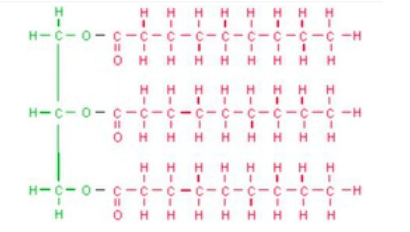
Which biomolecule includes fats, such as triglycerides, oils, waxes, and steroids (cholesterol); insoluble in water; provides energy storage, insulation, part of cell membrane, and hormones 
a)
Nucleic Acid
b)
Lipids
c)
Carbohydrate
d)
Protein
34.
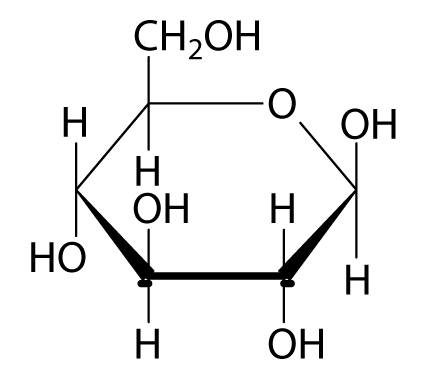
Identify the biomolecule
a)
Carbohydrate
b)
Lipid
c)
Protein
d)
Nucleic Acid
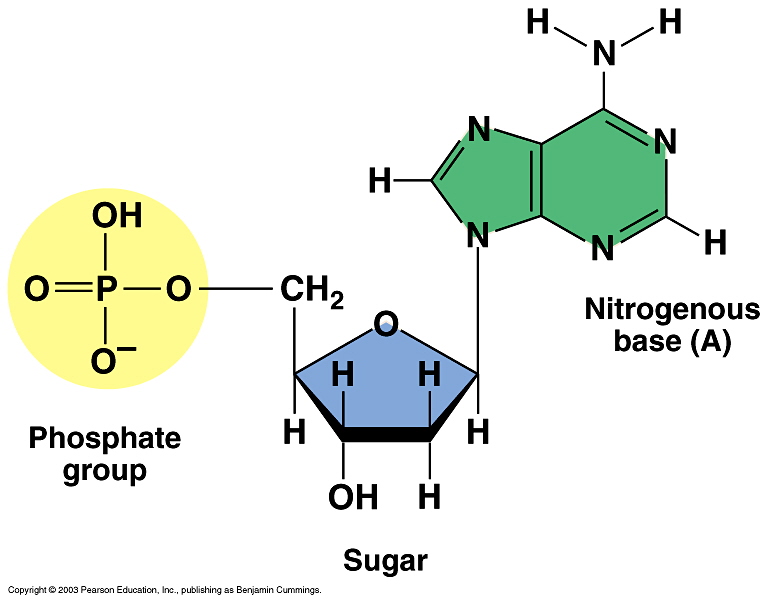
35.
Identify the biomolecule
a)
Lipid
b)
Protein
c)
Carbohydrate
d)
Nucleic Acid
36.
What is the monomer for a protein?
a)
Monosaccharide
b)
Triglyceride
c)
Amino Acid
d)
Nucleotide
37.
Which biomolecule is a main source of quick energy?
a)
Nucleic Acid
b)
Protein
c)
Lipid
d)
Carbohydrate
38.
What is the function of a nucleic acid?
a)

Stores genetic information

b)

Stores energy

c)

Quick source of energy

d)

Speed up chemical reactions

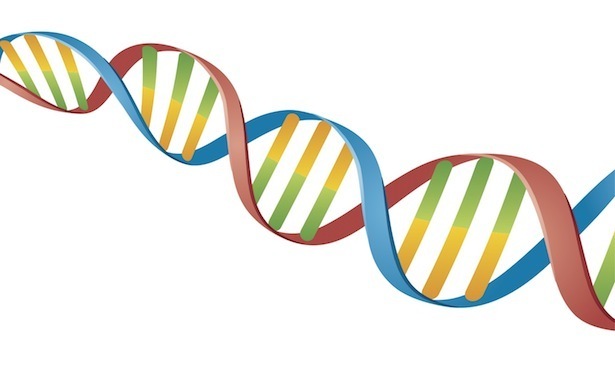
39.
Which biomolecule is this a picture of?
a)
Protein
b)
Nucleic Acid
c)
Lipid
d)
Carbohydrate
40.
What is the purpose  of an enzyme?
a)
give permission for the reaction
b)
raise activation energy
c)
speed up reactions
d)
control how many reactions occur
41.
The cells produced via meiosis are called:
a)

sex cells(sperm and egg)

b)

somatic cells

c)

body cells

d)

skin cells

42.

If the body cells in cats have 38 chromosomes, how many chromosomes will be in the sperm cells of a cat?

a)

76

b)

19

c)

38

d)

you cannot tell

43.
This picture shows which process? 
a)
mitosis
b)
meiosis
c)
the cell cycle
44.

Which process does the picture show and what type of cells are produced?

a)

mitosis, gametes

b)

mitosis, body cells

c)

meiosis, gametes

d)

meiosis, body cells

45.
Fruit fly body cells have 8 chromosomes. After mitosis, you would expect a resulting fruit fly daughter cell to have ...
a)
16 chromosomes.
b)
46 chromosomes.
c)
8 chromosomes.
d)
4 chromosomes.
46.
In mitosis, the two resulting cells are
a)
different from the starting cell and identical to each other.
b)
different from the starting cell and different from each other.
c)
identical to the starting cell and different from each other.
d)
identical to the starting cell and identical to each other.
47.
In meiosis, the four resulting cells are 
a)
identical to the starting cell and different from each other.
b)
different from the starting cell and different from each other. 
c)
identical to the starting cell and identical to each other.
d)
different from the starting cell and identical to each other.
48.
Before cells can divide, what must be copied?
a)
mitochondria
b)
cytoplasm
c)
DNA
d)
Cell Wall
49.
The cells produced via meiosis are called:
a)
sex cells (gametes)
b)
somatic cells
c)
body cells
d)
skin cells
50.
After meiosis is complete how many cells will there be?
a)
1
b)
2
c)
3
d)
4
51.
The maintenance of an organism’s internal environment is called:
a)
compensating
b)
homeostasis
c)
balancing
d)
routine
52.
The two types of feedback systems that help organisms maintain homeostasis are:
a)
positive and negative 
b)
receptor and effector
c)
static and dynamic
d)
minor and major
53.
Maintaining body temperature is an example of a:
a)
negative feedback loop
b)
positive feedback loop
54.

When glucose levels in the blood rise, your brain sends a signal to your pancreas. The pancreas releases insulin, which opens channels in cell membranes to allow glucose to enter the cell, lowering blood sugar levels. This is an example of a:

a)

Positive Feedback Loop

b)

Negative Feedback Loop

55.
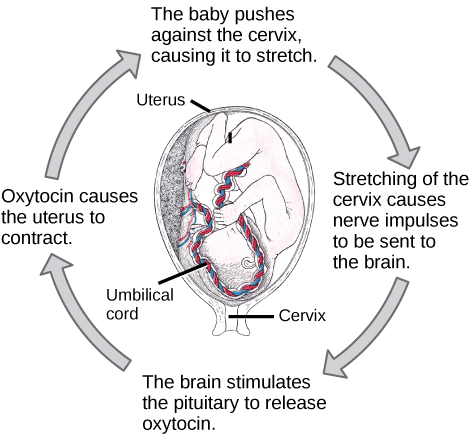
What type of feedback loop is shown?
a)
negative
b)
neutral 
c)
positive
56.

If the calcium in your blood decreases below homeostasis levels, a gland in the brain will sense the decrease and send a chemical message to your bones. Your bones will release calcium into the blood, bringing blood calcium levels back up. This is an example of what type of feedback?

a)

Positive Feedback Response

b)

Negative Feedback Loop

57.

increases or speeds up original change

a)

negative feedback

b)

positive feedback

c)

endotherm

d)

ectotherm

58.

A structure made up of different types of tissue and performs a specific job.

a)

cells

b)

tissue

c)

organ

d)

organ system

59.
A group of similar cells that perform the same function.
a)
tissue
b)
organelle
c)
mass
d)
tendon
60.
A group of organs that work together to perform a major function is an organ
a)
system
b)
column
c)
bank
d)
stack