
 Worksheets
Semester Test Review
Total questions: 70
Worksheet time: 1hrs 10mins
Name
Class
Date
1.
A red winged bird of some kind has made a nest in the garage of Cole’s house. This bird is unlike any other that has been seen in this area and is acting very strange when people get near its nest. What type of scientist would be the best help for Cole’s family in identifying the bird?
a)
Ichthiologist
b)
Ornithologist
c)
Astronomer
d)
Botanist
2.
A strange species of fish is being caught off the coast of Georgia. No one who has caught this fish has been able to identify it. Fishermen should take fish to a(n) __________________ to help them identify what type of fish they are catching.
a)
Ornithologist
b)
Ichthyologist
c)
Botanist
d)
Astronomer
3.

What is measured with a graduated cylinder?
a)
Passage of time
b)
Distance from one thing to another
c)
Weight of an object
d)
Volume of liquid
4.

What volume of liquid is in this graduated cylinder?
a)
5 ml
b)
15 ml
c)
20 ml
d)
25 ml
5.

Name the tool pictured
a)
scalpel
b)
Pipette
c)
Tweezer
d)
Forceps
6.

An asexual offspring needs:
a)
Fertilization
b)
Some fertilization
c)
Wings to fly
d)
No fertilization
7.
7,000 g = ____ kg
a)
70
b)
700
c)
7
d)
0.07
8.
285 kg = ____ g
a)
285,000
b)
285
c)
2,850
d)
28,500
9.

Which of the following scientists contributed to the cell theory?
a)
Redi, Robert Hooke, Anton van Leuwenhoek
b)
Matthais Schleiden, Theodor Schwann, Rudolf Virchow, Robert Hooke, Anton Van Leeuwenhoek
c)
Pasteur, Theodor Schwann, Anton von Leuwenhoek
d)
Einstein, Matthais Schleiden, Robert HookeOption
10.

Which of the following scientists concluded that all animals are made of cells?
a)
Rudolf Virchow
b)
Matthais Schleiden
c)
Robert Hooke
d)
Theodor Schwann
11.

Which of the following scientists was the first to observe bacteria (animalcules)?
a)
Anton van Leuwenhoek
b)
Matthais Schleiden
c)
Robert Hooke
d)
Theodor Schwann
12.

What is one way in which all living things on Earth are alike?
a)
All living things have hair.
b)
All living things are made of cells and come from other cells.
c)
The cells of all living things have chloroplast.
d)
All living things can move.
13.
Anton van Leeuwenhoek made his own version of the microscope and discovered something very odd when he looked a the gunk on his teeth. What did he discover?
a)
Cells
b)
Bacteria
c)
Cavities
d)
Influenza
14.
Which scientist disproved spontaneous generation of large organisms by showing maggots came from flies not from rotting meat?
a)
Redi
b)
Needham
c)
Spallanzani
d)
Pasteur
15.
Which scientist designed a special flask that allowed air in but kept microbes out and once and for all disproved spontaneous generation?
a)
Redi
b)
Needham
c)
Spallanzani
d)
Pasteur
16.

What is the name of the genetic material that is inside the nucleus?
a)
ER
b)
ATP
c)
YOLO
d)
DNA
17.
Modifies, collects, & packages proteins.
a)
smooth ER
b)
golgi bodies
c)
ribosome
d)
rough ER
18.
The process of photosynthesis takes place in this part of the cell. Gives plants their green color.
a)
mitochondria
b)
ribosome
c)
chloroplast
d)
nucleus
19.
Selectively permeable barrier that controls what enters and leaves the cell.
a)
cell membrane
b)
cell wall
c)
cytoskeleton
d)
rough ER
20.
Produces energy in the form of ATP for the cell.
a)
chloroplast
b)
mitochondria
c)
ribosome
d)
nucleus
21.
Controls cell functions because DNA is stored here.
a)
nucleus
b)
endoplasmic reticulum
c)
ribosome
d)
cholorplast
22.
The only organelle in the cell that makes proteins and is located in two different places.
a)
nucleus
b)
mitochondria
c)
vacuole
d)
ribomsome
23.
Transports materials throughout the cell. Acts as an assembly line for proteins.
a)
endoplasmic reticulum
b)
vacuole
c)
nucleus
d)
ribosome
24.
Stores materials such as WATER, salts, proteins, & carbohydrates.
a)
ribosome
b)
lysosome
c)
vacuole
d)
endoplasmic reticulum
25.
Contains digestive enzymes to break down worn out parts of the cell.
a)
vacuole
b)
lysosome
c)
ribosome
d)
nucleolus
26.
Rigid, nonliving support structure made of cellulose found only in plant cells.
a)
cell membrane
b)
nuclear membrane
c)
lysosome
d)
cell wall
27.
Gel-like “Substance” of the cell that is mostly composed of water. The site of many chemical reactions in the cell.
a)
cytoplasm
b)
nucleus
c)
endoplasmic reticulum
d)
cell membrane
28.
Which 2 organelles are only found in plant cells?
a)
chloroplast and mitochondria
b)
chloroplast and cell membrane
c)
mitochondria and cell wall
d)
chloroplast and cell wall
29.
Internal structures of a cell. Each of these structures has a job it must preform for the cell to survive.
a)
Organ
b)
Organelle
c)
Ribosome
d)
Nucleus
30.
Under a microscope, a student observes a specimen containing a cell wall, nucleus, and chloroplasts. Which of the following could the specimen being observed belong to?
a)
oak tree leaf
b)
human
c)
bacteria
d)
cat hair
31.
During ___________ conditions inside our body are kept stable (the same)
a)
homeopathic
b)
Homo sapian
c)
homeostasis
d)
homologous
32.

What type of cell is pictured here?
a)
Prokaryote
b)
Eukaryote
33.
An accepted scientific idea in the 1700's that stated nonliving things could produce living organisms.
a)
Cell Theory
b)
Spontaneous Generation
c)
Law of Cells
d)
Cellular Respiration
34.
Find the mean of these numbers:
5, 11, 2, 12, 4, 2
5, 11, 2, 12, 4, 2
a)
4.1
b)
6
c)
4.5
d)
4
35.
Find the median of these numbers:
4, 2, 7, 4, 3
4, 2, 7, 4, 3
a)
2
b)
5
c)
7
d)
4
36.
The mode score on the 6th grade math test was 94!
Given that.... what does this tell you about the test scores (BEST ANSWER)?
Given that.... what does this tell you about the test scores (BEST ANSWER)?
a)
99 was the highest score on the test.
b)
More students received a 94 than any other score
c)
No student scored below a 50
d)
A score of 91 was slightly below average.
37.
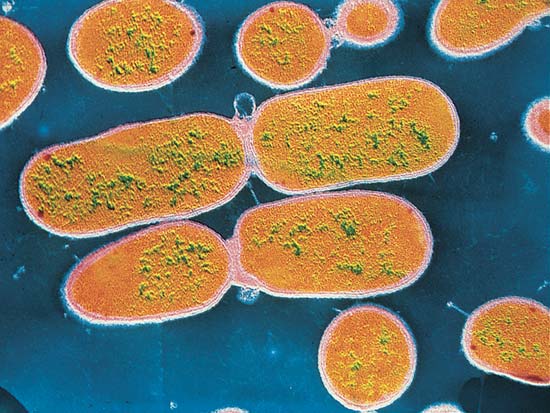
The offspring from asexually reproduced organisms are?
a)
Different than their parents
b)
Identical to parents
c)
Like a combination from both parents
d)
A different species
38.
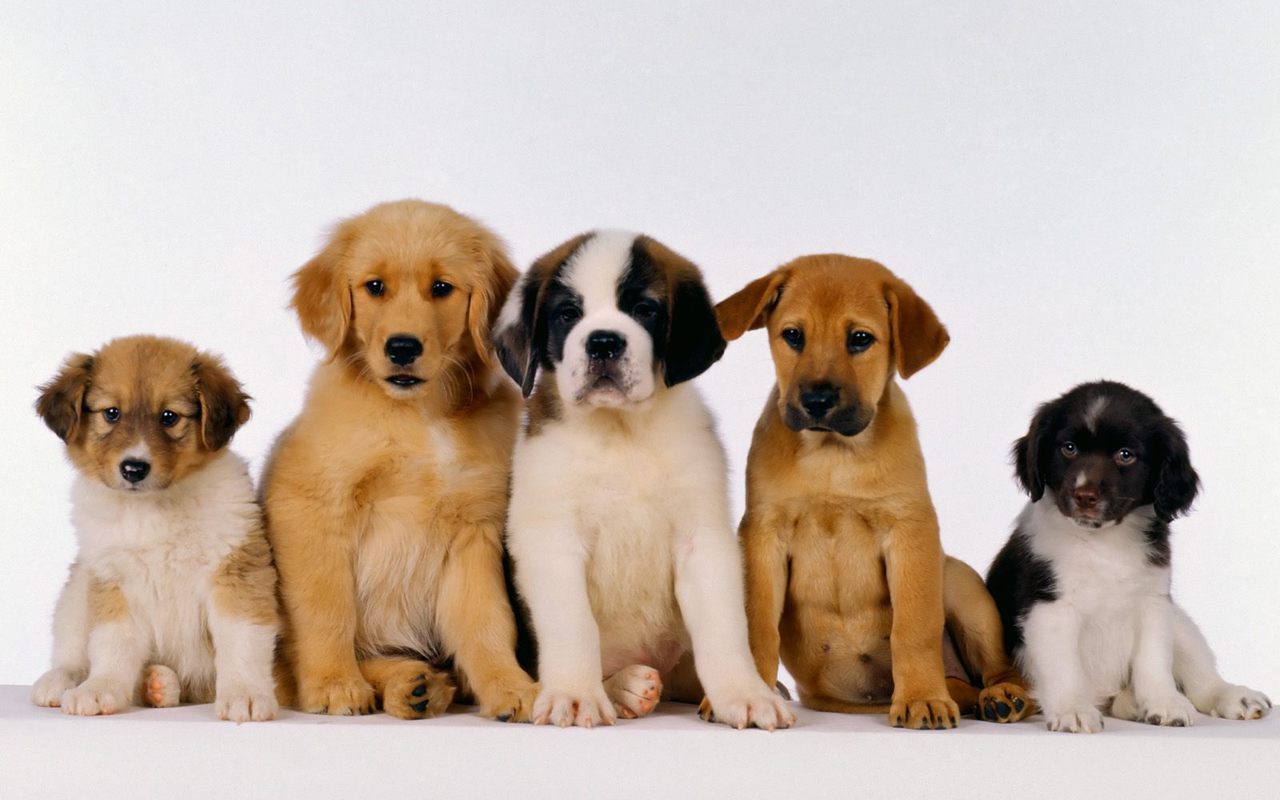
If two organisms reproduce sexually, then their offspring will exhibit a genetic makeup that is -
a)
identical to only one parent
b)
identical to all of its siblings
c)
a unique combination of traits
d)
the recessive traits of each parent
39.
What process occurs when WATER diffuses across a membrane?
a)
endocytosis
b)
mitosis
c)
osmosis
d)
nuclear fission
40.
When both inside and outside of a cell have the same amount of water it is said that the cell has reached a state of ___________.
a)
osmosis
b)
equilibrium
c)
diffusion
d)
hypertonic
41.
What does selectively-permeable mean?
a)
The cell controls what passes in and out of the cell
b)
Nothing gets through
c)
The cell lets only large substances through
42.
Which type of transport requires an input of energy?
a)
Passive Transport
b)
Osmosis
c)
Simple Diffusion
d)
Active Transport
43.

_______ regulates what enters and leaves a cell.
a)
Cell Membrane
b)
Nucleus
c)
Mitochondria
d)
Cytoplasm
44.

The cell below is in a _________ solution.
a)
Hypotonic
b)
Hypertonic
c)
Isotonic
45.

The cell below is in a _____________ solution.
a)
Hypertonic
b)
Hypotonic
c)
Isotonic
46.
If you looked at red blood cells under a microscope and saw that several of the blood cells had burst, what would you say happened?
a)
The cells were placed in a hypotonic solution.
b)
The cells were placed in a hypertonic solution.
c)
The cells were placed in an isotonic solution.
47.
If a cell is placed in a hypotonic solution, the cell will _______.
a)
stay the same
b)
swell (get bigger)
c)
shrink (get smaller)
48.

This process is known as (leaving the cell)
a)
phagocytosis
b)
endocytosis
c)
exocytosis
d)
osmosis
49.
Convert 0.25 m to mm
0.25 m = ___ mm
0.25 m = ___ mm
a)
25mm
b)
2.5mm
c)
250mm
d)
0.025mm
50.
Cave drawings, ancient writings, and artifacts are all used by ____________ to study people and cultures of the past.
a)
Virologist
b)
Hematologist
c)
Lepidopterist
d)
Archeologist
51.

This chart will be used by what type of scientist?
a)
Virologist
b)
Lepidopterist
c)
Astronomer
d)
Hematologist
52.
You are heating a substance in a test tube. Never point the open end of the tube
a)
towards your body
b)
toward your lab partner
c)
towards another classmate
d)
all of the above
53.
You have been injured in the laboratory (cut, burn, etc.). First you should
a)
visit school nurse
b)
text your parent
c)
see a doctor after school
d)
tell teacher immediatly
54.

The proper technique for smelling chemicals is ______________
a)
keeping your nose close to the glassware
b)
WAFT toward your nose
c)
to sniff only a small amount
d)
Trick question; you never are allowed to smell chemicals in class
55.
During a chemistry experiment, a student needs to pour an unknown solution from a beaker into a test tube. What piece of lab equipment should the student use to ensure no chemical is spilled?
a)
Funnel
b)
Pipette
c)
Petri Dish
d)
Micorscope
56.
The name of the liquid measurement line that is read when finding the volume of a liquid.
a)
Center Line
b)
Interval
c)
Meniscus
d)
Mid-Line
57.
When reading the volume of water in a graduated cylinder, you should always.....
a)
Make sure the graduated cylinder is on a level surface
b)
Calculate the interval between units of measurement on teh graduated cylinder
c)
Always read the bottom of the meniscus
d)
All of the Above
58.
All organisms are made of small building blocks called _________.
a)
Chemicals
b)
Atoms
c)
Cells
d)
Molecules
59.
A unicellular organism is
a)
composed of many cells
b)
composed of one cell
c)
made of many proteins
d)
harmful to only plants
60.
A multicellular organism is
a)
composed of many cells
b)
composed of one cell
c)
composed of water
d)
harmful to only plants
61.
A cell with very few internal structures; creates simple organisms; has circular DNA; no nucleus.
a)
Prokaryotic
b)
Eukaryotic
62.
A cell that has: many internal structures; makes up complex organisms; has spiral DNA; is controlled by a necleus
a)
Prokaryotic
b)
Eukaryotic
63.
What is the most abundant chemical in a cell?
a)
Water
b)
Salt
c)
Potassium
d)
Carbon Dioxide
64.
All living things must __________ in order to continue their species of life.
a)
eat
b)
sleep
c)
reproduce
d)
poop
65.
Active transport uses..........
a)
a transport protein
b)
a transport protein + energy (ATP)
c)
gas
d)
kerosene
66.
Oxygen is needed to produce energy in eukaryotic cells. Which organelle would need oxygen the most?
a)
Cell Membrane
b)
Nucleus
c)
Mitochondria
d)
Lysosomes
67.
Which of the following is NOT an example of active transport?
a)
Osmosis
b)
Endocytosis
c)
Exocytosis
68.
Energy: Active Transport::
No Energy: ___________
No Energy: ___________
a)
Facilitated Diffusion
b)
Passive Transport
c)
ATP
d)
Endocytosis
69.
The cell membrane is considered to be ___________ _____________.
a)
Mean
b)
Hard to Pass Through
c)
Easy to Pass Through
d)
Selectively Permeable
70.
Used for measuring volatile liquids during a science lab.
a)
Flask
b)
Beaker
c)
Graduated Cylinder
d)
Petri Dish
100 %

