wayground logo

Free Printable Worksheets

NEW

Font size

S
M
L
XL
Worksheets

Unit 2 Heredity Test Review

Total questions: 74

Worksheet time: 3570secs

Name
Class
Date
1.

What is an advantage of sexual reproduction?

a)

does not require special cells or a lot of energy

b)

lots of variation within a species

c)

face massive die-off if environment changes

d)

needs time & energy

2.

A sperm and an egg join together in a process called

a)

mitosis

b)

meiosis

c)

fertilization

d)

fission

3.

The organism produced during reproduction is called a(n) _____________.

a)

child

b)

growth

c)

offspring

d)

baby

4.

Organisms produced by asexual reproduction are genetically different from the parent organism.

a)

False

b)

True

5.
How many parent(s) are needed for asexual reproduction?
a)
4
b)
1
c)
9
d)
100
6.
Which process is considered to be faster? 
a)
Asexual
b)
Sexual 
7.
What is one disadvantage for asexual reproduction?
a)
Happens very quickly
b)
Only needs one parent
c)
Lack of genetic diversity
d)
All offspring are exact copies of parent
8.
Where is all the genetic material inside a cell?
a)
nucleus
b)
vacuole
c)
cell membrane
d)
ribosome
9.
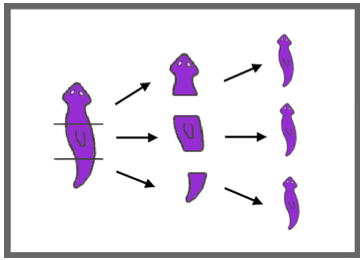
What type of asexual reproduction is illustrated in this picture?
a)
budding
b)
fragmentation
c)
binary fission
d)
vegetative propagation
10.
Bacteria reproduce this way.
a)
budding
b)
fragmentation
c)
binary fission
d)
vegetative propagation
11.

How does this organism reproduce?

a)

sexually

b)

asexually

12.

how does this organism reproduce?

a)

sexually

b)

asexually

13.

How does this organism reproduce?

a)

sexually

b)

asexually

14.

How does this organism reproduce?

a)

sexually

b)

asexually

15.

How is this organism reproducing?

a)

sexually

b)

asexually

16.

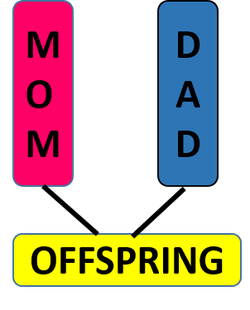
How many parent(s) are needed for sexual reproduction?

a)

1

b)

2

c)

9

d)

100

17.
All of the offspring of an organism have the same genetic material, which is identical to the parent organism. From this, we can conclude that this organism -
a)
makes its own food
b)
is unicellular
c)
live in a marine habitat
d)
reproduces asexually
18.
The genetic material of an offspring of sexually reproducing organisms is best described as–
a)
identical to that of the other offspring
b)
a copy of the genetic material of the mother
c)
a copy of the genetic material of the father
d)
genes from both parents, in unique combinations
19.

Requires only one parent

a)

sexual

b)

asexual

20.

Requires two parents

a)

sexual

b)

asexual

21.
Passes genetic information
onto future generations
a)
sexual reproduction
b)
asexual reproduction
c)
both
22.
The passing of DNA from parents to offspring
a)
Generation
b)
Heredity
c)
Inheritance
d)
Traits
23.
Chromosomes are found in the ____________ of the cell
a)
Chloroplast
b)
Nucleus
c)
Cytoplasm
d)
Mitochondria
24.
What is a gene?
a)
An entire chromosome that  codes for a trait
b)
a piece of clothing
c)
a piece of a DNA on chromosome that codes for a trait
d)
Chemical messengers in your brain that code for a trait
25.
Segments of DNA are called _______________________
a)
Genes
b)
Nuclei
c)
genotypes
d)
Chromosomes
26.
What is a recessive allele?
a)
A trait that is always shown (capital letter)
b)
A trait that can be hidden (lower case letter)
c)
Alleles that are the same
d)
Alleles that are different
27.
What is a dominant allele?
a)
A trait that is always shown (capital letter)
b)
A trait that can be hidden (lower case letter)
c)
Alleles that are the same
d)
Alleles that are different
28.
The physical traits of an organism
a)
Teletype
b)
Genotype
c)
Mesotype
d)
Phenotype
29.
The genes of an organism
a)
Mesotype
b)
Phenotype
c)
Teletype
d)
Genotype
30.
A unit of genetic material that determines a trait
a)
Carrier
b)
DNA
c)
chromosome
d)
Gene
31.
What are the two genotypes that show the DOMINANT Phenotype
a)
GG, gg
b)
GG, Gg
c)
Gg, gg
32.
What is the only Genotype that shows the RECESSIVE Phenotype?
a)
GG
b)
Gg
c)
gg
33.
Look at the picture.
A dog that sits when told to.
a)
inherited
b)
learned
34.
Look at the picture.
Eye color.
a)
inherited
b)
acquired
35.
Look at the picture.
Purple hair.
a)
inherited
b)
learned
36.
Look at the picture.
A baby crying when its hungry.
a)
inherited
b)
learned
37.
Look at the picture.
Speaking different languages.
a)
inherited
b)
learned
38.
Look at the picture.
The ability to curl your tongue.
a)
inherited
b)
learned
39.

If Brown eyes (B) are dominant over blue eyes (b), what would the phenotype be for a bb genotype?

a)

Brown Eyes

b)

Blue Eyes

c)

Green Eyes

40.

If straight hair (S) is dominant to curly hair (s) - what are the possible Genotype(s) for curly hair?

a)

ss only

b)

SS only

c)

SS or Ss

d)

Curly Hair

e)

Straight Hair

41.
Alternative forms of a gene are called
a)
Alleles
b)
Homozygous
c)
DNA
d)
Genetics
42.
What is the dominant trait?
a)
yellow pea seeds
b)
green pea seeds
c)
there is no dominant seed
d)
Jolly green giant
43.
What genotype would go in box 3?
a)
BB
b)
Bb
c)
bb
44.
What genotype would go in box 1?
a)
BB
b)
Bb
c)
bb
45.

Brown eyes are dominant to blue eyes. There are two parents that are homozygous dominant and homozygous recessive. Could their grandchildren have blue eyes?

a)

No, it is impossible.

b)

No, it is possible but it is too small of a probability.

c)

Yes, since their children will be a carrier, their grandchildren could have blue eyes.

d)

Yes, all of their grandchildren will have blue eyes.
46.
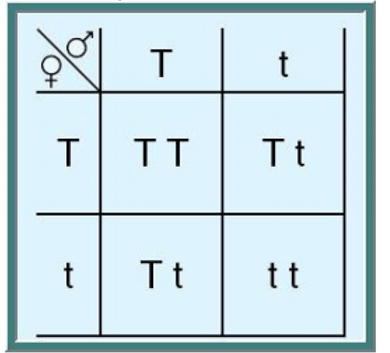
Which of the following genotypes is heterozygous?
a)
Bb
b)
BB
c)
bb
d)
B
47.
Which of the following genotypes is homozygous dominant?
a)
A
b)
Aa
c)
AA
d)
aa
48.
Which of the characteristics is a lion least likely to pass on to its offspring?
a)
fur color
b)
length of tail
c)
scars on leg
d)
body size
49.
In a heterozygous genotype, the ___________ allele takes over in the phenotype.
a)
recessive
b)
dominant
c)
lower case letter
d)
both 
50.

In pea plants, tall is dominant to short. If 2 heterozygous plants are crossed, what % of the offspring will be short?

a)

0%

b)

25%

c)

50%

d)

75%

51.
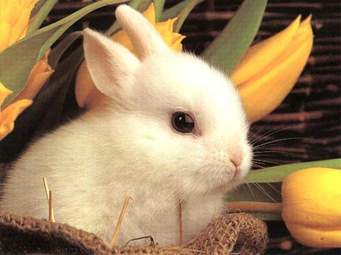
It is NOT possible for two purebred black rabbits (both BB) to produce white offspring.
a)
True
b)
False
52.
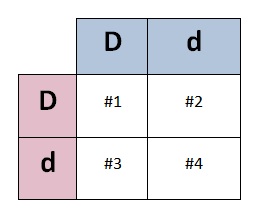
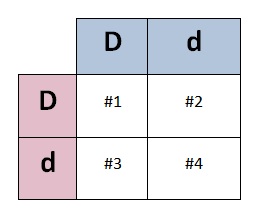
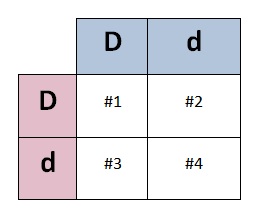
What is the possibility of this offspring having a dominate trait?
a)
50%
b)
75%
c)
25%
d)
0%
53.
What is the allele combination for square 1?
a)
Dd
b)
DD
c)
dd
d)
D
54.
What is the chance of this offspring having a recessive trait?
a)
25%
b)
100%
c)
50%
d)
0%
55.

the science that studies how traits are inherited through the interactions of alleles

a)

heredity

b)

genetics

c)

biology

56.

the passing of traits from parent to offsprint

a)

heredity

b)

genetics

c)

botany

57.

the genetic make-up; the actual gene pair

a)

genotype

b)

phenotype

58.

the physical or visible appearance of an organism; a trait we can see

a)

genotype

b)

phenotype

59.

blue eyes, curly hair

a)

genotype

b)

phenotype

60.

Tt, BB, rr

a)

genotype

b)

phenotype

61.

controls the trait; you only need one gene for the trait to show up in an organism

a)

dominant

b)

recessive

62.

the weaker trait; you need 2 genes for the trait to show up in an organism

a)

dominant

b)

recessive

63.

the different forms of a trait that make up a gene, R OR r

a)

allele

b)

dominant

c)

recessive

64.

purebred; the same gene pair

a)

homozygous

b)

heterozygous

65.

hybrid; a different gene pair

a)

homozygous

b)

heterozygous

66.

TT, tt

a)

homozygous

b)

heterozygous

67.

Rr, Ff

a)

homozygous

b)

heterozygous

68.

BB, RR, TT

a)

heterozygous

b)

homozygous dominant

c)

homozygous recessive

69.

nn, ww, gg

a)

heterozygous

b)

homozygous dominant

c)

homozygous recessive

70.

Tt, Bb, Ww

a)

heterozygous

b)

homozygous dominant

c)

homozygous recessive

71.

the father of genetics

a)

James Watson

b)

Robert Hooke

c)

Gregor Mendel

d)

Reginald Punnett

72.

CC, DD, EE

a)

heterozygous

b)

homozygous dominant

c)

homozygous recessive

73.

aa, bb

a)

heterozygous

b)

homozygous dominant

c)

homozygous recessive

74.

a tool used to predict the results from crossing 2 sets of allelles

a)

microscope

b)

Punnett square

c)

Jawsome trapezoid