wayground logo

Free Printable Worksheets

Font size

S
M
L
XL
Worksheets

Life Science-Ch 26 Ecosystems

Total questions: 70

Worksheet time: 1hrs 7mins
Name
Class
Date
1.
Which biome is characterized by low temperatures and low amounts of rainfall?
a)
tundra
b)
desert
c)
temperate deciduous forest
d)
tropical rain forest
2.
Which biome covers most of the land mass near the Earth's equator?
a)
tundra
b)
desert
c)
grassland
d)
tropical rainforest
3.
Which biome, because of its climate, has the largest number of species of plants and animals?
a)
tundra
b)
desert
c)
tropical rainforest
d)
pine forest
4.
One characteristic feature of tundra is that only the surface thaws in the summer and refreezes in the winter, leaving a layer of permanently frozen subsoil.  This characteristic is known as
a)
glaciation
b)
permafrost
c)
crystallization
d)
soilfrost
5.
Which type of trees is found in a temperate forest?
a)
deciduous
b)
evergreen
c)
ginko
d)
palm
6.
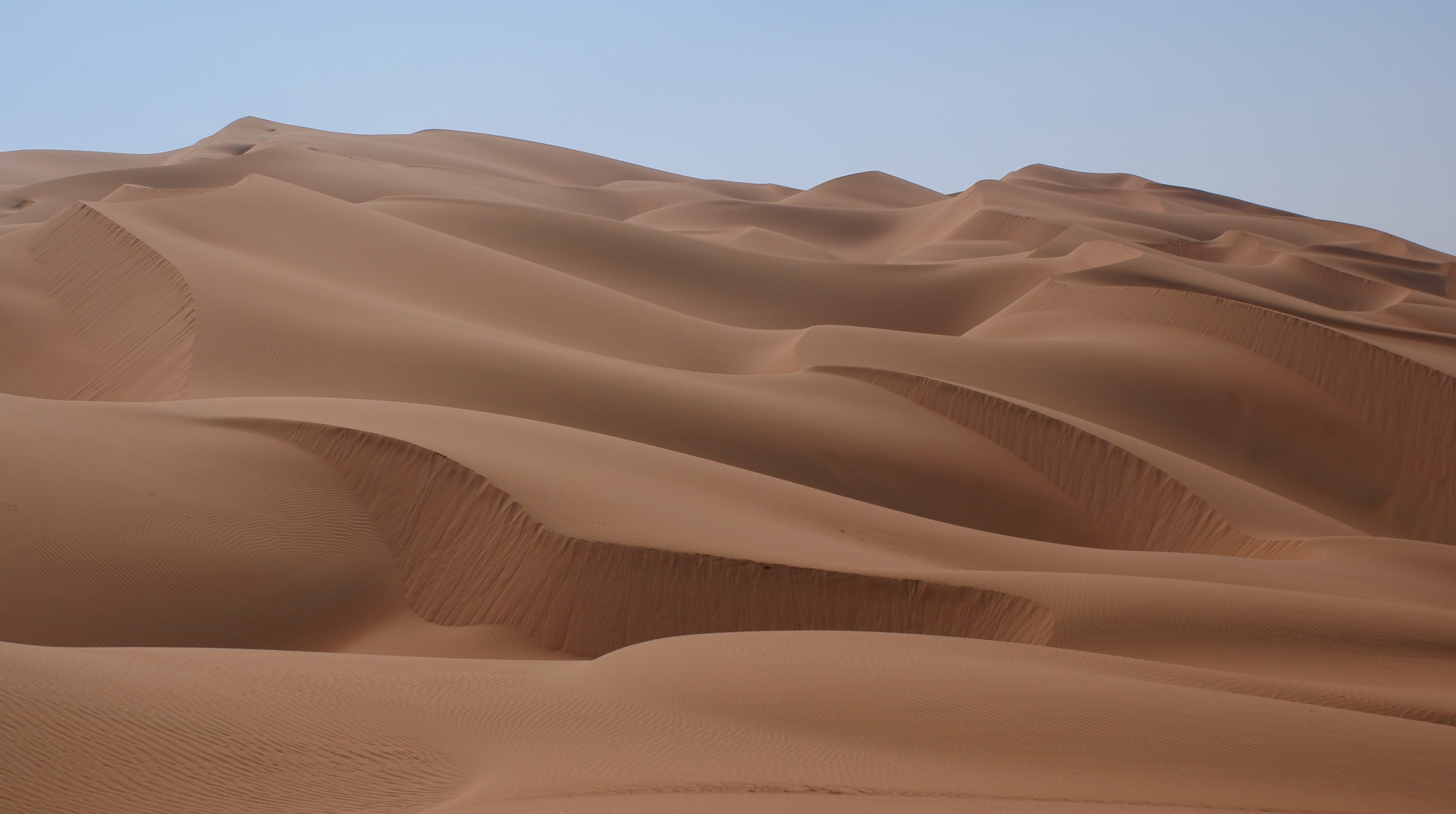
Which major biome is home to cacti, mesquite, white thorn, pack rats, small reptiles, and coyotes?
a)
desert
b)
taiga
c)
tundra
d)
grassland
7.
Which biome receives between 0 to 25 centimeters of rain per year, has a temperature range of 0 to 50 degrees Celsius, has poor soil, and is home to lizards, scorpions, and snakes?
a)
desert
b)
mountain
c)
taiga
d)
tundra
8.
Which biome receives between 0 and 25 centimeters of precipitation each year, has a temperature range from -27 to 5 degrees Celsius, has frozen soil, and is home to hares, caribou, and wolves?
a)
desert
b)
mountain
c)
savannah
d)
tundra
9.
Which of the following habitats probably has the greatest number of plant and animal species?
a)
the African savannah
b)
a rainforest in Brazil
c)
a temperate forest in China
d)
a temperate grassland in Kansas
10.
Which biome contains large populations of grazing herbivores, few species of birds, and deep, rich soil?
a)
taiga
b)
tundra
c)
deciduous forest
d)
grassland
11.
This biome contains mostly spruce trees and Douglas firs, which are both evergreen.  The winters are long and cold and the summers are short and rainy.  The soil is very rich.  Moose and elk live here.  This biome is classified as a
a)
taiga
b)
tundra
c)
deciduous forest
d)
temperate forest
12.
The biome known for trees with broad leaves that fall off the trees in the winter.
a)
Coniferous Forests
b)
Deciduous Forests
c)
Deserts
d)
Tropical Rain Forests
13.
The most important abiotic factors when studying biomes are...
a)
Food and Water
b)
Water and Sunlight
c)
Temperature and Oxygen
d)
Water and Temperature 
14.
The greatest biodiversity on earth is found in the __________ biome.
a)
taiga
b)
grassland
c)
temperate deciduous forest
d)
tropical rainforest
15.
This biome is found around the equator and is home to a large amount of biodiversity.
a)
Deserts
b)
Tropical Rain Forests
c)
Savannas
d)
Chaparral 
16.
Which biome is MOST LIKE the "desert" in terms of precipitation?
a)
tropical rainforest
b)
temperate deciduous forest
c)
tundra
d)
coniferous forest
17.
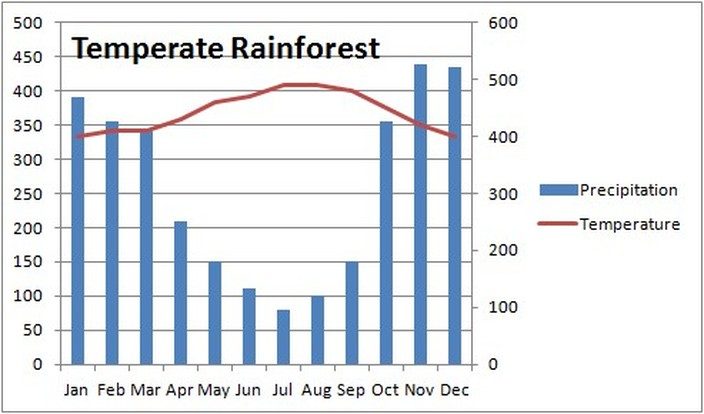
Which biome is represented by the rainfall amounts in letter C?
a)
desert
b)
prairie
c)
deciduous forest
d)
tropical rain forest
18.
What are the key features of the Tundra?
a)
cold winter, thin acidic soil, evergreen trees
b)
treeless, permafrost, cold dark winters
c)
ong cool summers, short dark winters, migrating animals
d)
many evergreen trees, short moist summers, long snowy winters
19.
What biome would you be most likely to find a shark?
a)
forest
b)
tundra
c)
tropical rainforest
d)
aquatic
20.
Which biome is located closest to the poles?
a)
tundra
b)
tropical rainforest
c)
grasslands
d)
desert
21.
Oceans make up what percentage of the Earth's surface?
a)
50%
b)
30%
c)
25%
d)
75%
22.
the first organisms that appear in an ecological community
a)
ecological succession 
b)
primary succession 
c)
secondary succession
d)

pioneer species

23.
succession that occurs in an area where soil is already present
a)
ecological succession 
b)
primary succession 
c)
secondary succession
d)
pioneer speciles
24.
succession that occurs in an area with no soil
a)
ecological succession 
b)
primary succession 
c)
secondary succession
d)
pioneer speciles
25.
Natural disasters such as flooding and tornadoes are linked to ________________.
a)
primary
b)
secondary
c)
old field
d)
ecosystem
26.
Which biome is home to lions, zebras, wildebeests, giraffes, and elephants?
a)
Grasslands
b)
Tundra
c)
Rainforest
d)
Temperate Forest
27.
What kind of animals live in an estuary?
a)
elephants and birds
b)
cats and dogs
c)
hamsters and rats 
d)
Fish and shell fish
28.
Why doesn’t photosynthesis occur in deep ocean water?
a)
There is no sunlight.
b)
There are not enough nutrients. 
c)
The salinity level of the water is too high.
d)
The water temperature is too cold.
29.
Which organism can be found in coral reefs?
a)
Clownfish
b)
Dragonfish
c)
Whales
d)
Dogs
30.
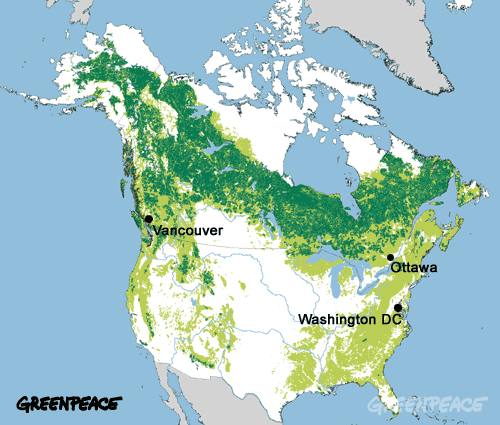
Which biome is Canada in?
a)
Tundra
b)
Taiga
c)
Temperate Forest
d)
Desert
31.
A large ecosystem is called a ______
a)
Ecosystem
b)
Habitat
c)
Biome
d)
Niche
32.
Which Biome has permafrost?
a)
Temperate Forest
b)
Rainforest
c)
Taiga
d)
Tundra
33.
Which biome has 4 seasons?
a)
Taiga
b)
Tundra
c)
Grasslands
d)
Temperate Forest
34.
Which biome receives frequent wildfires?
a)
Grasslands
b)
Mediterranean
c)
Taiga
d)
Temperate Deciduous Forest
35.
What is the difference between biotic and abiotic?
a)
Biotic are non-living things
b)
Abiotic are living organisms
c)
Biotic is life,
Abiotic is non-living
d)
Biotic is non-living, Abiotic is living
36.
A wetland that contains a mixture of fresh water and salt water is called
a)
an estuary
b)
a stream
c)
a river
d)
a pond
37.
Which is NOT a freshwater ecosystem?
a)
a river
b)
a lake 
c)
an estuary
d)
a stream
38.
The intertidal zone of oceans
a)
surrounds continents
b)
is on the coastline
c)
has tides that rise and fall each day
d)
is the open ocean
39.
Which factor(s) affect aquatic ecosystems?
a)
depth
b)
flow
c)
nutrients
d)
all affect aquatic ecosystems
40.
Circulating water in lakes and ponds is important for distributing 
a)
heat
b)
oxygen
c)
nutrients
d)
all of these
41.
An ecosystem where water covers the soil or water is near the surface of the soil is called
a)
a desert
b)
an ocean
c)
an estuary
d)
a wetland
42.
Which is NOT a freshwater wetland?
a)
estuary
b)
marsh
c)
bog
d)
swamp
43.
Estuaries form where 
a)
a lake evaporates
b)
a river meets the sea
c)
a river becomes dammed
d)
a wetland becomes filled in
44.
Estuary water should have 
a)
less salt than the ocean
b)
more salt than the ocean
c)
no salt
45.
Which would have kelp forests and coral reefs?
a)
intertidal zone
b)
coastal ocean
c)
open ocean
46.
Which would have barnacles, seaweed, and starfish?
a)
coastal ocean
b)
intertidal ocean
c)
open ocean
47.
This type of aquatic ecosystem is a mix of fresh and salt water.
a)
estuary
b)
lake
c)
river
48.
One of the benefits of wetlands, is that they can
a)
replace lakes and ponds
b)
filter pollutants out of water
c)
provides land for housing developments
49.
Important limiting factors in streams and rivers include
a)
amount of oxygen
b)
temperature of water
c)
all of the above
50.
Organisms in estuaries must be able to survive
a)
frequent dry conditions
b)
high winds
c)
changing salt levels
51.
Salt water is denser than fresh water. What ecosystem is most affected by this fact?
a)
lake
b)
river
c)
stream
d)
estuary
52.
Miki, a graduate student, needed to estimate how many catfish were in a local river. First, she marked 590 catfish with tags. Later, she captured 700 catfish, of which 59 had tags. To the nearest whole number, what is the best estimate for the catfish population?
a)
7000 catfish
b)
6500 catfish
c)
6000 catfish
d)
5500 catfish
53.
During a study on the local armadillo population, a wildlife researcher put tags on 80 armadillos. Several weeks later, the researcher caught 150 armadillos and saw that 15 of them had tags. To the nearest whole number, what is the best estimate for the armadillo population?
a)
800 armadillos
b)
400 armadillos
c)
500 armadillos
d)
450 armadillos
54.

The MOST common way a member leaves a population is by:

a)

the birth rate

b)

limiting factors

c)

the death rate

d)

sending a text

55.

The MOST common way a new member joins a population is:

a)

death rate

b)

birth rate

c)

mark & recapture

d)

silence

56.

The method of estimating a population where an organism is marked, released, then captured a while later is known as:

a)

Direct Observation

b)

Mark and Recapture

c)

Indirect Observation

d)

Sampling

57.

Which community has higher species evenness?

a)

Community A

b)

Community B

58.

What is the species richness of the community?

(a)  

59.

Species richness is

a)

a measure of how all of the individual organisms in an ecosystem are balanced between the different species.

b)

the total number of different species found in an ecosystem

60.

These are goods taken directly from natural resources.

a)

Cultural services

b)

Supporting services

c)

Provisioning services

d)

Regulating services

61.

These generate money through recreation at a National Park.

a)

Cultural services

b)

Supporting services

c)

Provisioning services

d)

Regulating services

62.

Species diversity ___ the further from the mainland.

a)

decreases

b)

increases

c)

stabilizes

63.

Biodiversity, aka biological diversity, usually refers to

a)

the same species in a general location

b)

the number of different species in a given area

c)

the number of animal species in a given area

d)

the number of plant species in a given area

64.

Biodiversity is the ____________ and variability of __________ on earth

a)

variety

b)

life

c)

diversity

d)

difference

65.

a benefit to biodiversity is that it helps to boost ecosystem _______________________

a)

survival

b)

value

c)

life

d)

productivity

66.

The hottest spots for species diversity are close to the _____________.

a)

Coast

b)

Florida

c)

Equator

d)

Poles

67.

A species that plays a critical role in the health, maintenance, growth, or definition of an ecosystem.

a)

keystone

b)

invasive

c)

engineer

d)

predator

68.

Biodiversity is greater

a)

Near the poles

b)

In the Tundra

c)

In the desert

d)

Near the equator

69.

Which ecosystem below has the HIGHEST biodiversity?

a)
b)
c)
70.

Genetic Diversity are the variations in ___________ of a species.

a)

Colors

b)

Location

c)

Genes