
 Worksheets
Cell Types
Total questions: 67
Worksheet time: 55mins
Which type of cell DOES NOT have a nucleus?
Prokaryotic
Eukaryotic
Which type of cell HAS a nucleus?
Prokaryotic
Eukaryotic
Which type of cell is found in plants, animals, fungi and protists?
Prokaryotic
Eukaryotic
Which type of cell has DNA that is NOT in a nucleus?
Prokaryotic
Eukaryotic
Which type of cell has DNA IN A NUCLEUS?
Prokaryotic
Eukaryotic
Which type of cell is surrounded by a cell membrane?
Prokaryotic
Eukaryotic
Both
Which type of cell has a cytoplasm?
Prokaryotic
Eukaryotic
Both
Which type of cell has ribosomes?
Prokaryotic
Eukaryotic
Both
Which type of cell makes up ONLY unicellular organisms?
Prokaryotic
Eukaryotic
Which type of cell has DNA floating in its cytoplasm?
Prokaryotic
Eukaryotic
Which types of cells have cell walls?
Animal cells and plant cells
Animal cells and bacteria cells
Bacteria cells and plant cells
ALL cells have ALL of the following organelles EXCEPT:
Ribosomes
Cytoplasm
Cell membrane
Nucleus

What type of cell is this?
Prokaryotic
Eukaryotic

Which type of cell is this?
Prokaryotic
Eukaryotic

Which type of cell is this?
Eukaryotic
Prokaryotic
True or False: ALL cells have a CELL WALL
True
False
Which type of cell has organelles like endoplasmic reticulum and mitochondria?
Prokaryotic
Eukaryotic
Both
Which type of cell has circular DNA?
Prokaryotic
Eukaryotic

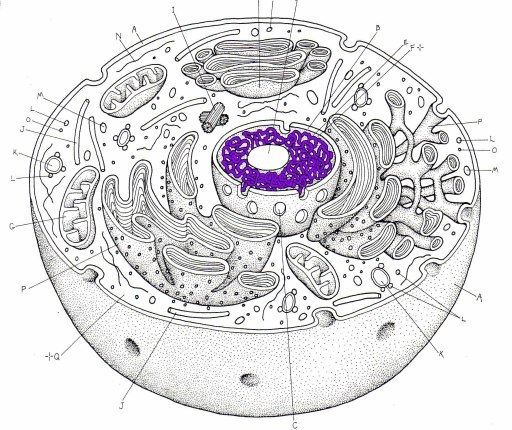
What kind of cell is in the diagram?
Eukaryotic
Prokaryotic
Which of the following distinguishes prokaryotic and eukaryotic cells?
The presence of a nucleus
The presence of ribosomes
The presence of a cell wall
The presence of genetic material
Aaniyah is examining a cell under a microscope. She notices a mitochondria inside. Which of the following is a conclusion she might draw?
She is examining a eukaryotic cell.
She is examining a prokaryotic cell.
This cell could be either eukaryotic or prokaryotic.
Which cell type has the highest degree of complexity?
Archaebacteria
Eubacteria
Eukaryotes
Prokaryotes
Zaquan is examining a cell under a microscope. He notices a ribosome inside. Which of the following is a conclusion he might draw?
He is examining a eukaryotic cell.
He is examining a prokaryotic cell.
This cell could be either eukaryotic or prokaryotic.
Which statement is an accurate comparison of prokaryotic and eukaryotic cells?
Prokaryotic cells have membrane-bound organelles and eukaryotic cells do not have membrane-bound organelles
Prokaryotic cells and eukaryotic cells reproduce by meiosis
Prokaryotic cells have a lower degree of complexity than eukaryotic cells.
Prokaryotic cells are generally larger than eukaryotic cells.
Check all of the following that are characteristics of a prokaryotic cell? (pick 3)
examples are bacteria
examples are plant and animal cells
small, simple with NO membrane bound organelles
has a nucleus
does NOT have a nucleus
Check all of the following that are characteristics of an eukaryotic cells. (pick 3)
examples are bacteria
examples are plant and animal cells
small, simple with NO membrane bound organelles
has a nucleus
larger and more complex with membrane bound organelles
Which of these organelles are found in ALL living cells. (pick 3)
cytoplasm
cell membrane
nucleus
ribosomes
cell wall
Which of the following is a prokaryote
plant cell
animal cell
bacterium cell
fungi cell
protists cell
Which of the following is NOT an eukaryotic cell
plant cell
animal cell
bacterium cell
fungi cell
protists cell
Which type of cell does the cell theory apply to?
eukaryotic cells only
prokaryotic cells only
both prokaryotic and eukaryotic cells
Where would you find the DNA in a prokaryotic cell?
in the nucleus
in the cytoplasm
in the cell membrane
prokaryotic cells do NOT have DNA

Which cell in the diagram is an Eukaryotic cell?
the smaller one on the left
the larger one on the right
both are eukaryotic
neither are eukaryotic
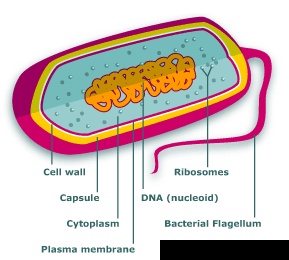
A fossilized cell is discovered, and evidence suggests it reproduced on its own and had DNA, but a membrane did not enclose its DNA. Which type of organism would this most likely be?
Virus
Fungus
Prokaryote
Eukaryote
Which cell type has the highest degree of complexity?
Archaebacteria
Eubacteria
Eukaryotes
Prokaryotes
Zaquan is examining a cell under a microscope. He notices a ribosome inside. Which of the following is a conclusion he might draw?
He is examining a eukaryotic cell.
He is examining a prokaryotic cell.
This cell could be either eukaryotic or prokaryotic.
Which statement is an accurate comparison of prokaryotic and eukaryotic cells?
Prokaryotic cells have membrane-bound organelles and eukaryotic cells do not have membrane-bound organelles
Prokaryotic cells and eukaryotic cells reproduce by meiosis
Prokaryotic cells have a lower degree of complexity than eukaryotic cells.
Prokaryotic cells are generally larger than eukaryotic cells.

Bacteria is what kind of cell?
Eukaryotic
Prokaryotic

What kind of cells are these?
Eukaryotic
Prokaryotic


