
 Worksheets
AP I Exam #1 Review
Total questions: 75
Worksheet time: 45mins
Name
Class
Date
1.
Homeostasis in the human body is often maintained by a:
a)
neutral feedback loop
b)
solar feedback loop
c)
positive feedback loop
d)
negative feedback loop
2.
What does homeostasis mean?
a)
Temperature
b)
Water
c)
Cells
d)
Steady state
3.
What is the atomic number?
a)
the number of protons
b)
the number of protons and neutrons
c)
the number of neutrons
d)
the number of protons and electrons
4.
What is the atomic weight?
a)
the number of protons
b)
the number of protons and neutrons
c)
the number of neutrons
d)
the number of protons and electrons
5.
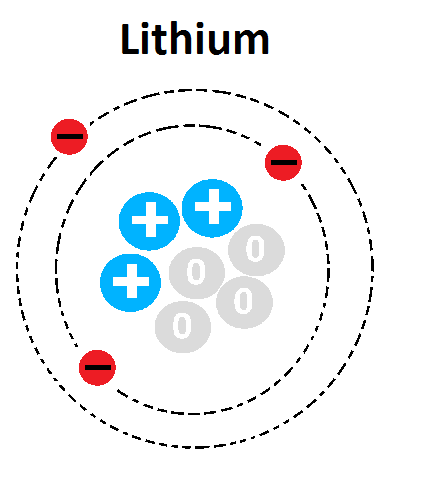
What is the atomic number of this atom?
a)
1
b)
3
c)
4
d)
7
6.

What is the atomic weight of this nucleus?
a)
1
b)
3
c)
4
d)
7
7.
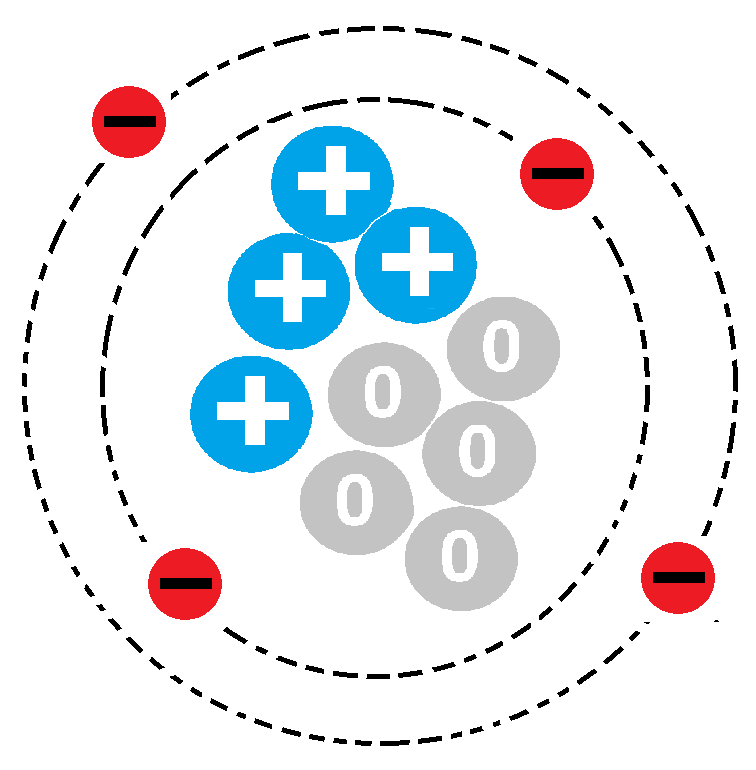
What is the atomic number of this atom?
a)
4
b)
5
c)
9
d)
none of the above
8.

What is the atomic weight of this atom?
a)
9
b)
10
c)
19
d)
27
9.

The heart is contained within this cavity (most specific)
a)
mediastinum
b)
pericardial
c)
pleural
d)
thoracic
10.
The ___ separates the two sections of the ventral cavity
a)
heart
b)
lungs
c)
spleen
d)
diaphragm
11.
divides the body into upper and lower halves
a)
ventral
b)
medial
c)
transverse plane
d)
mid-sagital plane
12.
refers to the middle
a)
lateral
b)
medial
c)
caudal
d)
proximal
13.
divides body into right and left halves
a)
sagittal plane
b)
mid-sagittal plane
c)
medial
d)
transverse plane
14.
below the waistline (inferior = below)
a)
medial
b)
distal
c)
caudal
d)
cephalad
15.
divides the body into anterior (front) and posterior (back)
a)
frontal (or coronal) plane
b)
sagittal plane
c)
transverse plane
d)
ipsilateral
16.
body standing, arms at each side, with palms facing forward and the feet side by side
a)
transverse plane
b)
mediolateral
c)
anatomical position
d)
proximal
17.
Contains the esophagus, trachea, lungs, heart and aortaPleural cavity: surrounds the lungs
Mediastinum: area between the lungs, containing the heart, aorta, trachea, esophagus and thymus gland
Mediastinum: area between the lungs, containing the heart, aorta, trachea, esophagus and thymus gland
a)
abdominal cavity
b)
thoracic cavity
c)
cranial cavity
d)
spinal cavity
18.
Consists of the spinal column connecting to the cranial cavityThe space within the spinal column (backbone) containing the spinal cord
a)
pleural cavity
b)
spinal cavity
c)
thoracic cavity
d)
abdominal cavity
19.
Space within the skull containing the brain
a)
pleural cavity
b)
cranial cavity
c)
pelvic cavity
d)
thoracic cavity
20.
Contains the stomach, intestines, liver, spleen, gallbladder, pancreas, ureters and kidneys
a)
abdominal cavity
b)
pleural cavity
c)
pelvic cavity
d)
cranial cavity
21.
Contains the urinary bladder, urethra, uterus and vagina, part of the large intestine and the rectum
a)
pelvic cavity
b)
abdominal cavity
c)
pleural cavity
d)
cranial cavity
22.
refers to being away from the point of origin
a)
ventral
b)
medial
c)
lateral
d)
distal
23.
refers to the point nearest to the point of origin
a)
caudal
b)
distal
c)
medial
d)
proximal
24.
The prefix meaning outside is
a)
ecto-
b)
hypo-
c)
peri-
d)
infra-
25.
The prefix meaning within is
a)
supra-
b)
meta-
c)
intra-
d)
inter-
26.
The prefix meaning many is
a)
poly-
b)
mega-
c)
mono-
d)
post-
27.
The suffix meaning sensation is
a)
-form
b)
-gen
c)
-esthesia
d)
-paresis
28.
homo-
a)
one
b)
different
c)
same
d)
good
29.
-algia
a)
dissolution
b)
inflammation
c)
painful condition
d)
pertaining to
30.
supra-
a)
before,in front of
b)
backward, behind
c)
above, excessive
d)
again, backward
31.
A group of tissues that perform a similar function is called_____. (Examples include the heart, lungs or stomach)
a)
cells
b)
tissues
c)
organs
d)
organ system
32.
In order from smallest to largest, what are the five levels of organization in the body?
a)
organism, organ system, organ, tissue, cell
b)
cell, organ, organ system, tissue, organism
c)
cell, tissue, organ, organ system, organism
d)
cell, tissue, organ system, organ, organism
33.
Chemicals that carry out a wide variety of chemical processes that support life
a)
Excretion
b)
Responsiveness
c)
Metabolism
d)
Growth
34.
Regulates rates of metabolic reactions
a)
Water
b)
Food
c)
Heat
d)
Pressure
35.

What does the nucleus of an atom contain?
a)
Electrons & Neutrons
b)
Protons & Neutrons
c)
Neutrinos & Positrons
d)
Protons only
36.
What sub-atomic particle is this?
In the Nucleus
Positively Charged
In the Nucleus
Positively Charged
a)
proton
b)
electron
c)
neutron
d)
ion
37.

An atom that has 13 protons and 13 electrons, would have how many electrons in the outer most shell?
a)
3 electrons
b)
5 electrons
c)
2 electrons
d)
4 electrons
38.
What sub-atomic particle is this?
Outside the Nucleus
Negatively Charged
Outside the Nucleus
Negatively Charged
a)
proton
b)
electron
c)
neutron
d)
ion
39.
Which of the following bulk elements is the most abundant element in the human body?
a)
Nitrogen
b)
Carbon
c)
Oxygen
d)
Hydrogen
40.

An atom that has 18 protons and 18 electrons, would have how many electrons in the outer most shell?
a)
7 electrons
b)
8 electrons
c)
9 electrons
d)
10 electrons
41.

An atom that has 9 protons and 9 electrons, is more likely to:
a)
gain 1 electron
b)
lose 1 electron
c)
gain 2 electrons
d)
stay the same
42.
All chemical bonds involve two atoms sharing electrons.
a)
True
b)
False
43.
When an atom gains or loses an electron, it is known as a....
a)
Isotope
b)
Ion
c)
protein
d)
enzyme
44.
A chemical bond formed between shared atoms.
a)
chemical bond
b)
covalent bond
c)
oxidation #
d)
ionic bond
45.
A positively or negatively charged particle.
a)
covalent bond
b)
compound
c)
ion
d)
chemical bond
46.
Tells what elements a compound contains and the number of those atoms.
a)
compound
b)
ion
c)
molecular formula
d)
ionic bond
47.
What is the name for an ion with a positive charge?
a)
Anion
b)
Cation
c)
Dogion
d)
Ion
48.
What is the name for an ion with a negative charge?
a)
Anion
b)
Cation
c)
Dogion
d)
Ion
49.

What kind of bond forms from transfer of electrons?
a)
Chemical bon
b)
Ionic bond
c)
Covalent bond
d)
Electron bond
50.
What does a pH scale do?
a)
Tells if a substance is an acid or base
b)
Measures the strength and weakness of acids and bases
c)
Both statements are correct
d)
Both statements are false
51.
Values from 0-14 that determine the acidity of a solution
a)
Molarity
b)
Electronegativity
c)
pH scale
d)
Solubility
52.
OH- is called the:
a)
hydrate ion
b)
hydrogen ion
c)
hydronium ion
d)
hydroxide ion
53.
A solution with a pH of 7 is________
a)
increasing
b)
neutral
c)
decreasing
d)
apple juice
54.

Which food is the most acidic?
a)
bananas
b)
lemon juice
c)
orange juice
55.
Bases release ____________ ions when they break down or dissociate.
a)
Hydrogen (H+)
b)
Hydroxide (OH-)
c)
Chlorine (Cl-)
d)
no
56.
Acids produce _________ ions when they break down or dissocciate.
a)
Hydroxide (OH-)
b)
Water
c)
Chlorine (Cl-)
d)
Hydrogen (H+)
57.
Produces water as a by-product
a)
Dehydration synthesis
b)
Hydolysis
58.
Breaks up polymers, forming monomers
a)
dehydration synthesis
b)
hydrolysis
59.
Connects monomers to form a polymer
a)
Dehydration synthesis
b)
hydrolysis
60.
What elements make up carbohydrates?
a)
Carbon, hydrogen, nitrogen, oxygen
b)
sulfur, carbon, hydrogen
c)
glucose and fructose
d)
carbon, hydrogen, oxygen
61.
Which nutrient provides the body with the most amount of energy?
a)
Fats
b)
Carbohydrates
c)
Protein
d)
Fiber
62.

What type of carbohydrate is this?
a)
polysaccharide
b)
disaccharide
c)
monosaccharide
d)
it isn't a carbohydrate
63.
The 3 categories of carbohydrates are:
a)
Monosaccharide, disaccharide, polysaccharide
b)
glucose, fructose, galatose
c)
starch, cellulose, chitin
d)
There are no categories of carbohydrates
64.
A simple sugar is referred to as a:
a)
monosaccharides
b)
disaccharides
c)
polysaccharides
d)
none of these
65.
Lactose is an example of a:
a)
monosaccharide
b)
disaccharide
c)
polysaccharide
d)
ion
66.
A saturated fat is completely covered in:
a)
hydrogen
b)
carbon
c)
oxygen
d)
nitrogen
67.
A saturated fat is completely covered in:
a)
hydrogen
b)
carbon
c)
oxygen
d)
nitrogen
68.
A triglyceride is composed of:
a)
1 fatty acid and a glycerol
b)
2 fatty acids and a glycerol
c)
3 fatty acids and a glycerol
d)
4 fatty acids and a glycerol
69.
Proteins are made of smaller units called:
a)
lipids
b)
monosaccharides
c)
amino acids
d)
fatty acids
70.
The structure of a protein that is made from 1 long polypeptide chain and has a three-dimensional shape.
a)
Primary structure
b)
Secondary structure
c)
Tertiary structure
d)
Quaternary structure
71.
Nucleic acids are made from smaller units called:
a)
amino acids
b)
ribonucleic acid
c)
nucleotides
d)
disaccharides
72.
Which of the following nitrogenous bases is not found in DNA but is found in RNA?
a)
Guanine
b)
Cytosine
c)
Uracil
d)
Thymine
73.
Unit that consists of a phosphate group, 5 carbon sugar and a nitrogenous base
a)
Polysaccharide
b)
Nucleotide
c)
Protein
d)
Polypeptide
74.
Which of the following is an example of a(n) polysaccharide?
a)
Glucose
b)
Sucrose
c)
Glycogen
d)
Deoxyribose
75.
Which structure of a protein resembles a string of beads?
a)
Primary structure
b)
Secondary structure
c)
Tertiary structure
d)
Quarternary structure
100 %

