
 Worksheets
Pre-AP Biology Practice Unit 3 Test
Total questions: 70
Worksheet time: 55mins
Name
Class
Date
1.
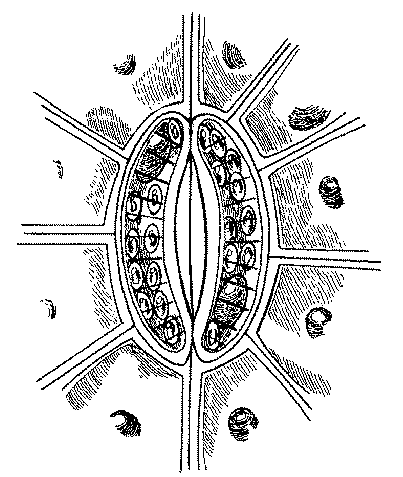
How does the stomata work?
a)
It helps transport sugars to the root cells.
b)
It helps to transport nutrients to the roots.
c)
It helps to exchange gases and water.
d)
It helps to conduct fermentation in the leaf.
2.

This organelle is found in plants and helps them to capture sunlight.
a)
Chlorophyll
b)
Chloroplast
c)
Vacuole
d)
Mitochondria
3.
Mike has four aquatic plants of the same size and the same species. He submerges the plants in a separate beaker filled with 200 ml of water. She then sets each beaker under a different intensity of light. Mike observes that, of the four plants, the plant in the beaker under the most intense light gives off the most gas bubbles in a 20 minute period.
Which of the following statements best explains Mike’s observations?
Which of the following statements best explains Mike’s observations?
a)
Cells decompose most quickly under the most intense light.
b)
Water evaporates from plants faster under the most intense light.
c)
Photosynthesis occurs at the highest rate under the most intense light.
d)
Gases in the leaves of plants expand most under the most intense light
4.
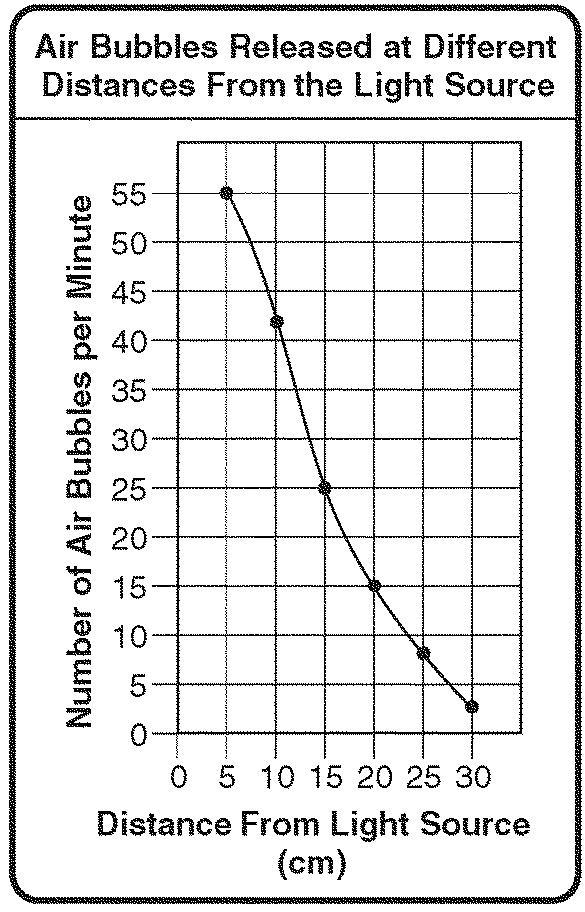
Why are there less air bubbles as the plant is place further away from the light source
a)
because cellular respiration decreases when there is less light
b)
because the light independent reaction decreases when there is less light
c)
because photosynthesis decreases as a plant is moved further away from a light source
d)
the wavelength increases as a plant is placed further away from a light source
5.
What is the correct equation for cellular respiration?
a)
6O2 + C6H12O6 -> 6CO2 + 6H2O + Energy
b)
6O2 + C6H12O6 + Energy -> 6CO2 + 6H2O
c)
6CO2 + 6H2O -> 6O2 + C6H12O6 + Energy
d)
6CO2 + 6H2O + Energy -> 6O2 + C6H12O6
6.
Chlorophyll is green because
a)
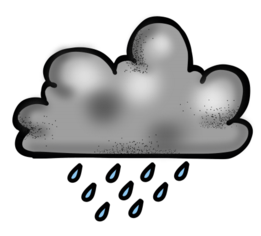
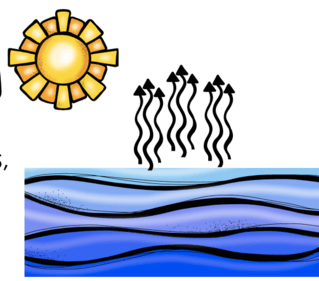
it absorbs green wavelengths of light
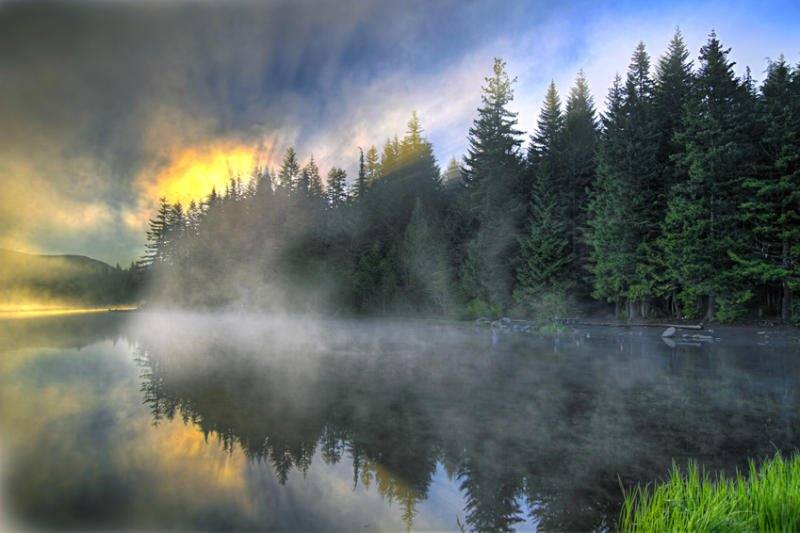
b)
it absorbs blue and yellow wavelengths which make green
c)
it transmits light and causes an optical illusion
d)
it reflects green wavelengths of light
7.
All organic molecules contain carbon that ultimately can be traced back in the food chain to:
a)
the bodies of heterotrophs
b)
carbon dioxibe from the atmosphere
c)
water absorbed by plants
d)
the carbon that comes from the sun
8.
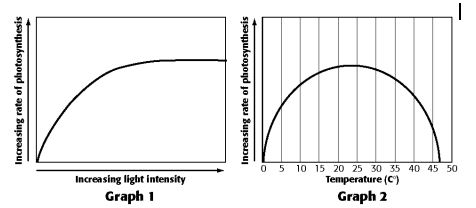
Graph 1 demonstrates that the rate of photosynthesis
a)
decreases in response to increasing light intensity
b)
increases indefinitely in response to increasing light intensity
c)
increases in response to increasing light intensity, but only to a certain point
d)
is unaffected by changes in light intensity
9.
What happens to light energy when it is used by plants in photosynthesis?
a)
its turned into glucose
b)
its turned into Carbon dioxcide
c)
its turned into air
10.
What is the equation for photosynthesis?
a)
6CO2 + 6H20 ----> C6H12O6 + 6O2
b)
6CO2 -----> C6H12O6
11.
Where do the light and dark reactions happen in the plant?
a)
in the mitochondria
b)
in the chloroplast
c)
in the roots
d)
in the stem
12.
The carbon cycle circulates carbon dioxide and oxygen throughout an ecosystem. Which statement below best explains the role of photosynthesis and cellular respiration in the carbon cycle?
a)
Animals take CO2 out of the atmosphere through the process of photosynthesis and plants release CO2 back into the atmosphere through the process of cellular respiration.
b)
Animals take O2 out of the atmosphere through the process of cellular respiration and release O2 back into the atmosphere through the process of cellular respiration.
c)
Plants take O2 out of the atmosphere through the process of photosynthesis and animals release CO2 into the atmosphere through the process of cellular respiration.
d)
Plants take CO2 out of the atmosphere through the process of photosynthesis and animals release CO2 back into the atmosphere through the process of cellular respiration.
13.
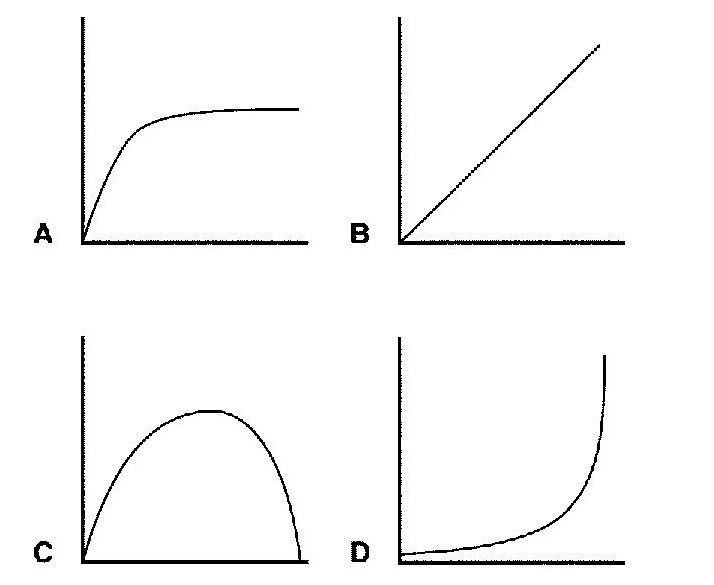
Which of the graphs represents the effect of light intensity on the rate of photosynthesis?
a)
B.
b)
A.
c)
D.
d)
C.
14.
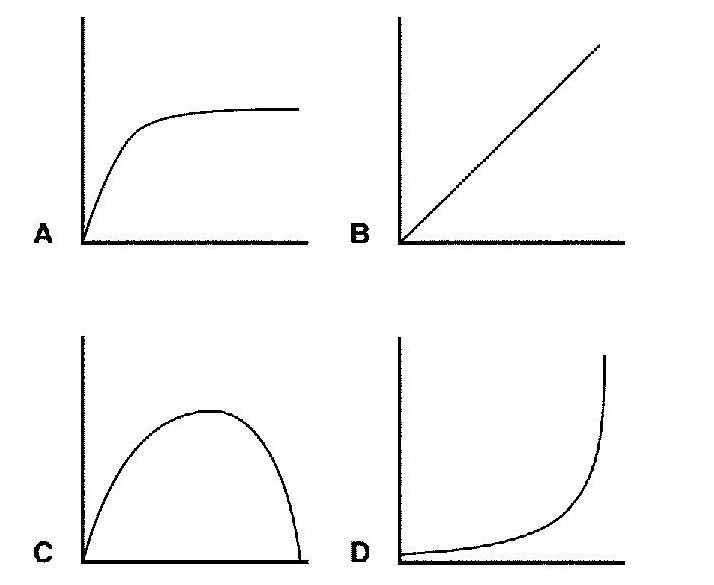
Which of the graphs represents the effect of carbon dioxide levels on the rate of photosynthesis?
a)
D.
b)
B.
c)
A.
d)
C.
15.
What are the products of cellular respiration?
a)
Glucose and water
b)
Glucose and carbon dioxide
c)
Oxygen and water
d)
Carbon dioxide and water
16.
During photosynthesis in plants, what is the source of the carbon in the sugar molecule (C6H12O6) produced?
a)
carbon particles in the soil
b)
carbon dioxide in the air
c)
carbon monoxide in the air
d)
carbon particles in water
17.
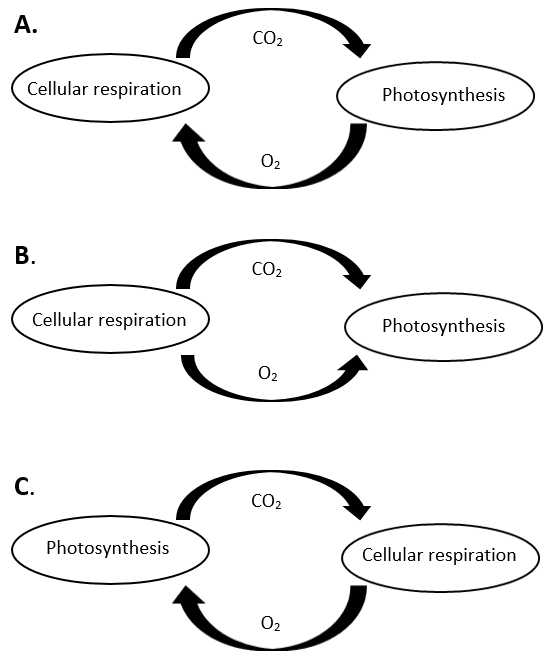
Which diagram accurately represents the use of the gases from both cellular respiration and photosynthesis?
a)
C.
b)
B.
c)
A.
18.
Which of the following is the correct equation for photosynthesis?
a)
6O2 + C6H12O6 + Energy → 6CO2 + 6H2O
b)
6O2 + C6H12O6 → 6CO2 + 6H2O + Energy
c)
6CO2 + 6H2O + Energy → 6O2 + C6H12O6
d)
6CO2 + 6H2O → 6O2 + C6H12O6 + Energy
19.
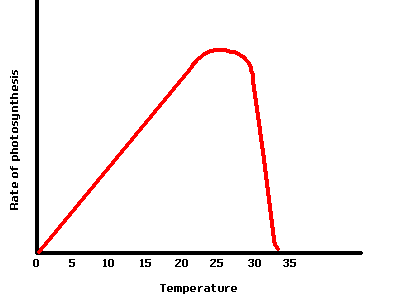
The diagram represents the effects of temperature on the rate of photosynthesis of the Elodea plant. Which statement best explains the results of the study?
a)
As temperature increases, the rate of photosynthesis constantly increases.
b)
As temperature increases, the rate of carbon dioxide bubbles constantly increases.
c)
The rate of photosynthesis increases as temperature increases up to around 25⁰ C and then decreases.
d)
The rate of carbon dioxide bubbles increases as temperature increases up to around 25⁰ C and then decreases.
20.
Which of the following is the correct equation for cellular respiration?
a)
6CO2 + 6H2O → 6O2 + C6H12O6 + Energy
b)
6O2 + C6H12O6 → 6CO2 + 6H2O + Energy
c)
6CO2 + 6H2O + Energy → 6O2 + C6H12O6
d)
6O2 + C6H12O6 + Energy → 6CO2 + 6H2O
21.
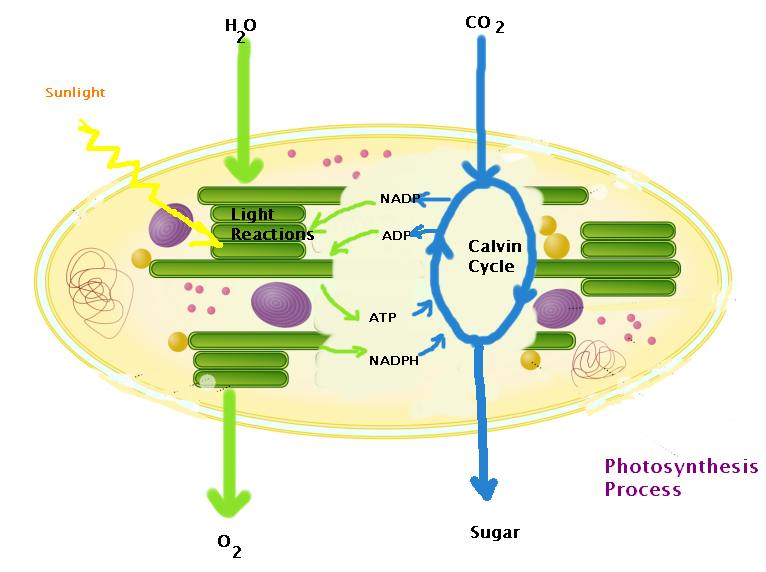
What is the organelle depicted in the diagram?
a)
chloroplast
b)
mitochondria
c)
nucleus
d)
vacuole
22.
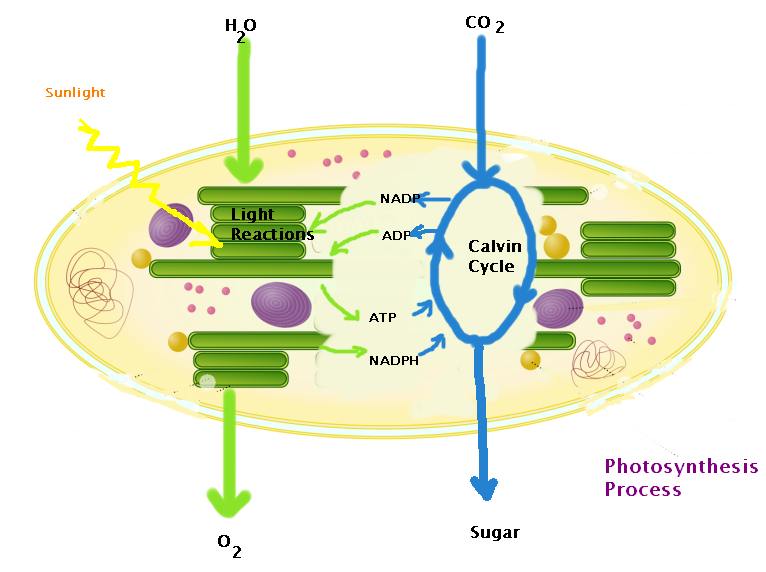
What is the process called which is depicted by the diagram?
a)
cellular respiration
b)
photosynthesis
c)
alcoholic fermentation
d)
anaerobic respiration
23.
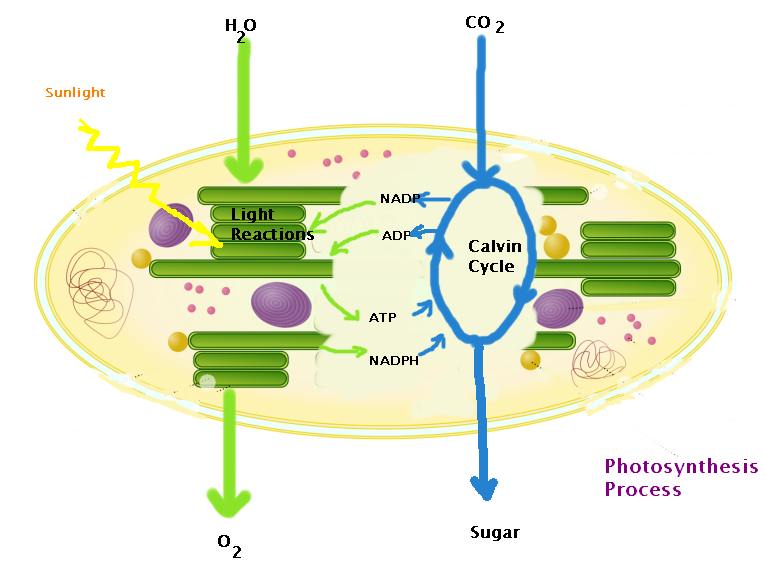
What are the products of the process shown in the diagram?
a)
water and sugars
b)
water and carbon dioxide
c)
oxygen and water
d)
oxygen and sugars
24.
Alcoholic fermentation and lactic acid fermentation produce 2 ATP molecules. How many are produced through cellular respiration?
a)
4 ATP
b)
20 ATP
c)
26 ATP
d)
36 ATP
25.
What does the term anaerobic respiration refer to?
a)
A process that takes place with no oxygen present
b)
A process that takes place with oxygen present
c)
A process that takes place with no carbon dioxide present
d)
A process that takes place only in yeast cells
26.
How could a scientist measure the rate of cellular respiration of a snail in water with only her eyes?
a)
She would count the carbon dioxide bubbles release into the water
b)
She would count the bubbles of oxygen released into the water
c)
She would look for sugar molecules in the water.
d)
She would use an indicator to measure the increase of oxygen in the water
27.
When investigating the effect of light intensity on the rate of photosynthesis, what variables should be kept the same
a)
Temperature and carbon dioxide concentration
b)
Temperature and light intensity
c)
Light intensity and carbon dioxide concentration
d)
All of the above
28.
why do we need to respire?
a)
to release energy from glucose
b)
to create energy
c)
to breathe
d)
to release energy from oxygen
29.
how is anaerobic respiration different to aerobic respiration?
a)
it doesn't require glucose
b)
it happens faster
c)
it doesn't require oxygen
d)
it takes longer
30.
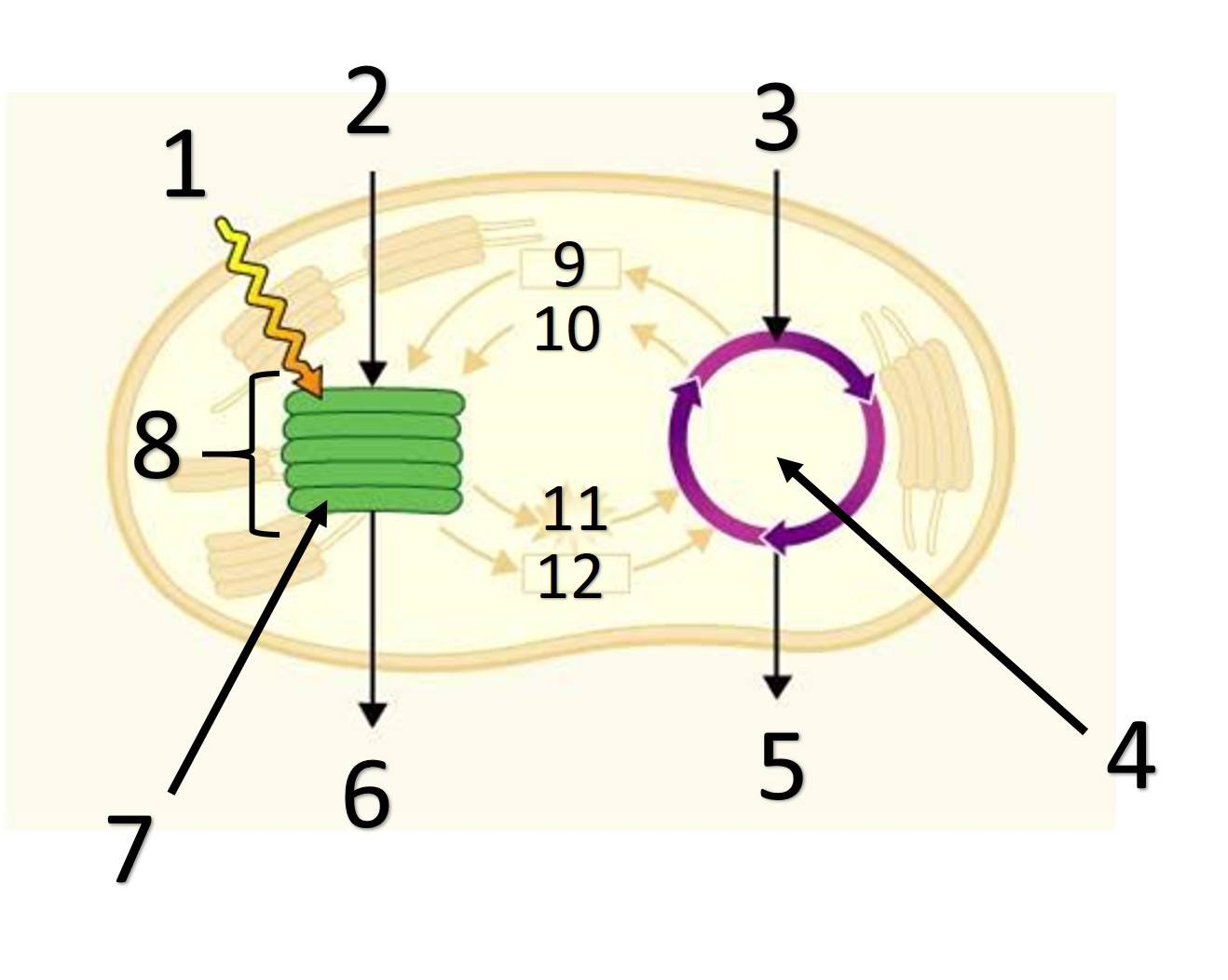
"2" represents which reactant of photosynthesis?
a)
carbon dioxide
b)
glucose
c)
water
d)
oxygen
31.
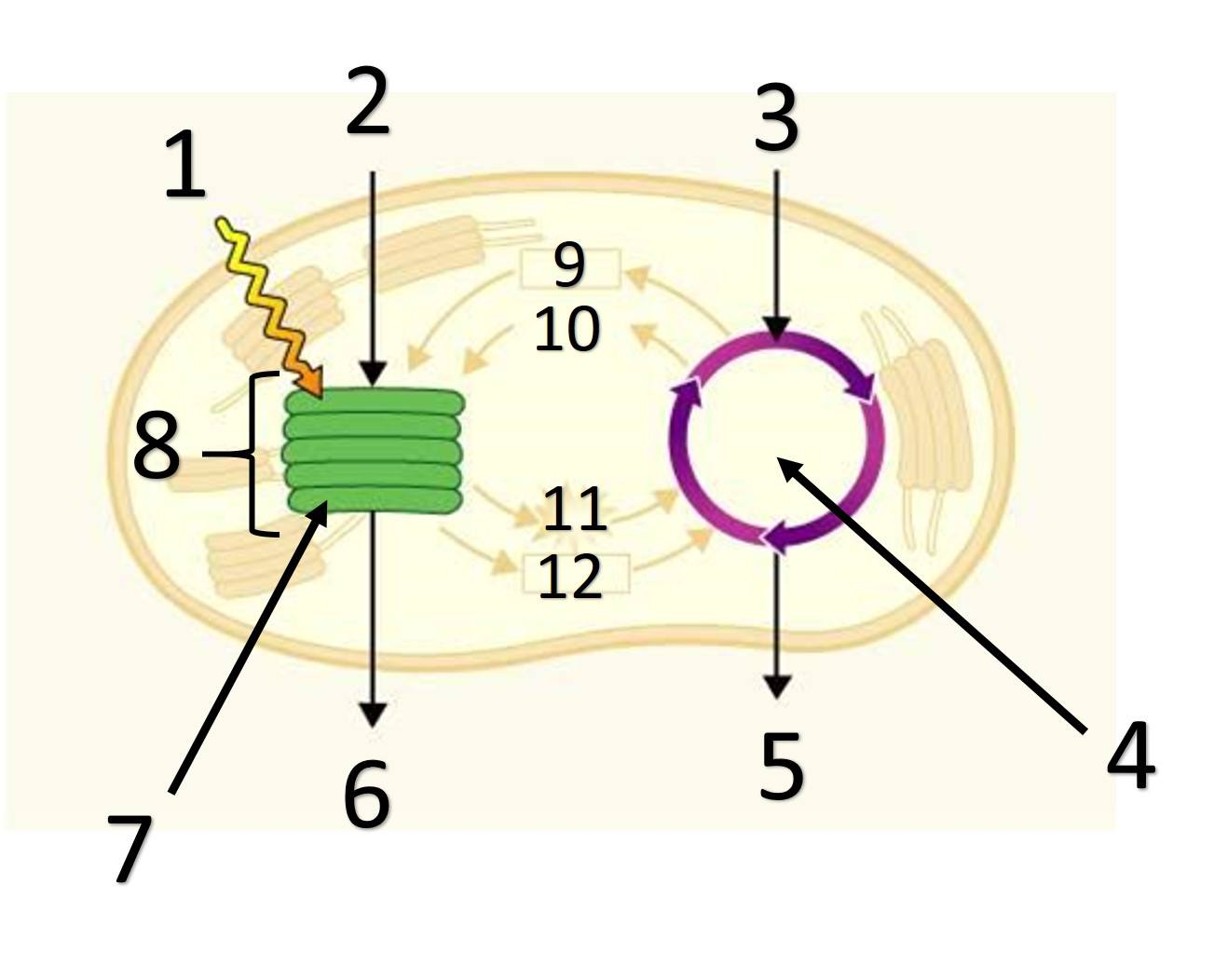
"6" represents which product of photosynthesis?
a)
carbon dioxide
b)
glucose
c)
water
d)
oxygen
32.
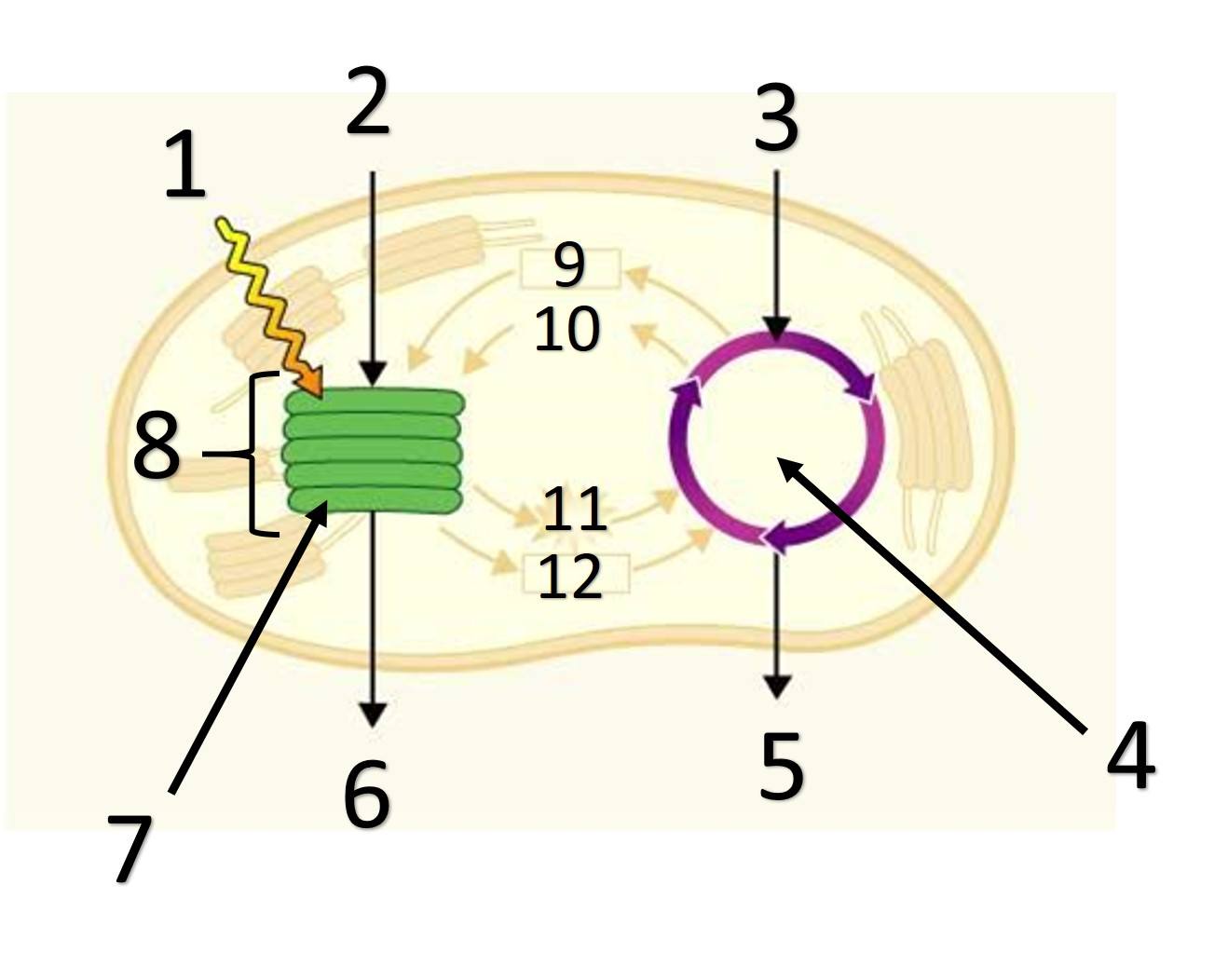
"5" represents which product of photosynthesis?
a)
carbon dioxide
b)
glucose
c)
water
d)
oxygen
33.
The worst thing you can do for the health of a green-leafed plant is to illuminate it with only
a)
red light
b)
green light
c)
blue light
d)
all are equally bad
34.
Which wavelengths of light are absorbed by chlorophyll?
a)
yellow and red
b)
red
c)
blue and yellow
d)
red and blue
35.
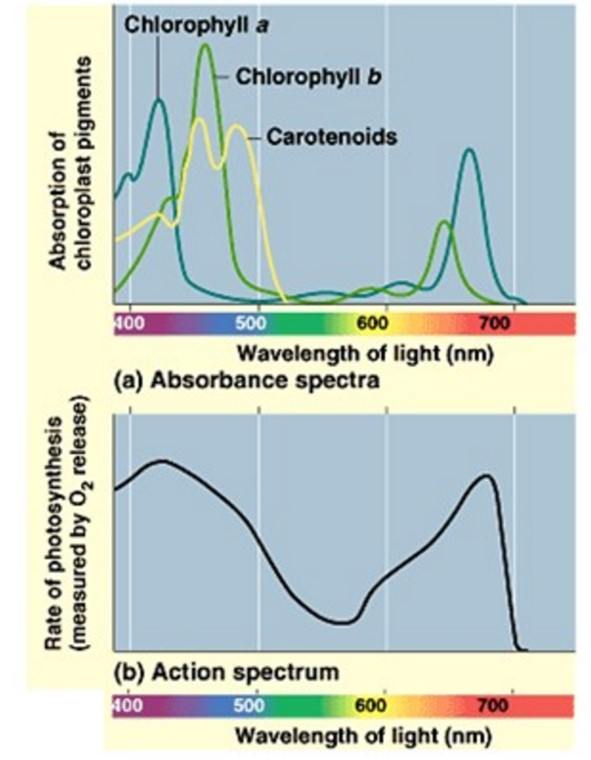
What wavelengths of light does chlorophyll reflect?
a)
blue
b)
yellow
c)
red
d)
green
36.
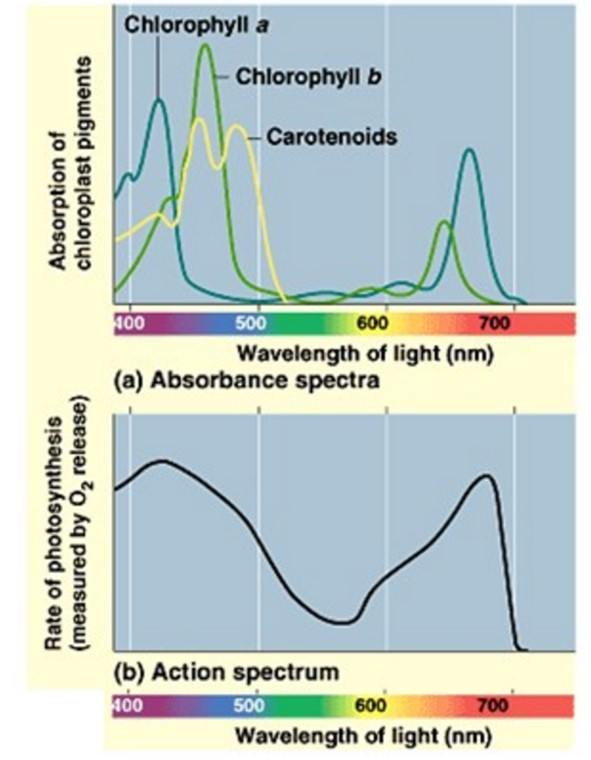
According to the graph, which pair of colors of light has the highest rate of photosynthesis?
a)
green and yellow
b)
violet and yellow
c)
red and violet
d)
green and orange
37.
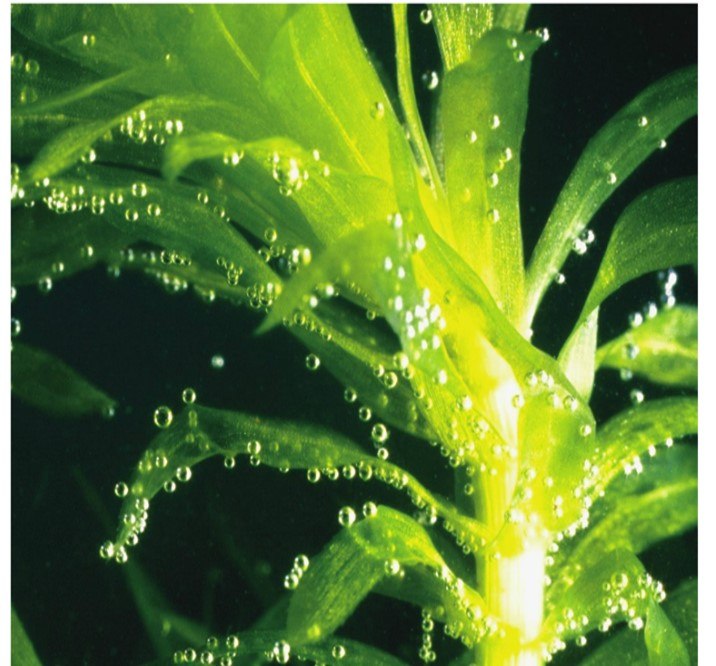
If this was a plant in a lake, what would these bubbles be composed of?
a)
oxygen gas
b)
carbon dioxide gas
c)
glucose
d)
water
38.
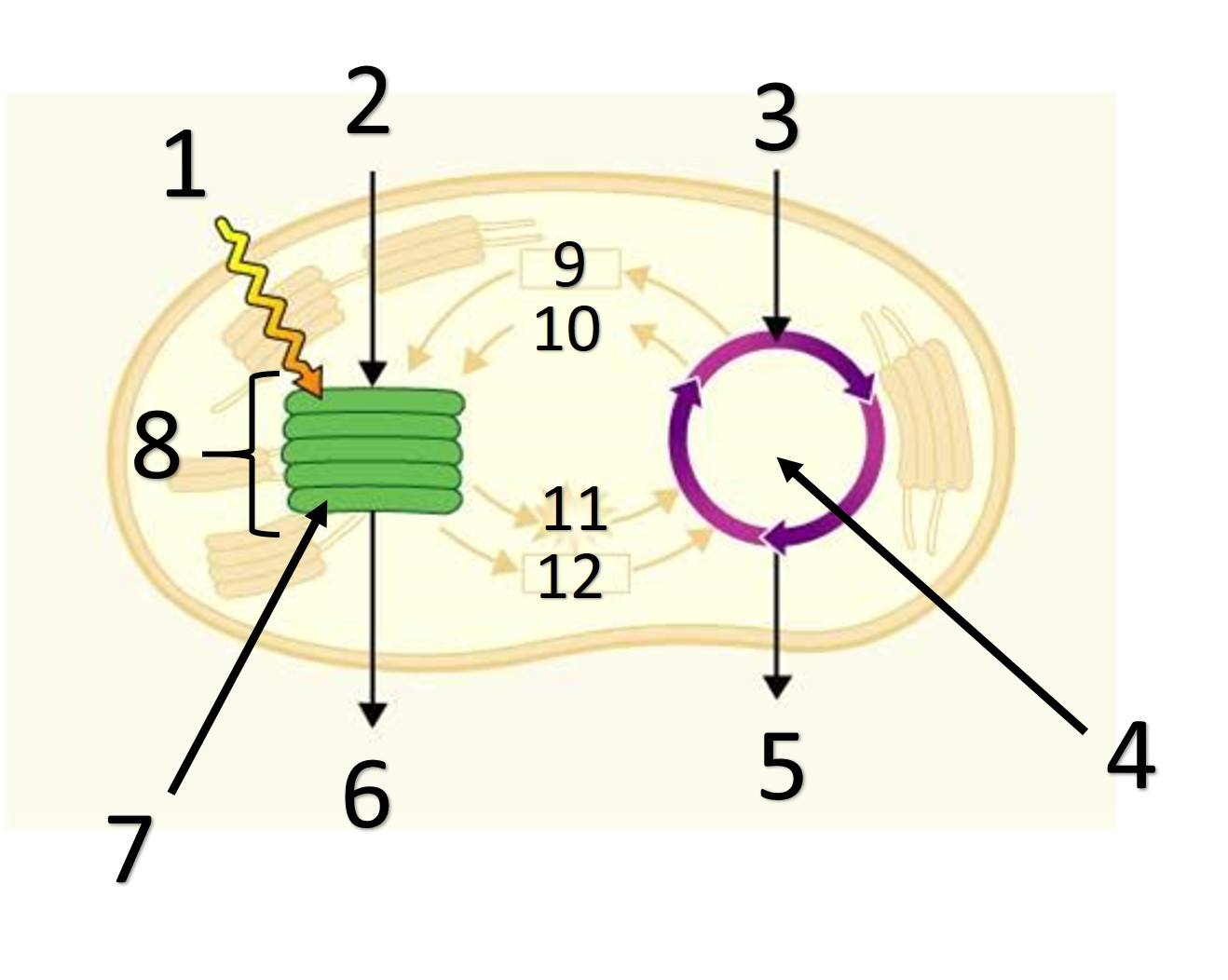
Which process occurs in the area marked "4"?
a)
stroma
b)
thylakoid
c)
light-dependent reaction
d)
light-independent reaction
39.
Where does the light independent stage of photosynthesis occur?
a)
grana
b)
stroma
c)
thylakoid membranes
d)
cytosol
40.
Include sugars (ex. glucose) and starches
a)
Carbohydrates
b)
Lipids
c)
Proteins
d)
Nucleic Acids
41.
Provide quick energy and serve as structural components of plant cells
a)
Carbohydrates
b)
Lipids
c)
Proteins
d)
Nucleic Acids
42.
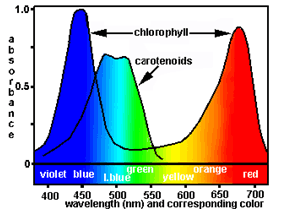
What is one function of the other pigments besides chlorophyll, in the chloroplast?
a)
to block damaging wavelengths of light
b)
to absorb different wavelengths than the chloroplasts
c)
to provide different colors to the leaves
d)
to transfer energy to a separate photosystem beside the one using chlorophyll a and b.
43.
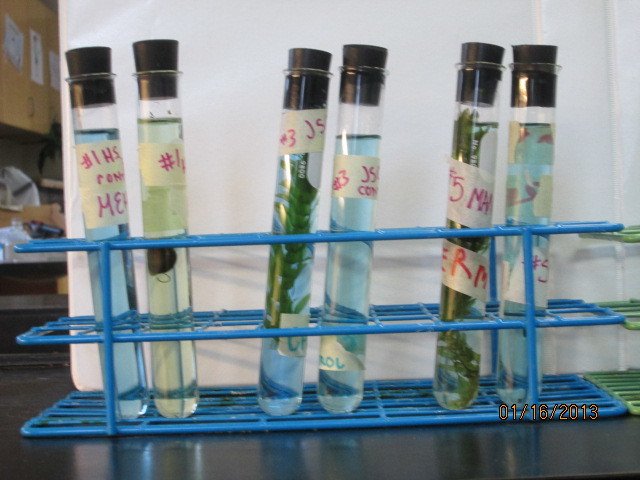
In the snail and elodea experiment, which organisms were putting carbon dioxide into the water?
a)
snails
b)
elodea
c)
snails and elodea
d)
neither
44.
In the snail and elodea experiment, which organisms were taking carbon dioxide out of the water?
a)
snails
b)
elodea
c)
snails and elodea
d)
neither
45.
How were the results different when the snails and elodea were put in the dark?
a)
carbon dioxide built up because no photosynthesis could occur.
b)
oxygen built up because cellular respiration slowed down.
c)
carbon dioxide was removed because cellular respiration increased
d)
oxygen was added because cellular respiration was increased
46.
Where do the light-independent reactions occur?
a)
thylakoid
b)
stroma
c)
lumen
d)
mitochondria
47.
It forms a boundary between the inside of the cell and the outside of the cell.
a)
Cell Membrane
b)
Lipid Cleric Layer
c)
Membrane Gate
d)
Protein Receptors
48.
Controls the passage of materials inside and outside of the cell.
a)
Cell Membrane
b)
Lipid Cleric Layer
c)
Membrane Gate
d)
Protein Receptors
49.
How can photosynthesis be related to cellular respiration?
a)
What's produced (made) by one is needed (the reactants) for the other
b)
They both produce the same products
c)
They both have the same reactants (need the same things)
d)
These 2 processes have nothing in common
50.
What are the products of photosynthesis?
a)
Carbon dioxide and water
b)
Carbon dioxide and oxygen
c)
Glucose and oxygen
d)
Glucose and water
51.
The ability to keep producing energy even when no oxygen is present is called
a)
Photosynthesis
b)
Glycolysis
c)
Fermentation
d)
Oxidation
52.
Besides alcohol, What is the product of alcoholic fermentation?
a)
Glucose
b)
Carbon dioxide
c)
Oxygen
d)
Pyruvic acid
53.
This process does not make ATP alone, but it allows glycolysis to continue making ATP when oxygen is unavailable for cellular respiration.
a)
Fermentation
b)
Electron Transport Chain
c)
Glycolysis
d)
Kreb's cycle
54.
What is a disadvantage of fermentation?
a)
It produces too much ATP
b)
It only produces 2 ATP
c)
It occurs in the absence of oxygen
d)
It is only for quick bursts of energy
55.
The waste products of alcoholic fermentation are ethanol and
a)
CO2
b)
pyruvate
c)
citrate
d)
ADP
56.
A student exposed two plants to only red light and two plants to only green light. Which plants should grow better?
a)
those under the red light
b)
those under the green light
c)
both will grow the same amount
d)
neither will grow
57.
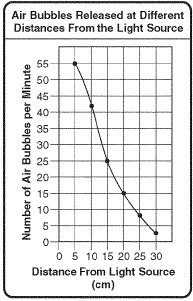
Looking at the graph, what is the dependent variable?
a)
distance from light source
b)
number of air bubbles per minute
c)
light source
d)
color of light
58.
A student poured a solution of bromthymol blue indicator into two test tubes (BTB turns yellow in the presence of carbon dioxide). Then, he placed an aquatic plant in the test tubes. He placed a stopper on each test tube and placed them all in the dark for 24 hours. What color would you expect the solution to be after 24 hours in the dark?
a)
blue
b)
green
c)
yellow
59.
A student poured a solution of bromthymol blue indicator into two test tubes (BTB turns yellow in the presence of carbon dioxide). Then, he placed an aquatic plant in the test tubes. He placed a stopper on each test tube and placed them all in the dark for 24 hours. He then put one of the tubes in the light for 24 hours. What color would you expect the solution to be after 24 hours of light?
a)
blue
b)
green
c)
yellow
60.

What is it called when plants give off water vapor as a waste product?
a)
condensation
b)
evaporation
c)
sublimation
d)
transpiration
61.
What is it called when plants give off water vapor as a waste product?
a)
condensation
b)
evaporation
c)
sublimation
d)
transpiration
62.
What follows evaporation during the water cycle? How does this occur?
a)
Water evaporates into water vapor
b)
Water vapor condenses and forms a cloud
c)
Water precipitates to the ground
d)
Water runs down into the hydrosphere
63.
What happens after groundwater at the very end/beginning of the water cycle?
a)
Evaporation
b)
Transpiration
c)
Condensation
d)
Groundwater
64.
What part of the water cycle does this picture show?
a)
condensation
b)
precipitation
c)
evaporation
65.
What part of the water cycle does this picture show?
a)
condensation
b)
precipitation
c)
evaporation
66.
Transpiration is a type of ______.
a)
Liquidation
b)
Condensation
c)
Evaporation
67.
What cycle is transpiration a part of?
a)
The water cycle
b)
The life cycle
c)
The bicycle
68.
Many years of deforestation (cutting down our trees) have occurred in the Amazon rainforest. What can be a problem for the environment if this trend continues.
a)
Less oxygen will be produced
b)
Carbon dioxide will be reduced
c)
Water intake would increase
d)
Less sunlight would penetrate the area
69.
Decomposition is a natural process of the carbon cycle. When an organism dies, what is the benefit?
a)
Dying animals release oxygen and bacteria use it to produce carbon dioxide
b)
bacteria break down the molecules, to return to the soil
c)
Animals become fossil fuels immediately.
d)
Bacteria uses glucose and oxygen from the decaying material.
70.
A giant sequoia tree can grow over 3000 years. As it increases in height, what molecule does it convert to use in its trunk?
a)
Glucose => Carbon
b)
Water => Oxygen
c)
Oxygen => Glucose
d)
Carbon => Water
100 %

