
 Worksheets
Chemical Bonding and shapes
Total questions: 43
Worksheet time: 47mins
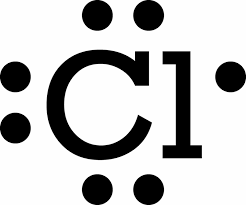

What is the molecular structure?
Bent/Angular
Linear
Trigonal Planar
Trigonal Pyramidal

What is the molecular shape of the following?
Bent
Linear
SeeSaw
Octahedral

What is the molecular shape of the following?
Tetrahdral
Trigonal Bipyramid
See-Saw
Bent

What is the molecular shape of the following?
Trigonal BiPyramid
Tetrahedral
Trigonal Planar
T-Shape


Is this molecule polar or non-polar?
Polar
Non-polar

Is this molecule polar or non-polar?
Non-polar
Polar
The polarity of a bond between two elements can be best determined by
The difference in electronegativity between the elements
The difference in first ionization energy between the elements
The number of electrons shared in the bond
The difference in atomic radius between the elements

Which of the following molecules has Π bonds?
CO2
BF3
NH3
H2O

Which of the following molecules are polar molecule?
HCl
H2O
CH4
NH3
Chemical bond formed from the electrostatic attraction between positive and negative ions
covalent bond
ionic bond
metallic bond
Use VSEPR theory to predict the shape of the hydrogen chloride molecule, HCl.
tetrahedral
linear
bent
trigonal planar
Use VSEPR theory to predict the shape of the chlorate ion, ClO3–.
trigonal planar
octahedral
trigonal pyramidal
bent
Which is the correct description about van der Waals' forces?
They are the weakest of the intermolecular forces arising from instantaneous dipole - induced dipole interactions.
They are the strongest of the intermolecular forces arising from dipole - dipole interactions.
Which of the following molecules are held together by van der Waals’ forces and hydrogen bonds?
Ammonia
Carbon dioxide
Chloromethane
Hydrogen sulphide
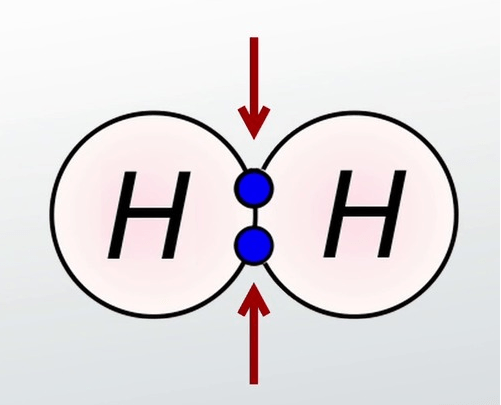
What is considered a Hydrogen Bond?
H-Pb
H-Fe
H-O
All of the above
Can ammonia, NH3 form hydrogen bonds?
Yes
No
Which substance has the weakest intermolecular forces?
Substance A, boiling point of 75 °C
Substance B, boiling point of 105 °C
Substance C, boiling point of 25 °C
Substance d, boiling point of 45 °C
The weaker the intermolecular forces of a substance the _____________ the boiling point
higher
lower
________________________ have the strongest intermolecular forces of attraction.
Dipole- Dipole
Dispersion
Hydrogen Bonds
covalent bond
London forces
hydrogen bond
dipole-dipole attraction

Which type of IMF is responsible for the attraction pictured above?
Dipole-Dipole Interaction
Ion-Dipole Interaction
Hydrogen Bonds
Covalent Bond
Ionic Bond

