Wayground logo

Free Printable Worksheets

Font size

S
M
L
XL
Worksheets

Environmental Science Honors Midterm 2020

Total questions: 65

Worksheet time: 2hrs 47mins

Name
Class
Date
1.
The International System of Unites
a)
is a device used only to measure volume
b)
is used only for measuring length
c)
is based on units of 10
d)
is based on units of 12
2.
A hippo's mass would most likely be described using with units?
a)
kilometers
b)
milligrams
c)
kilograms
d)
triple beam balance
3.
What is the base unit for temperature in in the metric system?
a)
meters
b)
degrees Celsius
c)
degrees Fahrenheit
d)
centimeters
4.
To find the volume of a rock, a student submerges the rock in beaker and finds the difference between the initial volume and the final volume. What is this process called?
a)
volume by displacement
b)
volume by gravity
c)
mass by volume
d)
weight
5.

The Metric System is based on powers of:

a)

5's

b)

10's

c)

20's

d)

50's

6.

What unit is used for measuring MASS in the metric system?

a)

Grams

b)

Liters

c)

Meters

d)

Miles

7.

Which unit of the metric system is used for measuring VOLUME?

a)

Meters

b)

Liters

c)

Grams

d)

Ounces

8.
An irregularly shaped stone was lowered into a graduated cylinder holding a volume of water equal to 2 ml. The height of the water rose to 7 ml. If the mass of the stone was 25 g, what was its density?
a)
30g/mL
b)
5g/mL
c)
20g/mL
d)
2.77g/mL
9.
Which of the following statements is an inference about the picture
a)
The vase is broken.
b)
The girls' bow is blue and purple.
c)
The girl broke the vase.
d)
The girl has blonde hair.
10.
What is an observation for this picture?
a)
The man is scared
b)
The man is going to get eaten
c)
There is a man in a kayak
d)
The man is paddling fast
11.
A series of steps used by scientists to solve a problem or answer a question. 
a)
scientific method
b)
recipe
c)
data collection
d)
metric system
12.
A testable explanation to a problem that has not yet been tested. 
a)
data
b)
theory
c)
hypothesis
d)
fact
13.
This variable in an experiment is the one being changed by the scientist. 
a)
dependent variable
b)
independent variable
c)
data
d)
control group
14.
The summary at the end of an experiment that explains the results. 
a)
conclusion
b)
procedures
c)
materials
d)
responding variable
15.
An experiment is performed on plants to see how different liquids affect plant growth. Each plant in the experiment is given a different liquid; water, apple juice, or milk. Each plant has the same amount of soil, sunlight, and listens to the same music. In this investigation, the independent variable is ...
a)
The type of plant
b)
The amount of sunlight
c)
The type of music
d)
The type of liquid
16.
If you increase the amount of spinach you eat, then you will increase the iron in your blood. 
What's the dependent variable?
a)
increase the amount of iron in your blood
b)
spinach you eat
17.
Will a construction paper air plane fly faster than an airplane made from notebook paper? Choose the best hypothesis.
a)
If I make a paper airplane from notebook paper, then it will fly faster than construction paper.
b)
Yes.
c)
No.
d)
I think the construction paper air plane will fly faster.
18.
In a controlled experiment, how many variables can be worked with at a time? 
a)
one
b)
none
c)
two or more
d)
how ever many makes sense.
19.
This sphere includes the continents, the ocean floor, all the rocks on the surface, and all of the sand in the deserts. 
a)
Hydrosphere 
b)
Biosphere 
c)
Atmosphere 
d)
Geosphere 
20.
Composed of all the water on or near the earth
a)
Hydrosphere 
b)
Biosphere 
c)
Atmosphere 
d)
Geosphere 
21.

This sphere is composed of all the energy needed for living things.

a)

Hydrosphere

b)

Biosphere

c)

Atmosphere

d)

Geosphere

22.
Body of air surrounding our planet. 
a)
Hydrosphere 
b)
Biosphere 
c)
Atmosphere 
d)
Geosphere 
23.
Water evaporating from the surface of a lake moves from the...
a)
Atmosphere to the geosphere 
b)
Geosphere to the hydrosphere 
c)
Hydrosphere to the atmosphere 
d)
Atmosphere to the hydrosphere 
24.

In a closed system, the only thing that can enter or leave is

a)

air.

b)

energy.

c)

matter.

d)

water.

25.

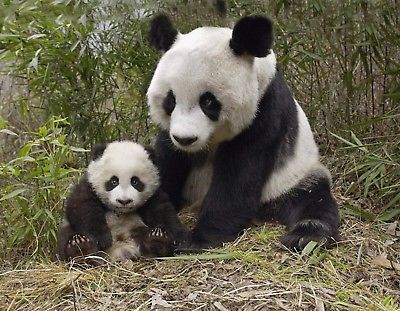
Animals such as pandas are long lived, mature slowly, and generally produce fewer offspring during their life spans but place a greater investment in each. What term is applied to this type of reproductive strategy?

a)

K-strategy

b)

r-strategy

26.

Which contribute to a positive population growth?

a)

immigration

b)

positive birth rate

c)

emigration

d)

positive death rate

27.

Which of the following are density dependent factors?

a)

competition for resources

b)

predation

c)

disease

d)

natural disasters

28.

Which of the following are examples of a density independent factors?

a)

forest fire

b)

seasonal cycles

c)

storms

d)

disease

29.

As a population of a species increases within a territory, which of the following most likely also increases?

a)

Immigration

b)

Food supply

c)

Carrying capacity

d)

Competition

30.

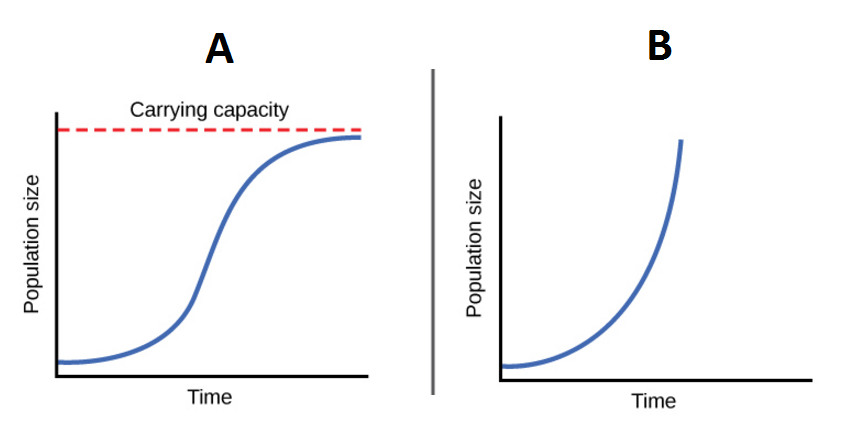
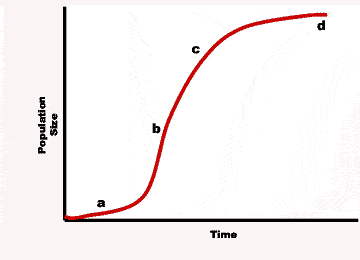
What type of growth model is shown in image B?

a)

Exponential

b)

Logistic

31.

What point on the graph represents carrying capacity?

a)

a

b)

b

c)

c

d)

d

32.

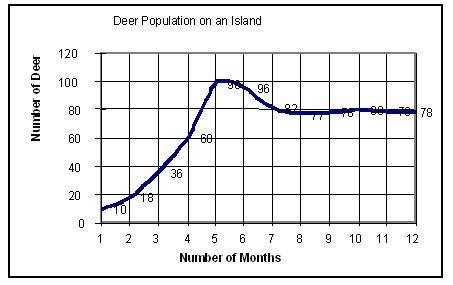
Which choice most closely approximates the deer population's carrying capacity based on the graph?

a)

100

b)

80

c)

60

d)

10

33.

The average number of children a female member of a population has during her lifetime

a)

fertility rate

b)

replacement rate

c)

growth rate

d)

death rate

34.
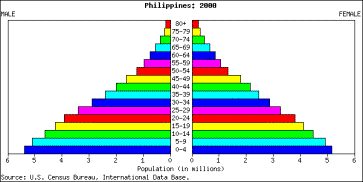
According to the population pyramid of this country, its population is most likely...
a)
growing slowly.
b)
growing rapidly.
c)
decreasing.
d)
not changing.
35.

Which of the following leads to a decrease in birthrates among women?

a)

Higher Education

b)

High Infant Mortality Rate

c)

No Prenatal Care

d)

No contraceptives

36.

Which problem today is primarily the result of the Industrial Revolution?

a)

extensive air and water pollution

b)

increased transmission of disease between people living in close proximity

c)

decline in quality of agricultural soil

d)

erosion from deforestation as more fuel wood is harvested

37.
The most populous country in the world
a)
China
b)
India
c)
US
d)
Brazil
38.

What is the definition of the tragedy of the commons?

a)

when humans overuse a natural resource

b)

when the short-term, positive effects go to the individual, while the long-term, negative effects are spread out to the group

c)

when humans act selfishly, thinking of the own interest

d)

when plants and animals compete for space, resources, and/or food

39.

What will happen to the price of corn if almost no rain falls on corn crops?

a)

The price will increase

b)

The price will decrease

40.
Food, water, sunlight, shelter, and space are resources that are  __________.
a)
limiting factors
b)
wet
c)
messy
d)
found in rocks
41.
Which is a producer?
a)
deer
b)
tall grass
c)
lion
d)
worm
42.
What is this called?
a)
Food Web
b)
Food Chain
c)
Abiotic Factors
43.
What is this called?
a)
Food Web
b)
Food Chain
c)
Abiotic Factors
44.

An organism that lives by breaking apart dead organic matter into simpler parts is...

a)

scavenger

b)

detritivore

c)

decomposer

d)

carnivore

e)

herbivore

45.
An animal that eats other animals is a....
a)
carnivore
b)
omnivore
c)
herbivore
d)
decomposer
46.

In a food web, arrows point at:

a)

the organism who gets energy.

b)

the organism who gets eaten.

47.

What does a food web represent?

a)

All connections of energy flow throughout all organisms in a ecosystem.

b)

The specific ways that mutualism is carried out.

c)

A single pathway or energy flow between organisms.

d)

How spiders trap their prey.

48.
Bacteria, fungi, and earthworms are examples of: 
a)
scavengers
b)
predators
c)
prey
d)
decomposers
49.
Which of the following is a herbivore?
a)
cricket
b)
frog
c)
hawk
d)
shrew
50.
A community of living and nonliving things in their natural environment makes up a 
a)
food web
b)
ecosystem
c)
food chain
51.
__________ is an organism that eats BOTH plants and animals for energy.
a)
Omnivore
b)
Darnivore
c)
Carnivore
d)
Herbiovre
52.
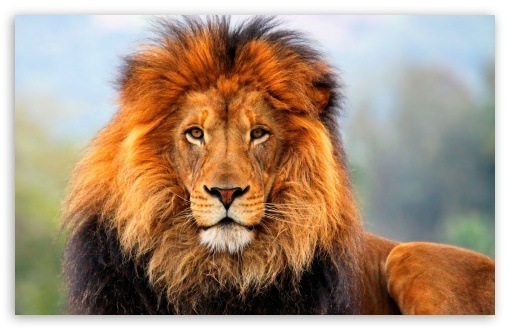
Lions only eat buffalo, antelopes, zebras and crocodiles. They are called __________.
a)
Omnivore
b)
Herbivore
c)
Carnivore
d)
Delivore
53.
If the grasshopper were to be removed completely from the food web, what organism would be most effected?
a)
The squirrel
b)
The shrew
c)
The deer
d)
The rabbit
54.

Organism that makes its own food:

a)

consumer

b)

producer

c)

heterotroph

d)

autotroph

55.

Organism that eats other things for food

a)

consumer

b)

producer

c)

heterotroph

d)

autotroph

56.

An individual is a single _______________ of a particular species. One single zebra is an example.

a)

Population

b)

Organism

c)

Ecosystem

57.

All the individuals of one species in a given area is called a ______________. A herd of zebras would be an example.

a)

Population

b)

Community

c)

Non-living

d)

Organism

58.

The total sum of all the populations of living things within an area that interact with one another is called_________. Zebra, elephants, and giraffes would be an example

a)

Biosphere

b)

Population

c)

Community

d)

Organism

59.

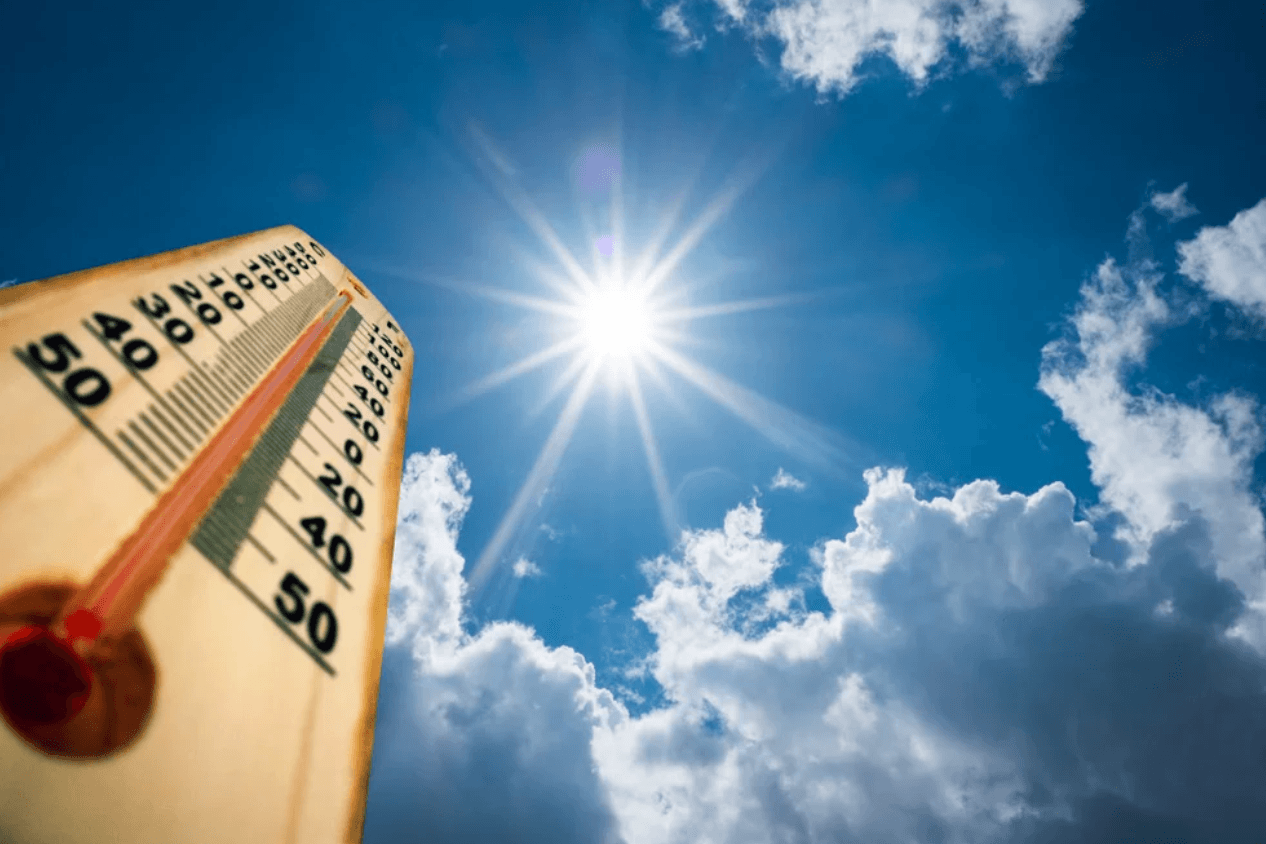
Temperature

a)

Biotic

b)

Abiotic

60.

A zebra skeleton

a)

Biotic factor

b)

Abiotic factor

61.
In an energy pyramid, energy_______ as you move up the pyramid.
a)
Increases
b)
Decreases
c)
Stays the same
d)
Changes up and down
62.
In the energy pyramid here, how much of the energy in the producers gets passed to the herbivores?
a)
10%
b)
20%
c)
80%
d)
90%
63.
All the organisms on earth get their energy directly or indirectly from?
a)
Oxygen
b)
Water 
c)
Nitrogen
d)
The Sun
64.

Position that an organism occupies based on what it eats

a)

Producer

b)

Trophic level

c)

Heterotroph

d)

Consumer

65.

In this energy pyramid, which type of consumer gets only 10% of the energy stored in plants?

a)

Herbivore

b)

Carnivore

c)

Omnivore

d)

Secondary Consumer