
 Worksheets
Nervous System
Total questions: 61
Worksheet time: 47mins


What does the nervous system do?
Pumps blood from your heart to your body
Carries messages back and forth between your brain and the rest of your body
Breaks up food
Secrete hormones.
What is the gap between two neurons called?
Impulse
Synapse
CNS
Inter neuron
Select the VOLUNTARY action.


Select the INVOLUNTARY action.


The part of the neuron that insulates the axon and increases the speed of the neural message within the neuron.
Synapse
Dendrite
Myelin Sheath
Axon Terminal

This part of the neuron receives chemical messages from the neurotransmitters of other neurons. It is labeled A in the diagram.
Dendrite
Axon
Axon Terminal
Cell Body
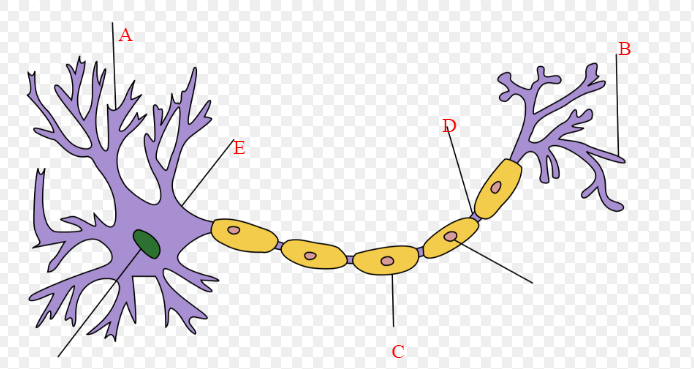
Which part sends nerve impulse to the next cell?
Dendrite
Axon
Axon Terminal
Cell Body

The long, fiber like part of a neuron which the cell sends information to receiving neurons. Labelled D in diagram.
Synapse
Axon
Axon Terminal
Dendrite
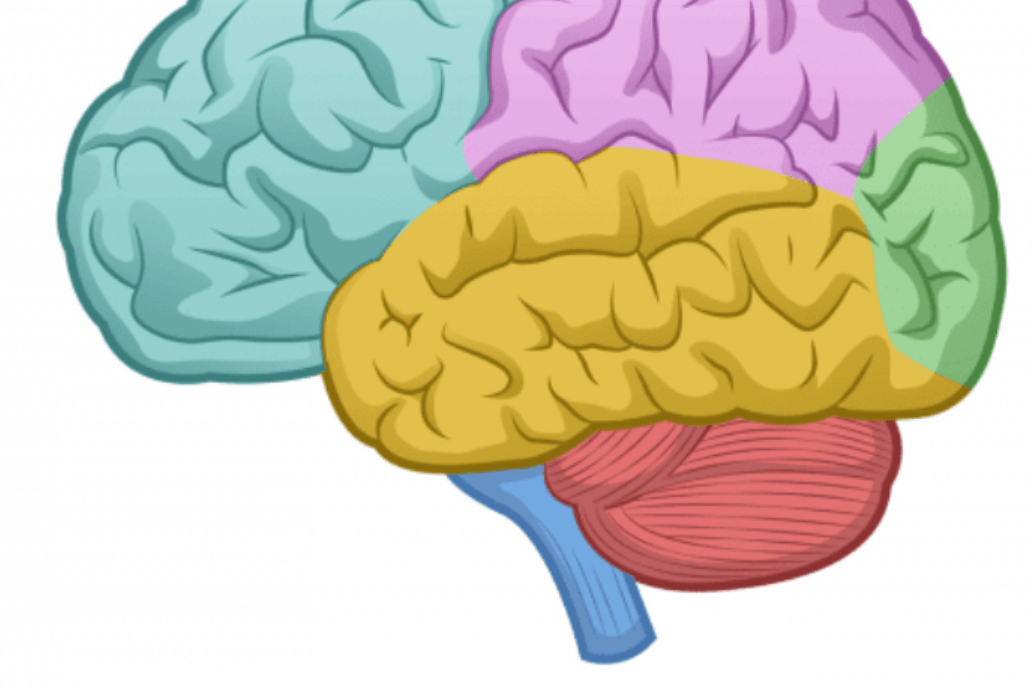
What structure is bright blue and located at bottom of the brain and controls the information sent between brain and rest of the body?
Cerebrum
Cerebellum
Brain Stem

Which part of the brain controls your blood pressure and heart rate?
brain stem
cerebrum
cerebellum
adrenal gland
Which statement best describes a reflex arc?
Slow response that you have to think about
Rapid response to protect body from harm

Where would the nerve impulse start in this reflex arc?
A
C
D
E

_____ neurons carry messages away from the central nervous system and out to muscles or glands. The RED neuron in diagram.
sensory
motor
inter
central

How is a message delivered from the "sending" neuron to the "receiving" axon?
sympathetic nerves
hormones
medulla oblongata
neurotransmitters
__________ carry messages between sensory neurons and motor neurons.
Active Neurons
Interneurons
Refraction Neurons
Flower Neurons


Another name for nerve impulse:
action potential
resting potential
membrane potential
synapse


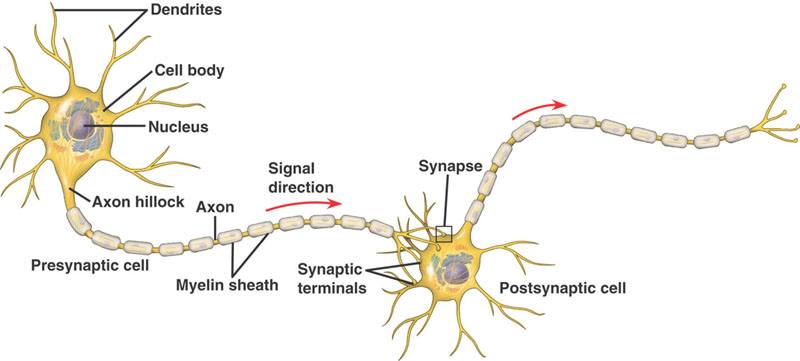

At what stage is there more potassium outside the neuron, and more sodium inside the neuron?
Depolarizarion
Repolarization
Hyperpolarization (refractory period)
Resting Potential
Which one of the following is involved in maintaining a resting membrane potential?
Na+/K+ ATPase pump moves 3Na+ in for every 2K+ out
Na+/K+ ATPase pump moves 3K+ in for every 2Na+ out
Na+/K+ ATPase pump moves 3Na+ out for every 2K+ in
Na+/K+ ATPase pump moves 3K+ out for every 2Na+ in
In neural processing, a brief resting pause that occurs after a neuron has fired.
threshold
synaptic cleft
action potential
refractory period

If I step on a nail...what type of neuron take that signal TO the CENTRAL NERVOUS SYSTEM?
interneurons
motor
sensory
receptors
The outer layer of Schwann cells containing only nucleus and cytoplasm is called the:
axon
neuroglia
nodes of Ranvier
neurilemma
This brain structure relays sensory impulses to the cerebrum and deals with emotion related to memory:
pons
thalamus
hypothalamus
medulla oblongata
Controls the reflex centers that regulate heartbeat, breathing and vasoconstriction. Place where crossover of messaging between spinal cord and brain occurs.
pons
medulla oblongata
thalamus
cerebellum
Regulates sleep, thirst and hunger:
hypothalamus
thalamus
cerebellum
pons
Division of ANS where ganglia are located closer to spine and postganglionic fibers are longer than preganglionic fibers.
Sympathetic
Somatic
Parasympathetic

