
 Worksheets
Chemistry-Covalent Bonds
Total questions: 20
Worksheet time: 40mins
Name
Class
Date
1.
How many Valence Electrons are on Oxygen
a)
2
b)
7
c)
6
d)
1
2.
The desire for an element to have 8 atoms around it is called
a)
Octet Rule
b)
Resonance
c)
Ionization energy
d)
Electronegativity
3.
What can be generalized about covalent bonds?
a)
Electrons will be exchanged.
b)
Electrons will be transferred.
c)
Electrons will be given and taken.
d)
Electrons will be shared.
4.
What is it called if there are three-pairs of electrons being shared?
a)
Triple bond
b)
Bond length
c)
Tribond
d)
Chocolate Mousse
5.

Which of the following is the correct Lewis dot structure for the molecule fluorine (F2)?
a)
A
b)
B
c)
C
d)
D
6.
How many electrons should Carbon have around its Lewis dot structure?
a)
1
b)
3
c)
4
d)
5
7.
What two types of atoms make a covalent bond?
a)
2 Nonmetals
b)
1 Nonmetal & 1 Metal
c)
2 Metals
d)
2 Noble Gases
8.

What is the formula for the ammonia molecule shown below?
a)
NH
b)
NH3
c)
N3H3
d)
N3H
9.
Atoms form bonds with other atoms in order to become more ______.
a)
stable
b)
happy
c)
dense
d)
energetic
10.

What type of chemical bond is being shown in the F2 molecule?
a)
single covalent bond
b)
double covalent bond
c)
triple covalent bond
d)
quadruple covalent bond
11.

Name the following compound:
CO2
CO2
a)
monocarbon dioxide
b)
carbon oxide
c)
carbon dioxide
d)
oxygen carbonide
12.

How many bonds does carbon have to create in order to satisfy the octet rule
a)
1
b)
2
c)
3
d)
4
13.
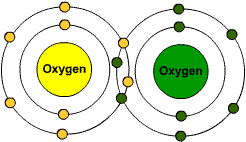
Is this image an example of covalent bonding?
a)
Yes
b)
No
14.
What is the proper name for the covalent compound, CCl4
a)
Carbon Chloride
b)
Carbon Quadrachloride
c)
Carbon Tetrachloride
d)
Carbon Dichloride
15.
What is the proper name for the covalent compound N3F8?
a)
Nitrogen Flouride
b)
Nitrogen Fosfate
c)
Trinitrogen Octaflouride
d)
Nitrogen Pentaflouride
16.
Name this covalent compound: CO
a)
Carbon Oxide
b)
Carbon Monoxide
c)
Colorado
d)
Carbon Oxygenide
17.
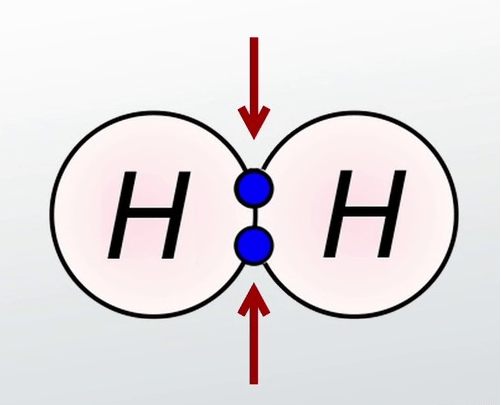
What type of bond is shown in this image?
a)
Ionic
b)
Polar Covalent
c)
Nonpolar Covalent
d)
Van der Waals Force
18.
Diatomic elements are defined as IDENTICAL elements that bond with each other (i.e. Oxygen with Oxygen). What type of bond should they form?
a)
Ionic
b)
Polar Covalent
c)
Nonpolar Covalent
d)
Van der Waals force
19.
Oxygen has 6 valence electrons. How many more electrons does it need to fulfill the octet rule
a)
1
b)
2
c)
3
d)
4
20.
The _______ describes the atoms in a compound.
a)
chemical equation
b)
chemical formula
c)
chemical symbol
d)
coefficient
100 %

