
 Worksheets
Heredity and Reproduction Review 1
Total questions: 30
Worksheet time: 25mins
Produces offspring with identical DNA.
asexual reproduction
sexual reproduction
Provides greater genetic variation.
asexual reproduction
sexual reproduction
Where in the body is DNA found?
In a cell's ribosomes
In a cell's nucleus
Moving freely through the body
Moving freely through a cell

Eye color.

A dog that sits when told to.

The ability to play basketball.
What is an advantage of asexual reproduction?
Simple and Fast
If the parent has poor qualities so will the offspring
Allows for genetic variation
Aides the offspring
What is an advantage of sexual reproduction?
Allows for genetic variation
If the parent has good qualities so will the offspring.
Simple and fast
Requires one parent
What is a disadvantage of sexual reproduction?
Complex
Fast
Requires one parent
If the parent has good qualities so will the offspring.
What are chromosomes made of?
cells
DNA
nucleus
traits
A gene is best described as -
the release of energy.
the waste produced by cells.
a unit of heredity.
a collection of adaptations.
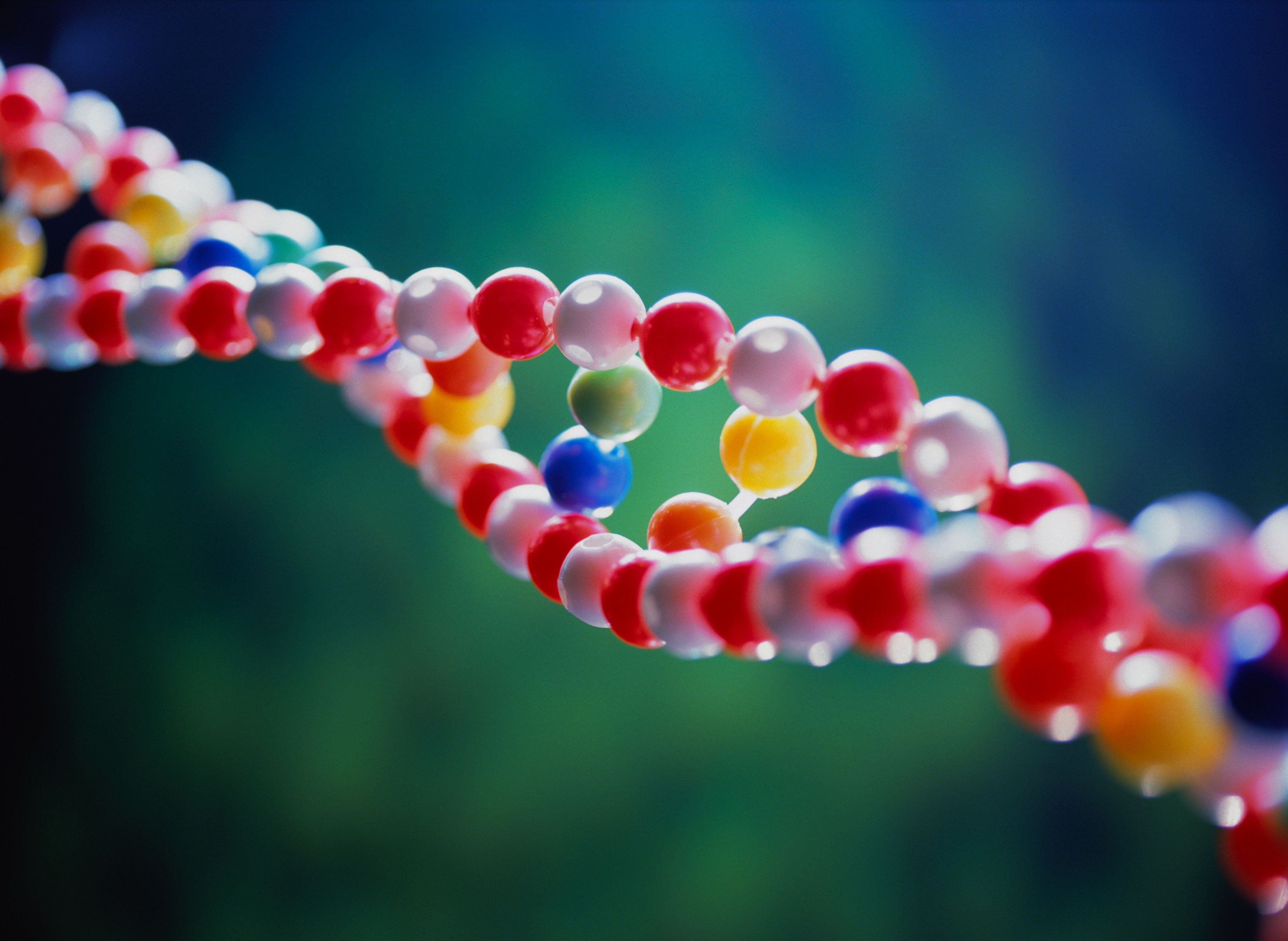

Which organelle is where genetic information is stored?
Vacuole
Mitochondria
Nucleus
Cytoplasm
What parts of a cell are most involved in determining the shape of your face?
Genes, chromosomes, and nucleus
Cytoplasm, chloroplasts, and genes
Vacuoles, nucleus, and chromosomes
Chromosomes, chloroplasts, and vacuoles

The hydra is a very small, simple animal that lives in water. Hydras reproduce asexually by budding,
a process in which a bud breaks off an adult hydra and floats away. Which of these describes a hydra?
A hydra bud contains genetic material from its two parents.
A hydra bud is genetically identical to the parent hydra.
A hydra bud has different mutations than the parent hydra.
A hydra bud has half as much genetic material as the parent hydra
An organism reproduces asexually. What percentage of the offspring’s genetic information is the same as the genetic information of the parent?
25%
50%
75%
100%
In one student’s family, two of the children have curly hair, one child has wavy hair, and the fourth child has straight hair. Which of these processes is responsible for the variety of hair texture in this family?
Asexual reproduction
Binary Fission
Sexual Reproduction
Vegetative Propagation
Certain species of whiptail lizards have only female individuals and no males. These lizards reproduce asexually. What is one disadvantage of asexual reproduction for these lizards?
They are smaller than lizards that reproduce sexually.
They are more likely to develop a variety of tail lengths.
A new population can be established by a single individual in a relatively short period of time.
All the members of a population are genetically very similar and less able to survive environmental changes.


Eye color, hair color, having freckles, etc. are examples of:
DNA
Chromosomes
Genes
Traits

