wayground logo

Free Printable Worksheets

Font size

S
M
L
XL
Worksheets

Biology: Macromolecules Assessment

Total questions: 45

Worksheet time: 2hrs 15mins

Name
Class
Date
1.

The linking together of many monosaccharides makes

a)

A. Disaccharides

b)

B. Fatty acid

c)

C. Glucose

d)

D. Polysaccharides

2.

The primary function of carbohydrates is all of the following EXCEPT

a)

A. Storage of genetic information

b)

B. Main source of energy for the body

c)

C. Provides short term energy

d)

D. The bodies first energy source

3.

The difference between lipids and carbohydrates is

a)

A. Carbohydrates are quickly broken down to be used as energy, while lipids take longer to be broken down to be used for energy

b)

B. Carbohydrates are long term energy and lipids are short term energy

c)

C. Lipids make proteins and carbohydrates make DNA & RNA

d)

D. Carbohydrates are made of carbon, hydrogen, and oxygen and lipids are made of carbon, hydrogen, oxygen, and nitrogen

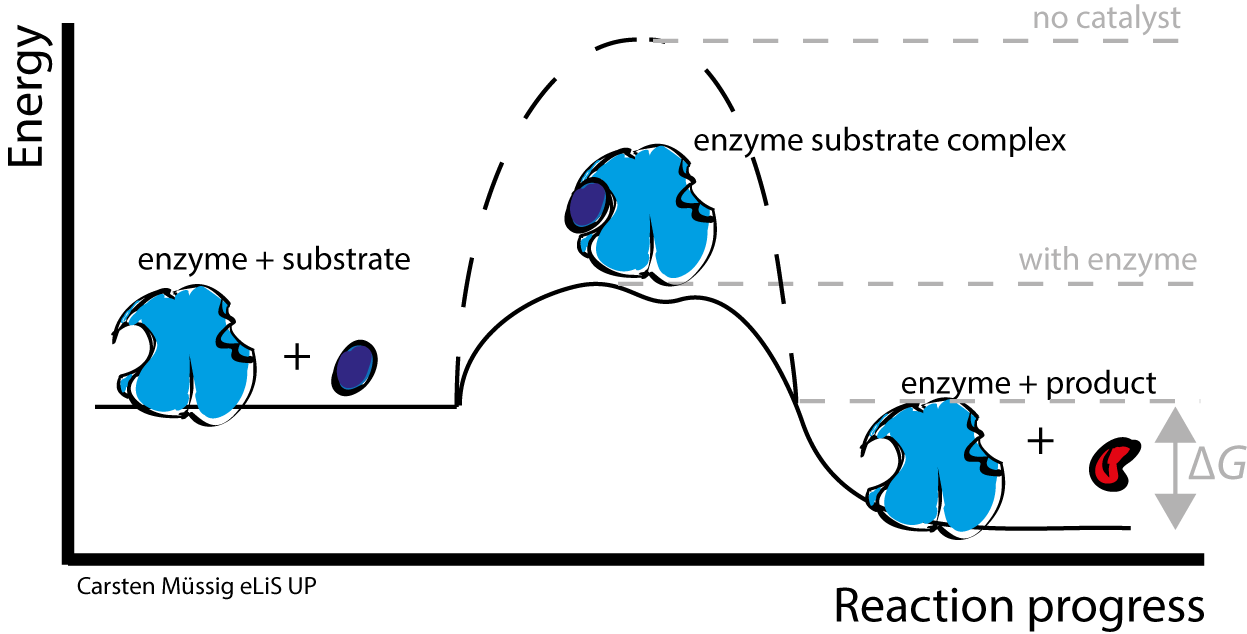
4.

What type of molecules are used for the synthesis of a lipid?

a)

A. Amino acid and Fatty acids

b)

Glycerol and Fatty acids

c)

C. Amino acid and Monosaccharides

d)

D. Monosaccharide and Glycerol

5.

Lipids are used for All of the following EXCEPT

a)

A. Insulation

b)

B. Long-term energy

c)

C. Protection of organs/muscles

d)

D. Source of stored energy

6.

All are functions of proteins EXCEPT

a)

A. Enzymes

b)

B. Main source of energy for the body

c)

C. Muscle development

d)

D. Make up our body

7.

Amino acids are held together by

a)

A. Covalent bonds

b)

B. Hydrogen bonds

c)

C. Ionic bonds

d)

D. Peptide bonds

8.

Nucleic acids used to transmit genetic code are ___

a)

Monosaccharides & disaccharides

b)

DNA & RNA

c)

Glycerol & Fatty acid

d)

Monomers & Polymers

9.

Which type of molecule is used for the synthesis of a Nucleic Acid?

a)

A. Amino acid

b)

B. Fatty acid & Glycerol

c)

C. Nucleotide

d)

D. Monosaccharide

10.

In living organisms, nucleic acids function mainly as

a)

A. Sources of stored energy and transmitters of genetic information

b)

B. Sources of stored energy and components of cell membrane

c)

C. Transmitters of genetic information and catalysts of chemical reactions

d)

D. Coding of traits and transmitters of genetic information

11.

What makes the structure of nucleic acids different from the other macromolecules?

a)

A. They contain Nitrogen

b)

B. They contain Oxygen

c)

C. They contain Phosphorus

d)

D. They contain Hydrogen

12.
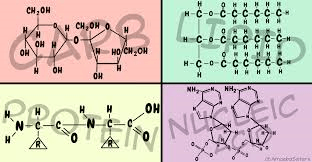
Which major macromolecule is being represented in this image? 
a)
carbohydrate
b)
lipid
c)
protein
d)
nucleic acid
13.
What are the building blocks of proteins?
a)
amino acid
b)
fatty acid
c)
nucleotide
d)
lipid
14.
What are the single sugars that are the building blocks of carbohydrates?
a)
monosaccharides
b)
disaccharides
c)
polysaccharides
d)
amino acid
15.
Waxes, oils and fats are examples of
a)
Carbohydrates
b)
Lipids
c)
Proteins
d)
Nucleic Acids
16.

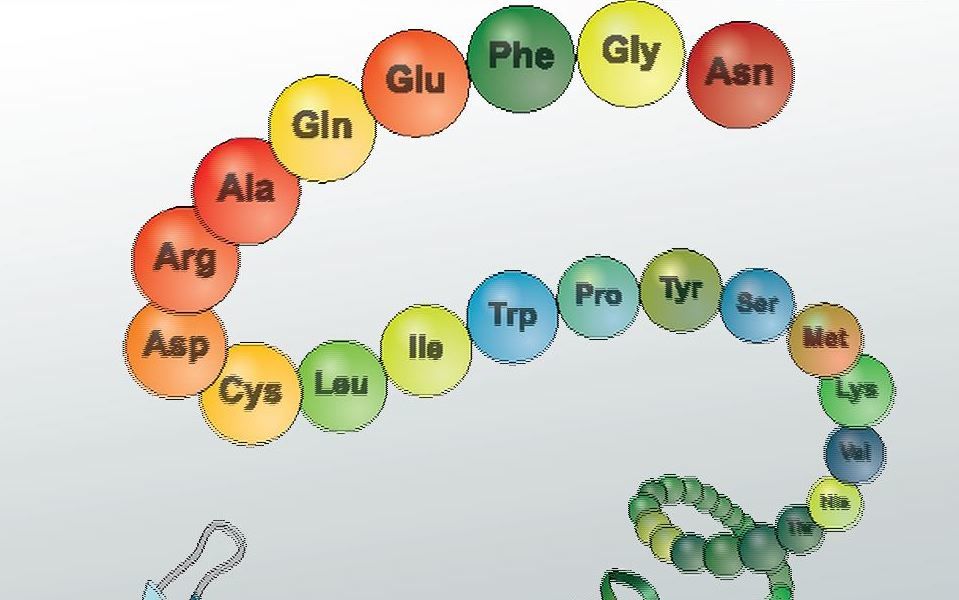
Which macromolecule is represented?

a)

lipid

b)

protein

c)

nucleic acid

d)

carbohydrate

17.
What elements are common to all 4 biomolecules?
a)
Carbon, hydrogen, nitrogen
b)
Carbon, Nitrogen, Phosphorus
c)
Carbon, Hydrogen, Oxygen
d)
Carbon, Hydrogen, Phosphorus
18.
A monomer is ...
a)
a single atom
b)
a building block for polymers
c)
a single element
d)
is an inorganic molecule
19.
The name of the initial chain of monomers in a protein is called.....
a)
polypeptide
b)
polysaccharide
c)
polyester
d)
polynucleotide
20.

monosaccharides, fatty acid and glycerol, amino acids, and nucleotides are examples of _____________.

a)

Elements

b)

Compounds

c)

Macromolecules

d)

Monomers

21.
Fats & oils are examples of this type of macromolecule
a)
Carbohydrates
b)
Lipids
c)
Proteins
d)
Nucleic Acids
22.
Which term includes all others in the list?
a)
monosaccharide
b)
polysaccharide
c)
starch 
d)
carbohydrate
23.
Which of the 4 major macromolecules provides a quick burst of energy?
a)
Carbohydrates
b)
Lipids
c)
Proteins
d)
Nucleic Acids
24.
How does your body use lipids?
a)
Primary source of energy
b)
energy storage and insulation
c)
speeds up chemical reaction
d)
defense
25.
Building blocks of the body, hair , muscles etc.
a)
protein
b)
nucleic acid
c)
lipids
d)
carbohydrates
26.

When reading the nutrition facts on food packaging total fats is a measure of...

a)

Carbohydrate

b)

Lipids

c)

Water

d)

Protein

27.

Example(s) of proteins are...

a)

Sugar

b)

Nuts

c)

Beans

d)

Fish

28.

Starch is...

a)

a stored form of sugar

b)

a carbohydrate

c)

a protein

d)

a lipid

29.

Example(s) of Lipids are...

a)

Sugar

b)

Olive Oil

c)

Corn Oil

d)

Jolly Ranchers

30.
What type of macromolecule is being represented in this image? 
a)
carbohydrate
b)
lipid
c)
protein
d)
nucleic acid
31.
The element _______is found in all of the organic compounds.
a)
Iron
b)
Nitrogen
c)
Carbon
d)
Oxygen
32.
What type of macromolecule are enzymes?
a)
Protein
b)
Carbohydrate
c)
Lipid
d)
Nucleic Acid
33.
Lipids are made of... 
a)
C H O
b)
C H O N
c)
C H O N P
d)
C H O N S
34.
Carbohydrates are made of... 
a)
C H O
b)
C H O N
c)
C H O N P
d)
C H O N S
35.
Proteins are made of... 
a)
C H O
b)
C H O N
c)
C H O N P
d)
C H O N S
36.
Is found in the cell membrane as a bilayer. 
a)
lipids
b)
protein
c)
nucleic acid
d)
carbohydrate
37.
What is the purpose  of an enzyme?
a)
give permission for the reaction
b)
raise activation energy
c)
speed up reactions
d)
control how many reactions occur
38.
Each enzyme only has 1 substrate that will fit its active site.  What is this called?
a)
reusable
b)
catalyst
c)
specific
d)
fragile
39.
Any substance that is acted upon by an enzyme is called a(n)?
a)
Coenzyme
b)
Substrate
c)
Vitamin
d)
Polypeptide
40.
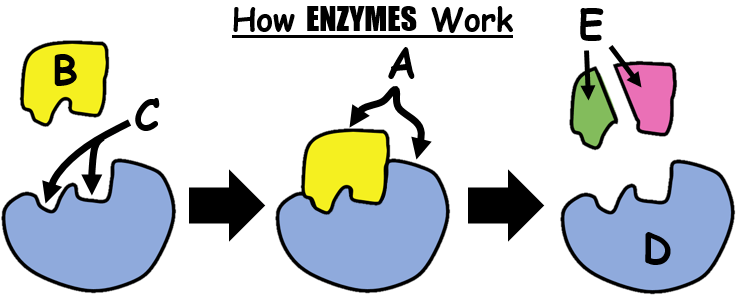
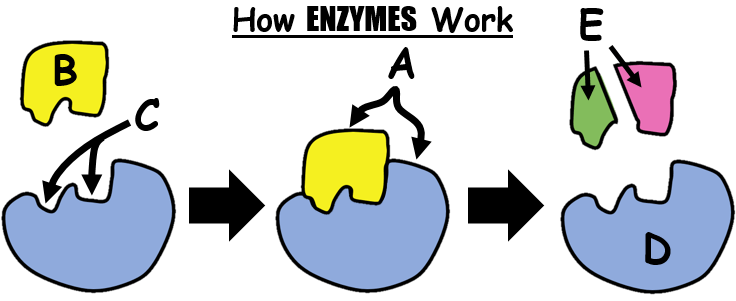
Letter D...
a)
active site
b)
enzyme
c)
substrate
d)
products
41.
Letter D...
a)
active site
b)
enzyme
c)
substrate
d)
products
42.
Letter B...
a)
active site
b)
enzyme
c)
substrate
d)
products
43.
Enzymes provide a site where reactants called substrates can be brought together in an enzyme-catalyzed reaction. The site is called the
a)
enzyme substrate complex.
b)
reaction site.
c)
active site.
d)
lock and key.
44.
An enzyme speeds up a reaction by
a)
lowering the activation energy.
b)
raising the activation energy.
c)
releasing energy.
d)
absorbing energy.
45.
An enzyme speeds up a chemical reaction in the cell but can only be used once.  True or False? 
a)
true
b)
false