
NEW
Font size
 Worksheets
Chemical Reactions End of Unit Review
Total questions: 28
Worksheet time: 22mins
What is the left part of a chemical equation called?
2 H2 + O2 --> 2 H2O
Yields
Products
Reactants
Chemical Equation
What is the right part of a chemical equation called?
2 H2 + O2 --> 2 H2O
Yields
Products
Reactants
Chemical Equation

Which of the following is a list of physical properties?
temperature change when a chemical is added, odor, density
flexibility, reaction with hydrochloric acid, color
density, physical state at room temperature, solubility
density, bubbling and fizzing, solubility
Which of the following describes signs of a physical change?
Burning wood in the fireplace.
Sharpening a pencil.
Milk going sour.
An iron fence rusting.

Which of the following show signs of a chemical reaction?
Liquid water is boiled to produce steam.
Large brown rocks are ground into smaller pieces to produce a brown powder.
A colorless liquid and a gray solid are mixed to produce a gas and a green liquid.
Dark blue food coloring is added to water to dissolve into a light blue liquid.

Which of the following is an example of a chemical change?
cutting a piece of wood into small wood chips
burning a marshmallow
dissolving table salt in a glass of water
freezing liquid water to produce ice cubes

A student pours two different liquids into a glass beaker. Which of the following would indicate that a chemical reaction occurred between the two liquids?
The formation of a solid in the beaker.
An increase in the total mass of the liquids.
A decrease in the total volume of the liquids.
The complete mixing of the two liquids.

Which of the following statements is true?
In a chemical reaction, the total mass of the products is more than the total mass of the reactants.
In a chemical reaction, the total mass of the products is less than the total mass of the reactants.
In a chemical reaction, the total mass of the products is unrelated to the total mass of the reactants.
In a chemical reaction, the total mass of the products is equal to the total mass of the reactants.
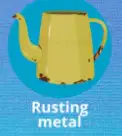
This type of reaction results in no change in temperature in the products
Endothermic Reaction
Exothermic Reaction
Isothermic Reaction
Whatsathermic Reaction
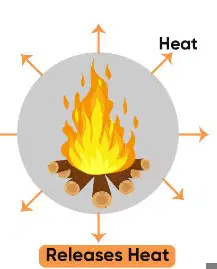
This type of reaction results in a release of energy causing the temperature to rise.
Endothermic Reaction
Exothermic Reaction
Isothermic Reaction
Whatsathermic Reaction
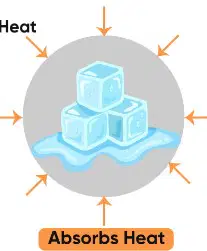
This type of reaction results in an absorption of energy causing the temperature to drop.
Endothermic Reaction
Exothermic Reaction
Isothermic Reaction
Whatsathermic Reaction

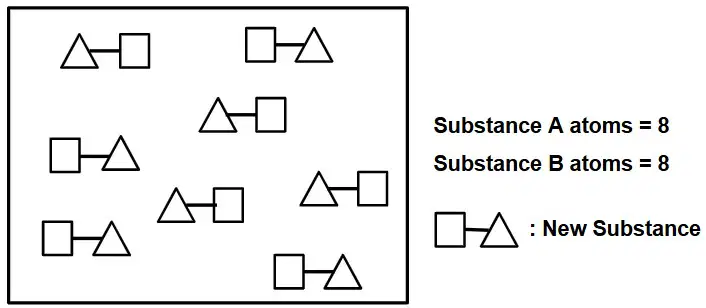
The diagram above shows molecules of two substances, A and B, that are mixed together. Which diagram below shows what might happen at the molecular scale if the substances were to undergo a chemical reaction?



Which of the following is an example of using a chemical process to transform chemical energy into electrical energy?
cutting wood into smaller pieces
dissolving copper chloride powder into a beaker of water
using a battery to power a flashlight
mixing ammonia with calcium chloride
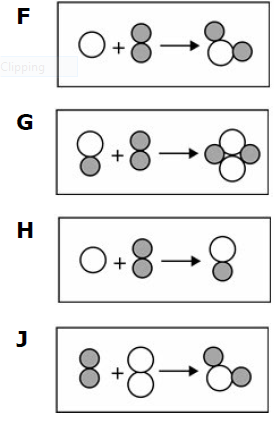
Click on the image to expand it. Which of the following models in the picture best demonstrates a balanced chemical equation?
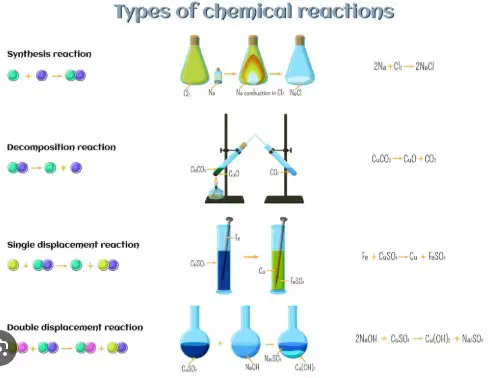
A chemical change occurs when
Just the appearance of one or more substances changes.
The molecules of the substances interact to form new molecules.
Multiple physical changes happen at the same time.
Anytime two or more substances are mixed together.

Look at the chemical equation.
How many atoms of oxygen (O) are in the products?
2
1
0
3
Look at the chemical equation.
Is it written correctly to show the Law of Conservation of Mass?
Yes, the number of atoms of the reactants match the number of atoms of the products.
No, on the reactants side, there is 1 Hg (Mercury) atom and on the products side, there are 2 Hg (Mercury) atoms.
No, on the reactants side, there is 1 Oxygen atom and on the products side, there are 2 Oxygen atoms.
Not enough information to tell.

Look at the chemical equation.
How many atoms of nitrogen (N) are in the reactants?
1
4
2
0
Look at the chemical equation.
How many atoms of oxygen (O) are in the reactants?
4
1
2
0
Look at the chemical equation.
Is it written correctly to show the Law of Conservation of Mass?
Yes, there are 4 Nitrogen atoms on both side and 2 Oxygen atoms on both sides.
No, there are 2 Oxygen atoms on the reactants and only 1 Oxygen atom on the products side.
Not enough information to tell.
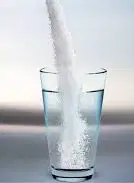
Sugar dissolving in water is an example of
A chemical change
Crystallization
A physical change
Precipitation
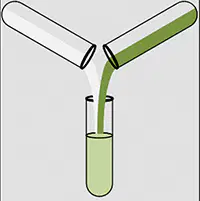
A student mixes a dark green solution with water, and result is pale green. What likely happened?
A precipitate was formed
There was a chemical change due to oxidation
The solution crystallized
There was a physical change due to a dilution
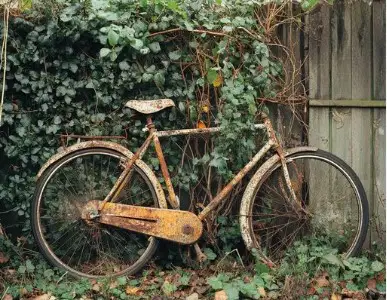
Curtis left his gray bike outside when he got called in for dinner. It rained over night and the next day he came out to find a reddish-brown rust covering the bike. This is an example of:
Chemical change: the molecules in the metal reacted with oxygen and water
Physical change: the molecules in the metal duplicated and made copies of themselvs
Physical change: the metal in the bike dissolved in the rain
Chemical change: the molecules in the metal evaporated
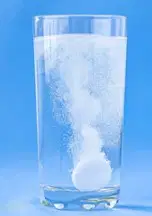
Benny mixes an effervescent tablet in a cup of water. The mass of the substances before was 62.62 grams. Afterward, the mass was 62.11 grams. What happened?
Atoms were destroyed in the chemical reaction
Atoms were created in the chemical reaction
Atoms changed into different elements in the chemical reaction
Atoms escaped the open system during the chemical reaction

Josue leaves a cup of salt water in a warm room. He checks on it after a week and finds small white crystals left in the glass and no liquid remaining. What likely happened?
Chemical change: the salt evaporated and the water remained
Physical change: the water evaporated and the salt crystallized
Chemical change: the salt acidized
Physical change: the salt pieces were grinded down into powder
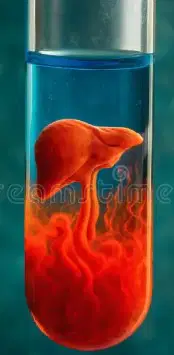
A reaction occurs between two liquids. Before the reaction, liquid A is clear and colorless. Liquid B is clear and light blue in color. When the two liquids are combined, a cloudy red solution is formed. Which of the following describes what has occurred?
A physical reaction where the mass was conserved.
A chemical reaction where the mass was conserved.
A chemical reaction where mass was not conserved.
This is clear evidence of a magical reaction and magic is real everyone!

A student measures out 5 mL of calcium chloride solution into a small container and 5 mL of sodium carbonate solution in another small container. The total mass of both chemicals and the containers they are in is 15.23 g. When the student combined the two clear liquids, a gooey, cloudy precipitate formed. What would the total mass of the products and the two containers be after this reaction took place?
15.20 g
15.23 g
15.25 g
30.46 g
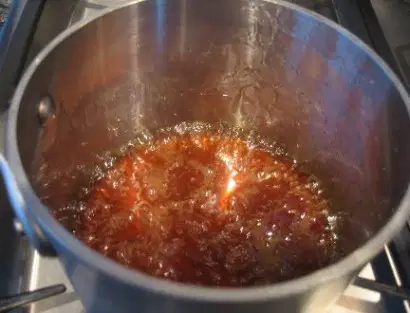
Which of the following is a chemical change?
A bottle of water expands and breaks in the freezer
Melted candle wax cools and solidifies
White sugar is heated up over a stove and cooked into brown caramel
Syrup is mixed into carbonated water to make soda

