wayground logo

Free Printable Worksheets

Font size

S
M
L
XL
Worksheets

Astronomy Unit Part 1

Total questions: 87

Worksheet time: 1hrs 11mins

Name
Class
Date
1.

What is Science?

a)

Study of Anything

b)

Scientific Method

c)

VooDoo

d)

Study of anything using the scientific method

2.

In the Heliocentric model developed by Copernicus, Helios means

a)

moon

b)

Earth

c)

sun

d)

planets

3.
Which choice shows the objects in order from LARGEST to smallest
a)
solar system, galaxy, sun, universe, planet
b)
planet, galaxy, universe, solar system, sun
c)
universe, galaxy, solar system, sun, planet
d)
galaxy, universe, solar system, sun, planet
4.
Which statement best describes the relationship between Earth and the Milky Way Galaxy?
a)
Which statement best describes the relationship between Earth and the Milky Way Galaxy?
b)
Earth is part of a galaxy that is nearest to the Milky Way Galaxy.
c)
Earth is located in the Milky Way galaxy but far from the galaxy center.
d)
Earth is positioned in the center of the Milky Way Galaxy
5.

In the geocentric model (the Earth at the center of the universe), which motion would occur?

a)

The Earth would revolve around the Sun,

b)

The Earth would rotate on its axis.

c)

The Moon would revolve around the Sun.

d)

The Sun would revolve around the Earth.

6.

Most of the radiant energy released by the sun results from the process of

a)

nuclear fission

b)

nuclear fusion

c)

combustion

d)

electrical generation

7.

What causes clouds of dust and gas to form a protostar?

a)

magnetism

b)

gravitational attraction

c)

expansion of matter

d)

cosmic background radiation

8.

Arrange the terms galaxy, star, and universe in order from largest to smallest.

a)

star, galaxy, universe

b)

galaxy, star, universe

c)

universe, star, galaxy

d)

universe, galaxy, star

9.

Which statement describes the general relationship between the temperature and the luminosity of main sequence stars?

a)

As temperature decreases, luminosity increases.

b)

As temperature decreases, luminosity remains the same.

c)

As temperature increases, luminosity increases.

d)

As temperature increases, luminosity remains the same.

10.
Which statement BEST summarizes The Big Bang Theory?
a)
whole universe began as a black hole and rapidly expanded, but is now collapsing
b)
whole universe began as a cool dense point and rapidly collasped, but is now expanding
c)
whole universe began as a hot dense point, rapidly expanded, and continues to expand
d)
the whole universe began as a hot dense point and rapidly expanded, but is now collapsing
11.

where does a star spend the majority of its life?

a)

as a red giant

b)

as a dwarf

c)

as a supernova

d)

in the main sequence

12.
The Milky Way Galaxy is a 
a)
spiral
b)
lenticular
c)
elliptical 
d)
irregular
13.

The process that produces light and heat energy within a star is called

a)

Radiation

b)

Conduction

c)

Nuclear Fusion

d)

Fire

14.
Definition: A group of stars, dust, and gases held together by gravity.
a)
rotation
b)
perihelion
c)
galaxy
d)
terrestrial planet
15.
Which star color indicates the hottest star surface temperature?
a)
blue
b)
yellow
c)
white
d)
red
16.

Which model of the solar system has the sun in the center with all of the planets orbiting it?

a)

heliocentric

b)

geocentric

17.
The Milky Way Galaxy is best described as _________.
a)
elliptical
b)
circular
c)
irregular
d)
spiral
18.

What is the main difference between the heliocentric theory and geocentric theory of the solar system?

a)

The heliocentric theory has the Sun as the center of the solar system, and the geocentric theory has the Earth as the center of the solar system.

b)

The heliocentric theory has the Earth as the center of the solar system, and the geocentric theory has the Sun as the center of the solar system.

c)

The heliocentric theory has Earth moving around the Moon, and the geocentric theory has the Sun moving around the Moon.

d)

The heliocentric theory has the Sun moving around the Earth, and the geocentric theory has Earth moving around the Sun.

19.

Select the picture that represents the spiral Milky Way galaxy where our solar system is?

a)

A

b)

B

c)

C

d)

D

20.

According to a heliocentric model of the solar system, what should be located at position Q where indicated on the diagram?

a)

The sun

b)

Earth

c)

Jupiter

d)

Moon

21.
What type of galaxy is this?
a)
Spiral
b)
Elliptical
c)
Irregular 
d)
Irrational
22.
Which star is the coldest?
a)
yellow star
b)
red star
c)
orange star
d)
blue star
23.
Our sun is currently in this star stage.
a)
Protostar
b)
Super Red Giant
c)
Main Sequence
d)
Red Giant
24.
In the diagram given, what happens as we move to the left?
a)
Stars Get Larger
b)
Stars get Colder
c)
Stars get hotter
25.
A supernova is the explosion of a dying
a)
high-mass star.
b)
low-mass star.
c)
medium-mass star.
d)
protostar.
26.
A star is born when
a)
a nebula expands.
b)
helium and oxygen combine.
c)
nuclear fusion starts.
d)
a protostar begins to cool.
27.
All stars begin as part of a large cloud of gas and dust called
a)
a nebula.
b)
a black hole.
c)
a protostar.
d)
elliptical galaxy.
28.
Our solar system is located in the 
a)
Milky Way galaxy.
b)
Andromeda galaxy.
29.
A galaxy that does not have a regular shape is classified as a(n) _____ galaxy.
a)
spiral
b)
open cluster
c)
globular
d)
irregular
30.
Characteristics used to classify stars include
a)
distance, size, and color.
b)
size, distance, and brightness.
c)
color, brightness, and distance.
d)
size, brightness, and temperature.
31.
Astronomers typically measure distances to stars in units called
a)
kilometers.
b)
light-years.
c)
parallax.
d)
electromagnetic spectrum.
32.
The brightness of a star as seen from Earth is its 
a)
apparent brightness.
b)
absolute brightness.
c)
parallax.
d)
reflective brightness.
33.
A star's ___________________ is the brightness the star would have if it were at a standard distance from Earth. 
a)
apparent brightness
b)
absolute brightness
34.
A graph relating the surface temperatures and absolute brightness of stars.
a)
spectrograph
b)
Hertzsprung-Russell diagram
35.
the average distance between the Earth and the sun; approximately 150 million kilometers
a)
astronomical unit
b)
light year
c)
parsec
d)
electromagnetic spectrum
36.
At which stage does a star swell up many times larger than its normal size?
a)
Protostar
b)
Nebula
c)
Main Sequence
d)
Red Giant
37.
As a whole, Giants are considered hotter than White Dwarfs.
a)
True
b)
False
38.
What type of galaxy is this?
a)
Spiral
b)
Elliptical
c)
Irregular
d)
Irrational
39.
The distance between the Earth and the Sun one ______________
a)
astronomical unit.
b)
Light-year
c)
kilometer
d)
meter
40.
What is Apparent Magnitude?
a)
 The magnitude of a celestial object as it is actually measured from the earth.
b)
The magnitude (brightness) of a celestial object as it would be seen at a standard distance of 10 parsecs
41.
What is absolute Magnitude?
a)
The magnitude (brightness) of a celestial object as it would be seen at a standard distance of 10 parsecs
b)
The magnitude of a celestial object as it is actually measured from the earth.
42.

The Big Bang refers to the origin of the _________

a)

Earth

b)

Our Solar System

c)

the Milky Way galaxy

d)

the Universe

43.

What theory does this model BEST support?

a)

special relativity

b)

heliocentric

c)

big bang

d)

geocentric

44.

Our solar system is part of what galaxy?

a)

Alpha Centauri galaxy

b)

Betelgeuse galaxy

c)

Milky Way galaxy

d)

Andromeda galaxy

45.

The image illustrates what type of galaxy

a)

Barred-Spiral Galaxy

b)

Spiral Galaxy

c)

Elliptical Galaxy

d)

Irregular Galaxy

46.

Which property determines whether or not a star is red, yellow, white, or blue?

a)

age

b)

temperature

c)

mass

d)

shape

47.

What is the predominant force that holds stars, planets, and moons in orbit?

a)

electrostatic force

b)

gravity

c)

solar winds

d)

electromagnetism

48.

The Sun is a medium-sized star and is expected to continue to perform nuclear fusion for five billion years. What is most likely to be the final stage of the Sun?

a)

neutron star

b)

supergiant

c)

white dwarf

d)

supernova

49.

A star causes a massive explosion at the end of its life cycle. What is this stage in the star’s life cycle called?

a)

Red giant

b)

white dwarf

c)

main sequence

d)

supernova

50.

Which statement describes the fusion that occurs in the Sun?

a)

Hydrogen fuses to form helium.

b)

Helium fuses to form solid iron

c)

Helium fuses to hydrogen

d)

Hydrogen fuses to form solid iron

51.

Why does the Sun look much larger to us than other stars?

a)

It is brighter than other stars

b)

It has more mass than other stars

c)

It is more dense than other stars

d)

It is closer to Earth than other stars

52.

Which describes the solar system model of Copernicus?

a)

Planets were in figure eight orbits

b)

Planets often revolved around each other

c)

The planets orbit the Sun.

d)

The other planets, Moon, and Sun all orbit the Earth.
53.

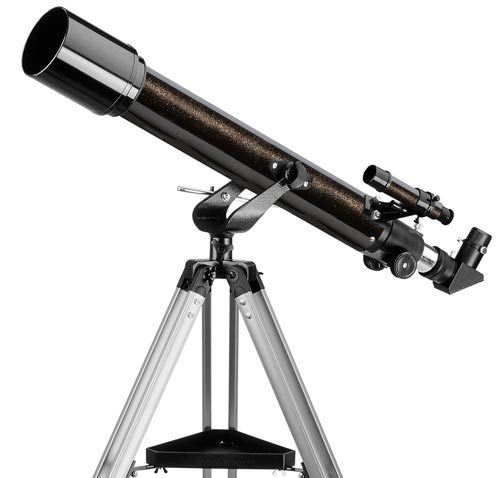
A refracting telescope uses _______ to focus light.

a)

Lenses

b)

Mirrors

c)

Lasers

d)

Water

54.

Reflecting telescopes use _______ to focus light.

a)

Lenses

b)

Flat mirrors

c)

Curved Mirrors

d)

A lens and lasers

55.
Why is the Hubble telescope located in space?
a)
So it can be closer to the stars it magnifies
b)
They have very large optical lenses
c)
So its images arent distorted by Earth's atmosphere 
d)
So it can be operated by astronauts 
56.
Both reflecting and refracting telescopes are designed to
a)
break visible light into colors of the spectrum.
b)
separate visible light from ultraviolet and radio waves.
c)
gather and focus visible light.
d)
work better with short-wavelength radiation.
57.
A device that detects radio waves from objects in space is called a(n)
a)
radio telescope.
b)
reflecting telescope.
c)
refracting telescope.
d)
electromagnetic telescope.
58.
Why is the Hubble telescope located in space?
a)
So it can be closer to the stars it magnifies
b)
They have very large optical lenses
c)
So its images arent distorted by Earth's atmosphere 
d)
So it can be operated by astronauts 
59.
Which of the following best describes a star?  A star is a celestial body ---
a)
composed of rock and metal with a very high density
b)
that is too big to be an asteroid, but too small to be a planet.
c)
that rotates on an axis and revolves around the Sun
d)
composed of gases that emit light due to nuclear reactions
60.
Use the Hertzsprung-Russell Diagram to answer the following question.  Betelgeuse is a _____
a)
Hot and Bright Star
b)
Cool and Bright Star
c)
Hot and Dim Star
d)
Cool and Dim Star
61.
What are the three types of galaxies?
a)
Spiral, Elliptical, Ambiguous
b)
Whirlpool, Ellipse, Irregular
c)
Spiral, Elliptical, Irregular
d)
Swirly, Fuzzy, Uh...
62.
Black holes are best described as:
a)
space fillers
b)
holes
c)
a place in space where gravity pulls so much even light can't get out
d)
gravity bombs
63.
Analyze this HR Diagram. Which group of stars is considered to have lower than average luminosity as well as a higher than average temperature?
a)
Giants
b)
Main Sequence
c)
White Dwarfs
d)
Super Giants
64.
Analyze this HR Diagram. Which group of stars is considered to have higher than average luminosity as well as a lower than average temperature?
a)
Giants
b)
Main Sequence
c)
White Dwarfs
d)
Super Giants
65.
In the diagram given, what happens as we move to the left?
a)
Stars Get Larger
b)
Stars get Colder
c)
Stars get hotter
66.
the distance light travels in a year
a)
parallax
b)
absolute magnitude
c)
apparent magnitude
d)
light year
67.
Galaxies are composed of (best answer)
a)
stars
b)
stars and gas
c)
stars, dust, and gas
d)
stars, dust, and gas held together by gravity
68.
The Milky Way Galaxy is a 
a)
spiral
b)
lenticular
c)
elliptical 
d)
irregular
69.
What type of galaxy is this?
a)
Spiral
b)
Elliptical
c)
Irregular 
d)
Irrational
70.
What type of galaxy is this?
a)
Spiral
b)
Elliptical
c)
Irregular
d)
Irrational
71.
What type of galaxy is this?
a)
Spiral
b)
Elliptical
c)
Irregular
d)
Irrational
72.
What type of galaxy has no defined pattern or shape?
a)
Spiral 
b)
Elliptical
c)
Irregular
d)
Constellation
73.

What galaxy do we live in?

a)

Irregular Galaxy

b)

Spiral Galaxy

c)

Elliptical Galaxy

d)

The toilet

74.
What is the name of our galaxy? 
a)
Our galaxy is called the Milky Way galaxy 
b)
Our galaxy is called the Andromeda galaxy 
c)
Our galaxy is called the Grand spiral  galaxy. 
d)
Our galaxy is called the Whirlpool galaxy.
75.

In comparison to other stars in the sky, the Sun appears brighter because it is–

a)

Bigger

b)

Smaller

c)

Nearer

d)

Further

76.
The color of a star depends on its
a)
size
b)
temperature
c)
shape
d)
magnitude
77.
Which property of a star is the brightness of a star at a standard distance?
a)
Apparent (magnitude) brightness
b)
Absolute (magnitude) brightness
c)
Luminosity
d)
Size of the star
78.
The brightness of a star as seen from Earth is its 
a)
apparent brightness.
b)
absolute brightness.
c)
parallax.
d)
reflective brightness.
79.
A very bright star can seem to be dimmer because it is 
a)
further away
b)
cooler in temperature
c)
very close
d)
batteries are dying
80.

Based on the belief that the sun is the center of the universe

a)

heliocentric

b)

geocentric

c)

aphelion

d)

parallax

81.

A model of the universe in which Earth is at the center of the revolving planets and stars.

a)

heliocentric

b)

geocentric

c)

aphelion

d)

parallax

82.

An apparent shift in the position of an object when viewed from different locations

a)

heliocentric

b)

geocentric

c)

parallax

d)

aphelion

83.
A constellation is a group of visible ____ that form a pattern when viewed from Earth.  
a)
planets
b)
stars
c)
patterns
d)
creatures
84.

What is a constellation?

a)

A group of patterns that form a star

b)

A group of stars that form a pattern

c)

Fine Italian cuisine

d)

A star

85.

Most scientists believe the Big Bang Theory explains which of the following questions?

a)

How our planets and moons formed

b)

How our universe began

c)

How the sun turns hydrogen into helium

d)

How fast light travels through space

86.
If a star is being observed from Earth and it's light has shifted towards the blue side of the electromagnetic spectrum it would be...
a)
Moving towards the Earth
b)
Moving away from the Earth
c)
This is a trick question that cannot be answered
d)
It isn't a star, it is a very large blueberry.
87.
If a star is being observed from Earth and it's light has shifted towards the red side of the electromagnetic spectrum it would be...
a)
Moving towards the Earth
b)
Moving away from the Earth
c)
This is a trick question that cannot be answered
d)
It isn't a star, it is a very large blueberry.