wayground logo

Free Printable Worksheets

NEW

Font size

S
M
L
XL
Worksheets

Atomic Structure; Atoms Vs. Ions

Total questions: 60

Worksheet time: 55mins

Name
Class
Date
1.

What is the atomic number?

a)

the number of protons in the nucleus

b)

the number of protons and neutrons in the nucleus

c)

the number of neutrons in the nucleus

d)

the number of protons in the energy levels

2.

What is the mass number?

a)

the number of protons in the nucleus

b)

the number of protons and neutrons in the nucleus

c)

the number of neutrons in the nucleus

d)

the number of protons and electrons in the atom
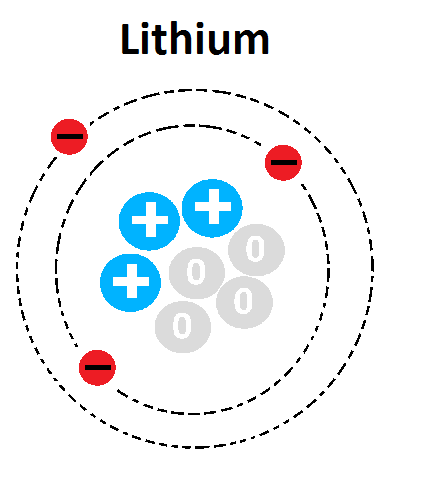
3.

What is the atomic number of this atom?

a)

1

b)

3

c)

4

d)

7

4.

What is the mass number of this atom?

a)

1

b)

3

c)

4

d)

7

5.
In order for an atom to be neutral what has to be true?
a)
The atom has more protons than neutrons
b)
The atom has more neutrons than protons
c)
The atom has the same number of protons and neutrons
d)
The atom has the same number of protons and electrons
6.
What does the C represent?
a)
atomic mass
b)
atomic number
c)
element name
d)
chemical symbol 
7.
How is the number of neutrons in the nucleus of an atom calculated?
a)
Add the number of e- and p+ together
b)
Subtract the number of e- from p+
c)
Subtract the number of p+ from the mass number
d)
Add the mass number to the number of e-
8.
What subatomic particles would you find in the nucleus of an atom?
a)
Protons only
b)
Protons and Neutrons
c)
Neutrons and Electrons
d)
Protons and Electrons 
9.
Which subatomic particles contribute the most to the mass of an atom?
a)
Protons, Neutrons, Electrons
b)
Protons only
c)
Protons and Electrons
d)
Protons and Neutrons
10.
If an atom has 12 positively charged subatomic particles, which of the following must it also have to be considered a neutral atom?
a)
12 neutrons
b)
12 electrons
c)
12 protons
d)
24 protons and neutrons
11.

An atom has 10 protons, 15 neutrons and 10 electrons what is its mass number.

a)

20

b)

10

c)

35

d)

25

12.

How many electrons does this atom have?

a)

2

b)

4

c)

6

d)

10

13.
The atomic number of an element that has 9 protons, 9 electrons, and 10 neutrons is _____.
a)
9
b)
10
c)
19
d)
28
14.
An element with a mass number of 11 and an atomic number of 5 has how many neutrons?
a)
11
b)
5
c)
6
d)
16
15.
Where is most of the mass in an atom located?
a)
in the nucleus
b)
in the protons
c)
in the neutrons
d)
in the electrons
16.
An atom has an atomic number of 15 and a mass number of 31. How many protons are there in the atom?
a)
15
b)
31
c)
16
d)
47
17.
What is the atomic number of the atom pictured? 
a)
9
b)
10
c)
18
d)
19
18.

Which of the following determines the identity of an element?

a)

number of protons

b)

atomic mass

c)

number of neutrons

d)

number of shells

19.
Valence electrons are: 
a)
Electrons farthest away from the nucleus
b)
Electrons closest to the nucleus
c)
Electrons that just come and go - they don't stay with the atom
20.
Ions are: 
a)
atoms with a positive or negative charge
b)
atoms with no charge
c)
atoms with ONLY a positive charge
d)
atoms with ONLY a negative charge
21.
When an atom loses a valence electron, it becomes a(n) _____________ ion.
a)
positive
b)
negative
c)
neutral
d)
polyatomic
22.

Why are ions formed?

a)

To make our lives difficult

b)

Because atoms want to be stable

c)

Because atoms have the same number of protons and electrons

d)

Because atoms gained neutrons

23.

Cations are...

a)

Positive

b)

Negative

c)

Neutral

24.

Anions are...

a)

Positive

b)

Negative

c)

Neutral

25.

A neutral atom of Magnesium (shown in image) will...

a)

Lose 2 electrons when it becomes an ion

b)

Gain 2 electrons when it becomes an ion

c)

Gain 6 electrons when it becomes an ion

d)

Lose 1 electron when it becomes an ion

26.
How many neutrons does B (Boron) contain?
a)
5
b)
11
c)
6
d)
10.811
27.

An element has 25 protons and 22 electrons. It has a charge of...

a)

3+

b)

3-

c)

2+

d)

1-

28.
subatomic particles found on the outermost shell & responsible for the atom's reactivity
a)
neutrons
b)
valence electrons
c)
isotopes
d)
ions
29.
Value representing the number of protons in an element
a)
Atomic Mass
b)
Mass Number
c)
Valence Electrons
d)
Atomic Number
30.
A tiny but very dense, positively charged portion of the atom that holds most of the atomic mass
a)
Electron Shells
b)
Orbitals
c)
Electron Cloud
d)
Nucleus
31.

In the modern periodic table, elements are organized by increasing ________.

a)

number of electrons

b)

atomic mass

c)

atomic number

d)
None of these
32.
How many "valance electrons" are in chlorine?
a)
7
b)
2
c)
17
d)
8
33.
An isotope has...
a)
the same number of protons but different number of electrons
b)
same number of protons but different number of neutrons
c)
same number of electrons and neutrons
d)
same number of electrons, protons, and neutrons
34.
Not non-metals or metals but somewhere in between
a)
noble gases
b)
isotopes
c)
metalloids
d)
ions
35.

I am usually a good conductor and shiny/lustrous

a)

Metal

b)

Metalloid

c)

Non-metal

36.

I am usually a gas, and at the very right side of the periodic table of elements

a)

Metal

b)

Metalloid

c)

Non-metal

37.

Potassium has 1 valence electron, would it rather gain 7 electrons or lose its one valence electron to complete its energy level?

a)

lose 1 electron

b)

gain 1 electron

c)

lose 7 electrons

d)

gain 7 electrons

38.

A Bromine ion gains 1 electron, which of the following is the correct symbol for a Bromine ion?

a)

Br-1

b)

Br+1

c)

Br+7

d)

Br-7

39.

If an atom loses electrons, the charge will be positive.

a)

true

b)

false

40.
An atom becomes _________ when it gains electrons.
a)
Positive
b)
Negative
c)
Neutral
d)
Invinsible
41.

Which types of elements form cations (+ ions)?

a)

metals

b)

nonmetals

c)

metalloids

d)

noble gases

42.
In order for an atom to be neutral what has to be true?
a)
The atom has more protons than neutrons
b)
The atom has more neutrons than protons
c)
The atom has the same number of protons and neutrons
d)
The atom has the same number of protons and electrons
43.
Where is most of the mass in an atom located?
a)
in the nucleus
b)
in the protons
c)
in the neutrons
d)
in the electrons
44.

An atom has 8 protons, 8 neutrons, and 10 electrons.

What is the mass of this atom?

a)

8

b)

16

c)

18

d)

-2

45.

Which part of an atom is used to identify it?

a)

number of protons

b)

number of neutrons

c)

number of electrons

46.
Which of the following best describes the Bohr model atom?
a)
It shows that electrons are evenly scattered in the atom
b)
Electrons are in the nucleus of an atom
c)
Electrons are in orbits around the nucleus
d)
It showed that electrons can be found anywhere in the atom
47.

What charge does an atom have when it GAINS electrons?

a)

Positive

b)

Negative

c)

Neutral

48.

How many neutrons does this bromine atom have?

a)

35

b)

45

c)

80

49.

What type of atom is this?

a)

Neutral atom

b)

Cation

c)

Anion

d)

Isotope

50.

What does it change in an ion?

a)

The number of electrons

b)

The number of protons

c)

The number of neutrons

51.

What does it happen to this atom?

a)

It LOSES electrons

b)

It GAINS electrons

c)

It GAINS protons

d)

It LOSES protons

52.

What type of atom is element C?

a)

Normal atom

b)

Ion

c)

Isotope

53.
Two atoms that have different numbers of protons are 
a)
Different ions
b)
Different isotopes
c)
Different elements
54.
Is the element shown in this image an ion, isotope or normal atom?
a)
atom
b)
isotope
c)
cation (+ ion)
d)
anion (- ion)
55.
The atomic mass is equal to _.
a)
the number of protons only
b)
the number of neutrons only
c)
the total number of protons and neutrons
d)
the number of protons, neutrons, and electrons.
56.

What did Niels Bohr propose about the structure of an atom?

a)

Atoms are indivisible

b)

Electrons move in fixed orbits around the nucleus

c)

Atoms are made up of protons, neutrons and electrons

d)

Atoms combine in simple whole number ratios to form compounds

57.

What did J.J. Thomson discover that led to the development of the 'plum pudding' model of the atom?

a)

Protons

b)

Neutrons

c)

Electrons

d)

Isotopes

58.
Rutherford's gold foil experiment provided evidence that...
a)
Negative and positive charges are spread evenly throughout the atom.
b)
Alpha particles have a positive charge.
c)
Gold is not a dense as previously thought.
d)
There is a dense positively charged nucleus at the center of an atom.
59.
J.J. Thomson provided evidence that an atom...
a)
is the smallest particle of matter
b)
contains negatively charged particles
c)
has an overall negative charge
d)
has an overall positive charge
60.
Which is the correct sequence of the scientists who made major changes in the model of the atom?
1-JJ Thomson
2-Erwin Schrodinger
3-John Dalton
4-Niels Bohr
5-Ernest Rutherford

a)
2, 1, 4, 3, 5
b)
3, 1, 5, 4, 2
c)
5, 3, 2, 1, 4
d)
4, 3, 2, 1, 5