
 Worksheets
Year 10 B 2020
Total questions: 100
Worksheet time: 50mins
Name
Class
Date
1.
Algorithm
a)
is simply a list of instructions that describe how to do
a particular task.
a particular task.
b)
Starting up a computer
c)
The speed at which the processor carries out instructions
d)
A technology for storing data in an electronic format
which is used for memory cards. e.g. USB, memory cards.
which is used for memory cards. e.g. USB, memory cards.
2.
BIOS
a)
. It checks that the computer
hardware is all present and working correctly when you power up a
computer system
hardware is all present and working correctly when you power up a
computer system
b)
The speed at which the processor carries out instructions,
measured in Megahertz (MHz) or Gigahertz (GHz).
measured in Megahertz (MHz) or Gigahertz (GHz).
c)
A technology for storing data in an electronic format
which is used for memory cards. e.g. USB, memory cards.
which is used for memory cards. e.g. USB, memory cards.
d)
210 bytes exactly, or about 1000 bytes.
3.
Bit
a)
Either a 0 or a 1
b)
8 sets of 8 or 1
c)
1024 sets of 0 or 1
d)
The measurement of speed in a network
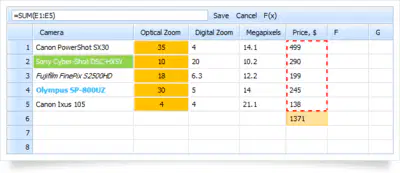
4.
Cache Memory
a)
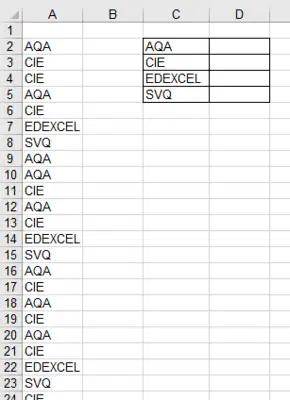
Very fast access memory which is close to the processor and stores
frequently used data.
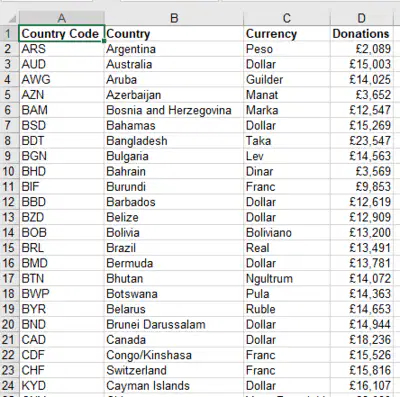
frequently used data.
b)
A technology for storing data in an electronic format
which is used for memory cards. e.g. USB, memory cards.
which is used for memory cards. e.g. USB, memory cards.
c)
a group of 4 bits.
d)
holds part of a program that starts running
when a computer is switched on.
when a computer is switched on.
5.
Virtual Memory
a)
when the computer uses some of its hard disk
space as if it were RAM.
space as if it were RAM.
b)
When you switch the power off, all the contents will be los
c)
where the workstations are 'further
apart' from each other. WANs are usually made up of LANs connected
together
apart' from each other. WANs are usually made up of LANs connected
together
d)
his is the place where the computer
stores programs and files it is using at the moment.
stores programs and files it is using at the moment.
6.
The PCs on a network are connected to a ______. It manages
lots of connections with computers at the same time and lets them all
communicate with the server.
lots of connections with computers at the same time and lets them all
communicate with the server.
a)
Hub or Switch
b)
Memory Drive
c)
USB
d)
HTTPS
7.
Dynamic IP Address
a)
changes all the time and is allocated by other equipment
on the network automatically.
on the network automatically.
b)
Transferring files over the internet
c)
software system which is designed and developed specifically for
a purpose or company.
a purpose or company.
d)
Very fast access memory which is close to the processor and stores
frequently
frequently
8.
Protocols
a)
When two devices want to successfully communicate, they must
agree to follow some rules about the way they will do it.
agree to follow some rules about the way they will do it.
b)
Memory devices which keeps its data without power and has no
moving parts.
moving parts.
c)
when the computer uses some of its hard disk
space as if it were RAM.
space as if it were RAM.
d)
When you switch the power off, all the contents will be lost. e.g. RAM
9.
Where the workstations are 'further
apart' from each other.
apart' from each other.
a)
WAN
b)
LAN
10.
Peripheral Device
a)
Any hardware device which is connected to the
computer and controlled by CPU.
computer and controlled by CPU.
b)
This is the place where the computer
stores programs and files it is using at the moment.
stores programs and files it is using at the moment.
c)
ROM holds part of a program that starts running
when a computer is switched on.
when a computer is switched on.
d)
Simple Mail Transfer Protocol
11.
Static IP Address
a)
IP address is fixed and is allocated by the network manager.
b)
Software that enables the user to provide instructions to, interact
with the computer or any device. It is part of the operating system.
with the computer or any device. It is part of the operating system.
12.
Multi-tasking
a)
it appears to be running more than one program at the same time.
b)
Memory that can be addressed and accessed directly by the processor
c)
Memory that is used to store the programs and data currently in use by a computer. It is volatile which means that it gets erased when the computer is switched off.
13.
Braille
a)
A technique that allows blind people to read by feeling a pattern of raised dots with their fingers.
b)
This is an area of the hard disk that is used to store running programs as if it was RAM.
c)
A computer is multitasking if it appears to be running more than one program at the same time.
14.
Magnetic storage
a)
Storage that uses a surface which can be magnetised to store data
b)
Storage that can be disconnected from the main computer unit, for example to transfer files between computers.
c)
Moving a data, program or file from memory onto secondary storage for later use.
15.
Solid state drive
a)
Storage that works by storing the data in electronic circuits
b)
Storage that can be disconnected from the main computer unit, for example to transfer files between computers.
c)
Storage that uses a surface which can be magnetised to store data.
16.
Boot program
a)
The program that is used to start the computer. It is automatically loaded so that its instructions can be fetched when the computer is turned on, and it eventually loads the operating system.
b)
The speed at which the processor carries out instructions, measured in Megahertz (MHz) or Gigahertz (GHz).
c)
Each single processor circuit capable of fetching and executing instructions.
17.
Fetch–Execute cycle
a)
The process by which programs are run on a computer. The processor repeatedly fetches the instructions of the program from memory and executes them.
b)
Memory buffer on the processor that stores instructions which have been fetched before and allows them to be fetched more quickly the next time.
c)
Each single processor circuit capable of fetching and executing instructions.
18.
Denary number
a)
A number that uses the denary digits from 1 to 10.
b)
A number consisting only of binary digits.
c)
The digits ‘0’ and ‘1’.
19.
Overflow
a)
An error caused by attempting to store a number that is too large for the number of bits available.
b)
Numbers expressed in base 16.
c)
Numbers expressed in base 10.
20.
Character set
a)
American Standard Code for Information Interchange – a7-bit character code.
b)
The complete collection of characters that can been coded in a particular coding system.
c)
At least 16-bit code. Defines what characters it encodes and then uses a suitable number of octets to store them as a number.
21.
Bit map
a)
An image file format where the picture is represented asset of dots or pixels.
b)
Data about data.
c)
The number of dots per unit length. It affects the clarity of the image.
d)
Graphics stored as formulae.
22.
Analogue
a)
A form of signal that can take any value between the lowest and the highest. Sound is like this.
b)
A form of signal that is either on or off. Computer music files must be digital.
c)
P3 MPEG-1 or MPEG-2 Audio Layer III – a digital audio encoding format which uses lossy data compression. A common standard for digital music.
23.
A way of compressing a file without losing data.
a)
Lossless
b)
Lossy
24.
The process of capturing data about the sound at intervals.
a)
Sampling
b)
Lossy
c)
Digital
d)
Analog
25.
A comparison between two items of data.
a)
Logical operation
b)
Instruction set
c)
Arithmetic operation
d)
Operand
26.
The total collection of instructions that a processor can carry out.
a)
Instruction set
b)
Logical operation
c)
Operand
d)
Operator
27.
A subset of code within a larger program, which performs a specific task.
a)
Subroutine
b)
Process
c)
Flowchart
d)
Decision
28.
A set of rules specifying a how to solve a problem.
a)
Algorithm
b)
Procedure
c)
Function
d)
Selection
29.
The pathway through a program is selected by using a condition to decide on what instructions to execute next.
a)
Selection
b)
Sequence
c)
Statement
d)
Iteration
30.
A group of instructions is executed repeatedly until a condition is met (a loop).
a)
Sequence
b)
Selection
c)
Iteration
d)
Nesting
31.
When control structures are inserted within other control structures.
a)
Sequence
b)
Selection
c)
Nesting
d)
Iteration
32.
Name used to identify a value in memory that does not change during the execution of the program.
a)
Variable
b)
Constant
33.
Name used to identify a value in memory that can change during the execution of the program
a)
Variable
b)
Constant
34.
Data type that will store decimal (or fractional) values.
a)
Real
b)
Integer
c)
String
d)
Boolean
35.
Data type that will store True or False
a)
Real
b)
String
c)
Integer
d)
Boolean
36.
A combination of values, variables, operators and functions that are evaluated according to the rules of the language.
a)
Expression
b)
Assignment
c)
Binary
37.
A block of variables of the same type using a single name and an index value.
a)
Array
b)
Index
c)
Integer
d)
Variable
38.
Integrated Development Environment containing various utilities used whilst writing computer code.
a)
IDE
b)
Run time environment
c)
Syntax
d)
Debugger
39.
Allows the developer to run the code during development to check for logical errors and that the code does what it is expected to do.
a)
Run time environment
b)
Syntax
c)
Debugger
40.
Set of rules that define the combinations of symbols that are acceptable in a computer language.
a)
Syntax
b)
Logic
41.
Software that is produced on commission, specifically fora user.
a)
Custom Written
b)
Open Source
c)
Proprietary
42.
System software that is used by the operating system to control peripheral devices.
a)
Device driver
b)
Disk Formatting
43.
An agreed system and set of rules that allow different programs to transfer files across different computers over the internet.
a)
File Transfer Protocol
b)
HyperText Transfer Protocol
44.
A utility or device that monitors the traffic between a computer and the internet and only allows connections that are authorised.
a)
Firewall
b)
Malware
c)
Memory management
d)
Multi-tasking
45.
Network in which all the computers are of equal status.
a)
Ring
b)
Bus
c)
Star
d)
Peer-to-peer
46.
Write Your Full Name
4 lines
47.
1. Practical: In a presentation the effects added between slides is known as...
a)
Transistion
b)
Ribbon
c)
Master Slide
d)
Animation
48.
2.Unit 3 Practical: In MS Word the default line spacing is...
a)
Single
b)
2
c)
Double
d)
1.5
49.
3. Which of the following is a valid formula?
a)
=sum(A1:A6)
b)
=sum(A1,A6)
c)
=sum[A1:A6]
d)
sum=(A1:A6)
50.
4.Zoe wants to add together a range of cells in her spreadsheet. She would like Excel to add only the cells in the range that are greater than 50. What function should she use?
a)
SUMIF
b)
AVERAGEIF
c)
TOTALIF
d)
COUNTIF
51.
5. If you see this code, what do you need to do?#####
a)
Check your function syntax
b)
Re-enter the function formula
c)
Widen the column
d)
Use a different function
52.
6. You have been asked In Cell D2 use a count formula that counts the frequency of AQA in cell range E3 to E25. Which is the most appropriate function to use?
a)
COUNTIF
b)
SUMIF
c)
VLOOKUP
d)
IF
53.

7. You have been asked In cell D10 enter a function to lookup the destination for Robert Maxwell.What function would you use?
a)
VLOOKUP
b)
IF
c)
AVERAGE
d)
SUMIF
54.
8. You've been asked to Extract a list of countries that use dollar as their currency. How would you do this?
a)
Use a filter
b)
Use a formula
c)
Use a function
d)
Use a chart
55.
9. Which of the below formulae includes absolute cell referencing?
a)
=B7*$D$21
b)
=SUM(A2:D5)
c)
=IF(D5=5,"MET","FAIL")
d)
=AVERAGE(H7:H20)
56.
10. What is the correct format of an IF statement
a)
=IF (TEST, VALUE IF TRUE, VALUE IF FALSE) =IF(A1>B1,"YES","NO")
b)
=IF (TEST VALUE IF FALSE VALUE IF TRUE) =IF(A1>B1,NO, YES)
c)
=IF TEST,VALUE IF TRUE, VALUE IF FALSE =IFA1>B1,"YES","NO"
57.
11. If you need to compute the total sales which function will you use?
a)
MIN
b)
SUM
c)
Avg
d)
Max
58.
12. How would you find the lowest sale for a quarter of the year?
a)
SUM
b)
AVG
c)
MAX
d)
MIN
59.
13. Another name for a spreadsheet is....
a)
worksheet
b)
tablet
c)
workbook
d)
paper
60.
14. What is a spreadsheet used for?
a)
It is used to spread things...
b)
Spreadsheets are used to organize your food
c)
They are used to edit data.
d)
Used to process and perform calculations of raw data
61.
15. Which chart in Excel would best show the percentages of students' favorite ice cream flavors?
a)
Bar chart
b)
Scatter Chart
c)
Pie Chart
d)
Line Chart
62.
16. What kind of software is Excel?
a)
Word processing software
b)
Data Base Software
c)
Spreadsheet Software
63.
17. When inserting a formula, always start with
a)
equals symbol
b)
minus symbol
c)
plus symbol
64.
18. To allow you to evenly distribute a title over a table of numbers, use the
a)
Center button
b)
Merge cells only button
c)
Merge and Center button
65.
19. Eg $A$6 a reference to a cell used in a formula where, when the formula is copied to a new address, the cell address does not change.
a)
Absolute reference
b)
wrap text
c)
label
d)
nested formula / functions
66.
20. raw facts and figures, e.g. readings from sensors, survey facts, etc.
a)
Data
b)
wrap text
c)
Absolute reference
d)
CSV comma separated variables.
67.
21. validation check to ensure the data being entered is the same type as the data type specified for the field.
a)
Data type check
b)
Absolute reference
c)
CSV comma separated variables.
d)
Data
68.
22. entering the details into an ICT system twice; only if the two sets of data are identical will they be accepted for processing. It is a method of verification. This method is often used when you set up a new password.
a)
Double entry of data
b)
CSV comma separated variables.
c)
Data
d)
Data type check
69.
23. validation check to make sure that the data being entered has the correct number of characters in it.
a)
Presence checks
b)
Extreme data
c)
Length check
d)
Normal data
70.
24. data that is acceptable for processing and will pass the validation checks.
a)
Normal data
b)
Double entry of data
c)
Extreme data
d)
Length check
71.
25. validation checks used to ensure that data has been entered into a field.
a)
Presence checks
b)
Extreme data
c)
Length check
d)
Normal data
72.
26. when a cell is used in a formula and the formula is copied to a new address, the cell address changes to take account of the formula’s new position.
a)
Relative reference
b)
Length check
c)
Normal data
d)
Presence checks
73.
27. these are checks that a developer creates, using the software, in order to restrict the data that a user can enter to reduce errors.
a)
Validation checks
b)
Relative reference
c)
Presence checks
d)
Normal data
e)
Option 2
74.
28. checking that the data being entered into the ICT system perfectly matches the source of the data.
a)
Verification
b)
Presence checks
c)
Relative reference
d)
Validation checks
75.
29. checks performed on codes to make sure that they conform to the correct combinations of characters.
a)
Format checks
b)
Relative reference
c)
Validation checks
d)
Verification
76.
30. A rectangle or block in a worksheet. Any data that you want to enter into your worksheet must be placed in a cell.
a)
Format checks
b)
Verification
c)
Validation checks
d)
cell
77.
31. A cell that is currently opened for editing.
a)
Format checks
b)
Verification
c)
Active Cell
d)
cell
78.
32. cells that are vertical
a)
Active Cell
b)
Columns
c)
Rows
d)
Cell
79.
33. The documents in the workbook. Also called sheets. You can have more than one worksheet in a workbook. Tabs at the bottom of the of the screen show which of your worksheets you are currently working on.
a)
worksheets / sheets
b)
columns
c)
rows
d)
Active Cell
80.
34. An Excel spreadsheet file. It has all of the data that you have entered and allows you to sort or calculate the results.
a)
workbook
b)
Rows
c)
columns
d)
worksheets / sheets
81.
35. At the bottom of the of the screen there is a rectangle box sticking out from the worksheet, this shows which worksheet you are currently working on.
a)
worksheets / sheets
b)
columns
c)
Tabs
d)
workbook
82.
36. There are different types of charts that are used to summarize and compare data. Such as bar, column and pie.
a)
charts
b)
tabs
c)
workbook
d)
worksheets / sheets
83.
37. A sequence inside a cell that is used to produce a value. It must begin with an equal (=) sign.
a)
charts
b)
tabs
c)
formula
d)
pages
84.
38. These are formulas that are pre-built into Excel. They are designed to make difficult formulas easier.
a)
pages
b)
charts
c)
function
d)
formula
85.
39. Is another way of saying number data.
a)
formula
b)
pages
c)
numeric data
d)
function
86.
40. So it is easy to remember you can give a cell (eg C1) a name that describes the data in that cell (eg Tax%)
a)
function
b)
formula
c)
named cell
d)
numeric data
87.
41. Is a collection of cells that have been identified as a group. So it is easy to remember you can give a range (eg A1:C12) a name that describes the data in those cells.
a)
numeric data
b)
function
c)
named ranges
d)
named cell
88.
42. formula or functions that are inside another, usually an IF function will hold other functions eg. IF(AVERAGE(B2:B10)>100,SUM(C2:G10),0)
a)
named cell
b)
numeric data
c)
nested formula / functions
d)
named ranges
89.
43. The text that is typed into the cells of a spreadsheet. They have no numeric value and cannot be used in a formula or function.
a)
nested formula / functions
b)
named ranges
c)
named cell
d)
label
90.
44. you can to apply a format to a cell or a range of cells based on certain rules. eg if the cell contains "A" fill the cell green
a)
Nested Formula
b)
Colour formatting
c)
Conditional formatting
d)
Numeric data
91.

45. information is ............
a)
None of the below
b)
Data + Data
c)
numbers and characters
d)
meanless
92.
46. Computer alows you to ......and ........information
a)
copy and paste
b)
save and play
c)
store and process
93.
47. Why do you need security on a computer?
a)
So no personal data can’t be stolen and hacked also private information
b)
To share everything with everyone
c)
To make it difficult for hackers
94.

48. What is ICT?
a)
Information Communication technology
b)
Information Connecting Technology
c)
Integrating communication technologhy
d)
Information communication technique
95.

49. What is download?
a)
To copy text from one document to another
b)
To create a new document
c)
To copy data from one computer system to another
d)
To send a message
96.

50. What is grooming?
a)
How a predator tries to get you to trust them
b)
Washing your dog
c)
Playing outside
d)
Washing your hair
97.
51. Mention three types of cell reference
(a)
98.
52. Give four examples of arithmetic operators used in spreadsheet
(a)
99.
53. What is the difference between a workbook and worksheet
(a)
100.
54.Give three types of operators used in spreadsheet
(a)
100 %

