
NEW
Font size
 Worksheets
FORM 4 END OF TERM EXAMINATION
Total questions: 60
Worksheet time: 48mins
What is the correct order of the levels of cell organization from simplest (smallest) to most complex (biggest)?
Cell, Organ, Tissue, Organ System, Organism
Organism, Tissue, Cell, Organ system, Organ
Cell, Tissue, Organ, Organ System, Organism
Tissue, Cell, Organ, Organ System, Organism
What is the smallest unit of an organism or living thing?
Organ
Organ System
Cell
Tissue
Which of the following is the LARGEST and MOST complex level of organization in the body?
Cell
Tissue
Organ
Organ System
Justin has learned that the brain, spinal cord, and peripheral nerves work together. What do they combine to form?
A cell
A tissue
An organ
An organ system
What body system produces blood cells for the body?
Nervous System
Digestive System
Respiratory System
Skeletal System
Which phrase defines the term homeostasis?
division of cells that make up the body
regulation of the environment outside the body
maintenance of a stable environment inside the body
removal of waste materials produced by the cells of the body

What type of joint is this
pivot
gliding
ball and socket
fixed

What type of joint is this
gliding
hinge
pivot
ball and socket

What type of joint is this
gliding
pivot
ball and socket
hinge

What type of joint is this
hinge
pivot
ball and socket
gliding
Tough band of tissue that holds bones together
cartilage
vertebrae
ligament
marrow
Soft rubbery tissue that keeps bone from rubbing together
cartilage
marrow
ligament
vertebrae
Which type of joint gives you the largest range of motion?
Pivot
Ball and socket
Hinge
Gliding

Ribcage (ribs)
1
6
4
7

Radius
2
10
7
6

Humerus
10
2
3
7

Ulna
2
10
3
5

Femur
5
10
11
8

Tibia
9
5
8
11

A human skeleton is made up of _________ bones
106
206
50
302

What bone is highlighted?
Skull (Cranium)
Mandible
Femur
Scapula

What bone is highlighted?
Vertebrae
Femur
Cranium
Ribs

What is the place where two bones meet?
bones
tendons
ligament
joint

What is the name for the connector that attaches bone to bone?
ligament
tendon
joint
cartilage


Muscles that you control are known as....
Involuntary
Fast Twitch
Voluntary
Slow Twitch
Of the 3 types of muscles, which muscles attach to bone.
Skeletal Muscle
Cardiac Muscle
Smooth Muscle
Of the 3 types of muscle, which is responsible for pumping your heart.
Skeletal Muscle
Cardiac Muscle
Smooth Muscle
Of the 3 types of muscle, which is found in hollow organs and around blood vessels.
Skeletal Muscle
Cardiac Muscle
Smooth Muscle
How do pairs of skeletal muscles work together?
One muscle in the pair pulls on a bone, while the second muscle pulls on the first muscle.
While one muscle in the pair contracts, the other returns to its original length.
Both muscles extend at the same time.
One contracts and the other stretches.

What type of muscle tissue is indicated in the picture?
cardiac
smooth
skeletal
fishy

What type of muscle is indicated in the picture?
cardiac
smooth
skeletal
epithial

What muscle is highlighted in the picture?
Triceps
Biceps
Quads
Deltoids

What muscle is highlighted?
Triceps
Biceps
Quads
Deltoids

What muscle is highlighted?
Trapezius
Latissimus Dorsi
Pectoralis Major
Deltoids

What muscle is highlighted?
Abdominals
Quads
Gluteus Maximus
Hamstring

What muscle is highlighted?
Latissimus dorsi (Lats)
Trapezius
Bicep Femoris (Hamstrings)
Gastrocnemius (Calves)

What is represented in the picture?
gastrochnemius (calf)
bicep femoris (hamstring)
deltoid
gluteus maximus
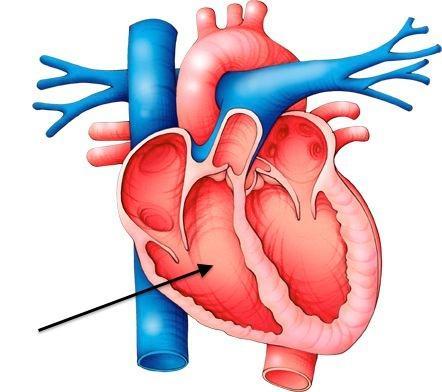


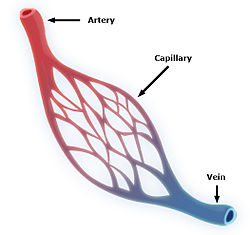


Name part I.
pericardium
mediastinum
septum
unknownum

Name part B.
Pulmonary arteries
Pulmonary veins
Superior Vena cava
Aorta

