wayground logo

Free Printable Worksheets

NEW

Font size

S
M
L
XL
Worksheets

Edwards Unit 1 Review

Total questions: 38

Worksheet time: 40mins

Name
Class
Date
1.
Each column in the periodic table is called a 
a)
period
b)
group
c)
cluster
d)
unit
2.
The atomic number tells you what?
a)
number of electrons
b)
number of protons
c)
number of neutrons
d)
both electrons and protons in an atom.
3.
Which group of the periodic table is composed of inert (not reactive)  gases?
a)
alkali metals
b)
alkaline earth metals
c)
halogens
d)
noble gases
4.
Elements which are shiny, conduct electricity and heat are called
a)
metal
b)
nonmetal
c)
metalloid
d)
nonexistent
5.
The atoms along the staircase are called 
a)
metals
b)
nonmetals
c)
metalloids
d)
noble gases
6.
How many neutrons are in a Gold atom?
a)
79
b)
196
c)
118
d)
275
7.
What's a valence electron?
a)
electrons in the second energy level
b)
electrons in the outermost energy level
c)
the atomic number
d)
electrons in the first level
8.
What does the 1.00794 stand for?
a)
Hydrogen
b)
atomic number
c)
atomic mass
d)
atomic explosion
9.
The positive particles of an atom are 
a)
electrons 
b)
positrons 
c)
neutrons 
d)
protons 
10.
Particles in an atom that are neutral and have no charge are 
a)
negatrons 
b)
electrons 
c)
neutrons 
d)
protons 
11.
The electrons of an atom are found...
a)
in the outer "cloud" surrounding the atom.
b)
in the nucleus of the atom.
c)
in the cloud and in the nucleus.
12.
The subatomic particle with a negative charge is the
a)
electron
b)
proton
c)
neutron
d)
nucleus 
13.
What is the atomic mass equal to?
a)
the number of protons
b)
the number of protons and neutrons
c)
the number of neutrons
d)
the number of protons and electrons
14.
In the modern periodic table elements are arranged by:
a)
atomic mass
b)
atomic number
c)
valence electrons
d)
number of isotopes
15.
Two elements chemically bonded form
a)
element
b)
compound
c)
mixture
d)
solutions
16.
All matter is composed of (contains) at least one element on the periodic table
a)
True
b)
False
17.
The amount of space something takes up.
a)
matter
b)
mass
c)
volume
d)
element
18.
Anything that has mass and takes up space.
a)
volume
b)
matter
c)
solid
d)
temperature
19.
The state of matter in which a substance has a definite volume but no definite shape.
a)
gas
b)
liquid
c)
solid
d)
matter
20.
The state of matter in which a substance has a definite shape and definite volume.
a)
solid
b)
gas
c)
atom
d)
liquid
21.
The state of matter in which a substance does not have a definite shape or volume.
a)
element
b)
compound
c)
gas
d)
liquid
22.
A change in which the form or shape of a substance changes but the chemical makeup of the substance remains the same.
a)
chemical change
b)
reaction
c)
physical change
d)
solution
23.
A change in one or more substances, caused by a reaction, that forms new and different substances.
a)
mixture
b)
physical change
c)
element
d)
chemical change
24.
The process in which new substances are formed during  a chemical change.
a)
reaction
b)
solution
c)
matter
d)
volume
25.
The smallest unit into which an element can be divided and still retain all the properties of that element.
a)
atomic theory
b)
compound
c)
element
d)
atom
26.
Matter that is made of only one kind of atom.
a)
compound
b)
volume
c)
element
d)
atom
27.
A substance made of atoms of two or more elements that have combined chemically.
a)
compound
b)
matter
c)
volume
d)
chemical change
28.
Atoms are most stable when their outer shell is complete.
a)
true
b)
false
29.
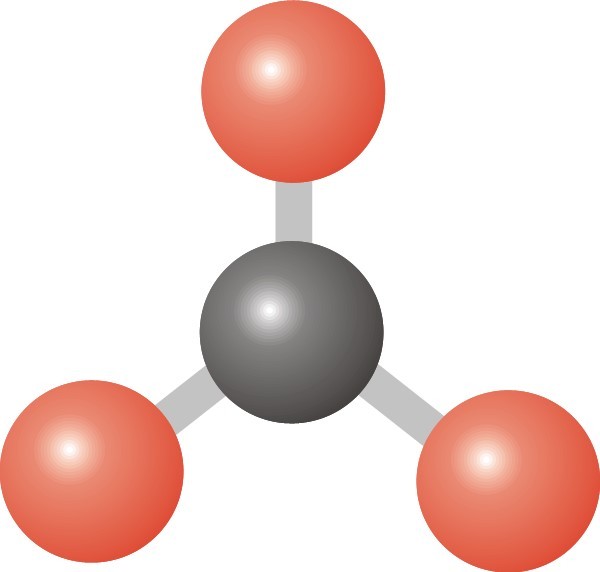
What molecule could this be? 
a)
BF3
b)
CH4
c)
H2O
d)
CO2
30.

Choose which one is a physical property

a)

Flammability

b)

Solubility

c)

Water Reaction

d)

Magic

31.

The melting point of a substance is the temperature at which the substance changes from a solid to

a)

Gas

b)

Liquid

c)

Solid

d)

Plasma

32.

Choose the one that is a chemical property

a)

Magnetism

b)

Size

c)

Color

d)

Reactivity with water

33.

If you describe a substance as being corrosive, you have given a __________ property of that substance

a)

Chemical

b)

Large

c)

Physical

d)

Thermal

34.

Electrical conductivity is an example of what kind of property?

a)

Chemical

b)

Large

c)

Physical

d)

Boiling

35.

Which of these statements best describes a chemical property of a substance?

a)

It reacts with an acid to form water

b)

The object has a blue color

c)

The substance has a powdery texture

d)

It has a density of 2.11 g/cm3

36.

Choose whether the following is a physical or chemical property: Reacts with oxygen

a)

Physical

b)

Chemical

37.

Choose whether the following is a physical or chemical property: Magnetic

a)

Physical

b)

Chemical

38.

Which option best describes the difference between a physical and chemical property?

a)

There is no difference between a physical and chemical properties?

b)

Physical properties are usually room temperature but chemical properties are very hot

c)

Observing a chemical property results in the creation of a new substance while observing a physical change does not change the substance

d)

The difference between physical and chemical properties are the states of matter