wayground logo

Free Printable Worksheets

NEW

Font size

S
M
L
XL
Worksheets

Semester Review

Total questions: 65

Worksheet time: 1hrs 5mins
Name
Class
Date
1.
What is the formula for force?
a)
F=M/A
b)
F=A/M
c)
F=M*A
d)
F=M*F
2.
45 m/s2 is the... 
a)
Mass
b)
Force 
c)
Acceleration
d)
weight
3.
If a force of 26 N is exerted on two balls, one with a mass of 0.52 kg and the other with a mass of 0.78 kg, which ball will have the greater acceleration?  (F=ma)
a)
The one with a mass of .78 kg will have the greatest acceleration.
b)
The one with a mass of .52 kg will have the greatest acceleration.
c)
They will both accelerate at the same rate.
4.
A 20 kg bike accelerates at 10 m/s2.  what was the force?
a)
25 Newtons
b)
20 Newtons
c)
200 Newtons
d)
10 Newtons
5.
A student pushes a box to right with a force of 10N while a young boy pushes the box to the left with a force of 8N. What is the sum of all forces on the box? 
a)
18N left
b)
18N right
c)
2N right
d)
2N left
6.
If net force acting on object is 0, then the force is considered to be..
a)
Balanced
b)
Unbalanced
c)
Equal in Direction
d)
Distance/Time
7.
What is Newton's First Law
a)
F=ma
b)
Every action has an equal and opposite reaction
c)
An object at rest stays at rest, an object in motion stays in motion. 
d)
Friction 
8.
Newton's third law states that any action will have a(n) _______ and ______ reaction
a)
Equal and similar
b)
Equal and opposite
c)
Equal and different
d)
Greater and opposite
9.
A person is pushed forward into their seat belt when a car stops.  Which law is this?
a)
1st
b)
 2nd
c)
2 and 3
d)
3rd 
10.
A bike accelerates at 10 m/s2 when a force of 50N is applied.  What is the mass of the bike and its rider?
a)
25 kg
b)
200 kg
c)
20 kg
d)
5 kg
11.
Which of Newton's laws are illustrated with a rocket launch?
a)
1st Law, the Law of Inertia. 
b)
2nd Law, the Law of Acceleration.
c)
3rd Law, the Law of Action Reaction
d)
The Law of Conservation of Mass
12.
Which of Newton's Laws is illustrated with a large mass and a small mass accelerating?
a)
1st Law, the Law of Inertia.
b)
2nd Law, the Law of Acceleration
c)
3rd Law, the Law of Action Reaction
d)
The Law of Conservation of Mass
13.
You and your dad are moving the couch from one side to another. Your dad pushes with a force of 35 N to the right and you push with a force of 25 N right. What is the net force on the couch?
a)
60 N right
b)
10 N left
c)
60 n right
d)
50 N left
14.
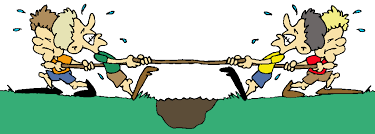
If these teams are pulling with the same amount of force what will happen?
a)
The boy in blue will win.
b)
They will not move at all.
c)
The boy in red will win.
d)
Both will fall down.
15.
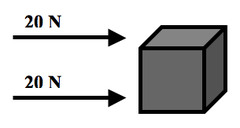
What is the net force?
a)
40 N left
b)
0 N Balalnced
c)
400 N right
d)
40 N right
16.
How will this object move? 
a)
It won't move. 
b)
It will move to the right. 
c)
It will move to the left. 
d)
It will move up. 
17.
In a tug of war the left team pulls with a force of 200N. The right team pulls with a force of 150N. What is the resultant force?
a)
50N to the left.
b)
350N to the left.
c)
350N to the right.
d)
50N to the right.
18.
What is the net force?
a)
400 N Up
b)
400 N Down
c)
- 400 N Down
d)
800 N Down
19.
Which of the blocks above has balanced forces acting on it?
a)
A
b)
B
c)
C
d)
D
20.
Object spinning on its axis. 
a)
revolution
b)
rotation
21.
Object orbiting another object. 
a)
revolution 
b)
rotation
22.
Longest day of the year
a)
Autumnal Equinox
b)
Summer Solstice 
c)
Winter Solstice
d)
Vernal Equinox
23.
Shortest day of the year
a)
Autumnal Equinox
b)
Summer Solstice 
c)
Winter Solstice
d)
Vernal Equinox
24.
If its ____ in the Northern hemisphere, then its fall in the Southern hemisphere. 
a)
spring
b)
summer
c)
fall
d)
winter
25.
In winter, the axis of the earth is pointed away or toward the sun?
a)
towards
b)
up
c)
down
d)
away
26.
In summer, the axis of the earth is pointed away or toward the sun?
a)
towards
b)
up
c)
down
d)
away
27.
Why is the Equator warmest?
a)
Because it is closest to the sun.
b)
Because it receives the most direct sunlight
c)
Because no clouds form here.
d)
Because it is far from the sun
28.
Which season is taking place in the Northern Hemisphere in Position 1?
a)
Winter
b)
Spring
c)
Summer
d)
Fall
29.
Which season is taking place in the Northern Hemisphere in Position 3?
a)
Winter
b)
Spring
c)
Summer
d)
Fall
30.
If its ____ in the Northern hemisphere, then its summer in the Southern hemisphere. 
a)
spring
b)
summer
c)
fall
d)
winter
31.
What are the reasons for the season?
a)
Earth's tilt & rotation
b)
Earth's tilt & revolution
c)
Earth's rotation & size
d)
Earth's tilt & resolution
32.
The Earth's axis is tilted _____ degrees.
a)
23.5
b)
25.3
c)
30.2
d)
24
33.
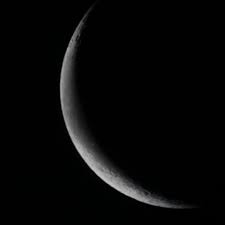
Name the moon phase
a)
waning crescent
b)
waxing crescent
c)
waning gibbous
d)
waxing gibbous
34.
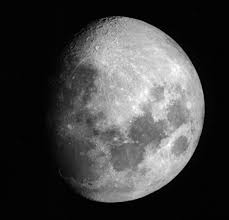
Name the moon phase
a)
waning crescent
b)
waxing crescent
c)
waning gibbous
d)
waxing gibbous
35.
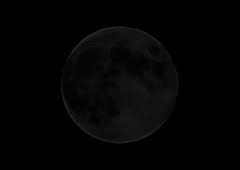
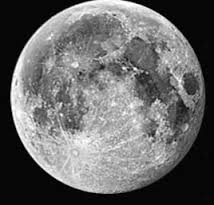
Name the moon phase
a)
First Quarter
b)
Last Quarter
c)
New Moon
d)
Full Moon
36.
Name the moon phase
a)
First Quarter
b)
Last Quarter
c)
New Moon
d)
Full Moon
37.
Name the phase of the moon for letter a
a)
First Quarter
b)
Last Quarter
c)
Waxing Gibbous
d)
Waning Gibbous
38.
The cycle of the moon lasts about a _.
a)
day
b)
year
c)
week
d)
month
39.

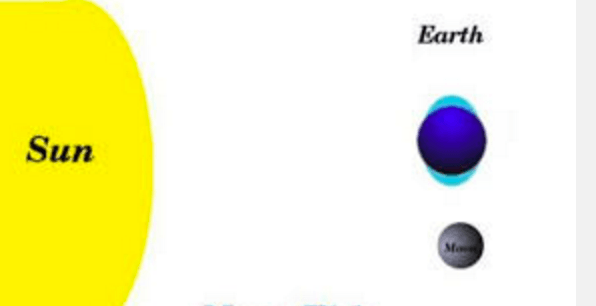
Which moon phase is shown in this diagram?

a)

new moon

b)

1st quarter

c)

full moon

d)

3rd quarter

40.

Which moon phase is shown in this diagram?

a)

new moon

b)

first quarter

c)

full moon

d)

3rd quarter

41.
What phase is this?
a)
Waning Gibbous Moon
b)
Waxing Gibbous Moon
c)
Waning Crescent Moon
d)
Waxing Crescent Moon
42.

What phase is this?

a)

First Quarter Moon

b)

Third Quarter Moon

c)

Waxing Gibbous Moon

d)

Waning Gibbous Moon

43.
Waxing means...
a)
Growing
b)
Dying
c)
Losing light
d)
Moving
44.

In sea-floor spreading, molten material rises from the mantle and erupts

a)

along the edges of all the continents.

b)

along mid-ocean ridges.

c)

in deep-ocean trenches.

d)

at the north and south poles.

45.

The process by which the ocean floor sinks beneath a deep-ocean trench and back into the mantle is known as _______

a)

convection.

b)

continental drift.

c)

subduction.

d)

conduction.

46.

The geological theory of _______ states that pieces of Earth’s lithosphere are in constant, slow motion.

a)

subduction

b)

plate tectonics

c)

deep-ocean trenches

d)

sea-floor spreading

47.

A place where two plates slip past each other, moving in opposite directions, is known as a _______

a)

transform boundary

b)

divergent boundary.

c)

convergent boundary.

d)

rift valley.

48.

The place where two plates come together is known as a _______

a)

transform boundary.

b)

divergent boundary.

c)

convergent boundary.

d)

rift valley.

49.
What are the two types of crust
a)
continental and oceanic
b)
ocean and upper
c)
lower and upper
d)
pizza and subway
50.
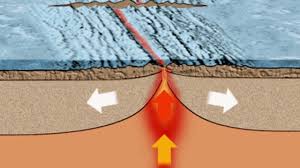
What type of event will occur at this boundary?
a)
Earthquake
b)
Volcano Eruption
c)
Tornado
d)
Mountain Building
51.
What type of plate boundary is this?
a)
Plate
b)
Divergent
c)
Convergent
d)
Transform
52.
A divergent boundary occurs when plates ....
a)
Pull apart
b)
Come together
c)
Slide past each other
d)
subducting
53.
What geologic feature/event would you most likely to find at a divergent boundary between two pieces of oceanic crust?
a)
Rift Valley
b)
Mid-Ocean Ridge
c)
Island Arc
d)
Flat land
54.
What geologic feature/event would you most likely to find at a convergent boundary between two pieces of continental crust?
a)
Volcano
b)
Mountain
c)
Rift
d)
Island Arc
55.

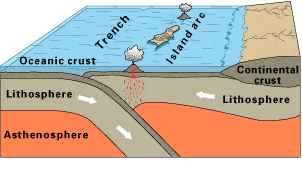
Observe this diagram of a plate boundary. One statement BEST describes what is happening. It is that

a)

the oceanic crust is melting.

b)

the denser ceanic crust is subducting under the less dense oceanic crust

c)

volcanic islands are forming.

d)

the tectonic plates are moving away from each other.

56.
If contour lines are close together, then the slope is
a)
gentle
b)
steep
c)
flat
d)
going up and down
57.
When you move from one contour line to another, the elevation
a)
stays the same
b)
goes up or down
c)
disappears
d)
is below sea level
58.
What are the curved lines on a topographic map called?
a)
contour lines
b)
contour intervals
c)
slope
d)
elevation
59.
What is the elevation of point B?
a)
800 ft
b)
850 ft
c)
900 ft
d)
1000 ft
60.
What is the difference in elevation between Point X and Point Y?
a)
120 m
b)
240 m
c)
360 m
d)
340 m
61.

A line that connects points of equal elecation on a map

a)

Contour interval

b)

Contour legend

c)

Contour line

d)

Index Contour

62.

The difference in elevation between two adjacent contour lines of a map.

a)

Relief

b)

Space in between

c)

contour line

d)

contour interval

63.

A topographic map of a region is provided. Which position indicated by the letters is at an elevation of 475 meters?

a)

W

b)

X

c)

Y

d)

Z

64.
What is the elevation of point B?
a)
800 ft
b)
850 ft
c)
900 ft
d)
1000 ft
65.
What is the contour interval of the topographic map below?
a)
400 m
b)
200 m
c)
100 m
d)
80 m