wayground logo

Free Printable Worksheets

NEW

Font size

S
M
L
XL
Worksheets

EES Final Exam Review (COVID Edition)

Total questions: 59

Worksheet time: 38mins

Name
Class
Date
1.

Movement of Earth around the sun.

a)

Rotation

b)

Revolution

2.

Spinning of Earth on its axis.

a)

Rotation

b)

Revolution

3.
Tides are caused by ___________
a)
wind
b)
gravitational pull of moon
c)
waves gravitation toward land
d)
rain
4.
Which moon phase is shown in this diagram?
a)
new moon
b)
first quarter
c)
full moon
d)
last quarter/3rd quarter
5.
During which season is the northern hemisphere tilted toward the Sun?
a)
Summer
b)
Fall
c)
Winter
d)
Spring
6.

During the winter months of the Northern hemisphere the Earth is ______.

a)

tilted closer toward the Sun

b)

tilted farther away from the Sun

c)

spinning slower than in Summer

d)

spinning faster than in Summer

7.

All the energy in the world comes from the ________.

a)

moon

b)

ocean

c)

sun

8.

When fuels are burned, chemical energy becomes ______ energy.

a)

mechanical

b)

electrical

c)

heat

9.

A rule of nature that sums up related observations to describe a pattern in nature is a _.

a)

scientific law

b)

hypothesis

c)

scientific theory

10.

A _ is an explanation based on experiments or the most logical explanation.

a)

hypothesis

b)

scientific law

c)

scientific theory

11.

Process that uses observations and investigation to gain knowledge about events in nature is called _.

a)

science

b)

predicting

c)

inferring

12.
Air in the atmosphere is 78%
a)
Einsteinium
b)
nitrogen
c)
oxygen
d)
carbon dioxide
13.
The atmosphere is 21%
a)
nitrogen
b)
oxygen
c)
argon
d)
flatulence
14.
The ozone layer
a)
is green and purple
b)
absorbs dangerous solar radiation
c)
smells like sulphur
d)
is made of carbon dioxide
15.
The greenhouse effect causes the Earth's air to
a)
heat up
b)
cool down
c)
blow up
d)
turn brown
16.
The ozone layer is located in the 
a)
biosphere
b)
atmsophere
c)
geosphere
d)
cryosphere
17.
Without the Greenhouse Effect the Earth would be
a)
warm 
b)
cold
c)
dead
18.
What is the greenhouse effect?
a)
The warming of a planet due to trapped radiation.
b)
The cooling of Earth due to air pollution.
c)
The heating of a solid, such as a rock.
19.

Cutting down large forests (deforestation) can result in:

a)

little to no changes

b)

more homes for animals

c)

less plants to absorb carbon dioxide, a greenhouse gas

20.
A[n] ______________ tide occurs when the sun is at right angles to the line between Earth and the moon. 
a)
high
b)
neap
c)
low
d)
spring
21.
A[n] ___________ tide occurs when the sun, Earth, and the moon are nearly in a line. 
a)
spring
b)
high
c)
low
d)
neap
22.

The process that the sun using to great energy is

a)

Fusion

b)

Fission

c)

Photosynthesis

d)

Cellular respiration

23.
This is the symbol for which type of front?
a)
cold front
b)
warm front
c)
stationary front
d)
occluded front
24.
What does this symbol on a weather map indicate? 
a)
High pressure system
b)
Low pressure system
c)
Cold Front
d)
Warm Front
25.
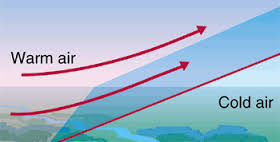
Which type of front is pictured?
a)
Cold front
b)
Warm front
c)
Occluded front
d)
Stationary front
26.
What are the two main factors that determine the climate of an area?
a)
precipitation and humidity
b)
temperature and air pressure
c)
wind conditions and humidity
d)
temperature and precipitation
27.
What are the 3 major climate zones in order from equator to the poles?
a)
polar, temperate, tropical
b)
tropical, temperate, polar
c)
temperate, polar, tropical
28.
What is the weather conditions in an area over a long period of time?
a)
climate
b)
temperature
c)
elevation
d)
precipitation
29.

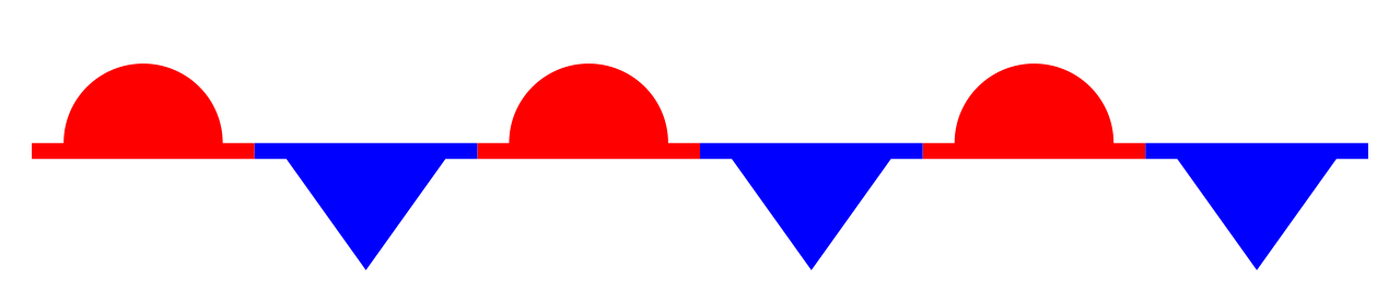
What is the name this front?

a)

warm front

b)

cold front

c)

stationary front

d)

occluded front

30.

Which type of air mass is HOT and DRY?

a)

Maritime Polar

b)

Maritime Tropical

c)

Continental Polar

d)

Continental Tropical

31.

Which type of air mass is COLD and HUMID?

a)

Maritime Polar

b)

Maritime Tropical

c)

Continental Polar

d)

Continental Tropical

32.
T/F: Water vapor is a greenhouse gas
a)
True
b)
False
33.
The main human activity that releases greenhouse gases is...
a)
using bottled water
b)
burning fossil fuels
c)
texting on cellphones
d)
eating meat
34.
Consequences of climate change include:
a)
Stronger hurricanes
b)
Increased flooding
c)
Frequent droughts
d)
All of the above
35.

Common source of methane is

a)

burning fossil fuels

b)

deforestation

c)

cows

d)

ocean acidification

36.
To help our environment, you should


a)
recycle, remember, and reduce.
b)
reduce, reuse, and recycle.
c)
reduce, repair, and recycle. 
d)
  reuse, replace, and recycle. 
37.

Land pollution occurs because of

a)

recycling

b)

misuse of chemical fertilizers

c)

throwing rubbish into the river

d)

burning rubbish

38.

what ocean current is responsible for our warm weather?

a)

El Nino

b)

Gulf stream

c)

La Nina

d)

Kuroshio

39.

Deep Ocean currents caused by

a)

Global Wind Patterns

b)

Earth's Rotation

c)

Differences in density

d)

All of the above

40.

Where would I find the most dense ocean water?

a)

At the surface

b)

In the middle

c)

At the bottom

d)

Lake Michigan

41.

what is a point source pollutant?

a)

any single identifiable source of pollution from which pollutants are discharged

b)

natural pollutant

c)

cannot determine the source of the pollutant

42.

as water drains through the soil in the ground it becomes

a)

soil water

b)

polluted water

c)

Surface water

d)

Ground water

43.
What do you call the land that water flows across, under, and through on its way to a body of water?
a)
Tributary
b)
River system
c)
Headwaters
d)
Watershed
44.
___________________ washes agricultural wastes, including animal wastes, fertilizers, and pesticides, into bodies of water, causing algae to grow.
a)
Runoff
b)
Peak flow
c)
Groundwater
d)
Municipal sewage
45.
An area of permeable layer of rock or soil that holds a large amount of water in the saturated zone is called what?
a)
Aquifer
b)
Spring
c)
Well
d)
Reservoir
46.
Many earthquakes happen along the borders of...
a)
Countries
b)
Tectonic Plates
c)
Climate Zones
d)
None of the above.
47.
The most destructive type of wave is a 
a)
P-wave
b)
S-wave
c)
Surface wave
d)
transverse wave
48.
3. Which type of wave is this...
a)
Primary Wave
b)
Secondary Wave
c)
Surface Wave
49.
4. What type of wave is this...
a)
Primary Wave
b)
Secondary Wave
c)
Surface Wave
50.
What type of weathering is it when acid rain breaks down and changes the rock.
a)
chemical weathering 
b)
physical or mechanical weathering
c)
erosion
51.
How do plants weather rocks?
a)
during photosynthesis
b)
when roots grow into cracks of rocks and expand the rock
c)
when the plant moves water from the roots to the leaves
52.
What are the 3 major types of rocks?
a)
Igneous, Metamorphic, Sedimentary
b)
Metamorphic, Igneous, Cementation
c)
Brown, Red, Gray
d)
Streak, Hardness, Breakage
53.
This rock formed when bits of other rocks became pressed into a solid. What type of rock is it?
a)
Sedimentary Rock
b)
Metamorphic Rock
c)
Igneous Rock
54.
This rock was formed when molten rock cooled into a solid. What type of rock is it?
a)
Igneous Rock
b)
Metamorphic Rock
c)
Sedimentary Rock
55.
The process by which metamorphic rocks are formed...
a)
heat and pressure
b)
erosion and deposition
c)
melting and cooling
56.
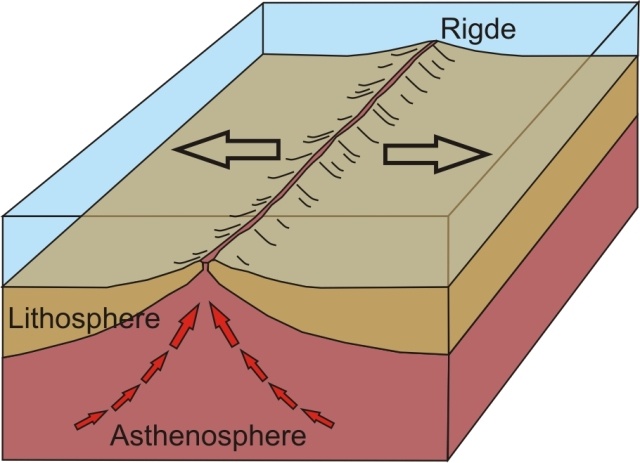
What kind of plate boundary is shown here?
a)
divergent
b)
convergent
c)
transform
d)
subducting
57.
What kind of plate boundary is shown here?
a)
divergent
b)
convergent
c)
transform
d)
submergent
58.
What kind of plate boundary is shown here?
a)
divergent
b)
convergent
c)
transform
d)
strike slip
59.
What geologic feature/event would you most likely to find at a divergent boundary between two pieces of oceanic crust?
a)
Rift Valley
b)
Mid-Ocean Ridge
c)
Island Arc
d)
Flat land