wayground logo

Free Printable Worksheets

Font size

S
M
L
XL
Worksheets

Physical Science Fall Final Exam

Total questions: 66

Worksheet time: 52mins

Name
Class
Date
1.
The amount of matter in an object is a measure of the object's ________________.
a)
volume
b)
density
c)
mass
d)
solubility
2.
What is the formula for calculating density?
a)
Mass ∗ Volume
b)
Volume ∗ Mass
c)
Mass ÷ Volume
d)
Volume ÷ Mass
3.
In which state does matter completely fill its closed container?
a)
Gas
b)
Liquid
c)
Solid
d)
Ice
4.
Which state of matter has a fixed shape and volume and it's molecules move very slowly?
a)
Liquid
b)
Gas
c)
Solid
d)
Plasma
5.
The boiling point of water is ______________.
a)
0° C
b)
50° C
c)
200° C
d)
100° C
6.
The volume of water in a beaker was 215 mL. After 5 days, the volume of the water was 200 mL. What best explains the change in volume?
a)
Some of the water absorbed the air. 
b)
Some of the water evaporated and escaped into the air as water vapor.
c)
Some of the water disappeared.
d)
Some of the water was released due to condensation.
7.
When a gas turns into a liquid, it is called ___________________.
a)
Condensation
b)
Evaporation
c)
Melting
d)
Freezing
8.
5 grams of salt was mixed with 50 mL of water to form a solution. In the solution, the water was which of the following?
a)
Solvent
b)
Saturate
c)
Solute
d)
Transparent
9.

Which of the following is a chemical property of matter?

a)

odor

b)

color

c)

volume

d)

density

e)

none of the above

10.

What phase change is described as ionization?

a)

Solid to Gas

b)

Liquid to Gas

c)

Plasma to Gas

d)

Gas to Plasma

11.

What is special about non-newtonian fluids?

a)

They exhibit properties of two states of matter

b)

They exhibit properties of only one state of matter

c)

They are only man made and do not exist in nature

d)

Mudslides and Quicksand are examples of non-newtonian fluids.

12.

The relationship of which two variables are compared in Charles's Law?

a)

pressure and volume

b)

volume and temperature

c)

temperature and pressure

d)

volume and moles (amount of gas)

13.

Records show that the incident of tire explosion is high during summer season. Which of the following gives the best explanation for this observation?

a)

there are more travelers during summer vacation

b)

high temperature during summer season causes the air in the tire to expand

c)

vehicles' tires are not well maintained

d)

there is too much air inside the tires

14.

According to Boyle's law, when pressure increases then the volume must...

a)

increase

b)

decrease

15.

Making a mixture results in ___________ only.

a)

chemical reactions

b)

separate parts

c)

physical changes

d)

two substances

16.

Solutions are a special kind of mixture in which

a)

each object stays the same in the mixture

b)

substances are dissolved together

17.

Element is a

a)

pure substance

b)

compound

c)

mixture

d)

molecule

18.

Is salt (NaCl) a compound or an element?

a)

compound

b)

element

19.

NaCl-H2O (salt water) is an example of a(n)

a)

element

b)

compound

c)

mixture

d)

pure substance

20.

Negatively charged particle

a)

proton

b)

neutron

c)

electron

21.
The central region of an atom where its neutrons and protons are is its 
a)
nucleus 
b)
electron cloud
c)
core 
d)
center 
22.

A neutral atom with atomic number 6 would have how many electrons?

a)

6

b)

12

c)

3

d)

cannot be determined

23.

A neutral atom with atomic number 6 would have how many neutrons?

a)

6

b)

12

c)

3

d)

cannot be determined

24.
The atomic number of an elements is the total number of which particles in the nucleus?
a)
neutrons
b)
protons
c)
electrons
d)
protons and electrons
25.
What is the mass of an atom if it has 11 protons, 12 neutrons, and 11 electrons?
a)
22
b)
11
c)
34
d)
23
26.
Isotopes are atoms of the same element that have the same number of __________ but different number of __________ . Therefore, isotopes of the same element have different masses. 
a)
protons, neutrons
b)
protons, electrons
c)
neutrons, protons
d)
electrons, protons
27.

What does it change in an ion?

a)

The number of electrons

b)

The number of protons

c)

The number of neutrons

28.
What is the correct formula for this molecule?
a)
NH
b)
N3H
c)
NH3
d)
NH4
29.
According to the octet rule most elements need _______ valence electrons.
a)
2
b)
8
c)
6
d)
18
30.
This is the correct dot diagram for sodium (Na)
a)
true
b)
false
31.
This is a correct dot diagram for oxygen (O)
a)
true
b)
false
32.
This is a correct dot diagram for fluorine (F)
a)
true
b)
false
33.
What element is represented in this Bohr Model? 
a)
Carbon
b)
Hydrogen
c)
Aluminum
d)
Lithium
34.
How many electrons can the first energy level hold?
a)
1
b)
2
c)
8
d)
0
35.
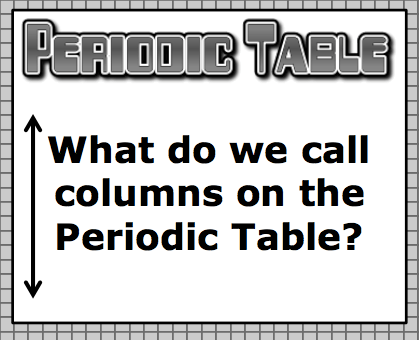
a)
Periods
b)
Groups
36.

Who invented the Periodic Table?

a)

Mendeleev

b)

Bohr

c)

Lewis

d)

Democritus

37.

Elements in the same group or column have the same ...

a)

# of valence electrons

b)

# of shells

c)

# of protons

d)

Mass Number

38.
Which of these is not a noble gas?
a)
Helium
b)
Argon
c)
Nitrogen
d)
Krypton
39.

Which types of elements from cations?

a)

metals

b)

nonmetals

c)

metalloids

d)

noble gases

40.

Why do all bonds form?

a)

so the number of protons equals the number of electrons

b)

so an atom can become unstable

c)

to fill the outermost energy level

41.
Covalent bonds are between...
a)
Metal and Non-metal
b)
Non-metal and Non-metal
c)
Metal and Metal
42.
Ionic bonds are between...
a)
Metal and Non-metal
b)
Non-metal and Non-metal
c)
Metal and Metal
43.
How are ionic bonds formed?
a)
Transfer of electrons
b)
Sharing of electrons
44.
Which of the following is an ionic bond?
a)
H3N
b)
CaCl2
c)
NO2
d)
SCl
45.
If an oxygen atom has 8 protons (+) and 10 electrons (-), what is it's charge?
a)
O10-
b)
O8+
c)
O2-
d)
O10+
46.
Is this ionic bond drawn correctly?
a)
Yes
b)
No
47.
Which of the following is a sign that a chemical reaction has occurred?
a)
change in shape
b)
melting
c)
formation of a gas
d)
dissolving
48.
Dissolving sugar in water is an example of a 
a)
physical change
b)
chemical change
49.
Which is an example of a chemical reaction?
a)
paper cut into small pieces
b)
chocolate melting in a pan
c)
flour and sugar mixed in a bowl
d)
cookies baking in an oven
50.
A catalyst works by
a)
changing the order of the reaction
b)
increasing the temperature
c)
lowering the activation energy
d)
making the activated complex
51.

What type of reaction is this?

a)

Exothermic

b)

Endothermic

c)

Energy Producing

d)

No way to tell

52.

When calcium reacts with water, the temperature changes from 18°C to 39°C. Which statement is correct?

a)

The solution at the end is acidic

b)

The reaction is reversible

c)

The reaction is exothermic

d)

The reaction is endothermic

53.

What is the Law of Conservation of Mass?

a)

It states that matter cannot be created or destroyed.

b)

It states that energy cannot be created or destroyed.

c)

It states that matter can be created or destroyed.

d)

It states that sound can be created or destroyed.

54.
What is a coefficient?
a)
The small number on the right of the chemical symbol.
b)
The large number in front of a chemical formula.
c)
The number in between the chemical symbols.
d)
The number behind a chemical formula.
55.
What is the part of the chemical equation in green called? 
Fe + S --> FeS
a)
products
b)
reactants
c)
yield
d)
chemical formula
56.
What is the little number after an element in a chemical equation called.
Example: H2
a)
Coefficient 
b)
Subscript
c)
Atom
d)
Equation
57.
What coefficient should be used to make the following equation balanced?
N2+O2--> _NO 
a)
1
b)
2
c)
3
d)
4
58.

Which problem is balanced?

(Check ALL answers)

a)

PbO2 + 2H2

b)

SO2 + H20 --> H2SO4

c)

2Na + 2H2O --> 2NaOH + H2

59.
How many elements are in C6H12O6?
a)
1
b)
2
c)
3
d)
4
60.
Element or compound?
H2O
a)
element
b)
compound
61.
How many HCl molecules do you need to balance this equation? 
Mg +  __HCl --->  MgCl2 + H2
a)
1
b)
2
c)
3
d)
4
62.
What is the total number of atoms present in 5Na3PO4
a)
5
b)
40
c)
55
d)
8
63.
Is the following equation balanced?
4Fe + 3O2 --> 2Fe2O3
a)
yes
b)
no
64.

1-5 - How confident do you feel going into the final?

a)

1 - not confident at all

b)

2

c)

3

d)

4

e)

5 - very confident

65.

Which of the following is an assumption of the kinetic-molecular theory of gases?

a)

Collisions between gas particles are inelastic.

b)

Gases consist of closely spaced particles.

c)

Gas particles move around in an orderly manner.

d)

The temperature of a gas depends on the average kinetic energy of the gas particles.
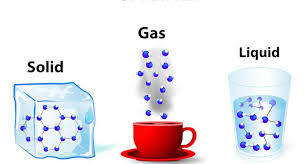
66.
Of these three states of matter, which one has the most kinetic energy? 
a)
Solid 
b)
Liquid 
c)
Gas