
Font size
 Worksheets
IIT-JEE & NEET LEVEL- 2 (9 - O)
Total questions: 100
Worksheet time: 2hrs 40mins


Approximate its value to the nearest ten-thousandths using change of base formula. log37
2.7712
1.7712
2
1.7718
Approximate the value to the nearest ten-thousandths using the change of base formula. log235
1.5592
5.9187
5.1293
1.8990
7y = 15
2.8970
1.3917
1.8956
5.2342
Solve using the properties log5x - log52 = log515
6
8
15
30
Solve using the properties.
log2(4x) + log25 = log240
2
1
10
8
Condense each expression.
log511+log57+2log53
log5(77⋅32)
log5(3211)
log5 73116
log5231
Solve
log4 4p = log4 (2p+10)
1517
5
-2
No Solution
Solve
log 5x2−log2=3
{5, −5}
{2}
{2, −2}
{20, -20}
Solve for x.
log52+log5x=log520
x = (a)
Solve
log5x+logx25=35
10
25
30
If log5y – log5√y = 2 logy 5, then find the value of y.
25
35
10
15
a + b = 1
a - b = 1
a = b
ab=1
Find the logarithm of 144 to the base 23
2
4
8
None of these
Which of the following statements is not correct?
log10 = 1
log(2+3)=log(2×3)
log1=0
log(1+2+3)=log(1×2×3)
If x, y and z are the sides of a right angled triangle, where ‘z’ is the hypotenuse, then find the value of
log(x+z) y1+log(x−z) y1
1
2
3
4

What is an ionic bond?
A bond between atoms where electrons are shared.
A secret bond
A bond that transfers to neutrons to another atom.
A bond between atoms where one atom gains an electron and another loses an electron.

What part of the atom makes a bond?
Electrons
Protons
Neutrons
Any subatomic particle

What type of bond is formed between a metal and a nonmetal?
Covalent
Ionic
Metallic
Carina

What type of bond is formed between two nonmetals?
Artemis
Ionic
Metallic
Covalent

Hydrogen atoms come together to form a _________________
Dancing bear
Hydrogen molecule
Carina molecule
Artemis molecule

What is the octet rule?
Elements just are
Elements keep electrons to make changes
Elements keep electrons to stay the same
Elements gain or lose electrons to fill their outer shell with 8 electrons
What type of bond is formed between a metal and a nonmetal?
Covalent
Ionic
Metallic
Carina
What type of bond is formed between two nonmetals?
Artemis
Ionic
Metallic
Covalent
What part of the atom makes a bond?
Electrons
Protons
Neutrons
Any subatomic particle
What part of the atom makes a bond?
Electrons
Protons
Neutrons
Any subatomic particle
12 Inches = Foot
1
3
2
4
5280 Feet = Mile
2
1
3
4
Cups = 1 Pint
0
1
3
2
6
Quarts = 1 Gallon
3
2
5
4
How Many Tons are in 2000 Pounds
1
4
2
3
1 Hour = Minutes
70
50
61
60
1 Year = How Many Years ( Not Counting Leap Year )
364
375
365
367
3 Feet = Yard(s)
1
3
2
5
1 Cup = Ounces
3
8
6
4
1 Quart = Pint
5
2
3
1
1 Pound = Ounces
15
17
16
18
24 Hours = Day
4
2
3
1
24 Hours = Day
4
2
3
1
24 Hours = Day
4
2
3
1
24 Hours = Day
4
2
3
1


There are three tenets of the Cell Theory. Which of the following is NOT a tenet?
Cells are the basic structure and function of life.
All living things are made of one or more cells.
The cell is the basic unit of matter.
All cells come from preexisting cells.
____ is credited with being the first scientist to observe cork cells.
Leewenhoek
Shleidon
Hooke
Sometimes called the “powerhouse” of the cell, this organelle is where respiration takes place.
Mitochondria
Nucleus
Vacuole
Bacteria is classified as a what?
Prokaryote
Eukaryote
There are three types of bacteria - Coccus, Bacilli, & Spirilla. Which of the following picture shows the spirilla.


If it does not rain for a long period of time, plants’ leaves will begin to wilt or sag. They have used up the water that they stored in their ___________
Vacuole
Chloroplast
Mitochondria
Which scientist was credited as being the first in observing cells?
Hooke
Leewenhoek
Virchow
This early cell theory scientist looked in a microscope and discovered "animalcules" in the gunk from his teeth and pond water.
Schleiden
Leeowenhoek
Hooke
Virchow
Schwann
Who discovered and named cells while looking at cork?
Captain Hook
Robert Hooke
Matthais Schleiden
Rudolf Virchow
What was Schleiden convinced of?
All plants are made of cells
All animals are made of cells
All cells are prokaryotic
None of the above
Who noted that all animals are made of cells and helped write the first two parts of cell theory?
Rudolf Virchow
Anton van Leeuwenhoek
Theodor Schwann
Robert Hooke
Who discovered that all cells come from other living cells and had research that lead to the last major principle of cell theory?
Matthias Schleiden
Theodore Schwann
Robert Hooke
Rudolf Virchow

Robert Hooke, Anton van Leeuwenhoek, Theodor Schwann, Rudolf Virchow, and Matthias Schliden were all responsible for what theory?
The Theory of Gravity
The Theory of Relativity
The Cell Theory
The Theory of Continental Drift
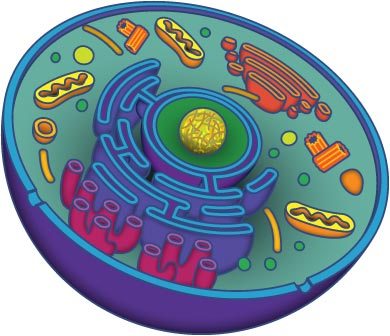
All living things are made up of...
cells
tissues
organ
organ systems
What is the basic structural and functional unit of all living things?
atom
cell
bacteria
animalcules
All cells -----
come from other dead cells
come from other living cells
crystallize out of the air

The perimeter of square of area 36 cm² is 24 cm.
The curved surface area of a a right circular cone of height 15 cm and base diameter 16 cm is
60π
68π
120π
136π
Frustum of a right circular cone of height 16cm with radii of its ends as 8 cm and 20 CM then the volume of the frustum is
3328π
3228π
3240π
3340π
6 km 435 m
64,350 meters
6,435 grams
6,435 liters
6,435 meters
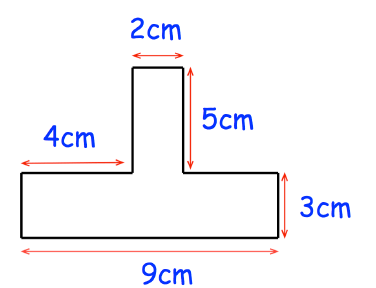
work out the perimeter of this shape
29cm
23cm
35cm
34cm
The height of a right circular cone whose radius is 5 cm and slant height is 13 cm will be
12cm
10cm
13cm
5cm
Choose the correct answer to find the area of a circle
πr2
2πr2
2πr
Which of the following is the correct Pythagoras' Theorem?
c2=a2+b2
c2=a2−b2
a2=b2+c2
Volume of a cube is 125 cu cm. Find its total surface area.
150 sq cm
25 sq cm
150 sq cm
100 sq cm


