Wayground logo

Free Printable Worksheets

Font size

S
M
L
XL
Worksheets

Christmas Test Revision

Total questions: 50

Worksheet time: 30mins

Name
Class
Date
1.
Plants need what to do photosynthesis?
a)
Food absorbed from ground
b)
Sun's energy
c)
Food broken down
d)
Minerals from the soil
2.
What gas goes into the plant before photosynthesis?
a)
Carbon Dioxide
b)
Carbon Monoxide
c)
Oxygen
d)
Nitrogen
3.
What three things are needed for a plant to do photosynthesis?
a)
Glucose, Oxygen, Sunlight
b)
CO2, Oxygen, Sunlight
c)
CO2, Water, Sunlight
d)
Oxygen, Water, Sunlight
4.
What two products does a plant make during photosynthesis?
a)
Water and Glucose
b)
Oxygen and Glucose
c)
Oxygen and Water
d)
CO2 and Glucose
5.
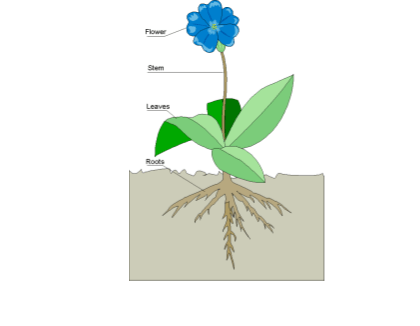
Which plant part absorbs water and nutrients?
a)
Leaf
b)
Stem
c)
Roots
d)
Flower
6.

Which organelle is responsible making food (Glucose) using sunlight?

a)

Cell Membrane

b)

Nucleus

c)

Chloroplast

d)

Mitochondria

7.

The green coloring in leaves that absorbs energy from the sun

a)

Leaves

b)

Oxygen

c)

Phtosynthesis

d)

Chorophyll

8.
All of the living and nonliving things in an area that interact with each other are called a/an ______.
a)
community
b)
habitat
c)
population
d)
ecosystem
9.
An area where an organism finds food, shelter and water in a specific arrangement
a)
niche
b)
biosphere
c)
biome
d)
habitat
10.
The living part of an ecosystem
a)
Biotic
b)
Abiotic
c)
Mother Earth
d)
Flowers
11.
Two or more members of a particular species living and interacting in the same area
a)
Community
b)
Population
c)
Organisms
d)
Biosphere
12.

What is the correct order for this food chain?

a)

Owl, Mouse, Grasshopper, Grass

b)

Grass, Mouse, Owl, Grasshopper

c)

Grass, Owl, Grasshopper, Mouse

d)

Grass, Grasshopper, Mouse, Owl

13.
The image provided is an example of a(n):
a)
Carnivore
b)
Herbivore
c)
Producer
d)
Autotroph
14.

What is this?

a)

herbivore

b)

carnivore

c)

omnivore

d)

decomposer

15.

Eat only plants

a)

Herbivore

b)

Carnivore

c)

Omnivore

16.

I eat hay and grass.

a)

Herbivore

b)

Carnivore

c)

Omnivore

17.
The organism that is hunted and eaten in a particular feeding relationship is known as:
a)
Predator
b)
Decomposer
c)
Prey
d)
Autotroph
18.
Living things depend on many different _________ in order to survive.
a)
resources
b)
environments
c)
ecosystems
d)
interactions
19.
Plants compete for air, water, ________ within ecosystems.
a)
space, and sound
b)
sunlight, and wind
c)
space, and sunlight
20.

Which is are characteristics of acids?

a)

Taste bitter

b)

Taste sour

21.

Which is are characteristics of bases?

a)

Turns litmus paper red

b)

Turns litmus paper blue

22.

Base has a pH range of ______________.

a)

0-6.9

b)

7.1-14

c)

0-14

23.

The substance getting dissolved

a)

Solvent

b)

Solute

c)

Solution

d)

Mixture

24.
Solubility is defined as
a)
the ability to catch on fire
b)
the ability to be dissolved
c)
the ability to fly.
d)
the ability to get on Mrs. D's nerves.
25.
Solutions are composed of __________ .
a)
salts and solutes
b)
solvents and salts
c)
solutes and alloys
d)
solutes and solvents
26.
What is a solvent?
a)
The substance that does the dissolving in a solution.
b)
The substance that is being dissolved in a solution.
c)
The mixing of different substances.
d)
The process in which neutral molecules lose or gain electrons
27.
What is a compound? 
a)
 the simplest form of a substance 
b)
a combination only of 3 elements 
c)
a combination of 2 or more elements 
d)
a place where people are held 
28.
Acid + Base ₋--> 
a)
salt + hydrogen
b)
salt + water
c)
salt + carbon dioxide + water
d)
salt
29.
a)

Mortar and Pestle

b)

Erlenmeyer Flask

c)

Beaker

d)

Graduated Cylinder

30.
a)

Funnel cake

b)

Funnel

c)

Funnel of Terror

d)

Funnelizator

31.
a)

Glass Straw

b)

Sipping Tool

c)

Glass Pipette

d)

Graduated Cylinder

32.
a)

Pipette

b)

Flask

c)

Test Tube

d)

Graduated Cylinder

33.

What is used to measure the volume of liquids?

a)

Flask

b)

Beaker

c)

Graduated Cylinder

d)

Pipette

34.
a)

burette

b)

graduated cylinder

c)

test tube

d)

beaker

35.

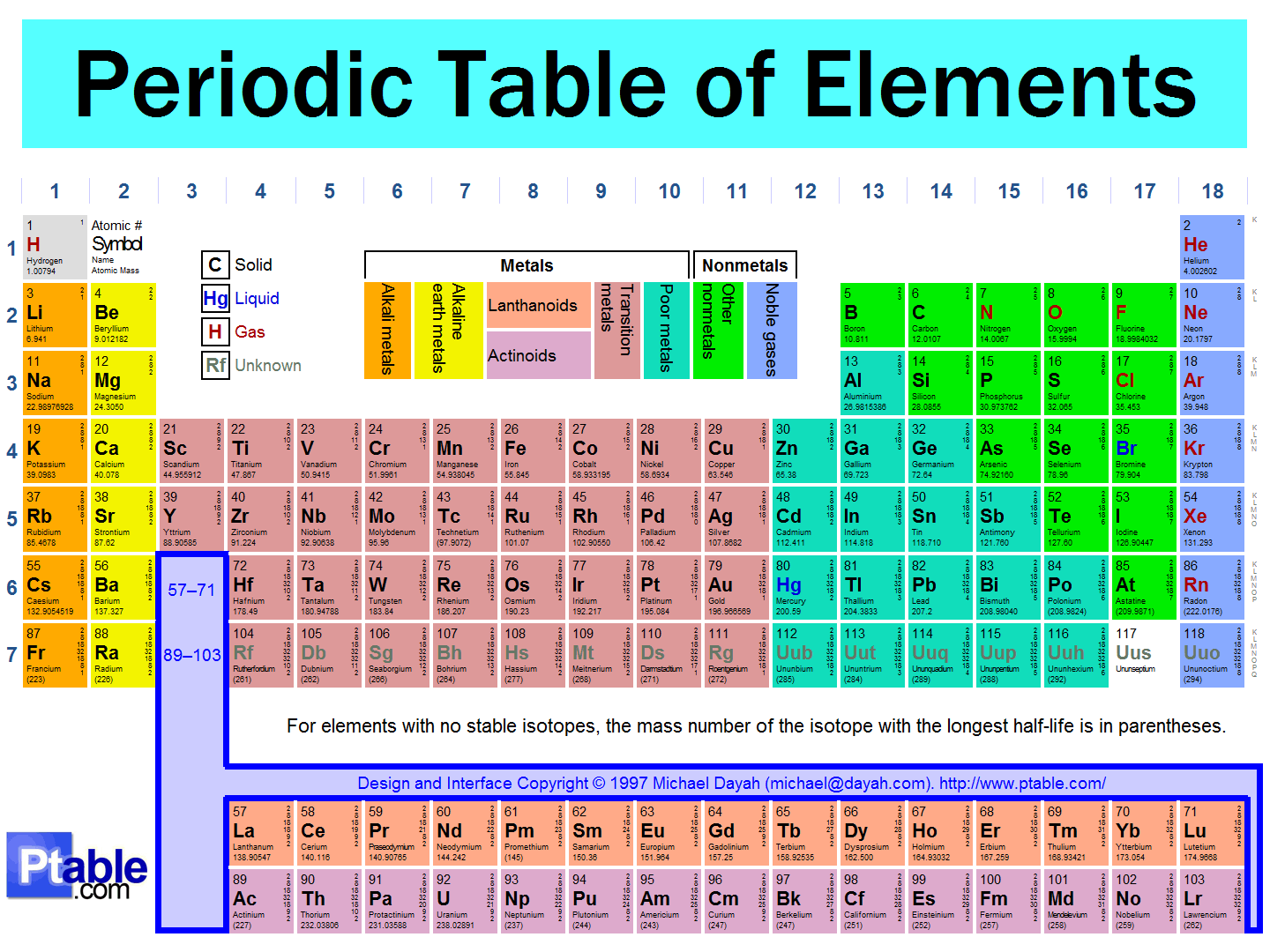
The vertical (up and down) columns in the Periodic Table are called

a)

groups

b)

towers

c)

periods

d)

atomic numbers

36.
Sodium (Na) is found in period 
a)
3
b)
2
c)
4
d)
1
37.
Sodium (Na) is found in group 
a)
1
b)
2
c)
3
d)
4
38.
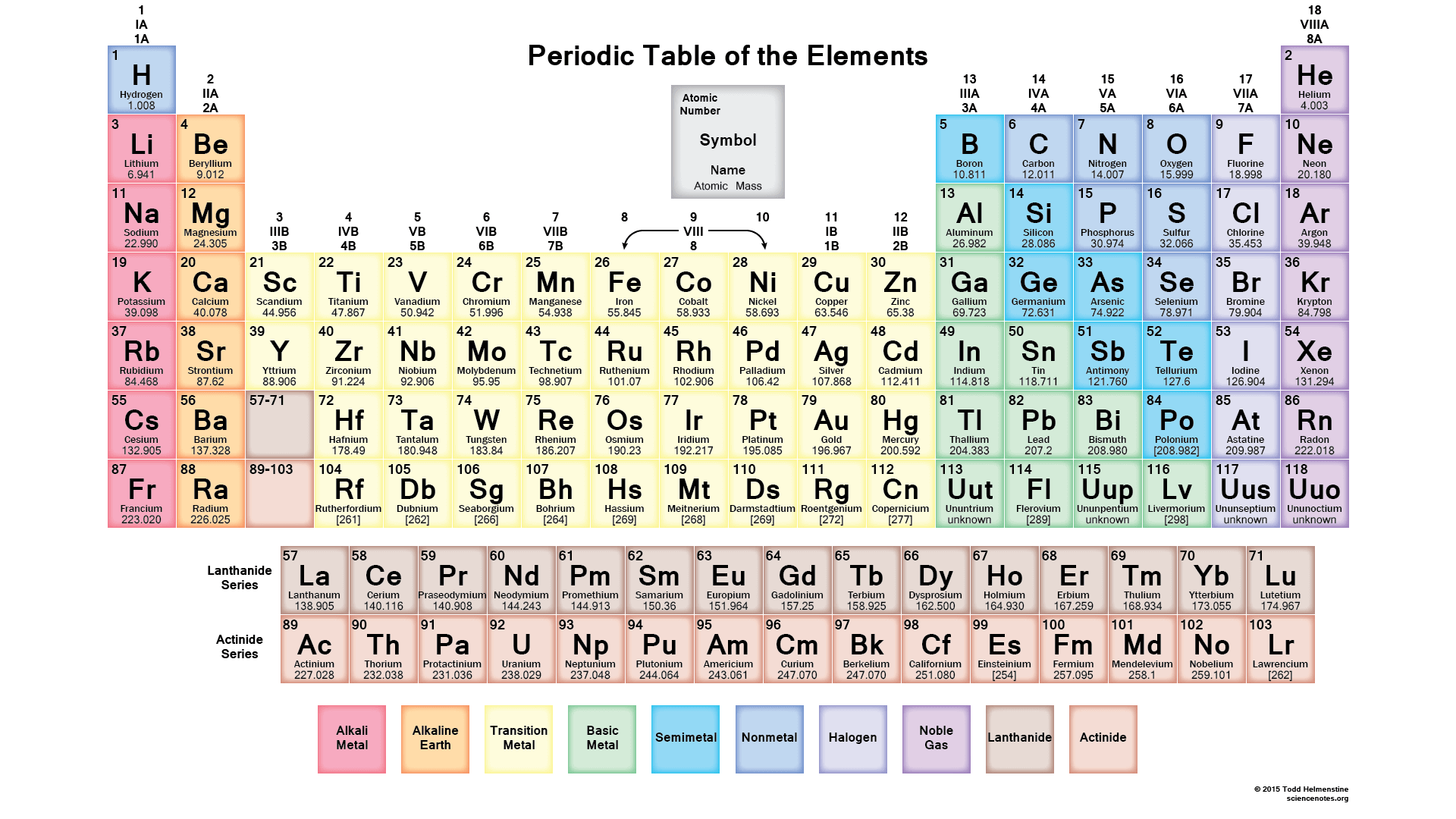
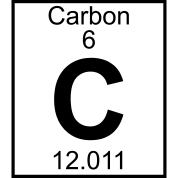
What does the 6 represent?
a)
atomic mass
b)
atomic number
c)
element name
d)
chemical symbol 
39.

A subatomic particle that has a positive charge and that is found in the nucleus of an atom

a)

Proton

b)

elecrtron

c)

groups

d)

neutrons

40.

A subatomic particle that has a negative charge

a)

nobles gases

b)

protons

c)

electrons

d)

neutrons

41.

The name and formula of the acid found in your stomach is

a)

hydrobromic acid, HBr

b)

hypochloric acid, HClO3

c)

hypochlorous acid, HClO

d)

hydrochloric acid, HCl

42.

Antacids include substances that contain _____, which neutralise excess acid in the stomach

a)

weak acids

b)

water

c)

bases

d)

sugar

43.
A(n) _______ is a substance with a pH greater than 7.
a)
Base
b)
Acid
c)
Buffer
d)
Water
44.
A solution with a pH of 8.6 would be...
a)
Acid
b)
Base
c)
Neutral
d)
Acid and Base
45.
A solution with a pH of 3.6 would be...
a)
Acid
b)
Base
c)
Neutral
d)
Acid and Base
46.

Which pH could belong to a weak acid?

a)

14

b)

8

c)

5

d)

1

47.

Which pH could belong to a strong alkali?

a)

14

b)

8

c)

5

d)

1

48.

What is a square called that we use to sample populations?

a)

grid

b)

quadrat

c)

cube

d)

quarter

49.

What is a suitable way to sample small invertebrates living on the ground.

a)

Quadrats

b)

Sweep nets

c)

Pitfall traps

d)

Water Sampling

50.
On this photosynthesis practical, bubbles of gas are produced.  What is this gas?
a)
Carbon dioxide
b)
Hydrogen
c)
Chlorine
d)
Oxygen