
 Worksheets
SNC2D Chemistry Quiz Review of Last Week
Total questions: 40
Worksheet time: 36mins
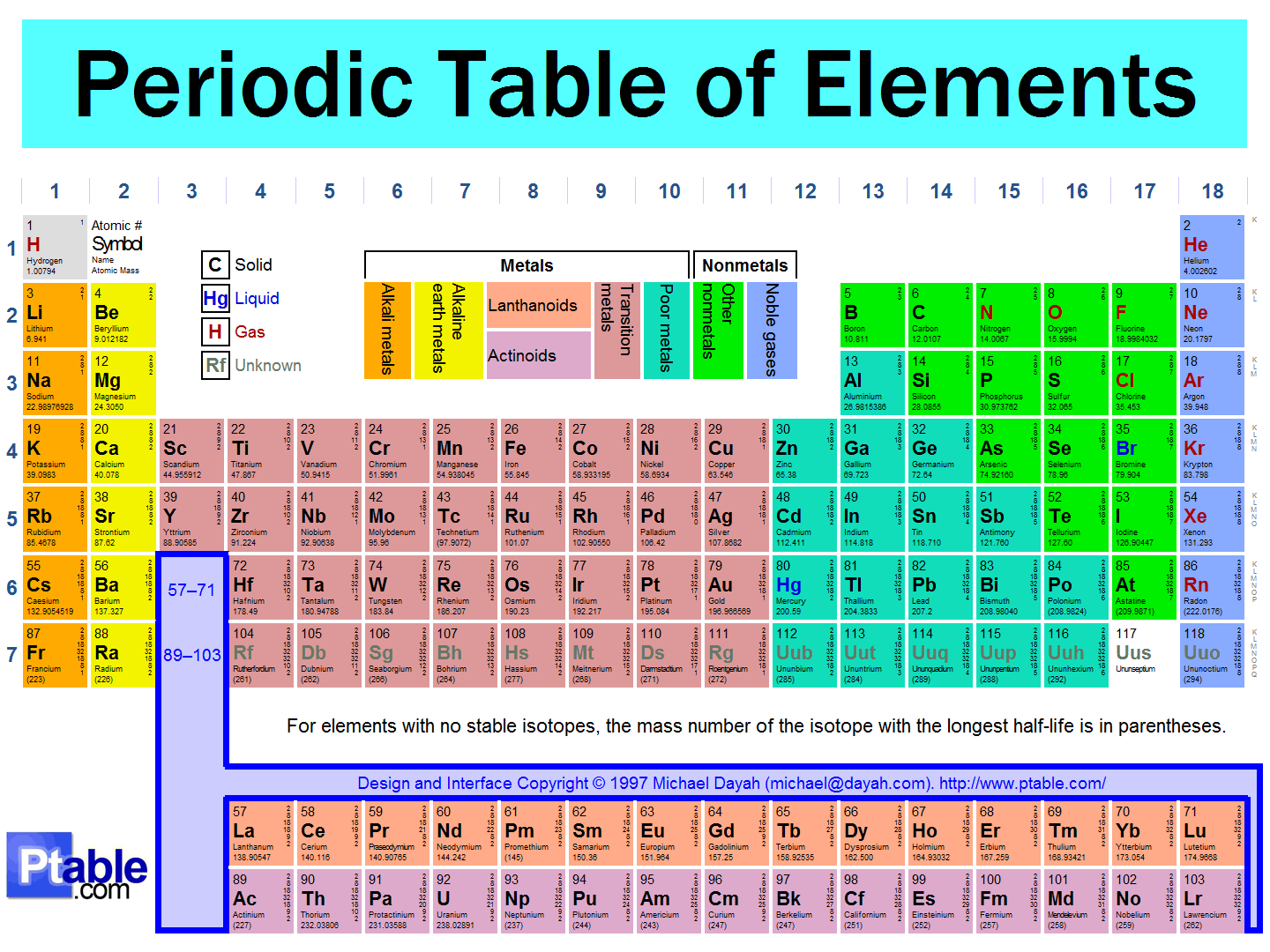

A vertical column of the periodic table is called...
group
tower
period
crew

Who discovered the first scientific and systematic periodic table
Henry Mosley
Dmitri Mendeleev
John Dalton
sir Isaac Newton
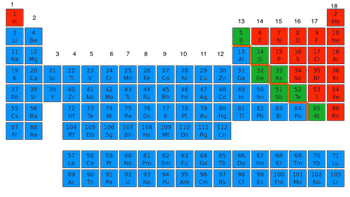
Where are metals located on the periodic table?
right side of the staircase
on the staircase
left side of the staircase
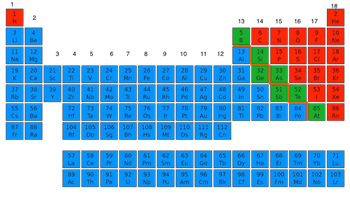
Where are the nonmetals located on the periodic table?
right side of the staircase
left side of the staircase
on the staircase
What is the octet rule?
Elements can only have 8 electrons in its outermost shell
The elements must form an octopus like structure
What are valence electrons?
The innermost electrons
The outermost electrons

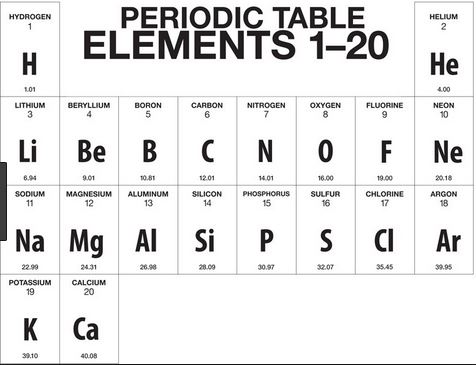
How many valence electrons does Helium Have?
1 Valence electron
2 Valence electron
3 Valence electron
4 Valence electron
5 Valence electron


What element is represented by this Bohr-Rutherford diagram?
Lithium
Boron
Carbon
Neon
How would you draw a Lewis dot diagram for Magnesium?


This is a correct dot diagram for neon (Ne)
true
false
What bond type transfers electrons?
Covalent bond
Ionic bond
Metallic bond
What bond type shares electrons?
Covalent bond
Ionic bond
Metallic bond
What bond is formed when a metal transfers electrons to a nonmetal?
Covalent bond
Ionic bond
Metallic bond
What is a anion?
a metal with a negative (-) charge that loses electrons
a non-metal with a negative (-) charge that gains electrons
a metal with a positive (+) charge that gains electrons
a non-metal with a positive (+) charge that loses electrons
What is a cation?
a metal with a negative (-) charge that gains electrons
a non-metal with a negative (-) charge that loses electrons
a metal with a positive (+) charge that loses electrons
a non-metal with a positive (+) charge that loses electrons
How many electrons should sodium, atomic number 11, have around its Lewis dot model?
1
2
3
4

This could be the dot diagram of
Mg
Cl
C
O
MgCl2
Ionic
Covalent
Metallic
NaCl
Ionic
Covalent
Metallic
CO2
Ionic
Covalent
Metallic
O3
Covalent
Ionic
Metallic
True or False: All atoms are created or destroyed in a chemical reaction.
true
false
maybe
The rule that states that matter cannot be created or destroyed during chemical reactions.
Precipitate
Law of Conservation of Mass
Products
Reactants
Ice (solid) can change to a liquid (water). This is a demonstration of a ______________________.
physical change
chemical change
neither
density
A process in which one or more substances change to form one or more new substances with different chemical makeups.
chemical reaction
precipitate
physical change
law of conservation of mass
A substance that results from a chemical change
Product
Reactant
Law of Conservation of Mass
Chemical reaction
Sodium and chlorine react to form sodium chloride. Sodium and chlorine are examples of
Reactants
Products
Exothermic reactions
Precipitates

Milk is a very weak acid. What might its pH value be?
6.5
7.8
4.2
12.2
Something that can be used to identify acid/alkali:
Indicator
Oxidator
Reductor
Terminator
Which of the following is true of an acid?
It has a pH value of 7.
It turns red litmus paper blue.
It turns blue litmus paper red.
It has a pH value of more than 7.

What is this piece of glassware called?
Flask of Erlenmeyer
Erlenmeyer Flask
Articulated Beaker
Convex Flask

What is this piece of equipment?
Glass Straw
Sipping Tool
Glass Pipette
Graduated Cylinder

What is this piece of equipment?
Scoopula
Crevice Tool
Chemical Scooper
Powder Shovel

