wayground logo

Free Printable Worksheets

NEW

Font size

S
M
L
XL
Worksheets

AHP MODEL

Total questions: 74

Worksheet time: 1hrs 14mins

Name
Class
Date
1.
Normal blood pressure is...
a)
120/80 mmHg
b)
80/120 mmHg
c)
140/90 mmHg
d)
80/140 mmHg
2.
The 'Lub' sound of the heart's LUB DUB? are the....
a)
Atrioventricular valves closing
b)
Semilunar Valves closing
c)
Blood flowing through the Pulmonary Trunk and Aorta
d)
Blood Flowing down into the venticles
3.

Which of the following is true about the semi-lunar valves in the heart?

a)

They are between atria and ventricles

b)

They close when pressure in the arteries is higher than pressure in the atria

c)

They prevent backflow of blood into the atria

d)

They open when pressure in the ventricles is higher than pressure in the arteries

4.

The hypothalamus synthesizes these two hormones that are secreted by the posterior pituitary: (Slide 29)

a)

ACTH (Adrenocorticotropic Hormone) and ADH (anti-diuretic hormone)

b)

ADH and Oxytocin

c)

Oxytocin and GH (Growth Hormone)

d)

FHS (Follicle Stimulating Hormone) and LH (Luteinizing Hormone)

5.

An excess of GH secreted in childhood results in: (Slide 38)

a)

Pituitary Dwarfism

b)

Achondroplasia

c)

Pituitary Gigantism

d)

Acromegaly

6.

Which hormone stimulates the cortex of the adrenal glands to secrete hormone? (Slide 42)

a)

ADH

b)

ACTH

c)

Vasopressin

d)

TSH (Thyroid stimulating hormone)

7.

This hormone helps trigger ovulation: (Slide 43)

a)

FSH

b)

LH

c)

Oxytocin

d)

ACTH

8.

Produces the hormone insulin and glucagon, which controls the level of glucose in the blood.

a)

Thyroid Gland

b)

Pancreas

c)

Thymus Gland

d)

Pituitary Gland

9.

What type of product is secreted by endocrine glands?

a)

Sweat

b)

Hormones

c)

Saliva

d)

Tears

10.
What is the general structure of cuboidal cells?
a)
Square with large central nucleus
b)
Flat, 'fried egg' appearance
c)
Rectangular with nucleus towards basal end
d)
Dead apical cells filled with keratin
11.
The stomach consists of what type of muscle?
a)
Smooth muscle
b)
Skeletal muscle
c)
Cardiac muscle
d)
Deoxygenated muscle
12.
The common term for adipose tissue is
a)
Fat
b)
Blood
c)
Bone
d)
Cartilage
13.

Fibers that form a thick protein matting in a dense irregular connective tissue include

a)

collagen fibers

b)

recticular fibers

c)

elastic fibers

d)

cartilage fibers

14.

What process involves the division of cell cytoplasm?

a)

Meiosis I

b)

Meiosis II

c)

Cytokinesis

d)

Karyokinesis

15.

If cells in the process of dividing are subjected to colchicine, a chemical that inhibits the formation of spindle fibres, at which stage will mitosis end?

a)

Prophase

b)

Metaphase

c)

Anaphase

d)

Telophase

16.

Which is not a job of the respiratory system?

a)

taking in oxygen

b)

taking in carbon dioxide

c)

moisten air

d)

transport glucose

17.

What does the digestive system do?

a)

brings in oxygen

b)

gets rid of carbon dioxide

c)

absorbs glucose from food

d)

none of the above

18.

Where does air go after the pharynx during inhalation?

a)

nose

b)

trachea

c)

bronchi

d)

alveoli

19.

Which system shares the pharynx with the respiratory system?

a)

circulatory

b)

digestive

c)

excretory

d)

skeletal

20.

The "windpipe" is known as the

a)

alveoli

b)

esophagus

c)

trachea

d)

bronchi

21.

A small flap of tissue that covers the trachea is called the

a)

bronchi

b)

larynx

c)

pharynx

d)

epiglottis

22.

Where would you find cilia?

a)

nose and alveoli

b)

bronchioles and mouth

c)

trachea and nose

d)

all of the above

23.
When you breathe, your lungs take in ___ and remove ___. 
a)
air/oxygen
b)
oxygen/carbon dioxide 
c)
carbon dioxide/waste 
d)
waste/air 
24.
Given the following structures:
1. larynx
2. nasal cavity
3. pharynx
4. trachea
Which of the following is the correct order that air would flow during inhalation. 
a)
1,2,3,4
b)
2,3,1,4
c)
2,1,3,4
d)
4,2,3,1 
25.

Which ion is pumped into the axon of a neuron to help maintain the resting potential?

a)

calcium

b)

hydrogen

c)

potassium

d)

sodium

26.

Depolarization is occuring at number

a)

1

b)

2

c)

4

d)

5

27.
When a membrane potential reaches +30mV, ________ channels open, ________ occurs, and ________ channels close.
a)
Sodium, depolarization, potassium
b)
Potassium, depoloarization, sodium
c)
sodium, repolarization, potassium
d)
postassium, repolarization, sodium
28.
Why is -55 mV a significant number?
a)
This is the largest charge achieved during an action potential
b)
This is the threshold required to complete an action potential
c)
This is the resting charge of a neuron
d)
This is the charge when all the sodium is inside the cell
29.
plasma membrane of a muscle cell
a)
sarcolemma
b)
sarcoplasmic reticulum
c)
thick filament
d)
thin filament
30.
myosin protein
a)
sarcolemma
b)
sarcoplasmic reticulum
c)
thick filament
d)
thin filament
31.
What describes a lack of water in the blood?
a)
Dehydration
b)
Rehydration
c)
Hydration
d)
Concentrated
32.
What is involuntary contractions of voluntary muscles to warm up?
a)
Shivering
b)
Sweating
c)
Vasodilation
d)
Vasoconstriction
33.

Homeostasis

a)

allows for a wildly fluctuating internal environment

b)

is impossible in vertebrates

c)

is the maintenance of a relatively stable internal environment and often incorporates a form of feedback regulation

34.
The main purpose of Red Blood Cells is to 
a)
carry gases, wastes, and nutrients
b)
attack and destroy pathogens
c)
clot the blood
d)
digest food
35.
The lack of sufficient red blood cells in the blood system is called
a)
cyanosis
b)
anemia
c)
hemochromatosis
d)
hypoxia
36.
What is the function of hemoglobin?
a)
to carry iron
b)
to carry wastes
c)
to carry oxygen
d)
to produce oxygen
37.
Another name for white blood cells is
a)
erythrocytes
b)
plasmocytes
c)
leukocytes
d)
thrombocytes
38.
Blood is classified as ___ tissue.
a)
connective
b)
circulatory
c)
epithelial
d)
muscular
39.

What carries food from the pharynx to the stomach?

a)

larynx

b)

trachea

c)

esophagus

d)

bronchioles

40.

What type of digestion takes place in the stomach?

a)

mechanical

b)

chemical

c)

both mechanical and chemical

41.

What enzyme is found in saliva that starts digesting carbohydrates?

a)

amylase

b)

chyme

c)

pepsin

d)

bile

42.

What part of the digestive system mechanically and chemically breaks down food?

a)

mouth

b)

stomach

c)

both the mouth and stomach

43.

The kidneys are stimulated to produce renin ________.

a)

when the peritubular capillaries are dilated

b)

when the pH of the urine decreases

c)

by a decrease in the blood pressure

d)

when the specific gravity of urine rises above 1.10

44.

The functional and structural unit of the kidneys is the ________.

a)

nephron

b)

nephron loop

c)

glomerular capsule

d)

capsular space

45.

The function of angiotensin II is to ________.

a)

constrict arterioles and increase blood pressure

b)

decrease the production of aldosterone

c)

decrease arterial blood pressure

d)

decrease water absorption

46.

What is #2?

a)

Kidney

b)

Ureter

c)

Bladder

d)

Urethra

47.

Temporary collection of urine takes place in

a)

ureters

b)

urethra

c)

urinary bladder

48.

Human urine consists of

a)

water, urea, uric acid

b)

excess water, urea, uric acid and excess mineral salts.

c)

uric acid and mineral salts

49.

No. of kidneys in human body

a)

1

b)

2

c)

3

50.

Kidneys are made up of

a)

neural cells

b)

neurons

c)

nephrons

51.
The first part of the eye that light hits. 
a)
lens
b)
cornea
c)
pupil
d)
retina
52.
Where does SIGHT occur? 
a)
In the eye.
b)
In the brain.
53.
Which part of the eye is the outer white part of the eye?
a)
cornea
b)
iris
c)
ciliary body
d)
sclera
54.
What part of the eye focuses light on the retina?
a)
lens
b)
retina
c)
pupil
d)
ciliary body
55.
Type of photoreceptor that is active in bright light and perceives color?
a)
fovea centralis
b)
cones
c)
rods
d)
optic disk
56.
Type of photoreceptor that functions in low light and creates shades of gray
a)
retina
b)
rod
c)
cone
d)
choroid
57.
What is the space inside the iris called?
a)
pupil
b)
ciliary body
c)
lens
d)
choroid
58.

this problem arises due to foggy or cloudy lens .

a)

presbyopia

b)

myopia

c)

cataract

d)

hypermetropia

59.
When sound waves cause the eardrum to vibrate, these vibrations are immediately passed on to the_________.
a)
outer ear and ear canal
b)
inner ear
c)
tiny hairs
d)
three small bones in the middle ear
60.
What happens in the inner ear? 
a)
Sound waves are captured.
b)
Sound waves move deeper into the ear. 
c)
Sound waves are reflected.
d)
Sound waves are converted into nerve impulses.
61.
Which travels faster: sound or light waves?
a)
sound
b)
light
62.
What unit do we use to measure sound?
a)
decibels
b)
inches
c)
pounds
d)
centimeters
63.
Sound is caused by ______________.
a)
vibrations
b)
light
c)
the sun
64.
Receives sensory information and relays it to the proper part of brain for further processing
a)
Hypothalamus
b)
Reticular Formation
c)
Cerebellum
d)
Thalamus
65.
Without the ____ the two sides of our brain couldn't communicate. 
a)
Frontal Lobe
b)
Cerebral Cortex
c)
Thalamus
d)
Corpus Callosum 
66.
The Medulla Obolongata controls our ___.
a)
Blood Pressure 
b)
Muscle Memory 
c)
Pain reaction
d)
Memory 
67.
What is the largest part of the brain?
a)
Thalamus
b)
Cerebellum
c)
Spinal Cord
d)
Cerebrum
68.
The parietal lobe controls __________.
a)
Vision
b)
Problem Solving
c)
Memory
d)
Sense of touch, pain, pressure
69.
The lobe responsible for making plans and evaluating consequences
a)
Frontal Lobe
b)
Temporal Lobe
c)
Parietal Lobe
d)
Occipital Lobe
70.
What is this?
a)
Cerebrum
b)
Cerebellum
c)
Brain Stem
d)
Diencephalon
71.
Controls hearing and smell
a)
Frontal Lobe
b)
Temporal Lobe
c)
Occipital Lobe
d)
Parietal Lobe
72.
The lobe responsible for vision
a)
Frontal Lobe
b)
Temporal Lobe
c)
Parietal Lobe
d)
Occipital Lobe
73.

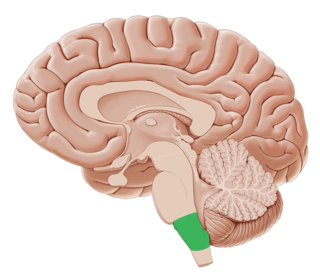
What is this?

a)

Corpus callosum

b)

Medulla Oblongata

c)

Cerebellum

d)

Hypothalamus

74.

Which lobe is this?

a)

Occipital Lobe

b)

Parietal Lobe

c)

Temporal Lobe

d)

Frontal Lobe