wayground logo

Free Printable Worksheets

NEW

Font size

S
M
L
XL
Worksheets

Properties of Water Test

Total questions: 62

Worksheet time: 49mins

Name
Class
Date
1.

What is the chemical formula for water?

a)

H2O

b)

HO2

c)

HOHOHO

d)

None of these

2.
What word describes when water is attracted to other substances?
a)
cohesion
b)
adhesion
c)
capillary action
d)
surface tension
3.
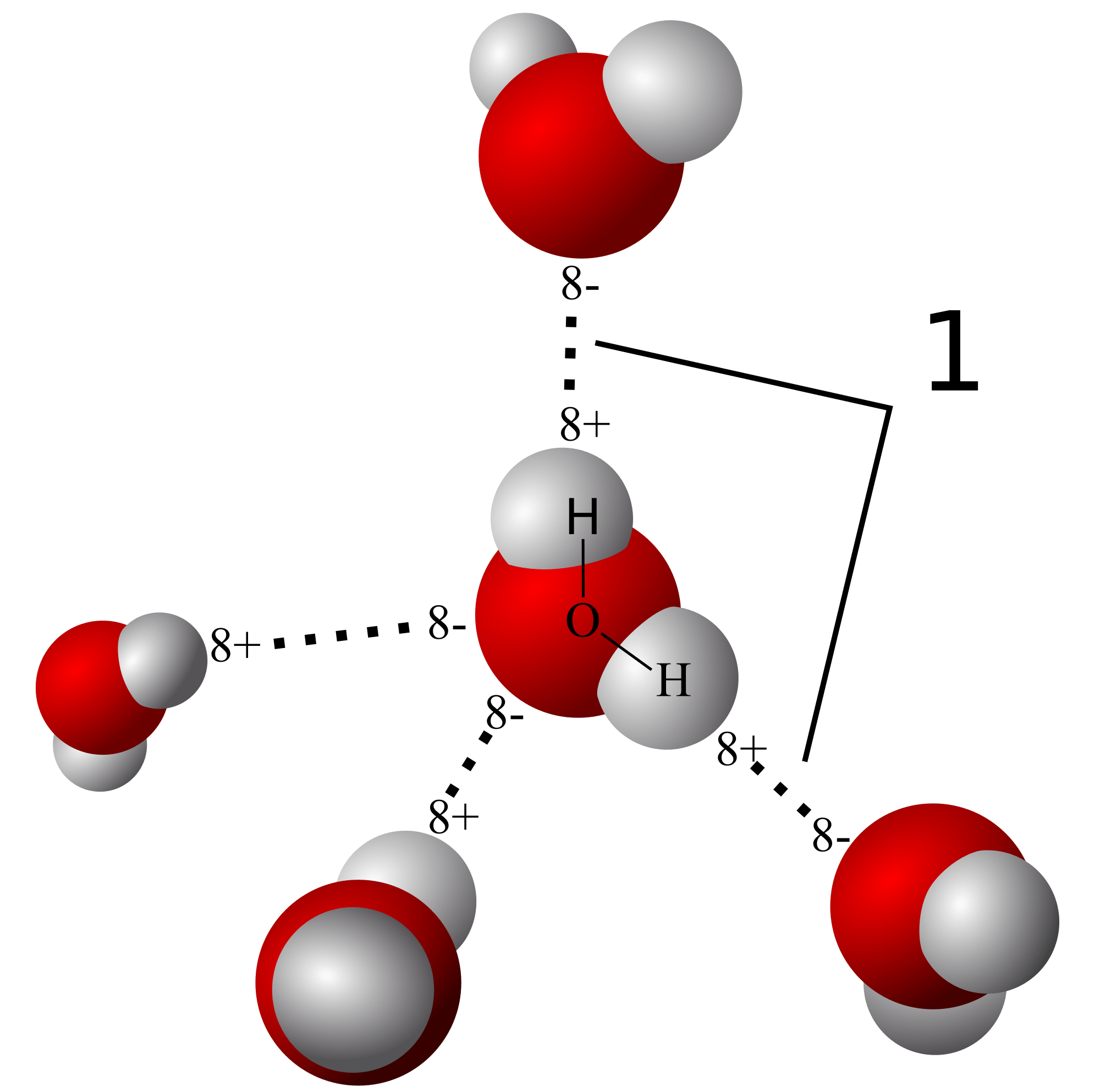
Attractions between water molecules are called
a)
Covalent bonds
b)
Ionic bonds
c)
Polar bonds
d)
Hydrogen bonds
4.
Water is polar because...
a)
The unequal sharing of electrons gives the water molecule a slight negative charge near its oxygen atom and a slight positive charge near its hydrogen atoms.
b)
The molecule has two poles, at which the it is colder than other regions of the molecule.
c)
The unequal sharing of electrons gives the water molecule a slight negative charge near its hydrogen atoms and a slight positive charge near its oxygen atom.
d)
The water molecule is neutral.
5.
Why does ice float?
a)
As water freezes, it expands and its density decreases.
b)
As water freezes, it takes up more hydrogen from the atmosphere, causing it to have a greater buoyancy.
c)
As water freezes, air becomes trapped between the hydrogen bonds of water molecules.
d)
As water freezes, it takes up more oxygen from the atmosphere, causing it to have a greater buoyancy.
6.
Which end of the water molecule has a slightly positive charge?
a)
the oxygen end
b)
the hydrogen end
c)
both ends are slightly positive
d)
neither end is positive
7.
Water is a universal solvent because it...
a)
It can be found anywhere
b)
It freezes when it gets cold
c)
floats when frozen
d)
Dissolves most substances
8.
Which types of compounds dissolve easily in water?
a)
Polar and Nonpolar
b)
Polar and Ionic
c)
Nonpolar and Ionic
d)
Covalent and Nonpolar
9.
What property of water helps to moderate earth's temperature?
a)
adhesion
b)
chohesion
c)
Specific heat capacity
d)
Latent heat of vaporization
10.

What is surface tension?

a)

an elastic film on the surface of the water caused by hydrogen bonds

b)

an elastic band that holds all the water together

c)

the tightness at the bottom of the water

d)

an elastic film on the surface

11.

The _____________ is the part of the solution that is dissolved.

a)

Smaller molecule

b)

Larger molecule

c)

Solute

d)

Solvent

12.

Due to its polarity, water doesn't mix with ____________ substances like _____________.

a)

polar; oil

b)

polar; salts

c)

Non-polar; oil

d)

Non-polar; salts

13.

When water moves up a piece of paper, or up a tree against gravity, it is displaying the property of water known as

a)

Adhesion

b)

Capillary action

c)

Cohesion

d)

Density

14.

Which of the following is an example of COHESION?

a)

water sticking to water

b)

water sticking to glass

c)

oil sticking to plastic

d)

hydrogen sticking to oxygen

15.

Water is polar. What does that mean?

a)

it is a molecule with opposite charges on opposite ends

b)

it is a molecule with no charge

c)

it is a molecule with identical charges on opposite ends

d)

it is a molecule with too many protons

16.

Water sticks well to many materials. What term relates to this property of water?

a)

cohesion

b)

adhesion

c)

density

d)

surface tension

17.

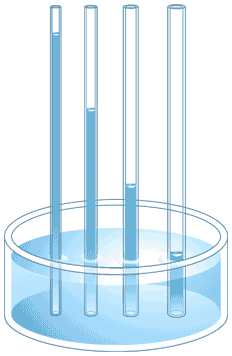
What is the term for water's ability to defy gravity and climb up a tube?

a)

Capillary Action

b)

Specific Heat

c)

Universal Solvent

d)

Magic

18.

Why does ice float?

a)

water expands when it freezes, making ice less dense than water

b)

water compacts when it freezes, making ice more dense than water

c)

hydrogen bonds in water push the ice to the surface

d)

ice is afraid of water, and avoids it

19.

At what temperature does water Freeze?

a)

0o C

b)

100o C

c)

32o C

d)

-273o C

20.

At what temperature does water Boil?

a)

0o C

b)

100o C

c)

32o C

d)

212o C

21.
The attraction that causes water and other liquids to form drops on thin films is called ________________. This is also water’s ability to be attraction to other water molecules.
a)
adhesion
b)
capillary action
c)
cohesion
d)
surface tension
22.
Water is a universal solvent because it...
a)
It can be found anywhere
b)
It freezes when it gets cold
c)
floats when frozen
d)
Dissolves most substances
23.
Which characteristic of water will allow a paperclip to remain floating on water when the paperclip is gently placed on top of the water?
a)
adhesion
b)
surface tension
c)
solvent properties
d)
nonpolar
24.

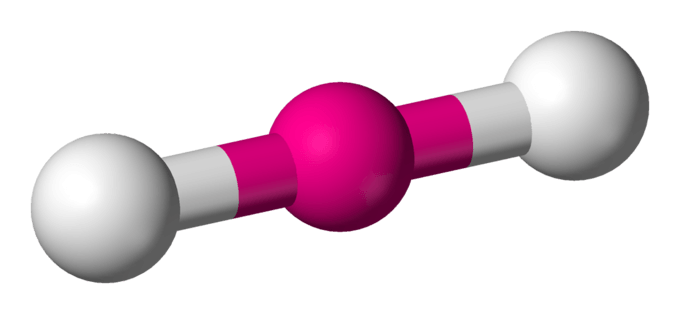
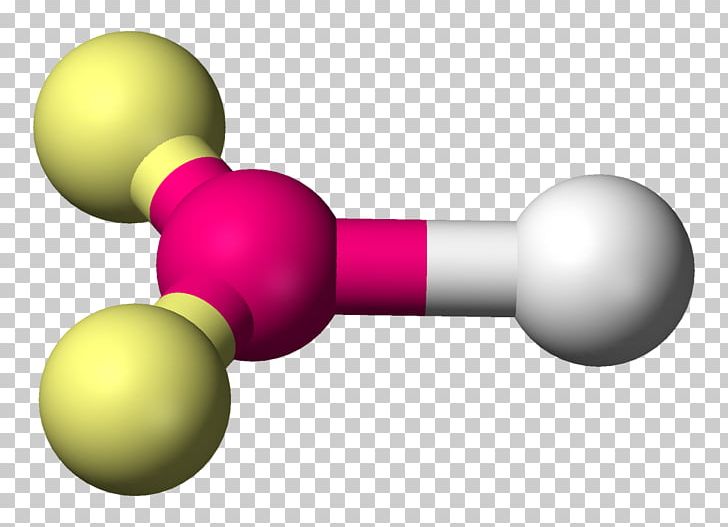
Which of the following is the correct molecular structure for water, H2O?
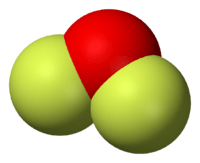
a)
b)
c)
d)
25.
Large bodies of water do not quickly fluctuate in temperature. Why?
a)
Water is a solvent.
b)
Water has a high heat capacity.
c)
Water acts as a buffer.
d)
Water is non-polar.
26.
What property of water helps to moderate earth's temperature?
a)
adhesion
b)
chohesion
c)
Specific heat capacity
d)
Latent heat of vaporization
27.
A general definition of cohesion is the attraction of:
a)
particles of the same substance
b)
particles of a different substance
c)
particles of both the same and different substances
d)
particles of neither the same or different substances
28.
Which term refers to water having partial positive and a partial negative charge?
a)
cohesion
b)
surface tension
c)
polarity
d)
adhesion
29.

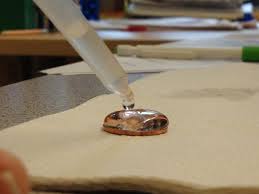
As you add drops of water to the surface of a coin, each drop sticks to the other water droplet because of ________________, and sticks to the penny because of ______________.

a)

adhesion, cohesion

b)

cohesion, adhesion

c)

capillary action, specific heat

d)

specific heat, capillary action

30.
Large bodies of water, such as lakes and oceans, do not quickly fluctuate in temperature. What is the reason for this phenomenon?
a)
Water is an acid.
b)
Water is a versatile solvent.
c)
Water has a high heat capacity.
d)
 Water acts as a buffer.
31.

The ability of water to move upward, against gravity, through small openings.

a)

specific heat index

b)

properties of water

c)

capillary action

d)

surface tension

32.
A hydrogen atom in a water molecule will be attracted to the _____________ atom of another water molecule. 
a)
oxygen
b)
hydrogen
c)
nitrogen
d)
positive 
33.

How many Hydrogen atoms does a single water molecule have?

a)

1

b)

2

c)

3

d)

4

34.

What does "polar" mean?

a)

A molecule is cold

b)

A molecule has areas of positive and negative charge

35.

This atom in a water molecule acts "negative".

a)

hydrogen

b)

oxygen

36.

The 3 states of water result of a

a)

chemical change

b)

physical change

37.

How do hydrogen bonds form?

a)

The "negative" oxygen of one water molecule is attracted to the "positive" hydrogen of another water molecule.

b)

because it's cold

c)

Polar bears and penguins

d)

The "positive" oxygen of one water molecule is attracted to the "negative hydrogen of another water molecule.

38.

A single water molecule has _________ net charge.

a)

a positive

b)

zero

c)

a negative

39.

A single water molecule has how many atoms?

a)

1

b)

2

c)

3

d)

4

40.

Protons are____________

a)

Positive and in the nucleus

b)

Negative and in the nucleus

c)

Neutral and in the nucleus

d)

None of these are correct.

41.
The pH scale is a range from:
a)
1-7
b)
0-14
c)
1-14
d)
1-20
42.
A(n) ______ is a substance with a pH less than 7
a)
Acid
b)
Alkaline
c)
Base
d)
Buffer
43.
A(n) _______ is a substance with a pH greater than 7.
a)
Base
b)
Acid
c)
Buffer
d)
Water
44.
What is the only substance with a neutral pH of 7?
a)
Milk
b)
Orange Juice
c)
Water
d)
Blood
45.
Which solution releases H+ in solution?
a)
Base
b)
Acid
c)
Buffer
d)
Water
46.
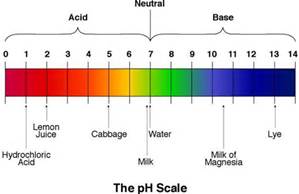
Is this substance acidic, basic, or neutral?
a)
Acidic
b)
Basic
c)
Neutral
47.
Is this substance acidic, basic, or neutral?
a)
Acidic
b)
Basic
c)
Neutral
48.
A solution with a pH of 3.6 would be...
a)
Acid
b)
Base
c)
Neutral
d)
Acid and Base
49.

Milk is a(n) ______

a)

acid

b)

base

c)

neutral

50.

According to the pH range which substance is more acidic than lemon juice

a)

Hydrochloric acid

b)

cabbage

c)

milk

51.
Which is the stronger acid?
a)
pH 1
b)
pH 4
c)
pH 8
d)
pH 13
52.
Which of the following word pairs correctly completes the sentence below?
_______ are corrosive substances characterized as having a strong smell, a sour taste, and a _______.
a)
Acids; pH less than 7
b)
Acids; pH greater than 7
c)
Bases; pH greater than 7
d)
Bases; pH less than 7
53.
If the pH of a solution is 9, it is a....
a)
acid
b)
base
c)
both
d)
none
54.
Which statement is true when acids and bases are mixed together?
a)
acids become stronger
b)
bases become stronger
c)
there is no change
d)
they neutralize each other
55.
Water is neutral because the number of hydrogen and hydroxide ions is _________.
a)
the same
b)
different
56.
If you neutralize an acid with a base what will be produced?
a)
Sugar and water
b)
Sugar and salt
c)
Salt and water
d)
Water
57.

Which of the following is the strongest base?

a)

4

b)

14

c)

7

d)

15

58.

A chemical has a pH = 6. It would be best described as

a)

Strong acid

b)

Strong base

c)

Weak acid

d)

Weak base

59.

A chemical has a pH = 2. It would be best described as

a)

Strong acid

b)

Strong base

c)

Weak acid

d)

Weak base

60.

A chemical has a pH = 13. It would be best described as

a)

Strong acid

b)

Strong base

c)

Weak acid

d)

Weak base

61.

A chemical has a pH = 8. It would be best described as

a)

Strong acid

b)

Strong base

c)

Weak acid

d)

Weak base

62.
What might happen if you mixed a strong acid with an equally strong base?
a)
You would see an explosive chemical reaction.
b)
The acid would destroy the base.
c)
The base would destroy the acid.
d)
You'd wind up with a pH-neutral substance.