wayground logo

Free Printable Worksheets

NEW

Font size

S
M
L
XL
Worksheets

The Solar System

Total questions: 50

Worksheet time: 26mins

Name
Class
Date
1.
How many planets are in our solar system (not including pluto)
a)
9
b)
8
c)
10
d)
7
2.
Name the planets in order from the one closet to the Sun
a)
Mercury, Venus, Earth, Mars, Jupiter, Saturn, Uranus, Neptune
b)
Neptune, Uranus, Saturn, Jupiter, Mars, Earth, Venus, Mercury
c)
Mercury, Earth, Mars, Venus, Saturn, Jupiter, Uranus, Neptune
d)
Mercury, Venus, Earth, Mars, Jupiter, Saturn, Uranus, Neptune, Pluto
3.
Which planet is the largest planet in our solar system?
a)
Saturn
b)
Earth
c)
Mars
d)
Jupiter
4.
What are the rings of Saturn made of?
a)
Rocks and Dust
b)
Rock, Frozen gases, Ice crystals, and water
c)
Ice Crystals
d)
Stars
5.
A small, icy body that orbits the Sun. Is made of a main body and a tail.
a)
Asteroid
b)
Comet
c)
Meteor
d)
Meteoroid
6.
A chunk of rock that burns up upon entering a planet's atmosphere
a)
Comet
b)
Meteor
c)
Meteoroid
d)
Asteroid
7.
What six things make up our Solar System?
a)
Sun, Planets, Moons, Asteroids, Comets, Meteors
b)
Galaxies, Planets, Stars, Asteroids, Planets, Moons
c)
Sun, Planets, Moons, Stars, Asteroids, Comets
d)
Planets, Stars, Galaxies, Comets, Meteors, Sun
8.
What planet do we live on?
a)
Sun
b)
Earth
c)
Mars
d)
Jupiter
9.
What are the terrestrial planets?
a)
Jupiter, Saturn, Uranus, Neptune
b)
Mercury, Venus, Earth, Mars
c)
Mercury, Earth, Mars, Neptune
d)
Jupiter, Saturn, Earth, Neptune
10.
What are the gaseous planets?
a)
Jupiter, Saturn, Uranus, Neptune
b)
Mercury, Venus, Earth, Mars
c)
Jupiter, Saturn, Uranus, Mars
d)
Mercury Venus, Earth Neptune
11.
How do moons move?
a)
Moons rotate around their planet and revolve on their axis
b)
Moon rotate around their planet and rotate on their axis
c)
Moons revolve around their planet and rotate on their axis
d)
Moons revolve around their planet and revolve on their axis
12.
Which planet is closest to the sun?
a)
Earth
b)
Mars
c)
Neptune
d)
Mercury
13.
Which planet is NOT considered a gas giant?
a)
Jupiter
b)
Saturn
c)
Venus
d)
Neptune
14.
Which of the following is an example of a dwarf planet?
a)
Pluto
b)
Mercury
c)
Mars
d)
Neptune
15.
The four inner planets are ______________.
a)
Mercury, Mars, Saturn, Neptune
b)
Mercury, Venus, Jupiter, Earth
c)
Mercury, Earth, Venus, Mars
d)
Mercury, Earth, Uranus, Mars
16.
The smallest planet in the solar system is _____________
a)
Mercury
b)
Venus
c)
Mars
d)
Neptune
17.
The hottest planet is ____________________.
a)
Mercury
b)
Venus
c)
Mars
d)
Earth
18.
The only planet with water in the surface is __________________. 
a)
Mercury
b)
Venus
c)
Earth
d)
Mars
19.
The four outer planets are ________________.
a)
Jupiter, Neptune, Saturn, Uranus
b)
Jupiter, Earth, Uranus, Mars
c)
Jupiter, Saturn, Mars, Uranus
d)
Jupiter, Saturn, Neptune, Mercury
20.
The planet with the largest rings is ____________________.
a)
Jupiter
b)
Neptune
c)
Uranus
d)
Saturn
21.
All inner planets are alike because______________.
a)
They have a solid and rocky surface
b)
They are the largest
c)
They are the coldest
d)
They have many moons
22.
All outer planets are alike because ______________.
a)
They are warm
b)
They are small
c)
They are made mostly of gas
d)
They have few moons
23.

The sun, moon, and earth all rotate on an __________.

a)

Axle

b)

Axis

c)

Pivot

d)

Point

24.
This planet is known as the Red Planet
a)
Earth
b)
Mars
c)
Neptune
d)
Saturn
25.
Which planet is the coldest?
a)
Neptune
b)

Uranus

c)
Earth
d)
Antarctica
26.
The center of our Solar System is the _____.
a)
moon
b)
sun
c)
Earth
d)
Atlantic Ocean
27.

The Earth revolves around the sun. It takes about ________ for the Earth to complete one revolution.

a)

28 days

b)

365 1/4 days

c)

24 hours

d)

3 years

28.
The Earth rotates (spins) on its axis.  It takes about ______ for the Earth to complete one rotation.
a)
24 hours
b)
28 days
c)
a week
d)
365 days
29.
The rotation of the Earth gives us _____.
a)
day and night.
b)
months. 
c)
weeks.
d)
years.
30.
The force that keeps the planets in orbit is  _____.
a)
friction
b)
sunlight
c)
gravity
d)
static electricity
31.
A constellation is a 
a)
star.
b)
a body of water.
c)
a pattern of stars.
d)
a pattern of planets.
32.
What does this picture show?
a)
Earth rotating
b)
Earth floating
c)
Earth revolving
d)
Earth orbiting
33.
What does this picture show?
a)
Earth REVOLVING around the sun
b)
Mars REVOLVING around the sun
c)
Earth ROTATING around the sun
d)
Mars REVOLVING around the sun
34.

When Earth spins, it turns around an imaginary line called a(n)

a)

rotation

b)

axis

c)

orbit

d)

ellipse

35.

Shraddha and Srinath want to develop a model of how Earth moves in space. In their model, Shraddha will represent Earth and Srinath will represent the sun. Which of the following should NOT be part of shraddha and Srinath 's model?

a)

Srinath walks in a circle around Shraddha.

b)

Shraddha spins in circles.

c)

None of these

d)

Shraddha walks in a circle around Srinath .

36.

Why does the sun seem to change position in the sky?

a)

Earth's rotation

b)

Earth's orbit

c)

The sun's rotation

d)

The sun's orbit

37.

What separates the inner planets from the outer planets?

a)
b)
c)
d)
38.
What does orbit mean?
a)
The path a planet takes around the sun.
b)
The spinning of the planet.
c)
When a rocket blasts into space.
d)
To fly into outer space.
39.

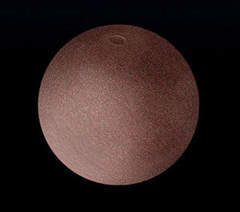
What is the name of the this Dwarf Planet in our solar system?

a)

Ceres

b)

Earth's Moon

c)

Mercury

40.
Do all planets have moons.
a)
Yes they all have moons.
b)
No not all planets have moons.
41.
How many moons orbit the planet Earth?
a)
2 moons
b)
No moons
c)
1 moon
42.
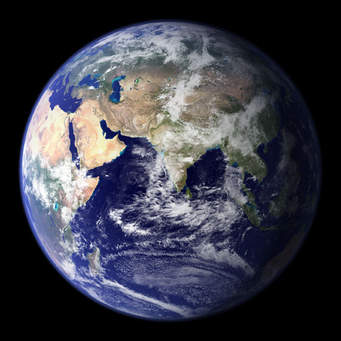
What is the only planet that has life on it?
a)
Earth
b)
Mars
c)
Venus
d)
Pluto
43.
How many moons does the planet Mercury have? 
a)
0 moons
b)
1 moon
c)
3 moons
d)
2 moons
44.
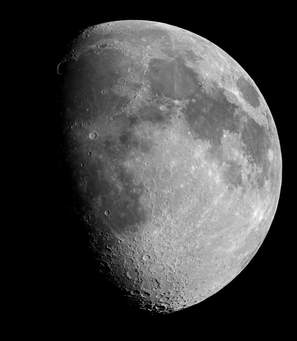
What is the Moon?
a)
It is a planet
b)
It is a satellite
c)
It is a star
d)
It is a comet
45.
What is the Sun?
a)
It is a satellite
b)
It is a Star
c)
It is a comet
d)
It is a planet
46.

The earth is made of three layers . Choose the correct statement related to layers of earth.

a)

The outer most layer is CRUST, Inner most layer is MANTLE and between CRUST and MANTLE is is CORE.

b)

The outer most layer is MANTLE , Inner most layer is CORE and between MANTLE and CORE is is CRUST.

c)

The outer most layer is CRUST, Inner most layer is CORE and between CRUST and CORE is MANTLE.

d)

None of these

47.

All planets in our solar system are the same size.

a)

true

b)

false

48.

Name the star closest to Earth.

a)

Polaris

b)

Sun

c)

Vega

d)

Alpha Centauri

49.

Mars is often called __________ due to red rusty dust.

a)

Red Planet

b)

Blue Planet

c)

Green Planet

d)

Orange Planet

50.

What causes our seasons here on Earth?

a)

Stars in our universe

b)

Our revolution around the moon

c)

Earth's tilted axis and our rotation

d)

The revolution of Earth around the sun and Earth's tilted axis