wayground logo

Free Printable Worksheets

NEW

Font size

S
M
L
XL
Worksheets

Term 1 Review - Grade 7

Total questions: 55

Worksheet time: 37mins

Name
Class
Date
1.

On a distance-time graph, a straight diagonal line ALWAYS indicates that an object’s speed is _____.

a)

constant

b)

zero

c)

increasing

d)

decreasing

2.
Change in speed over a given period of time is
a)
velocity
b)
motion
c)
speed
d)
acceleration
3.
When something has speed in a certain direction it is called ___________.
a)
motion
b)
position
c)
velocity
d)
speed
4.

The graph represents

a)

no motion

b)

Constant velocity

c)

Acceleration

d)

negative acceleration

5.
A vector is a quantity that has both size and 
a)
speed
b)
altitude
c)
acceleration
d)
direction
6.
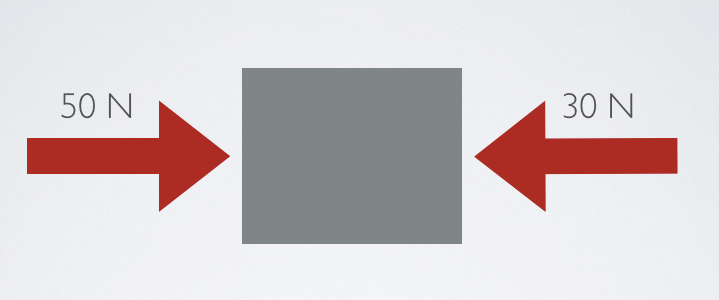
What is the net force?
a)
40 N left
b)
0 N Balalnced
c)
400 N right
d)
40 N right
7.
How will this object move? 
a)
It won't move. 
b)
It will move to the right. 
c)
It will move to the left. 
d)
It will move up. 
8.
The sum of all forces acting on an object and direction
a)
Contact Force
b)
Balanced Force
c)
Unbalanced Force
d)
Net Force
9.
Are forces balanced or unbalanced when a car is moving at a constant speed in a straight line?
a)
Balanced
b)
Unbalanced
10.
This type of force resist motion between two surfaces that are pressed together
a)
contact
b)
gravity
c)
friction
11.

What energy transformation occurs as bioluminescent algae glow in the ocean?

a)

Radiant --> Chemical

b)

Thermal --> Radiant

c)

Chemical --> Radiant

d)

Thermal --> Chemical

12.

What energy transformation occurs during photosynthesis?

a)

Chemical --> Radiant

b)

Thermal --> Chemical

c)

Radiant --> Chemical

d)

Mechanical --> Thermal

13.
Solar Energy is transferred to _____ Energy.
a)
Mechanical
b)
Solar
c)
Sound
d)
Electrical
14.
Where is the potential energy the greatest?
a)
A
b)
B
c)
C
d)
D
15.
The faster an object moves, the ________ kinetic energy it has. 
a)
more
b)
less
c)
none of the above
d)
all of the above 
16.
Gravitational potential energy depends on the ________ and ________ of the object. 
a)
Height and mass
b)
Friction and movement
c)
Mass and Movement
d)
Height and Friction 
17.

A hair dryer is rated at 1,200 W. If you use the dryer for 0.25 h, how much electric energy do you use?

a)

300 kWh

b)

300 Joules

c)

0.3 kWh

d)

0.3 Joules

18.

What energy transformation occurs in the chameleon as it quickly launches its tongue to catch an insect?

a)

Radiant --> Chemical

b)

Thermal --> Chemical

c)

Chemical --> Mechanical

d)

Mechanical --> Chemical

19.

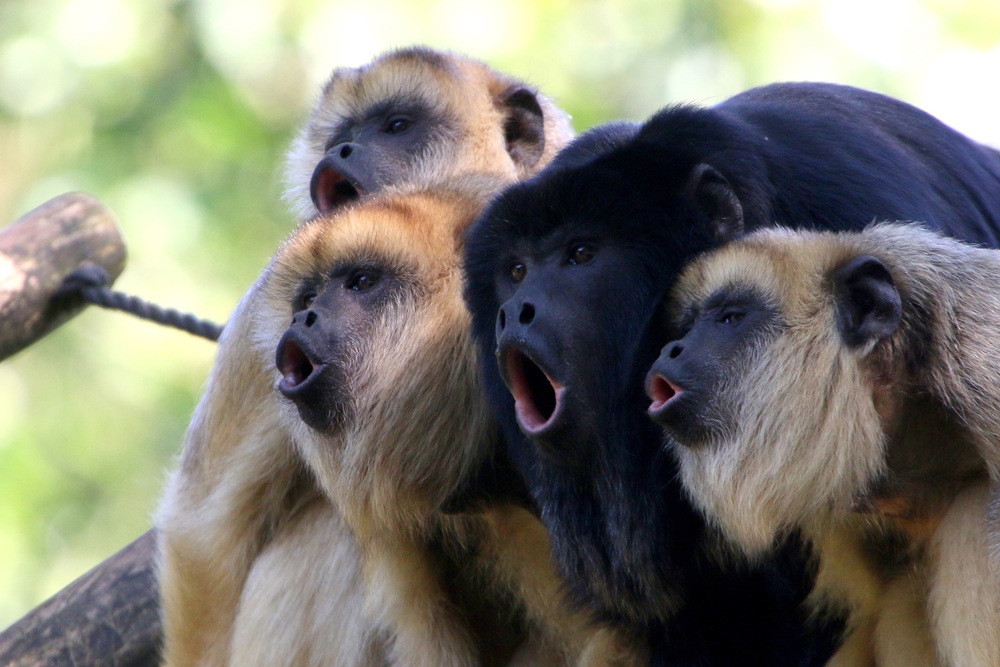
What energy transformation occurs as howler monkeys loudly call to each other in the forest?

a)

Chemical --> Mechanical --> Sound

b)

Chemical --> Sound --> Thermal

c)

Sound --> Chemical --> Radiant

d)

Mechanical --> Chemical --> Sound

20.

What do sound energy, radiant energy, and thermal energy all have in common?

a)

They're all forms of kinetic energy

b)

They're all made of similar atoms and molecules

c)

They're all made by plants during photosynthesis

d)

All of these choices

21.
Energy due to motion is ____________ energy. 
a)
Potential 
b)
Energy
c)
Kinetic
d)
Friction
22.
The faster an object moves, the ________ kinetic energy it has. 
a)
more
b)
less
c)
none of the above
d)
all of the above 
23.
__________ is stored energy. 
a)
Potential
b)
Kinetic
c)
None of the above 
d)
All of the above 
24.
What kind of energy is in a rock at the edge of a cliff?
a)
Potential
b)
Kinetic
c)
Both potential and kinetic energy
d)
none of the above
25.
Which is an example of potential energy?
a)
a roller coaster speeding down a hill
b)
the pulled back string on an archers's bow
c)
releasing the strings on a guitar
d)
an electric current lighting a light bulb
26.

Waves move ___ through vibrations of particles

a)

Energy

b)

Matter

c)

Mass

d)

Weight

27.
Which is the wavelength?
a)
1
b)
2
c)
3
d)
4
28.
The pitch of the sound depends on
a)
frequency
b)
amplitude
c)
wavelength
29.
The loudness of the sound depends on
a)
wavelength
b)
amplitude
c)
frequency
30.

Which type of interaction is this?

a)

reflection

b)

refraction

c)

diffraction

31.

Which type of interaction is this?

a)

reflection

b)

refraction

c)

diffraction

32.
Sound moves in a _________.
a)
Transverse wave
b)
Longitudinal wave
33.
How is sound produced?
a)
By the vibration of particles
b)
By the transfer of particles 
34.

Sound waves travel faster through ________ , because the particles are much closer

a)

solid

b)

liquid

c)

gas

d)

vacuum

35.
Sound does not travel in space because
a)
Space is too far away.
b)
There is no matter in space.
c)
Space is the final frontier
d)
Space has planets.
36.
Which has the LONGEST wavelength and, therefore, the lowest frequency/energy
a)
Gamma Rays
b)
Radio Waves
c)
Visible Light
d)
Infrared rays
37.
Which has the SHORTEST wavelength and, therefore, the highest frequency/most energy
a)
Radio waves
b)
Ultraviolet Rays
c)
Gamma Rays
d)
X-rays
38.
Which section of the spectrum is the ONLY one we can see?
a)
X-rays
b)
Visible Light
c)
Gamma Rays
d)
Ultraviolet Rays
39.

What are electromagnetic waves?

a)

waves that your eyes can see

b)

waves used to carry sound and image signals

c)

waves that can travel through matter

d)

waves that can travel through matter and empty space

40.

Which of the following electromagnetic waves has the lowest energy?

a)

gamma ray

b)

infrared wave

c)

visible light wave

d)

microwave

41.
Airport security is an example of _________.
a)
infrared rays
b)
radio waves
c)
x-rays
d)
gamma rays
42.

How do electromagnetic waves form?

a)

a charged particle vibrates, causing an electron charge to accelerate

b)

an uncharged particle vibrates, causing nothing to happen

c)

two charged particles collide, losing energy

d)

charged particles break apart and lose energy

43.
Which electromagnetic waves are used in devices such as heat lamps & TV remote controls?
a)
ultraviolet rays
b)
microwaves
c)
infrared rays
44.

an electromagnetic wave that a radio or TV station uses to carry its sound or image signals is called a ....

a)

radio wave

b)

electromagnetic wave

c)

carrier wave

d)

AM modulation

45.

The figure shows a carrier wave used to broadcast radio signals. What is modulated in this wave to carry information?

a)

amplitude

b)

crest height

c)

frequency

d)

loudness

46.
all matter is made of what 
a)
energy 
b)
atoms 
c)
electrons 
d)
compounds 
47.
The positive particles of an atom are 
a)
electrons 
b)
positrons 
c)
neutrons 
d)
protons 
48.
Particles in an atom that are neutral and have no charge are 
a)
negatrons 
b)
electrons 
c)
neutrons 
d)
protons 
49.
Matter is 
a)
everything that has density
b)
everything made of atoms 
c)
elements 
d)
anything that has mass and takes up space 
50.

How many elements are in CaCO3?

a)

3

b)

4

c)

5

d)

6

51.
Sodium chloride is considered a (n) ________  because it has a composition that is always the same.
a)
mixture
b)
atom
c)
substance
d)
molecule
52.
Heterogeneous mixtures are ________ mixed, while homogeneous mixtures are ________  mixed. 
a)
evenly, evenly
b)
unevenly, evenly
c)
evenly, unevenly
d)
unevenly, unevenly
53.
Making a mixture results in ___________________ only.
a)
chemical reactions
b)
separate parts
c)
physical changes
d)
two subtances
54.
The ability of a substance to dissolve is called...
a)
malleability
b)
ductility
c)
solubility
55.

Calculate Density

a)

0.5 g/cm3

b)

8 g/cm3

c)

2 g/cm3

d)

4 g/cm3