Font size
 Worksheets
Protein Synthesis
Total questions: 30
Worksheet time: 21mins
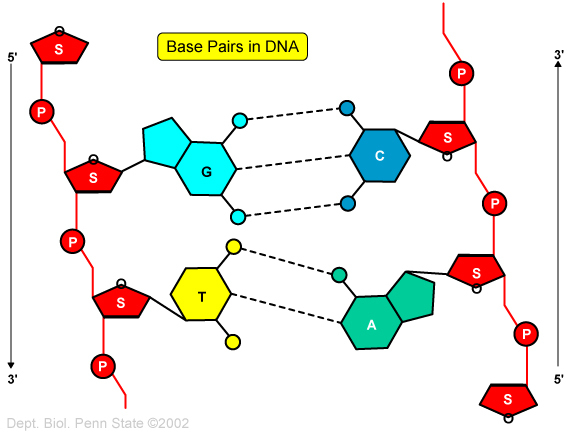
After examining the DNA of different organisms, which of the following did Erwin Chargaff conclude about the four bases?
A =T and C= G
A + T = C + G
A = C = G = T
A = C and G = T
Using the Codon chart for identifying amino acids, which of the following statements is true?
All anticodons begin with Adenine.
Tryptophan and Leucine have the exact same codon.
Methionine has multiple codons that can be translated.
The stop codes for translation begin with a Uracil.
Which of the following statements best describes, Central Dogma, the process of gene expression?
The information in DNA is translated by messenger RNA and then transcribed to make ribosomal RNA.
The information in RNA is transcribed to DNA and then translated to amino acids.
The information in DNA is transcribed to RNA and then translated to make specific proteins.
Messenger, transfer, and ribosomal RNA transcribe information onto a cell’s DNA.
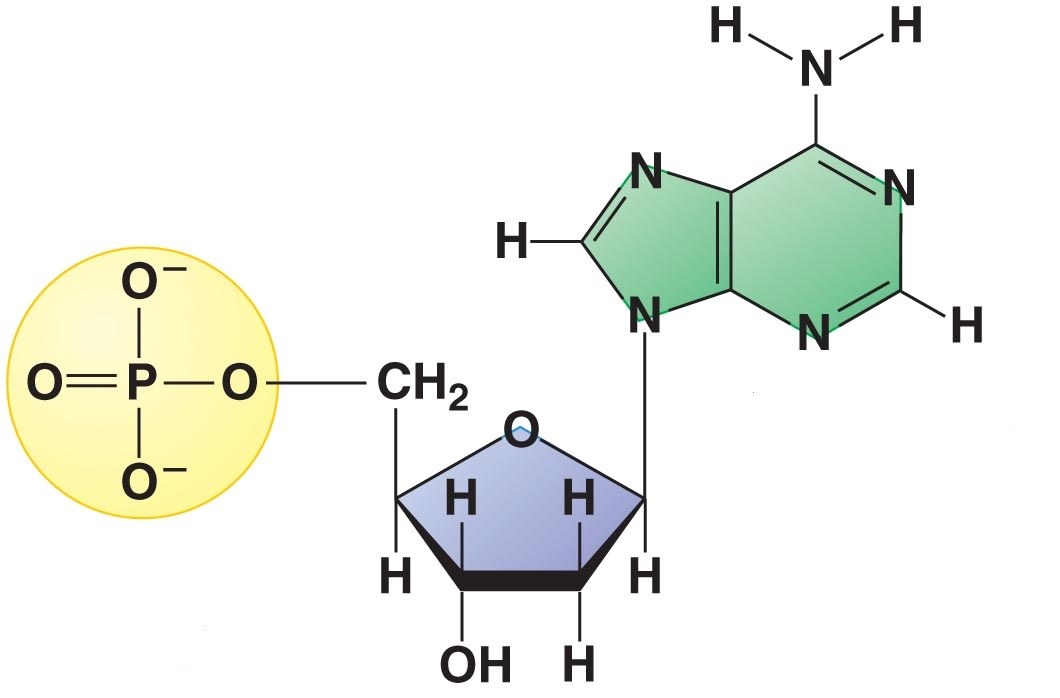
All of the following are found in the structure of DNA EXCEPT ________.
Ribose sugar
Hydrogen bonds
Nitrogen bonds
Phosphate
Which of the following is a known cause of genetic mutations?
common cold
cancer
UV radiation
poor nutrition
Cystic fibrosis is an example of a genetic disease caused by the deletion of codon. What is the term for this type of mutation?
frameshift
transcription
nonsense
point mutation
A student is using a microscope to observe cells. She sees a strand of DNA being replicated in the cytoplasm. What can she infer from her observations?
It is a prokaryotic cell completing DNA synthesis.
It is eukaryotic cell translating mRNA into proteins.
It is a protist like Amoebas using glucose for fermentation.
It is a plant cell converting water into sugar.
What does DNA polymerase do during replication?
transmits messages that are translated into proteins at the ribosome
unzips the RNA and forms covalent bonds between phosphates
binds nucleotides by forming hydrogen bonds and corrects base pair errors
carrries the amino acids to the ribosomes for protein synthesis
Using your codon chart, what of the following amino acids would be the result of the following DNA sequence:
TAC-GTC-AGG- GAT
Met- Glutamine- Ser- Leu
Met - Glut Acid- Pro- Arg
Lysine- Leucine- Ser- Stop
Leu - Ser- Glutamine- Met
What "message" does mRNA carry?
the genetic code that, when translated, forms proteins
the number of codons in an individual reading frame
the order of base pairs in complementary RNA strands
orders for making ribosomes, a cell's protein factories
How is it possible that a change in a DNA molecule can result in NO CHANGE in protein function?
The change only affects the process of replication and not translation.
The mutation codes for the same amino acid as the original code.
Protein function is unrelated to DNA mutations
The DNA molecule is only found in the gametes so it is not used to make proteins.
A template strand of DNA has the following sequence:
TAC-GGA-TAA-CTA-CCG-GGT-ATT-CAA
What would be the complimentary strand of mRNA?
AUG CCT ATT GAU GGC CCU UAA GUU
AUG CCU AUT GAU GGC CCA UAA GUT
AUG CCU AUU GAU GGC CCA UAA GUU
ATG CCT ATT GAT GGC CCA TAA GTT
Which step in DNA replication occurs first?
An enzyme unwinds the double helix.
The cell makes copies of all of the organelles
Nucleotides pair up with the nitrogenous bases
Hydrogen bonds between nitrogen bases separate
If a single DNA strand contains 40 adenines prior to replication, what conclusion can be made about its complementary strand after replication, assuming no mutations occurred?
The complementary strand contains a total of 40 uracils.
The complementary strand would contain a total of 40 thymines.
The complementary strand contains a total of 60 cytosines
The complementary strand would contain a total of 40 guanines.
Binary fission and mitosis are both processes involved in asexual cell reproduction. Both processes require DNA replication prior to cell division during the S phase of the Cell Cycle. Which statement describes a similarity between DNA replication during the S phase?
Both processes pair a purine to a pyrimidine..
Both processes take place in the nucleus.
Both processes require ribosomes to begin the replication process.
Both processes use uracil for DNA replication.
The (a) is the site of protein synthesis in both prokaryotes and eukaryotes.
Which of the following are differences in the structure between RNA and DNA
DNA uses deoxyribose sugar, RNA uses sugar ribose
DNA pairs Adenine with Uracil, RNA pairs Adenine with Thymine
DNA is a double helix, RNA is a single helix
DNA pairs Adenine with Thymine, RNA pairs Adenine with Uracil

Which process is represented in the image?
mitosis
transcription
replication
translation


What does Letter D indicate?
tRNA
Anticodon
Codon
mRNA
The monomer of a protein is a(n) (a) (two words).
What type of mutation in DNA alters just one nucleotide in a DNA sequence?
point mutation
frameshift
crossing over
replication