
 Worksheets
Micro Chapter 3 and 9
Total questions: 39
Worksheet time: 39mins
What is the idea that life can arise form nonliving material?
biogenesis
evolution
spontaneous combustion
spontaneous generation
Who finally disproved Spontaneous Generation?
Redi
Needham
Spallanzani
Pasteur
This early cell theory scientist looked in a microscope and discovered "animalcules" in the gunk from his teeth and pond water.
Schleiden
Leeowenhoek
Hooke
Virchow
Schwann
Who discovered and named cells while looking at cork?
Captain Hook
Robert Hooke
Matthais Schleiden
Rudolf Virchow
These three scientists together helped come up with the second part of the cell theory (all living things are made of one or more cells). CHOOSE 3 ANSWERS
Schleiden
Leeowenhoek
Hooke
Virchow
Schwann
Which instrument is credited for helping scientists develop cell theory?


Which statement was NOT included in cell theory?
All living things are composed of cells.
Living cells come only from other living cells.
Each cell contains a cell membrane, cytoplasm, nucleus, mitochondria, and endoplasmic reticulum.
Cells are the smallest structure of living things that can perform the functions necessary for life.
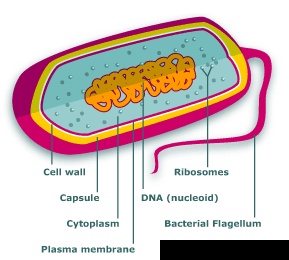

Which has ribosomes?
Prokaryote
Eukaryote
both
What microbes can grow in an environment that has low pH?
Acidophile
Neutrophile
Alkalophile
These are microbes that can survive high temperatures.
Psychrophile
Thermophile
Mesophile
The optimum temperature where most bacteria can survive
31-40
30-37
31-41
30-39
What is the effect of hypotonic solution to bacterial cell?
shrink
burst
nothing
Microbes that grow in cold temperature
Psychrophile
Mesophile
Thermophile
•Microbes that adapts to high salt concentration
Neutrophile
Alkalophile
Halophile
physical requirements:
pH
Osmotic Pressure
Temperature
Trace Elements
TOLERATE high osmotic pressure
facultative halophiles
Obligate Halophiles
Halophiles
Biofilms are associated with more than 50% of infections.
True
False
The two most common types of media used in the laboratory are:
chemically defined & simple
agar & broth
simple & complex
differential & selective

During which phase of growth are antibiotics most effective (because most of the organisms are dividing)?
lag
log/exponential
stationary
death
Bacteria make necessary enzymes for growth/reproduction.
Lag
Log
Stationary
Death
Long-term Stationary (LTS)
Most binary fission occurs.
Lag
Log
Stationary
Death
Long-term Stationary (LTS)
No nutrients or space remain for growth.
Lag
Log
Stationary
Death
Long-term Stationary (LTS)
Culture media provide microbes with:
CO2
O2
nutrients
agar
Bacteria growing in natural environments form:
colonies
pure cultures
spores
biofilms
Bacteria growing in lab environments form:
colonies
gangs
spores
biofilms
Osmophile:
sugar-loving microbe
salt-loving microbe
methane-loving microbe
Bacteria communicate cell-to-cell using:
planktonic phrasing
subculturing
quorum sensing
inoculation

