
 Worksheets
Estuaries in Virginia!
Total questions: 47
Worksheet time: 1hrs 8mins

A watershed is defined as--
water that is in the Chesapeake Bay
land that drains water into a particular set of rivers
land that is surrounded by water
the place that fresh and salt water meet

What body of water is NOT affected by river pollution in Virginia?
Atlantic Ocean
Gulf of Mexico
North Carolina Sound
Pacific Ocean

What body of water would be affected if a river was polluted in the area marked with the star?
Chesapeake Bay
North Carolina Sound
Gulf of Mexico
Pacific Ocean

What body of water would be affected if river pollution occurred in the light gray section of Virginia?
Chesapeake Bay
North Carolina Sound
Gulf of Mexico
Pacific Ocean

What body of water would be affected if river pollution occurred in the dark gray section of Virginia?
Atlantic Ocean
North Carolina Sound
Gulf of Mexico
Pacific Ocean
Where is the largest estuary in the 48 contiguous United States?
Great Lakes
Gulf of Mexico
Chesapeake Bay
off the coast of Flordia

Which ocean does our watershed travel to?
Pacific Ocean
Indian Ocean
Atlantic Ocean
Southern Ocean


What vocabulary word means a semi-enclosed body of water, where fresh and salt water mix?
Estuary
Swamp
Bay
Sea
A stream or small river that leads to a bigger river is known as a...
Tributary
Mouth
Estuary
Brackish

During the moon phases shown in the image Earth will experience a -
Spring Tide
Neap Tide

During the moon phases shown in the image Earth will experience a -
Spring Tide
Neap Tide


A type of material that scatters light as it passes through.
transparent
translucent
opaque
emitted
A type of material that transmits light without scattering it.
transparent
translucent
opaque
emit

A lens that is thinner in the center than at the edges
convex
concave
concentric
concentrated

A lens that is thicker in the center than at the edges
concave
cencentrate
concentric
convex

Electromagnetic radiation that can be seen with the unaided eye.
visible light
ultraviolet light
gamma rays
UV light

The point of a wave where the particles are close together
compression
amplitude
trough
crest

Which EM waves have the longest wavelength?
radio
x-rays
ultraviolet
gamma rays
Which EM waves are invisible? (more than one correct answer)
radio
visible
ultraviolet
gamma rays

Which letter shows the ball when it has MAXIMUM kinetic energy?
A
C
D
G
Which letter shows the ball when it has MAXIMUM potential energy?
A
B
D
G

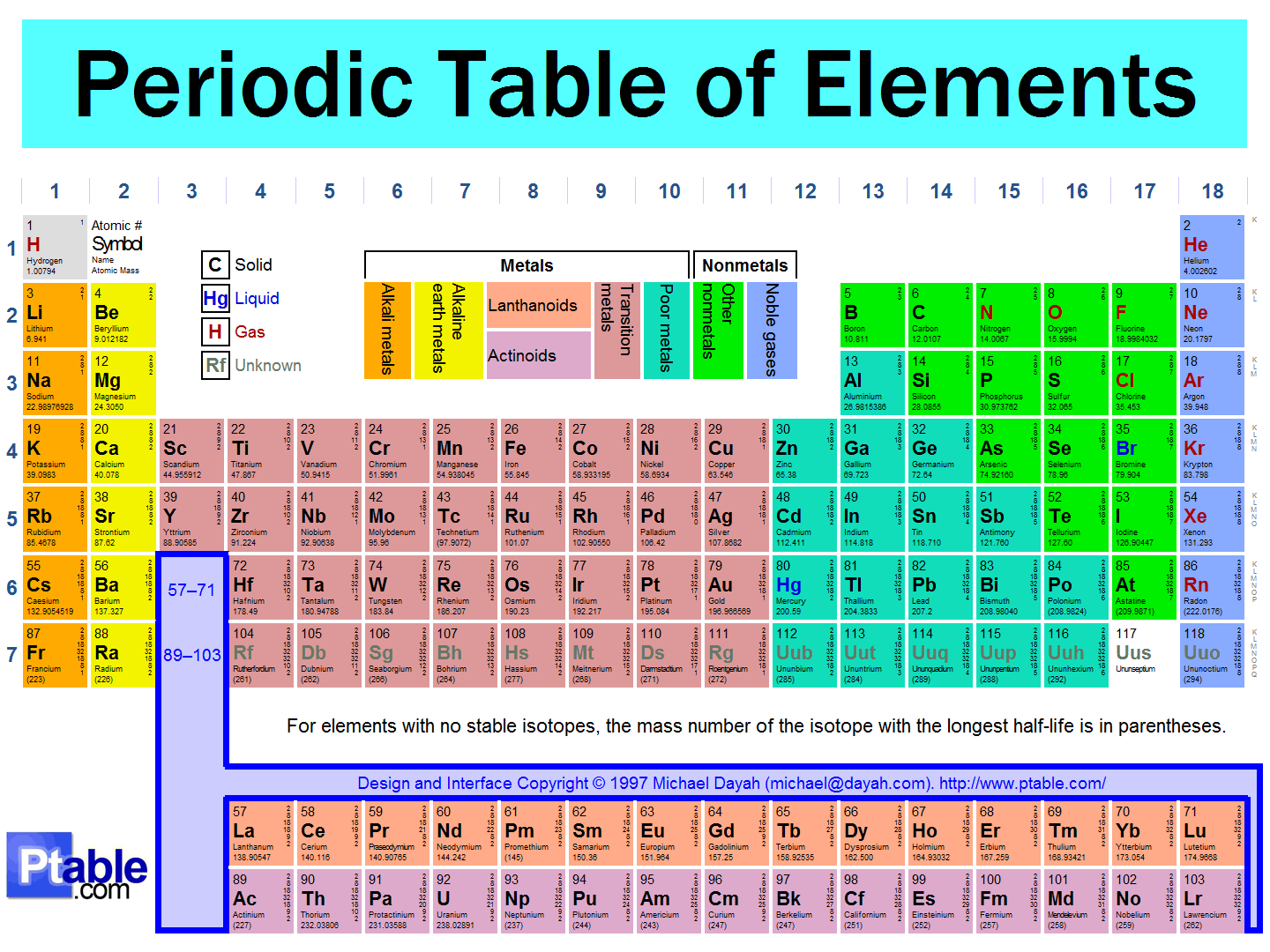
Carbon has an atomic number of 6. What can you conclude about carbon from this fact?
It has 6 protons.
It has 6 neutrons.
It's in group 6.
It's in period 6.

Noble gases are sometimes called "inert gases." What can you infer about the meaning of the word "inert" in chemistry?
It refers to substances that easily lose electrons.
It refers to substances that do not react with other substances.
It refers to substances that have strong electrochemical charges.
It refers to gases.

What do the elements highlighted in red have in common?
The same number of protons.
The same number of electrons.
The same number of neutrons.
The same number of electron shells.

Which of the following is a true statement?
Periods form horizontal rows; groups form vertical columns.
Groups form horizontal rows; periods form vertical columns.
Categories form horizontal rows; gases form vertical columns.
Gases form horizontal rows; categories form vertical columns.

To become positively charged, an atom must:
Gain a proton.
Lose a proton.
Gain an electron.
Lose an electron.


A trait that is expressed if one copy of the allele is present is a(n)
characteristic
dominant trait
gene
recessive trait

An organism’s genetic makeup; the pair of alleles for a trait is called a(n)
dominant trait
genotype
phenotype
recessive trait

An organism’s physical expression of a trait is called a(n)
dominant trait
genotype
phenotype
recessive trait

