
 Worksheets
Semester Review Jan 2021
Total questions: 184
Worksheet time: 3hrs 42mins

the bouncing of light waves when they encounter an obstacle
reflection
refraction

the bending of light waves as they pass from one material to another
reflection
refraction
absorption
A group of living things and their physical surroundings is called a(n): (
ecosystem
biosphere
community
population

Which of the following diagrams represents sexual reproduction?
I and II
I and III
II and III
III and IV
If an offspring is produced through sexual reproduction, the offspring’s genetic material is always -
A copy of the genetic material of one parent.
identical to the genetic material of its siblings.
A blend of the genetic material of its parents.
completely unrelated to that of its parents.
A farmer wants to increase the amount of food produced by corn crops. If the farmer selectively breeds the plants, for which trait should the farmer select?
taller stems
deeper roots
more cobs on each plant
resistance to pesticides
The passing of traits from parent to offspring
levels of organization
asexual reproduction
binary fission
heredity
There are over 2000 kinds of edible insects in the world, and they are becoming an increasingly popular source of protein. One cup of cricket flour contains over 28 grams of protein. The building blocks of the protein in cricket flour are
amino acids
water
simple sugars
carbohydrates
mitosis
makes sex cells
makes body cells
makes all cells in the body
Number of chromosomes in human body
1
2
23
46
asexual reproduction
genetic material from 2 parents
genetic material from 1 parent
genetic material from either 1 or 2 parents
During which phase of mitosis do sister chromatids separate from each other?
prophase
metaphase
anaphase
telophase
Why is it important for cells of multicellular organisms to undergo mitosis?
mitosis allows for reproduction with male and female gametes
mitosis increases variation within an organism
mitosis produces cells that are different from the original dividing cell
mitosis produces cells that are identical to the original dividing cell
During interphase, a cell grows, duplicates organelles and
divides the nucleus
divides the cytoplasm
copied DNA
produces a new cell
Selective breeding means...
traits are chosen by nature
only the strongest animals survive
people choose the traits that get passed down
Which correctly lists only abiotic factors?
soil, wind, rain, bacteria
temperature, water, rocks, sunlight
plants, animals, fungi, bacteria
rain, wind, clouds, birds
One DNA molecule becomes two identical DNA molecules by ___.
transcription
protein synthesis
mitosis
replication
What is a change in DNA called?
respiration
mutation
replication
transcription

The highest point on a wave is:
the crest
the trough
the top
the coast

Waves are caused by....
the gravitational pull of moon and sun
energy moving through a medium
density differences in the water
fish moving beneath the surface of the water

What is a trough?
highest point on a wave
lowest point on a wave
the horizontal distance between two waves
the vertical difference in a wave's low and high point

Frequently, this type of wave that forms far below the ocean surface is caused by an seismic activity beneath the ocean floor.
Tornado
Tsunami
Whirlpool
Cyclone
What is a crest?
highest point on a wave
lowest point on a wave
the horizontal distance between two waves
the vertical difference in a wave's low and high point
What is the wave length?
highest point on a wave
lowest point on a wave
the horizontal distance between two waves
the vertical difference in a wave's low and high point

A longitudinal wave is one where by....
the energy runs parallel to the medium
the energy runs perpendicular to the medium
the energy runs randomly through the medium
the energy runs both parallel and perpendicular to the medium
A transverse wave is one where by....
the energy runs parallel to the medium
the energy runs perpendicular to the medium
the energy runs randomly through the medium
the energy runs both parallel and perpendicular to the medium


What are chromosomes?
Long strands of DNA that contain lots of genes.
Different versions of a gene.
The basic unit of heredity; controls a specific trait.
A characteristic passed from parent to offspring
The differences that occur from a mixture of genes

What are alleles?
Long strands of DNA that contain lots of genes.
Different versions of a gene.
The basic unit of heredity; controls a specific trait.
A characteristic passed from parent to offspring
The differences that occur from a mixture of genes

What is a gene?
Long strands of DNA that contain lots of genes.
Different versions of a gene.
The basic unit of heredity; controls a specific trait.
A characteristic passed from parent to offspring
The differences that occur from a mixture of genes

What is an inherited trait?
Long strands of DNA that contain lots of genes.
Different versions of a gene.
The basic unit of heredity; controls a specific trait.
A characteristic passed from parent to offspring
The differences that occur from a mixture of genes

What is genetic variation?
Long strands of DNA that contain lots of genes.
Different versions of a gene.
The basic unit of heredity; controls a specific trait.
A characteristic passed from parent to offspring
The differences that occur from a mixture of genes

The offspring of asexually reproducing organisms have genes that are ____________ to that of their parent.
different
same
dominant
recessive

In sexually reproducing organisms, each parent contributes _____________ of the genes acquired by the offspring.
an eighth
a quarter
a half
three quarters

The difference between genotype and phenotype is :
Genotype shows the combination of alleles that provides the genes for a trait, while phenotype is the expression of the trait, what it will look like.
Phenotype shows the combination of alleles that provides the genes for a trait, while genotype is the expression of the trait, what it will look like.

Why do human siblings look similar, but not always identical if they have the same parents?
The reason that siblings can look similar without being identical is that there is always a mutation in the chromosomes.
The reason that siblings can look similar without being identical is that they have the exact same DNA, but it is in a different order.
The reason that siblings can look similar without being identical is that there are multiple combinations of alleles that code for genes, that express as traits that can be inherited.

A Punnett square showing the cross between two pea plants is shown. In pea plants, the smooth coat allele is (R) the wrinkled coat allele is (r). Which is the dominant allele?
smooth coat (R)
wrinkled coat (r)

A complete Punnett square here shows a cross between two mice with different fur color, agouti (A) and black (a). What is the probability of the recessive phenotype being expressed?
25%
50%
75%
100%

How is it genetically possible for parents with both natural brown hair, a dominant phenotype have an offspring with blonde hair, a recessive phenotype?
Both parents have blonde, but have dyed their hair brown.
Both parents have the allele for blonde hair that they passed down to their offspring.
The offspring is not their child.
In gene therapy, DNA which encodes a healthy, functional gene is used to replace a mutated gene. This technology will most likely have which of the following results?
Diseases that are not caused by mutated genes will become more common.
Traditional medications will no longer be effective at treating disease.
Diseases caused by mutated genes will have new treatments.
The spread of mutated genes will lead to increased risk of disease.
Greyhounds are dogs with long, powerful legs and slim bodies that make them very fast runners. Which of the following best describes how humans were able to engineer this breed of dog?
In every generation, only those dogs with the desired traits were allowed to reproduce.
Over many years, all the dogs were fed diets high in protein and vitamins.
Dogs that were slower than others were given exercise and trained to run fast.
For many generations, these dogs were allowed to run freely in large, open fields.

The table displays data about the presence of certain traits in a population of chickens over several generations. The data provide evidence that best supports the claim that these chickens are being bred for which characteristic?
Shorter beaks
Larger bodies
Fewer white feathers
More tail feathers

A complete Punnett square here shows a cross between two mice with different fur color, agouti (A) and black (a). This Punnett square can be used to make which of the following conclusions?
The trait of agouti fur is dominant over the trait of black fur.
Two agouti mice can’t produce offspring with black fur.
Eventually, all the mice that descend from this pair will have black fur.
The trait of agouti fur is an advantage to mice for avoiding predators.

Students are modeling how genes produce proteins by using wooden tiles with letters to represent the genes. In this model, the words that the combination of letters produce represents the proteins. In this model, which of the following best represents a mutation?
Changing one or more of the letters so that they spell a different word or no word at all
Combining many different words to create a complete message
Making different words, with a certain number of letters, that have the same meaning
Creating any word that is spelled exactly the same way forward and backward
In humans, the protein CFTR regulates the components of sweat, digestive fluids, and mucus. Humans can have a normal form of the gene or a mutated form. Which of the following would provide evidence that the mutated form of the CFTR protein is harmful to humans?
Both the normal and the mutated form of
the CFTR gene can be found in healthy humans.
Healthy individuals, with the normal form of the CFTR gene, can pass on a mutated form.
Most illnesses have symptoms associated with sweat, digestive fluids, and mucus.
Individuals who inherit the mutated form of the gene usually develop serious health problems.
Which of the following would be the most immediate result of a gene mutation in an organism?
A change in a protein produced by the organism
Increased reproductive success of the organism
Shortened life span of the organism
Decreased need for resources by the organism
Which of the following provides the best description of the function of chromosomes?
Relaying information from the environment
Controlling the production of specific proteins
Producing energy through cellular respiration
Ridding individual cells of waste products
Genes are located in which part of the cell?
Cytoplasm
Ribosome
Chromosome
Vacuole
the physical expression of the genes.
phenotype
genotype
DNA
heredity
one gene from the pair
phenotyoe
genotype
allele
RNA
Budding is best described as
When an offspring grows off of the parent
When a lost limb regrows
when a cell divides
Binary fission is usually
When an offspring grows off of the parent
When a lost limb regrows
when a cell divides
Behaviors that an organism acquires as it lives are known as
instinct
learned behavior
innate behavior
mating behaviors
Which of these is true of sexual reproduction
offspring are genetically identical to each other
slower and more energy required to find a mate and exchange genetic material
offspring are genetically identical to their parent cell
fast; not a lot of energy required
Which disadvantage is most related to asexual reproduction
slower process
requires more energy
produces less offspring
there is no genetic diversity
Which advantage is most related to asexual reproduction?
produces many offspring quickly
increases genetic diversity
sometimes both parents help to raise the offspring
the health of the population increases overtime because of genetic variation
Before mitosis begins, which happens before the nucleus starts dividing?
The cytoplasm separates
The DNA replicates
The sister chromatids separate
The homologous chromosomes cross over
Which statement best describes the relationship that exists among proteins, DNA, and cells?
Proteins combine to produce cells, which produce DNA.
Proteins are made up of DNA, which determines the cells that are produced.
DNA is made up of proteins, which tell a cell how to function.
Cells contain DNA, which controls the production of proteins.
Why is meiosis important for sexual reproduction?
It allows the zygote formed from fertilization to have triple chromosome number of the organism.
It allows gametes to have twice the original number of chromosomes of the organism
It allows gametes to have half the original number of chromosomes of the organism.
It allows the zygote formed from fertilization to have half the original number of chromosomes of the organism.
Which process produces the most variation within a species?
asexual reproduction
sexual reproduction
mitosis
cloning
a trait that is covered up if a dominant trait is present
Dominant
Recessive
a trait that overpowers another trait
Dominant
Recessive
genetically determined characteristics that are inherited from the parent or parents of the offspring
Genetics
Heredity
Traits
Gene
The physical characteristics of an organism; The way an
organism looks
Gentotype
Phenotype
The genetic makeup of an organism; The gene (or allele) combination an organism has
Genotype
Phenotype
Term used to refer to an organism that has two DIFFERENT alleles for the same trait (Tt)
Homozygous
Heterozygous
Term used to refer to an organism that has two identical or SAME alleles for a particular trait (TT or tt)
Homozygous
Heterozygous
A punnett square is used to show the different combination of genes that might result from a genetic cross.
True
False
A positive aspect (thing) about asexual reproduction is that ______________________.
there is no genetic diversity
it is easier, faster, and makes more offspring
there is genetic diversity
it requires a male and female
What are examples of inherited traits?
eye color
tattoos
knowlege
ideas


Which picture represents a chromosome?


Which picture represents a Gene?
Describe the relationship between a gene and a chromosome.
A gene is a section of DNA and a chromosome is just a long strand of DNA.
A chromosome does not contain genes, it contains DNA.
A gene is a smaller version of a chromosome.
They are not related.
Which statement reflects a way in which asexual reproduction is beneficial? Select all that apply.
It results in genetic variation.
It requires a lot of time and energy.
Organisms can reproduce without a mate.
It is a much quicker process.
Which statement describes why genetic variation is beneficial to populations of organisms?
individuals look different from one another
only one parent is needed to produce offspring
populations of the organism increase more rapidly
species can better survive environmental changes

Hydra produce offspring by growing the new individual on the body of the parent. This is an example of...
budding.
fission.
regeneration.
tubers.
Sexual VS Asexual

Select ALL traits that can be genetically inherited.
Dark-colored hair
Ability to throw a curve ball
Blue-eyes
Speaking Spanish

Which characteristic can be a result of an organisms environment but NOT passed down by parents?
Blue eyes
Green hair
Sickle Cell Anemia
Dark skin

Which or the following lists structures in the correct order (biggest to smallest)
Chromosome, Nucleus, Gene
Nucleus, Gene, Chromosome
Nucleus, Chromosome, Gene
Chromosome, Gene, Nucleus

Which reproduction concept does the diagram show?

The genotype 'aa' represents....
Butterflies lay eggs
Whales give birth to live young
A single-celled euglena splits into 2 cells
A single-celled amoeba produces young that are identical to the parent
Which organisms described on the list reproduce sexually?
1. Can produce corn that attracts grasshoppers
2. Can develop grass that can grow with less water
3. Can develop wheat that can grow in different types of soil
4. Can produces oranges that are not affected by freezing temperatures
Which items on the list provide logical arguments in favor of selective breeding?

The genotype for a yellow plant is...


Is this Asexual reproduction or sexual reproduction?
Asexual Reproduction
Sexual Reproduction

Is this Asexual reproduction or sexual reproduction?
Asexual Reproduction
Sexual Reproduction

Why is DNA important?
It is in everything
It serves as the blueprint for traits of all living things
Because we eat it every day for energy
It is very small and complicated

Sexual Reproduction
Mitosis
Meiosis

The cells that are made from meiosis have
Twice as many chromosomes as the other cells in the organism
Half as many chromosomes as the other cells in the organism
An exact copy of the chromosomes in the other cells in the organism
None of the chromosomes that are present in the other cells in the organism

DNA contains the genetic information for cells to make
A double helix
Genes
Chromosomes
Proteins

A plant that is homozygous dominant with red flowers is crossed with a plant that is homozygous recessive with white flowers. What is the probability that the offspring will have red flowers?
25% (1/4)
50% (2/4)
75% (3/4)
100% (4/4)

What is the name of the process in which a cell divides into two new cells, each having identical DNA?
Interphase
Cell cycle
Meiosis
Mitosis

Which of the following is true of genes?
Genes are only found in humans
Genes code only for recessive traits
Genes code only for dominant traits
Genes control your physical appearance
Genes can be boot cut, regular fit, or cropped
Sexual Reproduction
Creates a genetically identical copy of the parent
Creates offspring with a mix of genetic information
Requires a mate
Does not require a mate
Sperm and egg join

Mitosis produces ____________ cells and meiosis produces ____________cells.
diploid, haploid
haploid, diploid

How is meiosis different from mitosis?
Meiosis is required for sexual reproduction and mitosis is required for asexual reproduction
Meiosis is required for asexual reproduction and mitosis is required for sexual reproduction
Meiosis requires cells with a nucleus and mitosis does not
Mitosis requires cells with a nucleus and meiosis does not

California blackworms, also known as mudworms, are able to break apart. Each body section that broke apart is able to become an identical new worm. What type of reproduction does this example represent?
Sexual reproduction
Asexual reproduction
Explain difference between asexual and sexual reproduction.
Sexual reproduction involves one parent, and Asexual reproduction involves two parents.
Asexual reproduction involves one parent and the offspring is genetically identical to the parent. Sexual reproduction involves two parents, and the offspring a unique.
They are the same type of reproduction except asexual reproduction takes more time.
Sexual reproduction is shorter than asexual reproduction.
Select the choice that correctly describes a type of cell division. *PICK ALL CORRECT CHOICES.
Meiosis involves two cell divisions that produce four cells.
Mitosis involves two cell divisions that produce four cells.
Mitosis involves one cell division that produces two cells.
Meiosis involves one cell division that produces two cells.
Select the type of cell involved in mitosis. Note there may be more than one choice.
variegated cells
eggs cells
body/skin cells
sperm cells
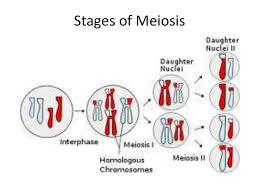
electromagnetic waves.


What does a wave carry from place to place?
energy
matter
people
A wave that can travel through matter and empty space is a:
electromagnetic wave
longitudinal wavy
transverse wave
Michael Scott wakes up one morning and sees that it is foggy outside. Which term best describes the fog he sees?
opaque
reflective
translucent
transparent
Stanley looks around his classroom at different objects. Which object reflects almost all of the light that strikes it?
a white poster board
clear window class
a red book cover
black construction paper


Which wave in the diagram has the greatest wavelength?
1
2
3
4
A wave carries...
Energy only
Matter only
The matter carries the energy
Nothing
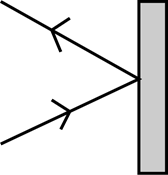
In the illustration, the light ray striking the object is-



