wayground logo

Free Printable Worksheets

NEW

Font size

S
M
L
XL
Worksheets

Energy, Pressure, Heat & Temperature, Gas Laws, Work & Power

Total questions: 68

Worksheet time: 6hrs 40mins

Name
Class
Date
1.
The movement of thermal energy from a warmer object to a cooler object is called:
a)
heat
b)
temperature
c)
motion
d)
momentum
2.
A measure of the average kinetic energy of the individual particles in an object is called:
a)
thermal energy
b)
conduction
c)
convection
d)
temperature
3.
You're holding hands with your best friend.  Your friend's hands are REALLY warm and yours are really cold.  After a few minutes, this has changed.  How might you explain what happened?
a)
The cold energy from your hand transferred to your friend's hand through conduction.
b)
The heat energy from your friend's hand transferred to your hand through conduction. 
c)
The cold energy from your hand transferred to your friend's hand through convection.
d)
The heat energy from your friend's hand transferred to your hand through convection.
4.

When a popsicle melts, the particles in the popsicle _____.

a)

gain thermal energy and speed up

b)

there are no particles in popsicles

c)

lose thermal energy and slow down

d)

stay the same

5.
What is NOT one of the six simple machines?
a)
Lever
b)
Pulley
c)
Hinge
d)
Screw
6.
What is the equation for power and energy?
a)
P = E/t
b)
E = P/t
c)
T = P x E
d)
P = W/t
7.
What is being transferred as you do work?
a)
Energy
b)
Heat
c)
Power
d)
Gravitational Potential Energy
8.
How do you calculate power?
a)
P = W/t
b)
P = E/t
c)
P = w * t
d)
P = bbq/chicken
9.
How much work is being done with 200 N of force over 426 meters?
a)
85,200 J
b)
45,620 J
c)
90,480 J
d)
62,329 J
10.
The SI unit of work is?
a)
Joules
b)
Watts
c)
Newtons
d)
meters
11.
The energy of movement is...? 
a)
Kinetic
b)
Potential
12.
Energy that is stored is called...
a)
Kinetic
b)
Potential 
13.
What is the formula for Kinetic Energy?
a)
PE = m*g*h
b)
KE = 1/2m*v2
c)
W = F*d
d)
P = W/t
14.
What is the formula for Gravitational Potential Energy?
a)
PE = m*g*h
b)
KE = 1/2m*v2
c)
W = F*d
d)
P = W/t
15.
What is g on Earth?
a)
9.8 m/s/s
b)
9.8 m/s
c)
42 m*s
d)
42 m/s/s
16.
Energy of a rock perched on a cliff is an example of...
a)
gravitational
b)
elastic
c)
chemical
d)
kinetic
17.
A force exerted over a distance to move an object is ______________________.
a)
power
b)
work
c)
momentum
d)
Watt
18.
If 68 Joules were necessary to move a 4 Newton crate, how far was the crate moved?
a)
272 m
b)
17 m
c)
4.05 m
d)
272 cm 
19.
If 150 Joules of work is needed to move a box 10 meters, what force was used? 
a)
1500 N
b)
15 N
c)
1.5 N
d)
150 N
20.
The faster an object moves, the ________ kinetic energy it has. 
a)
more
b)
less
c)
none of the above
d)
all of the above 
21.
Gravitational potential energy depends on the ________ and ________ of the object. 
a)
Height and mass
b)
Friction and movement
c)
Mass and Movement
d)
Height and Friction 
22.
What is the formula for calculating the total amount of mechanical energy?
a)
ME = KE + PE
b)
KE = ME + PE
c)
PE = KE + ME
d)
ME = 1/2 mv2
23.
Why does the total amount of mechanical energy stay constant in a system?
a)
energy is not created or destroyed
b)
energy leaves
c)
energy enters
d)
energy is not converted from one form into another
24.
On the CELSIUS temperature scale, there are no negative numbers.
a)
True
b)
False
25.
On the _____________ temperature scale, water boils at 212 degrees.
a)
Fahrenheit
b)
Celsius
26.

Pressure equals...

a)

Force x Area

b)

Area x Force

c)

Force / Area

d)

Area / Force

27.

Pressure is measured in...

a)

Pascals

b)

Newtons

c)

Milliliters

d)

Grams per centimeter3

28.

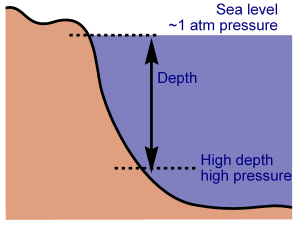
When you increase your depth under water, the water pressure on your body

a)

increases

b)

decreases

c)

stays the same

29.

An object will float on water if it is

a)

less dense than water.

b)

more dense than water.

c)

the same density as water.

30.
What pressure does a 4000N horse exert on the ground if each foot is 10cm2?
a)
40 N/cm2
b)
100 N/cm2
c)
400 N/cm2
d)
10 N/cm2
31.
Pressure can be measured in Pascals (Pa) or Newtons per square metre.
1 Pa = 1N/m2
a)
True
b)
False
32.
A fluid can be...
a)
a gas
b)
a liquid
c)
a liquid or a gas
d)
a solid
33.
Buoyancy is the tendency for objects to float in a fluid. Buoyancy pushes the opposite direction of...
a)
waves push.
b)
magnetic pull.
c)
the wind.
d)
gravity's pull
34.
Which of these animals would probably cause the greatest pressure on the ground?
a)
A fat cow with big feet
b)
A fat cow with small feet
c)
 A calf with big feet
d)
A calf with small feet
35.
The pressure resulting from a force of 50 N exerted over an area of 5 m2 is
a)
10 N
b)
0.1 N
c)
10 N/m2
d)
0.1 Pa
36.
Pressure decreases when the surface area over which a force is applied increases
a)
True
b)
False
37.
What is the formula Charles' Law?
a)
V = T
b)
VT = VT
c)
T1 / V1 = T2 / V2
d)
V1 / T1 = V2 / T2
38.
What is 50 C in Kelvin?
a)
223
b)
323
c)
100
d)
50
39.

(Charles Law) There are 65 liters of helium in a balloon at 35 K. If the temperature of the balloon is increased to 40 K, what will the new volume of the balloon be?

a)

40 L

b)

70 L

c)

74.3 L

d)

75.9 L

40.

(Charles Law) There are 40 liters of helium in a balloon at 100 K. If the temperature of the balloon is increased to 200 K, what will the new volume of the balloon be?

a)

80 L

b)

45 L

c)

54 L

d)

45.33 L

41.
Tom Brady enjoys balloon animals from the carnival. He just received a balloon giraffe that has an initial temperature of 39.0°C and a volume of 1.28 L. If Gronkowski plays a trick on Tom, and puts his balloon giraffe into the freezer, what would be the new volume of the balloon if the temperature drops down to 8.0°C?
(Don’t forget about what must be done to temperatures!)
a)
1.42 L
b)
6.85 x 10⁴ L
c)
3.78 L
d)
1.15 L
42.

A sample of hydrogen at 1.5 atm had its pressure decreased to 0.50 atm producing a new volume of 750 mL. What was its original volume?

a)

245 ml

b)

345 ml

c)

123 ml

d)

250.mL

43.

1. A sample of carbon dioxide occupies a volume of 3.50 liters at 125 kPa pressure. What pressure would the gas exert if the volume was decreased to 2.00 liters?

a)

219 KPa

b)

222 KPa

c)

567 KPa

d)

654 KPa

44.

A sample of hydrogen at 1.5 atm had its pressure decreased to 0.50 atm producing a new volume of 750 mL. What was its original volume?

a)

245 ml

b)

345 ml

c)

123 ml

d)

250.mL

45.

4 L of fluorine gas exerts a pressure of 1.5 atm. When the pressure is changed to 3 atm, what is its new volume?

a)

2 L

b)

1 L

c)

3 L

d)

4 L

46.
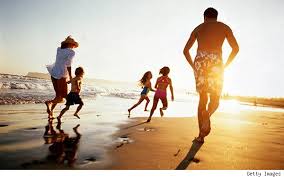
The sun shines down on this family as the play on the beach.
a)
conduction
b)
convection
c)
radiation
47.
A group of friends gather around a fire to stay warm.
a)
conduction
b)
convection
c)
radiation
48.
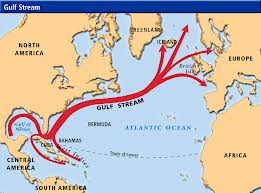
The Gulf Stream is a current that brings warm ocean water from the south to the north.
a)
conduction
b)
convection
c)
radiation
49.
Walking on the warm sand sand with your bare feet.
a)
conduction
b)
convection
c)
radiation
50.
Blow drying your wet hair.
a)
conduction
b)
convection
c)
radiation
51.
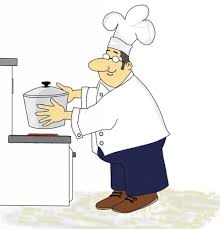
The man goes to take the hot pot off the stove with his bare hands.
a)
conduction
b)
convection
c)
radiation
52.
Warm air rises and the cool air sinks.
a)
conduction
b)
convection
c)
radiation
53.

Convert 35⁰F to Celsius (5/9 x (0F - 32))

a)

1.6⁰

b)

1.7⁰C

c)

2.0⁰

d)

16.6⁰C

54.

Convert 72⁰F to Celsius (5/9 x (0F - 32))

a)

2.2⁰C

b)

222⁰C

c)

22.2⁰C

d)

161.6⁰C

55.

Convert 30°C to Fahrenheit (1.8 x 0C) + 32

a)

860°F

b)

86°F

c)

63.8°F

d)

56°F

56.

Convert 25.6°C to Fahrenheit (1.8 x 0C) + 32

a)

48.1°F

b)

781°F

c)

78.1°F

d)

14.1

57.

100 Celsius is ? Kelvin (K = Celsius + 273)

a)

173 K

b)

373K

c)

273 K

d)

0 K

58.

Convert 30°C into Kelvin.

a)

252K

b)

316°C

c)

303K

d)

-163°C

59.

Convert -21°C into Kelvin.

a)

252K

b)

316°C

c)

303K

d)

-163°C

60.

Convert 89°F into °C.

a)

7.2°C

b)

32°C

c)

32°F

d)

212°F

61.

Convert 45°F into °C.

a)

7.2°C

b)

32°C

c)

32°F

d)

212°F

62.

Convert 0°C into °F.

a)

7.2°C

b)

32°C

c)

32°F

d)

212°F

63.

Convert 100°C into °F.

a)

7.2°C

b)

32°C

c)

32°F

d)

212°F

64.

Convert 20°C into °F.

a)

7.2°C

b)

32°C

c)

75.2°F

d)

°68

65.

Convert 24°C into °F.

a)

7.2°C

b)

32°C

c)

75.2°F

d)

°68

66.
An upward force.
a)
lift
b)
gravity
c)
life
d)
drag
67.
According to Bernoulli's Principle, when the wind speed is high, wind pressure is ________
a)
high
b)
low
c)
not enough information
d)
None of the above
68.
According to Bernoulli's Principle, when the wind speed is low, wind pressure is ________
a)
high
b)
low
c)
not enough information
d)
None of the above