Wayground logo

Free Printable Worksheets

Font size

S
M
L
XL
Worksheets

Nervous, Cardio, Digestive and Respiratory System Practices

Total questions: 33

Worksheet time: 34mins

Name
Class
Date
1.

Which statement best describes why your heart rate increases while exercising?

a)

Her bones needed more oxygen because they were moving faster.

b)

Her stomach needed more oxygen because it was digesting food faster.

c)

Her brain needed more blood to coordinate her rapid exercise movements.

d)

Her muscles needed more glucose and oxygen because they were working harder.

2.

Why is breathing necessary for humans?

a)

A. Breathing allows us to take in oxygen needed for cellular respiration and release Carbon Dioxide

b)

B. Breathing allows us to take in oxygen needed for photosynthesis

c)

C. Breathing allows us to take in CO2 needed for cellular respiration and release O2

d)

D. Breathing allows us to take in nitrogen needed to maintain homeostasis

3.
Which three human body systems coordinate to cause an arm to move?
a)
digestive, nervous, circulatory
b)
nervous, muscular, skeletal
c)
respiratory, muscular, digestive
d)
skeletal, circulatory, immune
4.
Which system sends messages around the body?
a)
Respiratory
b)
Skeletal
c)
Nervous
d)
Digestive
5.
The circulatory system works with the ___________ system to provide our body with oxygen.
a)
respiratory
b)
digestive
c)
muscular
d)
skeletal
6.
The circulatory system works with the __________ system to obtain energy from nutrients that we eat. 
a)
respiratory 
b)
digestive
c)
skeletal
d)
nervous
7.
Which is NOT a function of the circulatory system?
a)
deliver O2 and nutrients to cells
b)
remove CO2 and wastes from cells
c)
break down carbohydrates into glucose
d)
transport other materials through body
8.
Nutrients are absorbed in which digestive organ?
a)
large intestines
b)
mouth
c)
small intestines
d)
stomach
9.
Feces that contain high water content is a form of diarrhea.  Which digestive organ did not function properly for this to occur?
a)
stomach
b)
small intestines
c)
large intestines
d)
rectum
10.
Nutrients from digested food are absorbed in which digestive organ?
a)
Small Intestine
b)
Stomach
c)
Large Intestine
d)
Gallbladder
11.
Which is NOT a function of the Digestive System?
a)
To rid the body of solid waste
b)
Absorb nutrients for energy & growth
c)
Break down nutrients from food
d)
Pump blood around the body
12.

What is the correct order of digestion?

a)

Mouth - stomach - esophagus - Large intestine - Small intestine - anus - rectum

b)

Mouth - esophagus - stomach - gall bladder - small intestine - rectum - anus - large intestine

c)

Mouth - pancreas - stomach - rectum - gall bladder - small intestine - rectum - anus

d)

Mouth - esophagus - stomach - small intestine - large intestine - rectum - anus

13.
What important activity takes place in the lungs?
a)
Food is digested
b)
Waste filtered from blood
c)
Oxygen (O2) is exchanged for Carbon Dioxide (CO2)
d)
Trachea is exchanged for the larynx
14.
The Respiratory System is the body's:
a)
Breathing system
b)
Food processing system
c)
Blood transporting system
d)
System of nerves
15.
The place in the lungs where oxygen and carbon dioxide are exchanged 
a)
Diaphragm
b)

Alveoli

c)
Bronchi Tube
d)
Trachea
16.
The main organ of the Respiratory System where the gas exchange takes place.
a)
Heart
b)
Small Intestine
c)
Lungs
d)
Anus
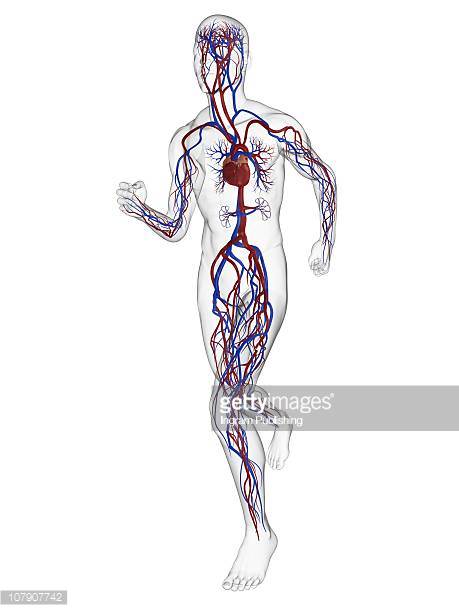
17.

What system is represented by the picture?

a)

Digestive system

b)

Circulatory system

c)

Nervous system

d)

Spinal system

18.

What is the function of the nervous system?

a)

to control and coordinate body functions and systems.

b)

to protect the body from harm.

c)

to identify pain and begin healing.

d)

to break down food.

19.

Aidan hears the fire alarm and gets up to leave the room.

In this situation, the fire alarm is:

a)

A stimulus

b)

A sensory neuron

c)

A motor neuron

d)

A relay neuron

20.
Which of the following systems protects the body from disease?
a)
Digestive System
b)
Nervous System
c)
Immune System
d)
Skeletal System
21.

White blood cells...

a)

Transport oxygen

b)

Carry nutrients to cells

c)

Carry carbon dioxide to the lungs

d)

Help fight infection

22.
This organ uses muscles to mix and mash food, and also adds digestive enzymes to chemically digest food. Food is turned into chyme here.
a)
small intestine
b)
large intestine
c)
mouth
d)
stomach
23.
Which body system gets ride of solid waste?
a)
Excretory (Urinary)
b)
Digestive
c)
Circulatory
d)
Respiratory
24.

What is another word that can be used to describe "homeostasis"?

a)

STABLE

b)

Unbalance

c)

COMPLETE

d)

CORRECT

25.
What is homeostasis?
a)
Another name for white blood cells
b)
Regulation of an organism's internal environment to maintain and balance conditions for life.
c)
Chemicals produced by glands that cause organs to behave in a certain way
26.
What transports substances around the body?
a)
Blood
b)
Sweat
c)
Tears
d)
Urine
27.
Which diagram represents an organ?
a)
#1
b)
#2
c)
#3
d)
#4
28.

What is the main organ of the circulatory system?

a)

small intestine

b)

bone

c)

lungs

d)

heart

29.

The job of the heart is to . . .

a)

pump blood around the body.

b)

send food to the small intestines.

c)

break down food.

d)

give energy to the body.

30.

The circulatory system works with the ___________ system to provide our body with oxygen.

a)

respiratory

b)

digestive

c)

muscular

d)

skeletal

31.
arteries, veins, and capillaries are three types of __________
a)
heart valves
b)
blood vessels
c)
cells
d)
veins
32.
Carbon dioxide is considered a _________________
a)
food
b)
waste
c)
energy
d)
fun party favor
33.

How does the heart work?

a)

It pumps blood first to the lungs, back to the heart and then around the rest of the body.

b)

It pumps blood first to the rest of the body, back to the lungs and then to the heart.

c)

It pumps blood around the rest of the body, back to the heart and then to the lungs,