
NEW
Font size
 Worksheets
Midterm Review Part 2
Total questions: 40
Worksheet time: 34mins
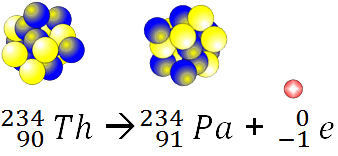
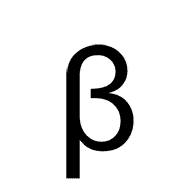
We start off with element 24X50 . After a beta decay we get another element, Y, that looks like
23Y50
22Y46
25Y50
24Y50
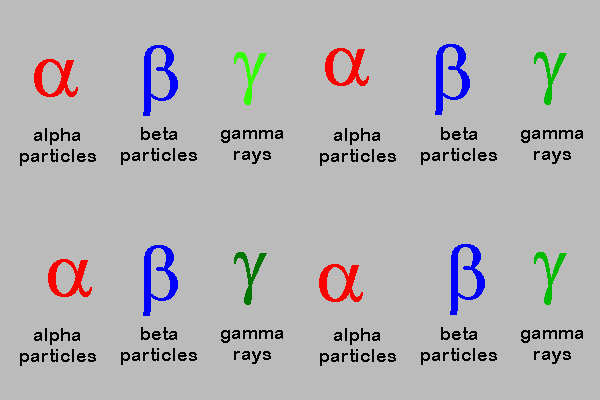
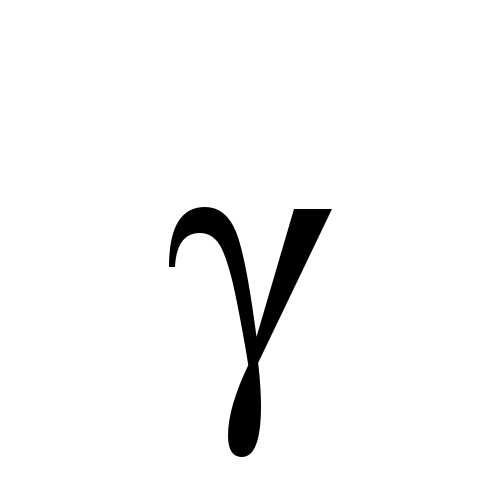
In order of most to least penetrating radiation we have
Alpha , Beta, Gamma
Beta , Gamma , Alpha
Gamma, Beta, Alpha
Gamma, Alpha, Beta
The order of elements in the periodic table is based on
the number of protons in the nucleus.
the electric charge of the nucleus.
the number of neutrons in the nucleus.
atomic mass.
Atoms of elements that are in the same group have the same number of
protons.
neutrons.
valence electrons.
protons and neutrons.
Which of the following elements is an alkali metal?
calcium
magnesium
mercury
sodium
How was Mendeleev's periodic table arranged?
by increasing atomic mass
by decreasing atomic mass
by increasing atomic number
by decreasing atomic number
Each column of the periodic table is
an element.
a group.
an isotope.
a period.
The three main groups of elements are metals, nonmetals, and
inert gases.
alkali metals.
radioactive isotopes.
semiconductors/metalloids.
Most elements are
metals.
nonmetals.
metalloids.
semiconductors.
The order of elements in the modern periodic table is based on an element's
atomic number.
name.
chemical symbol.
atomic mass.
Name the metal which is in liquid state.
Iron
Mercury
Zinc
Aluminium

How many protons does Lithium have?
3
4
7
Which elements have 1 valence electron?
period 1
group 1
group 4
Which elements are stable?
Group 1
Group 8
Group 18
which elements have 4 valence electrons?
group 3
group 4
group 14
What is a redox reaction?
A reaction where both reactants get reduced.
A reaction where both reactants get oxidized.
A reaction that involves a transfer of electrons between reactants.
A reaction that involves the combustion of at least one reactant.
What is reduction?
It is the gain of electrons.
It is the loss of electrons.
It is the creation of electrons.
It is the destruction of electrons.
What is oxidation?
It is the gain of electrons.
It is the loss of electrons.
It is the creation of electrons.
It is the destruction of electrons.
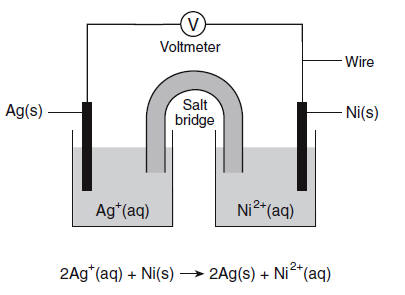
What is a galvanic (voltaic) cell?
It is a cell that destroys electrons on one side and creates electrons on the other side.
It is a cell that contains only one metal bar and one aqueous ion solution.
It is a type of battery that drives a redox reaction when electricity is applied.
It is a type of battery that generates an electrical current from redox reactions.
What is a half-reaction?
It is a reaction at equilibrium where half of the substances are reactants and half of the substances are products.
It is the reaction that occurs when the switch of a galvanic cell is open.
It shows EITHER the reduction component or the oxidation component of a redox reaction.
It shows BOTH the reduction and oxidation components of a redox reaction.
What is an anode?
It is the electrode where oxidation takes place.
It is the electrode where reduction takes place.
It is an aqueous solution containing an electrode.
It is the salt bridge that connects half-cells.
What is a cathode?
It is the electrode where oxidation takes place.
It is the electrode where reduction takes place.
It is an aqueous solution containing an electrode.
It is the salt bridge that connects half-cells.

Mg + PbCl2 → MgCl2 + Pb
Which statement correctly describes the oxidation and reduction that occur?
Mg is oxidized and Pb+2 is reduced
Mg is oxidized and Cl- is reduced
Mg is reduced and Cl- is oxidized
Mg is reduced and Pb+2 is oxidized

Galvanic cells convert
mechanical energy in to electrical energy
potential energy in to electrical energy
electrical energy in to chemical energy
chemical energy in to electrical energy
Group IA has 7 elements member, but for Alkali only has 6 elements member
Incorrect
Correct
How many electrons do the alkali metals have in their outer shell?
1
2
8
7
Which alkali metal has the symbol Cs
Caesium
Ceasium
Calcium
Sodium

