Wayground logo

Free Printable Worksheets

Font size

S
M
L
XL
Worksheets

US History II Final 2020-2021

Total questions: 64

Worksheet time: 3625secs

Name
Class
Date
1.

What does "Gilded" mean when we talk about the Gilded Age?

a)

Nice on the outside, ugly on the inside

b)

Ugly on the outside, nice on the inside

2.

Overcrowding and pollution were caused primarily by what?

a)

Urbanization

b)

Industrialization

c)

Nativism

d)

Assimilation

3.

Who is most associated with political machines in New York City?

a)

"Boss" Tweed

b)

John Rockefeller

c)

Jane Adams

d)

Andrew Carnegie

4.

What was the main source of power in big city governments during the Gilded Age?

a)

Political Machines

b)

Industrial Capitalists

c)

Robber Barons

d)

Labor Leaders

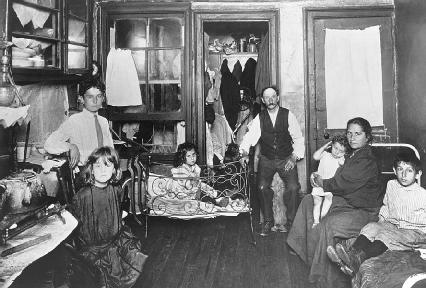
5.
The photo demonstrates one of the problems with
a)
overcrowding urban tenements.
b)
labor union activism in urban areas.
c)
the overproduction of consumer goods.
d)
the growth of political machines.
6.

How did Alexander Graham Bell contribute to society?

a)

He created products made with peanuts and potatoes

b)

He invented the first light bulb

c)

He invented a steel production to create steel for railroads

d)

He invented the first telephone

7.

Which industry did Carnegie lead?

a)

Oil

b)

Railroad

c)

Shipping

d)

Steel

8.

What was the Name of the Oil Company John made?

a)

Mobil oil

b)

Standard oil

c)

Chevron oil

9.

What invention of Thomas Edison do we use the most often?

a)

the phonograph

b)

the telephone

c)

the printing press

d)

the light bulb

10.
The total or complete control of a service, product or industry that prevents competition
a)
Union
b)
Robber Barron
c)
Monopoly
d)
Captain of Industry
11.

In what ways did Robber Barons in their money?

a)

Unethical

b)

Unscrupulous

c)

Ethical

d)

Dignified

12.

What did Henry Ford create?

a)

Assembly Line

b)

Model B

c)

Model T

d)

Quadricycle

13.
In The Jungle, Upton Sinclair exposed
a)
Dangers faced by coal miners
b)
Corrupt business practices of the Standard Oil Company
c)
Unsanitary conditions in the meat-packing industry
d)
Illegal deals between special interests and the government
14.
Suffrage refers to:
a)
Discrimination
b)
Women’s Rights
c)
The Right To Vote
d)
The Denial of Voting
15.
What did the Meat Inspection Act accomplish?
a)
Banned the use of assembly lines
b)
Allowed the government to have unlimited power
c)
Cleaned up food producing factories
d)
Advocated for minority groups
16.
Which idea of Theodore Roosevelt’s led to the creation of National Parks?
a)
Meat Inspection Act
b)
Preservation
c)
Conservation
d)
Intimidation
17.
Who wrote the expose piece of literature that revealed the extensive corrupt monopolistic business practices of Standard Oil?
a)
Ida Tarbell
b)
Lewis Hines 
c)
Jacob Riis
d)
Upton Sinclair
18.
Writers that dig up the bad things going on in society
a)
Suffragists
b)
Muckrakers
c)
Students
d)
Chaffinators
19.
The Sherman anti-trust act was passed to
a)
break up monopolies
b)
give equal rights to women
c)
help people living in poverty
d)
end racism
20.
Reporters, journalists, photographers, and authors who used the media to raise concerns about the negative effects of industrialization were known as
a)
muckrakers
b)
suffragists
c)
immigrants
d)
abolitionists
21.

Which of these would best describe how Hawaii became part of the United States.

a)

The Queen was removed and then Hawaii added

b)

Hawaii has always been part of the U.S.

c)

U.S. added it after the Boxer Rebellion

d)

Won it during the Spanish American War

22.

What was the event that started the Spanish-American War?

a)

explosion of the U.S.S. Maine

b)

Boxer Rebellion in China

c)

Japanese attack on Pearl Harbor

d)

Spanish colonization in Alaska

23.

When newspapers exaggerate the stories to get more readers it is called....

a)

Yellow Journalism

b)

Carpetbagging

c)

Muckraking

d)

Freeloading

24.

The army base Guantanamo Bay, that we created after the Spanish-American war is in what country?

a)

Cuba

b)

Puerto Rico

c)

Philippines

d)

Spain

25.

When one country takes control of another for economic, political or military gain it is called?

a)

Colonialism

b)

Imperialism

c)

Manifest Destiny

d)

Nationalism

26.
What is the policy of building up armed forces in aggressive preparedness for war?
a)
Militarism
b)
Nationalism 
c)
Imperialism
d)
Alliances
27.
What is a devotion to the interests and culture of one's nation?
a)
Imperialism
b)
Alliance
c)
Nationalism
d)
Militarism
28.
This was a German offer of an alliance with Mexico.
a)
Sedition Act
b)
Zimmerman Note
c)
Sussex Pledge
d)
Fourteen Point
29.
What was the land between two enemy lines called?
a)
No Man's Land
b)
His brother's land
c)
Auntie Anne's Land
d)
Pen Cattle
30.
What caused the U.S. and German relations to deteriorate in 1915?
a)
German invasion of Belgium
b)
German blockade
c)
Sinking of the Lusitania
d)
German embargo on U.S. goods
31.

What is an alliance?

a)

A strong love for one’s country

b)

An agreement between nations to defend one another

c)

A country who remains neutral during a war

32.

What is nationalism?

a)

A strong love for one’s country

b)

An agreement between nations to defend one another

c)

Information or ideas that are spread to help or harm a person, group or cause.

33.

What was one cause of World War I?

a)

Germany sank the Lusitania

b)

The Austria-Hungarian heir to the throne was assassinated

c)

Germany asked Mexico to join the Central Powers

34.

What was the purpose of the League of Nations?

a)

to give power to one country over Europe

b)

to punish Germany for starting WWI

c)

to promote peace among countires

35.
What organization did Wilson want to establish?
a)
United Nations
b)
European Union
c)
League of Nations
d)
NAFTA
36.
How quickly did America join the League of Nations?
a)
Never
b)
Immediately
c)
At the start of WWII
d)
1918
37.
A great jazz musician who helped the 1920s become known as the "Jazz Age"
a)
Henry Ford
b)
Babe Ruth
c)
Louis Armstrong
d)
Langston Hughes
38.
A President of the United States that tried to keep the United States out of World War I
a)
George Washington
b)
Woodrow Wilson
c)
Abe Lincoln
d)
Langston Hughes
39.
Famous African American poet who lived in Harlem and was a part of the Harlem Renaissance
a)
Louis Armstrong
b)
Langston Hughes
c)
Charles Lindbergh
d)
Woodrow Wilson
40.
What was the purpose of the 19th Amendment?
a)
End slavery
b)
Allowed women to have the right to vote
c)
Allowed former slaves to have the right to vote
d)
It changed the legal working age
41.
In  1920 all alcoholic beverages became illegal.  The law was disobeyed and then changed.  This time period was known  as 
a)
The Great Depression
b)
Prohibition
c)
Specialization
d)
Assembly of workers
42.
During the 1920s many African  Americans became excellent in music, art, writing, and sports.  They wanted to prove they were talented and wanted to be treated equally.  This time period is known as the
a)
Equal Rights Movement
b)
Specialization
c)
Cultural Change Movement
d)
Harlem Renaissance
43.

The movement of African Americans from the south to the north and Midwest is called

a)

the Harlem Renaissance

b)

the Great Migration

c)

the Great Depression

d)

the Italian Renaissance

44.
President during the 1930s who was considered a failure because he couldn't fix the Great Depression.
a)
Franklin D. Roosevelt
b)
Herbert Hoover
c)
Margaret Mitchell
d)
Jessie Owens
45.
The president who promised the people a "New Deal" during the Great Depression.
a)
Jesse Owens
b)
Herbert Hoover
c)
Franklin D. Roosevelt
d)
George Washington
46.
Bob lived during a time when there were large dust storms and no rain for weeks or months at a time.  This was known as the
a)
Great Recession
b)
TVA
c)
Dust Bowl
d)
CCC
47.
What program did Franklin Roosevelt create in order to help Americans during the Great depression?
a)
Roosevelts boys
b)
Newer Deal
c)
New Deal
d)
FDR's relief
48.
Location of the U.S. Navy's Pacific Fleet?
a)
Pearl Harbor, Hawaii
b)
Norfolk, Virginia
c)
San Diego, California
d)
Seattle, Washington
49.
Axis Powers:
a)
Italy, France, Britain
b)
U.S., France, Britain
c)
Italy, Japan, Germany
d)
Britain, Japan, Italy
50.
Allied Powers:
a)
Soviet Union, France, Britain
b)
U.S., Britain, Soviet Union
c)
Italy, Japan, U.S.
d)
Britain, Italy, Soviet Union
51.
Adolph Hitler led which country during World War II?
a)
France
b)
Soviet Union
c)
Germany
d)
Japan
52.
Winston Churchill led which country during World War II?
a)
France
b)
United States
c)
Great Britain
d)
Soviet Union
53.
Benito Mussolini led which country during World War II?
a)
Italy
b)
Japan
c)
Soviet Union
d)
France
54.
What were the two U.S. Presidents during World War II?
a)
Eisenhower and Truman
b)
FDR and Eisenhower
c)
Trump and Washington
d)
FDR and Truman
55.
What event led to the US joining World War II? 
a)
Germany invaded Poland. 
b)
Germany sent Mexico a secret telegram. 
c)
Japan bombed Pearl Harbor.
d)
Germany bombed Pearl Harbor. 
56.
During which war did the U.S. create the atomic bomb?
a)
World War I
b)
World War II
c)
Korean War
d)
Vietnam War
57.
What president made the decision to use the atomic bomb against Japan in World War II?      
a)
Dwight D. Eisenhower
b)
Franklin D. Roosevelt
c)
Harry S. Truman
d)
John F. Kennedy
58.

The birth of the largest generation of Americans born between 1946 & 1955 was called the

a)

Hippie Generation

b)

Gen X

c)

Millenials

d)

Baby Boom

59.

The main style of music in the 1950's was

a)

jazz

b)

hip-hop

c)

country

d)

rock n roll

60.

What caused the Baby Boom, Interstate Highways, the growth of the Middle Class, and the rise of Suburbs.

a)

An increase in immigration

b)

A decrease in trade

c)

1950S economic prosperity

d)

A reduction (decrease) in peacetime spending

61.

Known as the King of Rock and Roll

a)

Billy Graham

b)

Buddy Holly

c)

Elvis Presley

d)

Chuck Berry

62.
_______________ wrote "I Have a Dream" and delivered it to thousands in Washington, DC. 
a)
Harry Belafonte
b)
Barack Obama
c)
Martin Luther King, Jr. 
d)
Jesse Jackson
63.
Who was arrested for refusing to give up their seat on a bus?
a)
Charlayne Hunter
b)
Harriet Tubman
c)
Rosa Parks
d)
Rebecca L. Felton
64.
Father of the Civil Rights Movement, "I have a dream" speech at the March on Washington
a)
Lester Maddox
b)
Martin Luther King, Jr.
c)
Andrew Young
d)
Benjamin Mays