wayground logo

Free Printable Worksheets

NEW

Font size

S
M
L
XL
Worksheets

Earth Changing

Total questions: 30

Worksheet time: 20mins

Name
Class
Date
1.
What are the two kinds of crust that the Earth has?
a)
Oceanic and Crustatious Crust
b)
Oceanic and Continental Crust
c)
Optic and Continental Crust
2.
4. What layer is the hottest?
a)
Core
b)
Crust
c)
Mantle
3.
Which layer below is MORE dense?
a)
Outer Core
b)
Lower Mantle
4.
Which layer of Earth is located above the outer core?
a)
crust
b)
inner core
c)
mantle
d)
lithosphere
5.
Is the outer core a liquid or solid?
a)
liquid
b)
solid
6.

Which is the correct order of the Earths layers?

a)

inner core, outer core, mantle, crust

b)

crust, inner core, outer core, mantle

c)

crust, mantle, inner core, outercore

d)

crust, mantle, outer core, inner core

7.

It is possible to drill through the crust.

a)

Sure, they have already done it.

b)

Yeah, they will get it done soon.

c)

No way, it would make the world explode

d)

Nah, we've only drilled a little bit, like 1/100th of the way through.

8.
Do the layers move?
a)
No, they are all stuck in place...rocks are solid
b)
Yes, but only the crust
c)
All the layers but the mantle.  It is too thick to really move.
d)
All the layers are moving, some with convection, some are rotating.
9.

The supercontinent in the continental drift was called?

a)

Pantry

b)

Pangaea

c)

Wegenerland

d)

Eurasia

10.

Occurs when two tectonic plates move toward each other and collide

a)

convergent boundary

b)

subduction

c)

volcanic eruptions

d)

divergent boundary

11.

Occurs when two tectonic plates move away from each other called?

a)

Divergent Boundary

b)

Convergent Boundary

c)

Volcanic eruptions

d)

Mountain building

12.
This is an example of -
a)
convergent
b)
divergent
c)
transform
13.
Which of these is NOT a type of plate boundary?
a)
Convergent
b)
Divergent
c)
Bivergent
d)
Transform
14.
This is when two plates converge but one slides under the other due to density.
a)
Uplift
b)
Subduction
c)
Trench
d)
None of the above
15.
This type of plate boundary is when two plates move apart.
a)
Convergent
b)
Transform
c)
Divergent
d)
Subductive
16.
Name this boundary
a)
Convergent
b)
Divergent
c)
Transform
d)
Sergent
17.
Name the boundary
a)
divergent
b)
convergent
c)
transform
d)
sergent
18.
Name the boundary
a)
convergent
b)
transform
c)
divergent
d)
sergent
19.

What is this?

a)

Flood

b)

Earthquake

c)

Tsunami

d)

Windstorm

20.

What is This?

a)

Thunderstorm

b)

Earthquake

c)

Landslide

d)

Wildfire

21.

What is this?

a)

Wildfire

b)

Volcano

c)

Meteor

d)

Earthquake

22.

Once magma reaches the earth's surface it is called?

a)

Silica

b)

Rock

c)

lava

23.

Volcanoes can be found?

a)

on land

b)

under water

c)

on islands

d)

all of the above

24.
Approximately 70% of the world's composite volcanoes are located around the Pacific Ocean in a region called the ____________. 
a)
Ring of Fire
b)
Volcano Ring
c)
Nucleus of Volcanoes
d)
Center of Fire
25.
What energy can be tapped from a volcano?
a)
hydrothermal energy
b)
solar energy
c)
geothermal energy
d)
nuclear energy
26.

Tsunamis are caused by?

a)

underwater disturbances such as earthquakes, landslides, and volcanoes.

b)

wind and the gravitational pull of the moon.

27.

What is a tsunami?

a)

when land falls from a hill or cliff

b)

a large ocean wave

c)

magma coming from underground

d)

a form or precipitation

28.
Which of the following is NOT one of the causes of landslides?
a)
earthquakes
b)
wind abrasion
c)
fires
d)
volcanic eruptions
29.

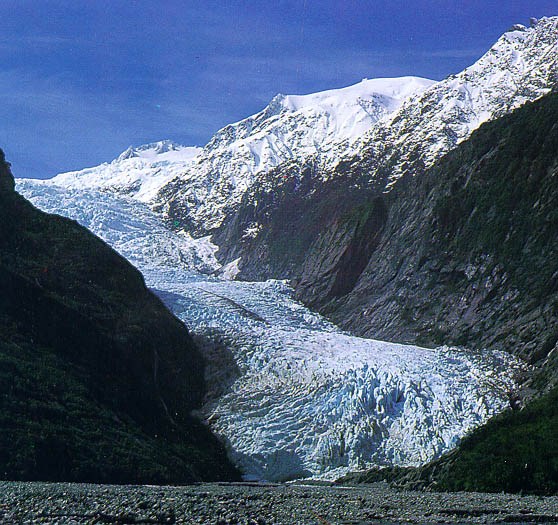
A glacier is a slowly moving mass of ?

a)

rock

b)

wind

c)

ice

d)

sediment

30.

What are most tsunamis caused by?

a)

Hurricanes

b)

Tornadoes

c)

Earthquakes

d)

Erosion