wayground logo

Free Printable Worksheets

Font size

S
M
L
XL
Worksheets

Depression/New Deal review

Total questions: 68

Worksheet time: 44mins

Name
Class
Date
1.

Which of these New Deal measures were struck down by the Supreme Court?

a)

CCC

b)

AAA

c)

FDIC

d)

PWA

2.

An expectation that it is the government's responsibility to intervene in the economy is a result of the New Deal.

a)

true

b)

false

c)

not sure

3.
The New Deal worked on accomplishing 3 goals: bring relief to unemployed, improve the economy, and what else? 
a)
bring relief to unemployed
b)
ensure a depression would never happen again
c)
make sure citizens don't need to work to live
d)
redistribute wealth from the wealthy
4.
This type of New Deal program gave immediate, temporary help to unemployed Americans
a)
relief
b)
reform
c)
recovery
5.
This ideology & president is associated with the belief that the economy would correct itself.  He did not support direct relief.
a)
Conservative;F.D.Roosevelt
b)
Liberal;Hoover
c)
Conservative;Hoover
d)
Radical;FDR
6.
This was the name for the set of programs put in place by FDR to help the depression era economy.
a)
fireside chat
b)
bank holiday
c)
New Deal
d)
packing the court
7.
A type of New Deal program that made permanent changes to the economy to fix some of the problems that led to the Great Depression and ensure the Depression wouldn't happen again
a)
relief
b)
reform
c)
recovery
8.
Why were the people of the United States angry at President Hoover during the Great Depression?
a)
he seemed uncaring, opposing most types of government direct relief
b)
he did not take enough action to help enough during the depression
c)
Americans opposed his handling of the Bonus Army marchers
d)
all of these are reasons
9.
This New Deal reform program insured checking and savings accounts. 
a)
Civilian Conservation Corps
b)
Fair Labor Standards Act
c)
Federal Deposits Insurance Corporation
d)
Social Security Act
10.
Which New Deal program set aside savings through taxes for unemployment, the disabled or retirement? 
a)
Federal Deposits Insurance Corporation
b)
Social Security Act 
c)
Agricultural Adjustment Act
d)
Civilian Conservation Corps
11.

What was the first order of business by FDR when he got into office?

a)

End the depression

b)

closed the stock market for a week

c)

bank holiday

d)

close Hoovervilles

12.
The purpose of this program is to regulate the stock market & prevent another stock market crash 
a)
FDIC
b)
SEC
c)
TVA
d)
CCC
13.
This program created dams in 7 states to provide cheap hydroelectric power & create jobs 
a)
CCC
b)
TVA
c)
WPA
d)
SEC
14.
During the New Deal, how did the government attempt to improve conditions for farmers through the AAA?
a)
By ending the practice of sharecropping
b)
By raising tariffs on farm imports
c)
By paying farmers to grow fewer crops
d)
By training farmers for jobs in a new field
15.
What cause of the Great Depression did the Agricultural Adjustment Act (AAA) attempt to solve?
a)
Stock market speculation
b)
Overproduction
c)
Weak banking system
d)
Unsafe loans
16.
The following may all be true of her, but why was the role of first lady Eleanor Roosevelt SIGNIFICANT?
a)
She was a distant cousin of FDR
b)
She traveled the country, taking on efforts to solve major issues
c)
She had five children
d)
She was the niece of Theodore Roosevelt
17.
A New Deal program that is still in operation today is the 
a)
Social Security Administration.
b)
FDIC
c)
SEC
d)
All of the above
18.
Which is NOT  cause of The Great Depression?
a)
Overproduction
b)
Speculation
c)
Shaky Banking
d)
Unrestricted International Trade
19.
What was the impact on Business during The Great Depression?
a)
The demand for goods decreased
b)
The demand for goods increased
c)
The demand for goods stayed the same
d)
Banks were able to make more loans so business could invest more into their buisness
20.
What was the human impact of The Great Depression?
a)
People were homeless and hungry
b)
People generally owned their own home 
c)
People were optimistic about their current circumstances. 
d)
There was so much economic prosperity that Photographers took historical images of all the boisterousness. 
21.
Who was Dorothea Lange?
a)
Photographer who took historically important pictures that documented the effects of the time
b)
A famous movie actress who spent time helping those impacted by the Dust Bowl
c)
FDR's wife
d)
A famous business woman who gave jobs to women to help support their family's 
22.
Why are Dorothea Lange's photographs worth seeing?
a)
Her photographs document the struggles of government officials
b)
Her pictures show how weak that generation was
c)
She documents the struggles of white men
d)
Her photographs tell the story of the hardship so many Americans suffered during this time
23.
In 1929, the United States entered an economic slowdown called the Great Depression. One of the early events was the stock market crash. What was a major cause of the stock market crash? (Use process of elimination)
a)
Stock prices went up so fast that investors could not keep up with the changes.
b)
Stock prices fell; investors panicked and sold their stocks, which led to more panic.
c)
The government decided to close the stock market in New York.
24.
Shanty towns (make-shift) towns were named after this person due to the people’s dissatisfaction of the amount of help they were given after the Stock Market Crash?
a)
Hoovervilles
b)
Shanty Villa 
c)
Bum Town
d)
Roosevelt RoadHouses 
25.
Who were three prominent women from this era? 
a)
Eleanor Rossevelt, Frances Perkins, Mary McLeod Bethune
b)
Julia Hunt Catlin Taufflieb, vMary Borden, Helen Fairchild
c)
Josephine Baker, Louise Brooks, Gabrielle Chanel
26.
October 29th, 1929
a)
Black Monday
b)
Black Tuesday
c)
Black Wednesday
d)
Black Friday
27.
The Dust Bowl devastated what part of the U.S. during the Great Depression?
a)
West Coast
b)
New England
c)
Deep South
d)
Great Plains
28.
What New Deal program paid young men to plant trees & build parks while sending $$$ home?
a)
CCC
b)
WPA
c)
PWA
d)
TVA
29.
Which of the following DID NOT cause the Dust Bowl?
a)
overproduction
b)
windstorms
c)
drought
d)
tornadoes
30.
Paying a small % of a stock's price & borrowing the rest is known as what?
a)
buying on margin
b)
speculation
c)
fiat money
d)
price supports
31.
Buying stock without knowing the risks, assuming it will just go up is known as ________.
a)
speculation
b)
buying on margin
c)
market capitalization
d)
hammering the market
32.
The Great Depression began in
a)
1925
b)
1929
c)
1932
d)
1940
33.
One difference between the administrations of President Roosevelt and President Hoover was that Roosevelt was-
a)
more willing to use government intervention to solve economic problems
b)
unwilling to allow government agencies to establish jobs
c)
able to ignore economic issues for most of his first term in office
d)
opposed to any type of government regulation of financial institutions
34.

How did FDR plan to change the role of the federal government?

a)

He wanted to increase the role of the executive branch and its power over Congress and the Supreme Court

b)

He wanted to put Congress in charge of the Supreme Court

c)

He wanted to follow the direction of Congress to solve the Great Depression

d)

He wanted to reduce the overall power of the federal government over the states

35.

What is the significance of FDR's "court-packing" plan?

a)

He successfully increased his influence over the Supreme Court

b)

The Supreme Court came to pass all New Deal policies

c)

Congress upheld the separation of powers and shut down FDR's plan

d)

Congress granted FDR total control over the federal government, creating uproar among the American people

36.
What was one economic consequence of President Franklin D. Roosevelt’s New Deal?
a)
Bank deregulation 
b)
Major industries were nationalized.
c)
Balanced budgets became the model for economic stability.
d)
The role of the federal government in the economy expanded.
37.
The criticism of President Franklin D. Roosevelt's plan to court-pack the Supreme Court was that the he was
a)
The criticism of President Franklin D. Roosevelt's plan to court-pack the Supreme Court was that the he was
b)
seeking the Supreme Court’s help against his political opponents
c)
attempting to exercise too much executive power over the Supreme Court
d)
refusing to allow the Supreme Court to review legislation
38.
Opponents of the New Deal criticized President Franklin D. Roosevelt for
a)
expanding the role and size of the federal government
b)
permitting banks to operate without government regulation
c)
weakening the executive branch
d)
reducing spending to balance the budget
39.
An important factor contributing to the start of the Great Depression in the United States was the
a)
uneven distribution of wealth
b)
increase in military spending
c)
reduction of tariff rates
d)
failure to maintain the gold standard
40.
In the 1930s, the enactment of New Deal programs demonstrated a belief that
a)
corporations were best left to operate without government interference
b)
state governments should give up control over commerce inside their states
c)
the Federal Government must concern itself with the people’s economic well-being
d)
the United States Constitution was not relevant to 20th-century life
41.
New Deal programs such as the Civilian Conservation Corps (CCC) and the Works Progress Administration (WPA) were primarily intended to help
a)
 farmers
b)
homeowners
c)
businesses
d)
unemployed workers
42.
Which event is most closely associated with the end of the Great Depression?
a)
passage of the Social Security Act
b)
beginning of World War II
c)
reelection of President Franklin D. Roosevelt in 1940
d)
announcement of the Marshall Plan
43.
This 1937 cartoon is criticizing President Franklin D. Roosevelt’s plan to
a)
reduce the number of federal courts
b)
 impeach current Supreme Court justices
c)
 give states the power to appoint Supreme Court justices
d)
 increase the number of justices on the Supreme Court
44.
The Dust Bowl experiences of the Oklahoma farmers during the Great Depression demonstrated the
a)
success of government farm subsidies
b)
 limitation of civil liberties during times of crisis 
c)
 result of the Indian Removal Act 
d)
effect of geography on people’s lives 
45.
European countries reacted to the Hawley-Smoot Tariff by 
a)
Increasing global trade
b)
Raising tariffs on American imports
c)
Importing more American goods
d)
Lowering prices on exports
46.

Migrants from the Great Plains headed west in search of better lives were called

a)

Okies

b)

Speculators

c)

Wagners

d)

Hoosier

47.

The period between March & June 1933 when FDR passed 15 major Acts to combat the Great Depression is called ___.

a)

New Deal

b)

New Freedom

c)

First 100 Days

d)

Nationalism

48.

The first feature-length animated film was

a)

Mr. Smith Goes to Washington.

b)

Snow White and the Seven Dwarfs.

c)

The Wizard of Oz.

d)

Mickey Mouse Club.

49.

During the 1930s, why did many Americans partake in popular entertainment like movies & radio?

a)

It focused on homelessness and unemployed.

b)

evoked anger at social injustice.

c)

created thrills with new special effects.

d)

provided a release from daily worries.

50.

Who was one of the leading male actors in the 1930s

a)

Paul Newman

b)

Rudolf Valentino

c)

Mel Gibson

d)

Clark Gable

51.

Clark Gable was best known for his role as ​ (a)   in 1939'2 Gone with the Wind.

Choose from the below words
Rhett Butler
George Smith
George Bailey
Austin Butler
52.

Throughout the 1930s, a young actress named ​ (a)   delighted movie-goers around the nation.

Choose from the below words
Shirley Temple
Vivian Leigh
Betty Davis
Judy Garland
53.

In the 1920s which new forms of entertainment became available to many Americans?

a)

Radio and movies

b)

Television and newspapers

c)

Books and magazines

d)

Advertising and telephones

54.

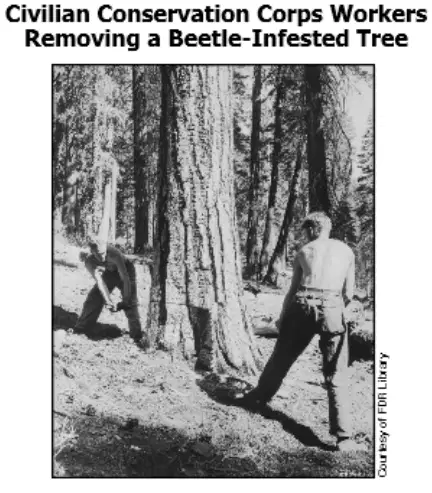
These workers are participating in a New Deal program to —

a)

build an electric dam

b)

improve the environment

c)

place railroad tracks

d)

guarantee high wages

55.

How did movies impact the popular culture of the late 1920s and early 1930s?

a)

Allowed Franklin Roosevelt to address the American public

b)

Encouraged the passage of the 18th Amendment

c)

Provided escape from the harsh realities of economic depression

d)

Promoted the traditional role of women in the home

56.

Which method of communication did Franklin D. Roosevelt use to reach the American people in his Fireside chats?

a)

Telephone

b)

Newspapers

c)

Television

d)

Radio

57.

Why are the FDIC and the SEC relevant today?

a)

The FDIC insures $2.5 million of customers money and the SEC regulates dishonest practices?

b)

The FDIC insures $25k of customers money and the SEC regulates dishonest practices

c)

The FDIC insures $2,500 of customers money and the SEC regulates honest practices

d)

The FDIC insures $250k of customers money and the SEC regulates dishonest practies

58.

What city has hosted the most Super Bowls?

a)

New Orleans, Louisiana

b)

Miami, Florida

c)

Tampa, Florida

d)

Pasadena, California

59.
January has 31 days. How many other months also have 31 days?
a)
Five
b)
Seven
c)
Six
d)
Eight
60.

What was a major goal of the Social Security Act of 1935?

a)

To regulate the stock market

b)

To provide financial assistance to the elderly and unemployed

c)

To build dams and provide electricity

d)

To support farmers through subsidies

61.

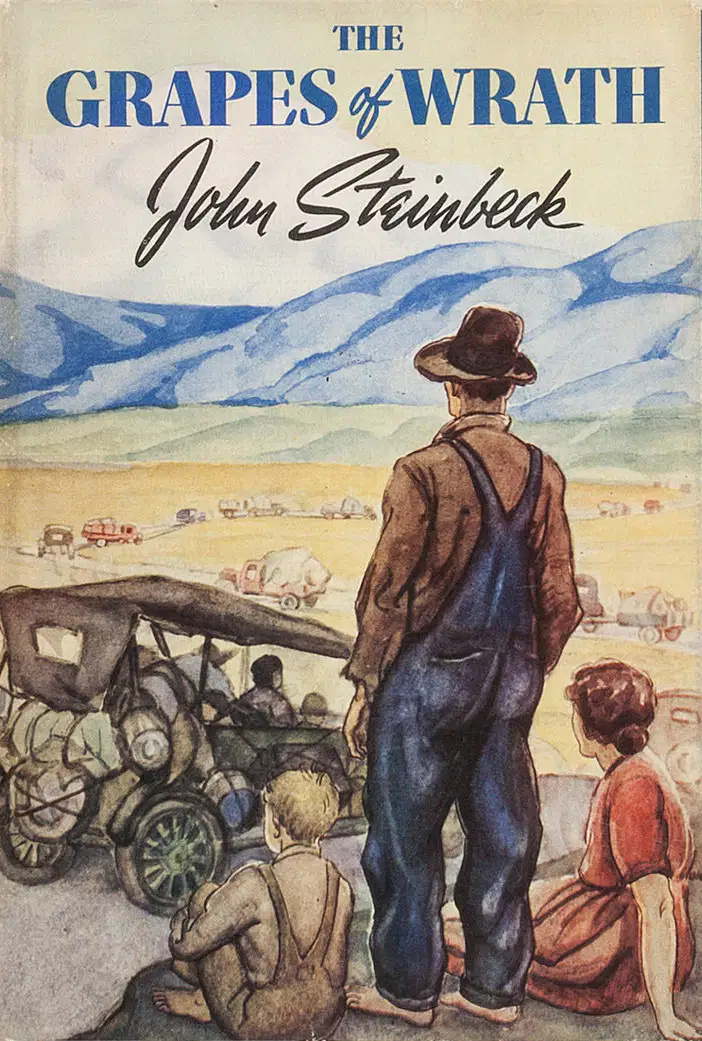
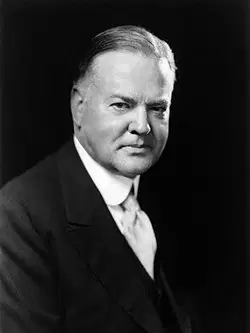
Match the person with what they did

a)

1.

Dorothea Lange

b)

2.

John Steinbeck

c)

3.

Eleanor Roosevelt

d)

4.

Father Coughlin

e)

5.

Herbert Hoover

62.
What are the 3 R's of the New Deal?
a)
Relief, Rebuild, and Reform
b)
Recover, Rebuild, and Reform
c)
Relief, Recovery, and Reform
d)
Recover, Revive, and Reform
63.

Built dams, bridges, power plants, hospitals, schools, and roads.

a)

Civilian Conservation Corps

b)

National Recovery Administration

c)

Public Works Administration

d)

Federal Emergency Relief Act

64.
The New Deal program that  raised the price of farm products by limiting supply.  Farmers were paid to produce less to drive the price up so each farmer made money for their crops.
a)
REA
b)
SSA
c)
AAA
d)
TVA
65.

What was Dr. Martin Luther King Jr. doing on the balcony of the hotel when he was shot?

a)

Preparing his speech

b)

Relaxing after a swim

c)

Smoking a cigarette

d)

Reading the bible

66.

At the age of 25, Martin Luther King Jr. graduated with his PhD and chose to become a ____________.

a)

Minister

b)

Civil Engineer

c)

Computer Programmer

d)

Police Officer

67.

What did Dr. Martin Luther King Jr. do with all of the $54,123 (about $400,000 today) he received for his Nobel Peace Prize?

a)

He donated it to the Civil Rights Movement

b)

He took his wife on vacation

c)

He bought a new house

d)

He paid taxes

68.

It wasn’t until the year _______ that all 50 states officially observed Martin Luther King Jr. Day.

a)

1995

b)

2000

c)

2005

d)

2020