wayground logo

Free Printable Worksheets

Font size

S
M
L
XL
Worksheets

Unit 2 chemistry rock and minerals review

Total questions: 100

Worksheet time: 1hrs 2mins

Name
Class
Date
1.
A mineral's resistance to being scratched is called?
a)
streak
b)
luster
c)
hardness
d)
heft
2.
By definition, a mineral has which of the following characteristic(s)?
a)
chemical composition
b)
crystalline structure
c)
natural
d)
all of the above
3.
A mineral is a living object
a)
True
b)
False
4.
Dull, silky, waxy, pearly, and earthy are terms that best describe which property of minerals?
a)
luster
b)
color
c)
streak
d)
cleavage
5.
Fluorescence is
a)
an uneven, jagged, or irregular break of a mineral
b)
a special property of minerals that causes some of them to glow
c)
color of the powder of a mineral
d)
a mineral that contains oxygen
6.
The ratio of an objects mass to its volume is called
a)
Fluorescence
b)
Streak
c)
Ore
d)
Density
7.
The definition of a mineral does NOT include:
a)
crystalline structure
b)
solid
c)
organic
d)
natural
8.
Which of the following properties does the Mohs scale measure?
a)
Luster
b)
Hardness
c)
Density
d)
Streak
9.
What does inorganic mean?
a)
Something that is living
b)
Something that is dead, but was once living
c)
Something that was never living
10.
_________ is how easily something can be scratched.
a)
specific gravity
b)
luster
c)
hardness
11.
___________ describes how the mineral reflects light.
a)
cleavage
b)
magnetic
c)
luster
12.
Minerals are identified by observing their ___________.
a)
physical properties
b)
name
c)
location
13.
Minerals are used in the creation of _____.
a)
jewelry and toothpaste
b)
hygiene items like various components of televisions, cars, computers…
c)
household items like porcelain toilets or dishes
d)
all of the above
14.
What elements are in silicate minerals?
a)
water
b)
carbon and hydrogen
c)
organic and inorganic
d)
silicon and oxygen
15.
If the mineral's chemical formula is BaSO4 which mineral group is the mineral in? 
a)
silicates
b)
carbonates
c)
halides
d)
sulfates
16.
The mineral's chemical formula consists of a metal combined with a nonmetal to make a salt. 
a)
silicates
b)
carbonates
c)
sulfides
d)
halides
17.
What mineral groups is the most common?
a)
silicates
b)
carbonates
c)
oxides
d)
halides
18.
What elements are in oxides?
a)
only oxygen
b)
oxygen and a metal
c)
metals
d)
nonmetals
19.
This rock formed when bits of other rocks became pressed into a solid. What type of rock is it?
a)
Sedimentary Rock
b)
Metamorphic Rock
c)
Igneous Rock
20.
When you watch a volcano erupt molten rock, you are seeing _____
a)
Lava
b)
Magma
c)
Mineral Crystals
d)
Igneous Rocks
21.
What are the 3 major types of rocks?
a)
Igneous, Metamorphic, Sedimentary
b)
Metamorphic, Igneous, Cementation
c)
Brown, Red, Gray
d)
Streak, Hardness, Breakage
22.
Two ways to describe types of igneous rocks are _____
a)
Extrusive and Intrusive
b)
Foliated and Non-Foliated
c)
Clastic and Biochemical
d)
Black and Gray
23.
Which of the words below describe broken up rock?
a)
stalactites
b)
magmas
c)
metamorphs
d)
sediments
24.
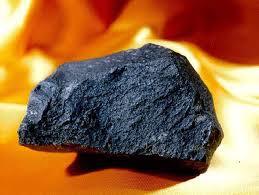
This rock was found near the mouth of a volcano. What type of rock is this?
a)
Sedimentary
b)
Igneous
c)
Metamorphic
25.
The process when rocks break into smaller pieces due to exposure to natural elements is called
a)
erosion
b)
weathering
c)
sediments
d)
deposition
26.
Sedimentary rock that is made of fragments of rocks cemented together by a mineral are called...
a)
chemical
b)
organic
c)
clastic
27.
Sedimentary rock that is formed from water evaporating and minerals being left behind.
a)
clastic
b)
organic
c)
chemical
28.
Which type of rock is formed from INTENSE heat and pressure?
a)
igneous
b)
sedimentary
c)
metamorphic
29.
all matter is made of what 
a)
energy 
b)
atoms 
c)
electrons 
d)
compounds 
30.
The positive particles of an atom are 
a)
electrons 
b)
positrons 
c)
neutrons 
d)
protons 
31.
an atom with atomic number 6 would have how many protons 
a)
6
b)
12
c)
3
d)
cannot be determined 
32.
Particles in an atom that are neutral and have no charge are 
a)
negatrons 
b)
electrons 
c)
neutrons 
d)
protons 
33.
The particles that are found in the nucleus of an atom are
a)
neutrons and electrons
b)
electrons only
c)
protons and neutrons
d)
protons and electrons
34.
"C" is the element symbol for which element?
a)
calcium
b)
carbon
c)
chlorine
d)
cadmium
35.
In the modern periodic table elements are arranged by:
a)
atomic mass
b)
atomic number
c)
valence electrons
d)
number of isotopes
36.
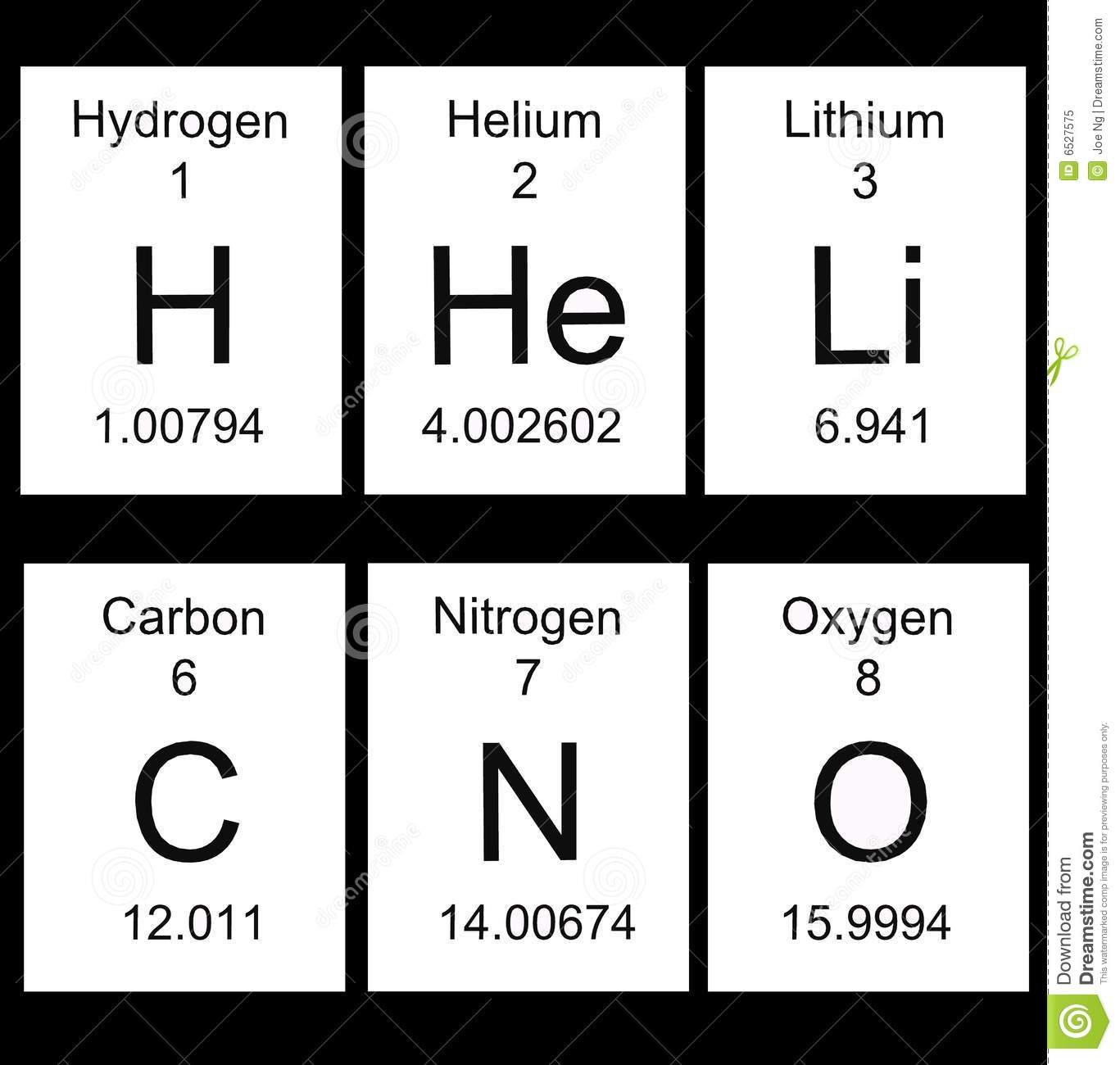
What does the 1.00794 stand for?
a)
Hydrogen
b)
atomic number
c)
atomic mass
d)
atomic explosion
37.
The number at the top of each square on the periodic table is the ...
a)
atomic number
b)
atomic mass
c)
Chemical Symbol
d)
Element Name
38.
The atomic number tells you what?
a)
number of electrons
b)
number of protons
c)
number of neutrons
d)
both electrons and protons in an atom.
39.
Sedimentary rock made from fossils are called...
a)
organic
b)
chemical
c)
stratified
40.
The formula for density is _____.
a)
D = volume/mass
b)
D = mass/LxW
c)
D = LxWxH
d)
D = mass/volume
41.
A metamorphic rock changes into an igneous rock by what two processes?
a)
Melting and cooling
b)
Extreme heat and pressure
c)
Compaction and cementation
d)
Weathering and erosion
42.
Each rock type can follow only one pathway of the rock cycle.
a)
True
b)
False
43.
Which minerals would all scratch apatite?
a)
diamond, topaz, quartz
b)
quartz, calcite, gypsum
c)
fluorite, talc, calcite
d)
diamond, fluorite, corundum
44.
Elements or compounds that make up the mineral.
a)
Cleavage
b)
Fracture
c)
Chemical composition
d)
Hardness
45.
A rating system that compares the hardness of minerals based on their resistance to scratching.
a)
Mohs Hardness Scale
b)
Mineral
c)
Naturally Occuring
d)
Streak
46.
The Rock Cycle...
a)
changes the Earth's surface.
b)
when broken down can form into another rock.
c)
provide material for the other classes of rock.
d)
All of these choices
47.
What is a pure substance that cannot be broken down into any other substance by physical or chemical means. Ex: Gold, Silver, Oxygen, & Nitrogen
a)
element
b)
compound
c)
mixture
d)
salad
48.
What is a  pure substance made of two or more elements chemically combined in a set ratio. Ex: CO2 has a set ratio of 1:2, meaning for every one carbon atom there are two oxygen atoms.
a)
element
b)
compound
c)
mixture
d)
salad
49.
What is an atom which has gained or last electrons called?
a)
isotope
b)
atom
c)
ion
d)
balanced
50.
What is matter
a)
Anything which is solid
b)
Anything that takes up space and has mass
c)
when something is wrong
51.
who developed the modern day periodic table of elements?
a)
Darwin
b)
Shultz
c)
Hooke
d)
Mendeleev
52.
On the Periodic Table each element increases by one _________
a)
electron
b)
proton
c)
neutron
d)
letter
53.
In a family or column, the elements have similar properties because they all have the same number of
a)
protons
b)
neutrons
c)
valence electrons
d)
electrons
54.
In what type of bond are electrons gained or lost?  This happens between a metal and a non-metal?
a)
ionic
b)
covalent
c)
subatomic
55.
In this type of bond electrons are shared by two non-metals
a)
ionic
b)
covalent
c)
subatomic
56.
The Law of Conservation of Matter says
a)
Matter can be created, but not destroyed
b)
matter can be destroyed, but not created
c)
matter cannot be created or destroyed
57.

atomic number is

a)

the number of protons

b)

the number of electrons

c)

the number of neutrons

d)

the location of an atom on the periodic table

58.

Atomic Mass is the number of

a)

protons and neutrons in the nucleus of an atom

b)

protons and electrons in the nucleus of an atom

c)

neutrons and electrons in the nucleus of an atom

59.

These rocks are formed when little bits of rock get squished together and harden into layers.

a)

metamorphic rocks

b)

sedimentary rocks

c)

igneous rocks

60.

The solid layer of rock in earth's crust is called

a)

bedrock

b)

magma

c)

lithosphere

61.

The scientific study of earth is known as

a)

earthology

b)

petrology

c)

geology

62.

Obsidian, pumice, and granite are all examples of

a)

metamorphic rocks

b)

sedimentary rocks

c)

igneous rocks

63.

Rocks are sorted by

a)

what they look like

b)

where they are found

c)

how they are formed

d)

how much they cost

64.

If a metamorphic rock bubbles when a drop of acid is placed on its surface, the rock is most likely

a)

schist

b)

slate

c)

marble

d)

quartzite

65.
Mixture of molten rock and gases that form underground
a)
lava
b)
magma
c)
sedimentary
66.
Intrusive rocks
a)
Forms at earth's surface
b)
Has a fine-grained texture
c)
Forms underground
67.
Extrusive rocks
a)
Forms underground
b)
Has a coarse-grained texture
c)
Cools quickly
68.
Clastic rocks, organic rocks, and chemical rocks
a)
sedimentary rocks
b)
igneous rocks
c)
metamorphic rocks
69.
Minerals that precipitate out of solution
a)
clastic rocks
b)
chemical rocks
c)
organic rocks
70.
Ways a rock can be transformed into a metamorphic rock
a)
by heat
b)
by pressure
c)
by chemical reaction
d)
all of them
71.
metamorphic rocks with crystals arranged in parallel bands or layers
a)
folliated rocks
b)
clastic rocks
c)
organic rocks
72.

Igneous rocks are also known as

a)

Clastic

Bioclastic

Crystalline

b)

Extrusive

Intrusive

c)

Foliated

Non-foliated

d)

Metallic

Nonmetallic

73.

Metamorphic Rocks are formed through the process of

a)

Deposition and Burial

b)

Heat and Pressure

c)

Weathering and Erosion

d)

Melting and Solidification

74.

Minerals can be classified through

a)

Composition

Texture

Crystal Size

b)

Texture

Grain Size

Composition

c)

Luster

Hardness

Streak

d)

Luster

Color

Composition

75.

Most igneous rocks are formed by which process

a)

Erosion and Deposition

b)

Heat and Pressure

c)

Melting and Solidification

d)

Compaction and Cementation

76.

The best evidence for determining cooling rate of an igneous rock during its solidification is provided by

a)

the mineral composition

b)

the crystal size of its minerals

c)

the index fossils

d)

faults in the rock

77.

The physical properties of minerals are determined by

a)

their streak and color

b)

their luster and hardness

c)

the internal arrangement of their atoms

d)

their composition

78.

What kind of rock is this?

a)

Clastic sedimentary rock

b)

Chemically formed sedimentary rock

c)

Volcanic Igneous Rock

d)

Plutonic Igneous Rock

79.

The grouping of rocks as igneous, sedimentary, and metamorphic is based primarily upon differences in

a)

luster

b)

origin

c)

sediments

d)

size

80.

What is this formation in rocks called?

a)

foliated

b)

mineral alignment

c)

banding

d)

metamorphic

81.
How many atoms of aluminum are on each side of the following equation: 4Al + 3O--> 2AlO3
a)
2
b)
6
c)
1
d)
4
82.
The law of conservation of mass states that....
a)
Matter can be made
b)
Matter can be destroyed
c)
Matter can neither be made or destroyed
d)
Matter can evaporate
83.

In order for an equation to be balanced, there must be ...

a)

an equal amount of atoms on both sides

b)

a greater mass on the product side

c)

a greater mass on the reactant side

d)

elements with the same atomic # on both sides

84.
The substances listed on the right side of a chemical equation are the
a)
Yields
b)
Reactants
c)
Products
d)
Precipitates
85.

Which characteristic provides the best evidence about the environment in which a rock was formed?

a)

the color of the rock

b)

the shape of the rock

c)

the texture of the rock

d)

the composition of the rock

86.

Which is an accurate statement about rocks?

a)

Rocks are located only in continental areas of the Earth.

b)

Rocks seldom undergo change.

c)

Most rocks contain fossils

d)

Most rocks have several minerals in common.

87.

Which process is necessary for the formation of igneous rocks?

a)

Crystallization

b)

Cementation

c)

Heat and Pressure

d)

Deposition

88.

Base your answers to questions 12 through 14 on the profile shown below, which shows the pattern of horizontal sorting produced at a particular time when a sediment-laden stream enters the ocean.


Why is this pattern of horizontal sorting produced?

a)

Sediments with a flatter shape settle faster.

b)

Lower density particles settle faster.

c)

Dissolved minerals are deposited first.

d)

Larger particles are deposited first.

89.

Which model best represents the silicon-oxygen tetrahedron?

a)

A

b)

B

c)

C

d)

D

90.

Which type of sedimentary rock is formed when mineral fallout of solution, leaving sediment behind?

a)

clastic

b)

chemical

c)

organic

d)

foliated

91.

Which type of metamorphism is caused by the bending and folding of preexisting rock?

a)

contact metamorphism

b)

dynamic metamorphism

c)

regional metamorphism

d)

hydrothermal metamorphism

92.

Which type of igneous rock has a high silica content?

a)

felsic

b)

mafic

c)

ultramafic

d)

intermediate

93.

Which of the following is NOT true of mining?

a)

It will likely become more costly to mine in the future.

b)

We can reduce our need to mine by recycling mineral-containing materials.

c)

Minerals are used to produce household items such as electronics and cosmetics.

d)

The environmental impact of mining will likely remain the same in the future.

94.

Which of the following would be found in a quarry?

a)

gold

b)

copper

c)

sand

d)

iron

95.

Which of the following is NOT a characteristic that all minerals must have?

a)

naturally occurring

b)

organic

c)

solid under normal conditions

d)

fixed chemical composition

96.

What is the product of Melting?

a)

Igneous Rock

b)

Sediments

c)

Sedimentary rock

d)

Magma

e)

Metamorphic rock

97.

breaks the rock down into smaller pieces

a)

melting

b)

deposition

c)

lithification

d)

uplift

e)

weathering and erosion

98.

a process that changes preexisting rocks into new forms because of increases in temperature, pressure, and chemically active fluids.

a)

melting

b)

lithification

c)

transportation

d)

metamorphism

e)

weathering and erosion

99.

Which of the following is a use of minerals in everyday life?

a)

Building materials

b)

Food additives

c)

Industrial processes

d)

All of the above

100.

What is the main difference between intrusive and extrusive igneous rocks?

a)

Intrusive rocks are formed inside the Earth, while extrusive rocks are formed on the surface.

b)

Intrusive rocks are always darker than extrusive rocks.

c)

Extrusive rocks are more dense than intrusive rocks.

d)

Intrusive rocks are formed from lava, while extrusive rocks are formed from magma.