
 Worksheets
WH Chapter 10 Review
Total questions: 100
Worksheet time: 1hrs 28mins
Prior to the Enlightenment, Chinese culture was viewed as
backward and behind the times
exquisite and valued
complicated and confusing
advanced, well ahead of the Europeans
What was the post-Enlightenment view of Chinese culture?
advanced, well ahead of the Europeans
admired for its progressive political systems and strong military
backward and behind the times with little value for progress
complicated and confusing
Which of the following best describes why China did very little trading in the 1700s?
China viewed themselves to be self-sufficient
China had extensive mining industries and a strong agricultural industry
China wanted to limit western influences in its country
All of the above are accurate descriptions
Which of the following best described how the Chinese felt about trade with foreigners?
not needed - China was self-sufficient
necessary since China was not industrialized
useful since there were products made in Britain that the Chinese wanted to trade for
China lacked natural resources and needed to trade for food to feed their growing population
Which of the following was not a trade goal of the MaCartney Envoy in 1793?
an island for the British to use for British merchants
sell opium in China
relax Chinese trade rule for Britian
grant an embassy to the British in China or at least have a British ambassador on the Imperial Court
What did the British discover about the Chinese as a result of the McCartney Envoy in 1793?
China had minimal industrial development
China's military technology was no match for the British
China's military technology was no match for the British
all of the above are correct
This practice was used by the Chinese when trading with foreign countries. It included a monetary gift and a kowtow. Countries seeking to trade with China were forced to admit to being inferior to China.
Trade treaties
Tribute system
Capitalism
Sphere of influence
Who benefited the most from the granting of extraterritorial rights in 19th century China?
Chinese peasants
Chinese Christians
Chinese government officials
Foreigners in China
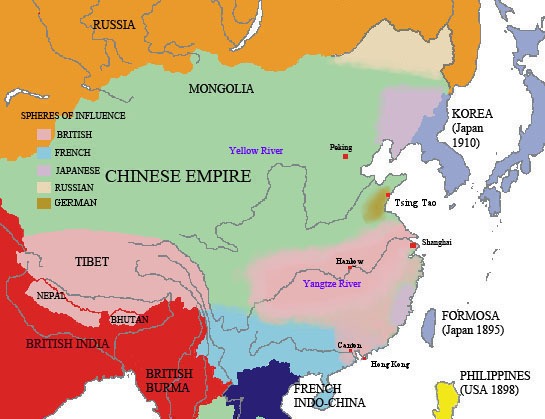
Which form of imperial control was used by western powers to divide and control China in the late 1800s and early 1900s?
Sphere of influence
Colony
Protectorate
Economic imperialism
Which of the following were imposed on China in the Treaty of Nanjing?
Hong Kong to Britain and elimination of the Cohong
Korea closed off to Russia and fishing rights granted to Japan
Pay an indemnity to Britain allow the opium trade to continue
Britain granted access to Manchuria
Britain granted Most Favored Nation Status and more ports opened to foreign trade
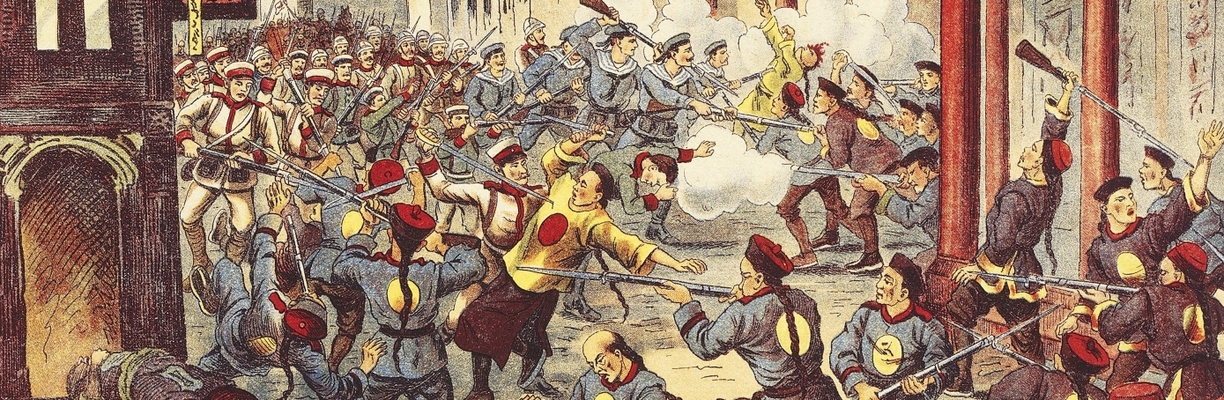
Which event in China was led by Hong Xiuquan with the goal of a China without poverty. The event ended with British and French troops stopping the rebellion.
Boxer Rebellion
Taiping Rebellion
Opium War
Self-Strengthening Movement
What was the armed rebellion against the presence of foreigners in China in 1900 that ended with foreign troops coming in to end the rebellion and resulted in the growth of Chinese nationalism?
Taiping Rebellion
Sino-Japanese War
Opium War
Boxer Rebellion
Nationalism grew in China in response to what 2 groups?
foreigners
Boxers
Chinese
Qing Dynasty
Japanese
What was the purpose of the Open Door Policy?
To protect US trading rights in China
To bring western ideas to China to help make reforms
To establish spheres of influence in China
To protect the trade of British opium in China
What was the leadership of Japan prior to Perry's visit in 1853?
The emperor
A president
The Shogun
An absolute monarch
What happened in 1854 with the signing of the Treaty of Kanagawa as a result of Commodore Perry's visit to Tokyo Harbor?
Japan built up a navy to fight against the US
Japan opened up 2 ports to US trade
Japan and Russia went to war over Manchuria
Japan annexed Korea
Japan modernized during the Meiji Era under the rule of Emperor Mutsuhito. What did the Japanese copy from the US in their efforts to modernize?
capitalism
education
government system
military
What did the Japanese copy from the British in their efforts to modernize during the Meiji Era?
army
centralized government
banking system
navy
What did the Sino-Japanese War and the Russo-Japanese War have in common?
Weapon manufacturing and shipbuilding decreased
Japan lost both wars
Japan became an imperial power and was competitive with the west
Japan's economy collapsed due to not being able to fund infrastructure projects
What 2 areas did Japan gain in their victory over China in 1894?
Tokyo and Kyoto
Beijing and Nanjing
Korea and Manchuria
Taiwan and Pescadores

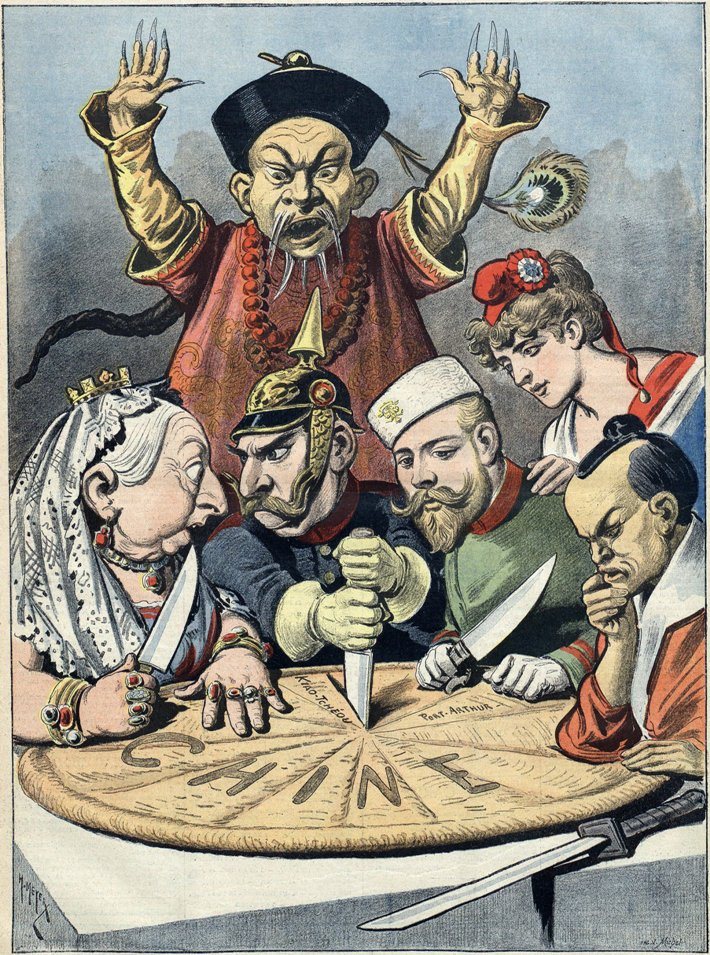
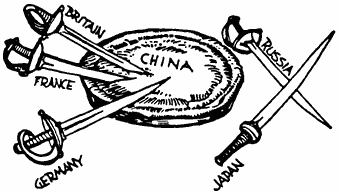
Who do the people in the image, sitting around the "pie" represent?
Asian nations wanting access to Chinese trade
Industrial, imperial powers
The US and other North American
colonies in Africa

What is the message of the image?
The Japanese are powerless in stopping the western powers from dividing up their country through economic imperialism.
The industrialized, imperials powers are competing with each other to carve out spheres of influence in China and the Qing Dynasty is powerless to stop them
European powers are planning to go to war with each other over China.
The Chinese and Japanese are plotting war against the west, causing racially motivated fear to become part of western relations with Asia
Which of the following areas did Japan annex and control from 1910 to 1945?
Korea
Manchuria
Mongolia
Hong Kong
What region of NE China was an area of interest in both the Russo-Japanese War and Sino-Japanese War?
Korea
Taiwan
Mongolia
Manchuria
The presence of foreigners in both China and Japan led to the growth of nationalism.
True
False
Which was a special privilege granted to foreigners in both China and Japan that created resentment and hatred towards foreigners in both countries?
government funded housing
spheres of influence
extra-territorial rights
free farm land
As a result of the Russo-Japanese War, Japan gained full control over
Russia
China
Taiwan and Pescadores
Manchuria and Korea
Which treaty ended the Russo-Japanese War?
Treaty of Portsmouth
Treaty of Kanagawa
Treaty of Hokkido
Treaty of Nanjing
Both China and Japan initially resisted change when confronted by Western powers.
True
False
Following Japanese annexation of Korea, the Japanese government made every effort to make the Koreans more Japanese. Koreans were not allowed to speak Korea, had to change their names to Japanese names, Korean schools were closed and all business was done in Japanese. This is an example of
Cronyism
Paternalism
Nationalism
Assimilation
One reason Japan became an imperialist power was to
Prevent invasion by Korea
Obtain basic resources
Learn about other cultures
To become a protectorate of China
Which of the following was not a result of Japanese modernization?
Japan's Japan's economy collapse, leading to Japan being divided into spheres of influence by western powers
Japan's economy grew and became an industrial powerhouse in the Pacific
Japan's military increased with weapons production and the development of a navy
Japan became competitive with the west and expected to be treated as an equal with the west.
What is domination by one country of the political, economic, or cultural life of another country or region
Imperialism
Industrialization

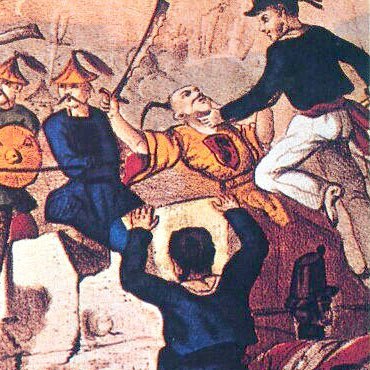

Treaty of Nanjing


Which of these was a British island colony on the coast of China? Which Britain won as a result of the first Opium War.
Hong Kong
Shanghai
Singapore
Nanjing
What product did the British desperately want in China?
Tea
Coffee
Rice
Opium
Opium was grown in what British colony?
India
Japan
China
Persia
What was the first country to imperialize China?
Japan
France
Great Britain
Russia
What was the main economic reason industrialized nations wanted to imperialize non-industrialized nations?
to gain raw materials and new markets
to spread Christianity and other religions
to show their national pride and cultural superiority
to build factories and canals
What are extraterritorial rights?
Agricultural rights in the colonies
Spheres of influence in China
The right to colonize Hong Kong
Foreigners not subject to laws within a country
What was the name of "unequal treaty" signed by the British and Chinese in 1842?
Treaty of Nanjing (Nanking)
Treaty of Hong Kong
The Free Trade Treaty
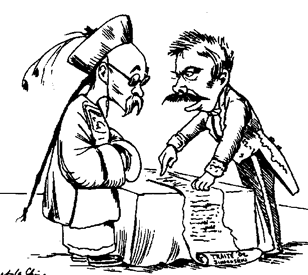
Which treaty benefited Europeans at the expense of China?
Berlin Conference
Monroe Doctrine
Treaty of Nanjing (Nanking)
Meiji Restoration
Who was the Qing ruler in the last half of the 19th century?
Dowager Empress Cixi
Shi Huang DI
Queen Victoria
Cecil Rhodes


Which of the following factors contributed to the Boxer Rebellion?
poor treatment of foreigners by Chinese leaders
the breaking of the alliances between Russia and China
Chinese nationalists' anger at foreign involvement in the country
American socialism and its effects on China
Prior to the Enlightenment, Chinese culture was viewed as
backward and behind the times
exquisite and valued
complicated and confusing
advanced, well ahead of the Europeans
What was the post-Enlightenment view of Chinese culture?
advanced, well ahead of the Europeans
admired for its progressive political systems and strong military
backward and behind the times with little value for progress
complicated and confusing
Which of the following best describes why China did very little trading in the 1700s?
China viewed themselves to be self-sufficient
China had extensive mining industries and a strong agricultural industry
China wanted to limit western influences in its country
All of the above are accurate descriptions
Which of the following best described how the Chinese felt about trade with foreigners?
not needed - China was self-sufficient
necessary since China was not industrialized
useful since there were products made in Britain that the Chinese wanted to trade for
China lacked natural resources and needed to trade for food to feed their growing population
Which of the following was not a trade goal of the MaCartney Envoy in 1793?
an island for the British to use for British merchants
sell opium in China
relax Chinese trade rule for Britian
grant an embassy to the British in China or at least have a British ambassador on the Imperial Court
What did the British discover about the Chinese as a result of the McCartney Envoy in 1793?
China had minimal industrial development
China's military technology was no match for the British
China's military technology was no match for the British
all of the above are correct
This practice was used by the Chinese when trading with foreign countries. It included a monetary gift and a kowtow. Countries seeking to trade with China were forced to admit to being inferior to China.
Trade treaties
Tribute system
Capitalism
Sphere of influence
Who benefited the most from the granting of extraterritorial rights in 19th century China?
Chinese peasants
Chinese Christians
Chinese government officials
Foreigners in China
Which form of imperial control was used by western powers to divide and control China in the late 1800s and early 1900s?
Sphere of influence
Colony
Protectorate
Economic imperialism
Which of the following were imposed on China in the Treaty of Nanjing?
Hong Kong to Britain and elimination of the Cohong
Korea closed off to Russia and fishing rights granted to Japan
Pay an indemnity to Britain allow the opium trade to continue
Britain granted access to Manchuria
Britain granted Most Favored Nation Status and more ports opened to foreign trade
Which event in China was led by Hong Xiuquan with the goal of a China without poverty. The event ended with British and French troops stopping the rebellion.
Boxer Rebellion
Taiping Rebellion
Opium War
Self-Strengthening Movement
What was the armed rebellion against the presence of foreigners in China in 1900 that ended with foreign troops coming in to end the rebellion and resulted in the growth of Chinese nationalism?
Taiping Rebellion
Sino-Japanese War
Opium War
Boxer Rebellion
Nationalism grew in China in response to what 2 groups?
foreigners
Boxers
Chinese
Qing Dynasty
Japanese
What was the purpose of the Open Door Policy?
To protect US trading rights in China
To bring western ideas to China to help make reforms
To establish spheres of influence in China
To protect the trade of British opium in China
What was the leadership of Japan prior to Perry's visit in 1853?
The emperor
A president
The Shogun
An absolute monarch
What happened in 1854 with the signing of the Treaty of Kanagawa as a result of Commodore Perry's visit to Tokyo Harbor?
Japan built up a navy to fight against the US
Japan opened up 2 ports to US trade
Japan and Russia went to war over Manchuria
Japan annexed Korea
Japan modernized during the Meiji Era under the rule of Emperor Mutsuhito. What did the Japanese copy from the US in their efforts to modernize?
capitalism
education
government system
military
What did the Japanese copy from the British in their efforts to modernize during the Meiji Era?
army
centralized government
banking system
navy
What did the Sino-Japanese War and the Russo-Japanese War have in common?
Weapon manufacturing and shipbuilding decreased
Japan lost both wars
Japan became an imperial power and was competitive with the west
Japan's economy collapsed due to not being able to fund infrastructure projects
What 2 areas did Japan gain in their victory over China in 1894?
Tokyo and Kyoto
Beijing and Nanjing
Korea and Manchuria
Taiwan and Pescadores
Who do the people in the image, sitting around the "pie" represent?
Asian nations wanting access to Chinese trade
Industrial, imperial powers
The US and other North American
colonies in Africa
What is the message of the image?
The Japanese are powerless in stopping the western powers from dividing up their country through economic imperialism.
The industrialized, imperials powers are competing with each other to carve out spheres of influence in China and the Qing Dynasty is powerless to stop them
European powers are planning to go to war with each other over China.
The Chinese and Japanese are plotting war against the west, causing racially motivated fear to become part of western relations with Asia
Which of the following areas did Japan annex and control from 1910 to 1945?
Korea
Manchuria
Mongolia
Hong Kong
What region of NE China was an area of interest in both the Russo-Japanese War and Sino-Japanese War?
Korea
Taiwan
Mongolia
Manchuria
The presence of foreigners in both China and Japan led to the growth of nationalism.
True
False
Which was a special privilege granted to foreigners in both China and Japan that created resentment and hatred towards foreigners in both countries?
government funded housing
spheres of influence
extra-territorial rights
free farm land
As a result of the Russo-Japanese War, Japan gained full control over
Russia
China
Taiwan and Pescadores
Manchuria and Korea
Which treaty ended the Russo-Japanese War?
Treaty of Portsmouth
Treaty of Kanagawa
Treaty of Hokkido
Treaty of Nanjing
Both China and Japan initially resisted change when confronted by Western powers.
True
False
Following Japanese annexation of Korea, the Japanese government made every effort to make the Koreans more Japanese. Koreans were not allowed to speak Korea, had to change their names to Japanese names, Korean schools were closed and all business was done in Japanese. This is an example of
Cronyism
Paternalism
Nationalism
Assimilation
One reason Japan became an imperialist power was to
Prevent invasion by Korea
Obtain basic resources
Learn about other cultures
To become a protectorate of China
Which of the following was not a result of Japanese modernization?
Japan's Japan's economy collapse, leading to Japan being divided into spheres of influence by western powers
Japan's economy grew and became an industrial powerhouse in the Pacific
Japan's military increased with weapons production and the development of a navy
Japan became competitive with the west and expected to be treated as an equal with the west.

