
NEW
Font size
 Worksheets
Earth Science Review
Total questions: 48
Worksheet time: 39mins


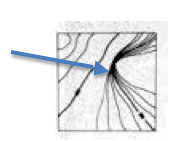

___________, meaning "all land," is the name of the great landmass that existed millions of years ago.
lithosphere
Pangaea
subduction zone
tectonic
Wegener
____________ is the scientist credited with the theory of continental drift (which led to the theory of plate tectonics).
lithosphere
Pangaea
subduction zone
tectonic
Wegener
The point where one plate slides beneath another is known as the ______________.
lithosphere
Pangaea
subduction zone
tectonic
Wegener
Two plates spread or move apart at what boundary?
Convergent
Divergent
Transform
Two plates come together or collide at what boundary?
Convergent
Divergent
Transform
Two plates slide past each other at what boundary?
Covergent
Divergent
Transform

New oceanic crust (sea floor) is created at this boundary.
Divergent Oceanic
Divergent Continental
Convergent Oceanic
Transform

The process where oceanic crust slides under another plate and is melted is called ___________.
seafloor spreading
subduction
continental drift
recycling
A divergent boundary on land creates what feature?
Mid Ocean Ridge
Rift Valley
Subduction Zone
Deep Ocean Trench

What two crustal features occur near every subduction zone?
Volcanoes and Trenches
Rift Valleys and Mid Ocean Ridges
Volcanoes and Rift Valleys
Mid Ocean Ridges and Trenches
The process that occurs at a divergent oceanic boundary that creates new crust (sea floor) is called?
Subduction
Seafloor Spreading
Continental Drift
Volcanism
What is the 'magic' that is happening in the mantle that helps move the 'lithospheric plates'?
Convection
Subduction
Seafloor Spreading
Aside from Earthquakes, what is the only thing you will find at transform boundaries?
Volcanoes
Subduction Zones
Folded Mountains
Fault lines
Which compositional layer is the least dense?
inner core
lithosphere
mantle
crust
The lithosphere includes the _____ and part of the _____.
core, crust
mantle, core
crust, core
crust, mantle

Which physical layer is represented by the yellow layer?
lithosphere
mesosphere
core
inner core
The correct order of the Earth's layers starting from the OUTSIDE going IN is
crust, inner core, mantle, outer core
mantle, outer core, inner core, crust
crust, mantle, outer core, inner core
inner core, outer core, mantle, crust
Which layer causes the lithospheric plates to move?
asthenosphere
inner core
crust
basalt
Which layer can be compared to the shell of a hard-boiled egg?
crust
mantle
outer core
inner core
Which of the following statements are true?
As you go deeper into Earth, pressure increases.
As you go deeper into Earth, temperature increases.
As you go deeper into Earth, the particles are packed tighter together (increasing density).
All of the above.
The movement of continents over millions of years was first called ____.
Continental Drift
Island Formation
Continent Building
Volcanic Eruptions
Fossils of the fern-like, tropical plant, Glossopteris have been found on the continents of Africa, South America, and Antarctica. How have scientists explained this observation?
The wind blew the plant's seed across the ocean from continent to continent.
The fern developed on each continent.
The continents were once joined together and later moved apart.
The fern had adaptations to survive in different climates.
The new theory that explains the formation and movement of Earth's plates is called ____.
The Pangaea Theory
The Wide World Theory
The Theory of Plate Tectonics
The Convection Current Theory


What process would cause a sharp rough mountain to become rounded and smooth over time?
Weathering and Erosion
Impact of Organisms
Plate Tectonics
Deposition
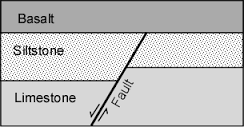


What evidence is most important when using relative dating?
the half-life of a radioactive element
the position of sediment in petrified rock
the types of minerals in a petrified fossil
the position of fossils in sedimentary rock layers
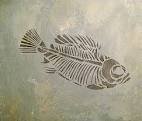
If scientists found this fossil, what could they infer?
what fish are like today
that this fish lacked oxygen
that water once covered the area where this fossil was found

