wayground logo

Free Printable Worksheets

Font size

S
M
L
XL
Worksheets

Science 4 Review

Total questions: 80

Worksheet time: 3hrs 40mins

Name
Class
Date
1.
The ovary, style, and the stigma make up the female part of a plant called the ?
a)
stamen
b)
petals
c)
stem
d)
carpel (pistil)
2.

Pollen grains are produced by ?

a)

the anther

b)

the stigma

c)

the flowers

d)

the leaves

3.
Pollen comes from the male or female parts of the flower?
a)
male
b)
female
4.
The tip of the style that has sticky hairs to trap pollen is the ___.
a)
stamen
b)
stigma
c)
ovary
d)
style
5.
All of the following are examples of seed dispersal except:
a)
wind
b)
volcanic eruptions
c)
physical movement (rolling)
d)
animals droppings
6.
What is the function of nectar?
a)
To provide food for the flower
b)
To attract pollinators
c)
To attract animals to disperse the fruits
d)
To produce perfumes for Man
7.

What do fern spores grow into?

a)

sori

b)

sporangium

c)

gametophytes

8.

Do sporangium or gametophytes produce fern eggs and sperm?

a)

sporangium

b)

gametophyte

c)

both produce fern eggs and sperm

9.

What are archegonium?

a)

They are the female reproductive organs of a fern

b)

They are the male reproductive organs of a fern

c)

They are the mature sporophyte reproductive organs

10.

What are antheridium?

a)

They are the female reproductive organs of a fern

b)

They are the male reproductive organs of a fern

c)

They are the mature sporophyte reproductive organ

11.

What is a zygote?

a)

A zygote is a fertilized egg

b)

A zygote is another name for fertilized spore

c)

A zygote is an unfertilized gametophyte

12.

We find a young sporophyte here.

a)

on the underside of a fern leaf

b)

with the antheridium before fertilization

c)

growing out of the gametophyte

13.

What does the mature sporophyte look like?

a)

Looks like a rhizoid

b)

Looks like a sorus

c)

Looks like a fern

14.

What do sporangium make?

a)

spores

b)

gametes

c)

zygotes

15.

Which ploidy term do you use for 2n?

a)

diploid

b)

haploid

c)

zygoid

16.

Where is the sorus located?

a)

on the young fern gametophyte

b)

within the fern zygote

c)

on the underside of the fern leaf

17.

What stage of the plant life cycle is shown in the picture?

a)

Germinating

b)

seedling

c)

mature plant

d)

flowering plant

18.

What stage of the plant life cycle is shown?

a)

seedling

b)

flowering plant

c)

a seed

d)

seedling

19.

In order to grow plants need?

a)

water,sunlight and air

b)

water, ice cream, and a ball

c)

sun, water, and book

d)

air, sun, and pencil

20.

In flowering plants, where are the seeds from ?

a)

leaves

b)

roots

c)

fruits/ flower

d)

stem

21.

Which of the following shows a seed ?

a)
b)
c)
d)
22.

Which of the following shows seedling ?

a)
b)
c)
d)
23.
What can some mosses and liverworts do?
a)
reproduce in a single cycle
b)
uncurl their leaves into fronds
c)
break rock into soil
d)
live for more than 300 million years
24.
When mosses and ferns reproduce, what do they produce in the first cycle?
a)
spores
b)
fronds
c)
sperm
d)
egg
25.
What do spores become after they are released from sporophytes?
a)
liverworts
b)
rhizoids
c)
cryptophobic
d)
gametophytes
26.
Spores are better than seeds because spores have a short lifetime
a)
TRUE
b)
FALSE
27.
How are mosses and ferns alike?
a)
They both have fronds
b)
They both reproduce without seeds
c)
They both grow only at night
d)
They both grow in the oceans
28.
Lack true roots and use tiny hair-like stems for absorption of water and nutrients from the soil
a)
Bryophytes
b)
Angiosperms
c)
Gymnosperm 
29.
In fern's life cycle, when does fertilization occur?
a)
when the egg and sperm fuse
b)
when spores germinate 
c)
when the young gametophyte releases sex cells 
30.
In moss' life cycle, how does a sperm cell get to an egg cell? 
a)
through the help of water 
b)
through self-pollination
c)
through cross-pollination
d)
through the help of the wind
31.
Pseudoscorpions often hitch rides on the backs of large beetles or true bugs. What is the ecological relationship?
a)
Mutualism
b)
Commensalism
c)
Parasitism
d)
Cooperation
32.
What term best describes the grasshopper?
a)
Herbivore
b)
Predator-prey
c)
Competition
d)
Producer
33.
Barnacles sometimes live on the outside surface of other larger shelled organisms without causing any harm. What is the ecological relationship?
a)
Mutualism
b)
Parasitism
c)
Commensalism
d)
Predator-Prey
34.
Cows and pronghorn both eat the same types of food in areas of Utah. What is the ecological relationship?
a)
Cooperation
b)
Parasitism
c)
Commensalism
d)
Competition
35.
Ants protect soft bodied aphids and in return the aphids feed the ants a sugary drink. What is the ecological relationship?
a)
Cooperation
b)
Parasitism
c)
Commensalism
d)
Mutualism
36.
What is the ecological relationship shown in this image of a robberfly and beetle?
a)
Cooperation
b)
Parasitism
c)
Predator-prey
d)
Competition
37.
What term best describes the vole, the small rodent, in this image?
a)
Prey
b)
Predator
c)
Producer
d)
Competition
38.
Termite colonies have workers, soldiers, and kings and queens that each have different jobs. What is the ecological relationship?
a)
Cooperation
b)
Parasitism
c)
Commensalism
d)
Competition
39.
Chickens will eat both insects and seeds. Which term best describes this feeding pattern?
a)
Omnivore
b)
Carnivore
c)
Herbivore
d)
Producer
40.
A relationship that describe a close interaction between two different species is known as what?
a)
Biodiversity
b)
Symbiosis
c)
Predation
d)
Emigration
41.
This is known as a relationship in which one organism benefits, while the other is unaffected.
a)
Parasitism
b)
Mutualism
c)
Immigration
d)
Commensalism
42.
An animal that feeds on what another animal has killed is known as a:
a)
Scavenger
b)
Mutualist
c)
Decomposer
d)
Parasite
43.
This is known as a relationship in which both organisms involved benefit. 
a)
Predator-Prey
b)
Commensalism
c)
Mutualism
d)
Decomposition
44.

Remoras are fish that generally latch on to sharks and eat leftovers of food from the shark. This is an example of which type of ecological relationship?

a)

Mutualism

b)

Commensalism

c)

Parasitism

d)

Competition

45.

An organism that obtains energy from consuming the bodies of other organisms is known as a:

a)

Mutualist

b)

Autotroph

c)

Producer

d)

Heterotroph

46.
What is force?
a)
A push exerted on an object
b)
A push or pull exerted on an object
c)
A pull exerted on an object
d)
Nothing
47.
The force that pulls things toward earth.
a)
Speed
b)
Gravity
48.
How do you know if and object has balanced force?
a)
It only has one force
b)
it's moving
c)
It has equal forces on all sides
d)
it's staying still
49.

A pull moves things _______ .

a)

Close to you

b)

Away from you

50.

A push moves things _______ .

a)

Close to you

b)

Away from you

51.

When you pick things up, you're _______.

a)

pushing

b)

pulling

52.

Forces can be applied in different directions.

a)

TRUE

b)

FALSE

53.

What happens when you PUSH a ball?

a)

It moves away

b)

It moves closer

54.

In tug of war, the force that we used is

a)

Push force

b)

Push and pull force

c)

Pull force

55.
Light travels
a)
around corners
b)
in a straight line
56.
Light bounces when it is 
a)
reflected
b)
absorbed
c)
refracted
57.
prism
a)
reflection
b)
refraction
c)
absorption
58.
Light bends when it is 
a)
refracted
b)
reflected
c)
absorbed
59.
black
a)
refracts
b)
absorbs
c)
reflects
60.
lenses
a)
reflect
b)
refract
c)
absorb
61.
mirror
a)
absorbs
b)
reflects 
c)
refracts
62.
smooth, shiny surfaces
a)
reflect
b)
refract
c)
absorb
63.
Which object would keep in the least light?
a)
White t-shirt
b)
Brown sock
c)
Orange jacket
d)
Black sweater
64.

When you shine sunlight through a magnifying glass onto a piece of paper, you can sometimes set the paper on fire. Why does this happen?

a)

The glass of the magnifier heats up.

b)

The energy of the Sun is focused in one small place.

c)

The energy of the Sun is spread out over the whole piece of paper.

d)

Sunlight sets everything on fire if it sits still long enough.

65.

3. Mrs. Smith’s class will be outside for several hours on Friday. The temperature is to be in the 90’s. What color clothing should students wear to stay cooler?

a)

black

b)

white

c)

red

d)

blue

66.

Which of the following properties makes a light wave different from a mechanical wave?

a)

A light wave slows down in a vacuum

b)

A light wave is able to transmit energy

c)

A light wave exists as a transverse wave

d)

A light wave can travel without a medium

67.

What is being transferred with a wave?

a)

matter

b)

medium

c)

energy

d)

water

68.

What causes the refraction of a wave?

a)

the density of the medium can change the speed

b)

the amount of the medium changes the direction

69.

What color do we see when all light is refracted?

a)

red

b)

black

c)

white

d)

rainbow

70.

All sounds are made by ............. objects.

a)

warm

b)

cold

c)

vibrating

71.

Sound is a kind of energy that travels in ..............

a)

waves

b)

current

c)

group

72.

................... is how loud or soft a sound is.

a)

Speed

b)

Wave

c)

Volume

73.
Sound travels through solids.
a)
True
b)
False
74.
1.  Sound can’t travel through liquids.
a)
True
b)
False
75.
1.  Without matter, sound waves could not travel.
a)
True
b)
False
76.

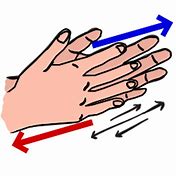
Why should Mrs. Gattullo use oven mitts when taking cookies out of a hot oven?

a)

The oven mitts will protect her hands from the heat

b)

The oven mitts will keep his hands warm

c)

The oven mitts look pretty

d)

The oven mitts will keep her hands clean
77.

Friction is caused by?

a)

Two objects rubbing together slowly

b)

Two objects rubbing together quickly

c)

Two objects sitting next to each other

d)

Two objects floating in water

78.

Heat travels from?

a)

Cooler objects to warmer objects

b)

Smooth objects to rough objects

c)

Wet objects to dry objects

d)

Warmer objects to cooler objects

79.

Energy resulting from the flow of electric charge through a conductor

a)

conductor

b)

conversion

c)

heat

d)

electrical energy

80.
She goes outside to make a snowman. Why do her hands stay warm?
a)
The heat flows quickly from the snow through the mitten.
b)
The heat flows quickly from the mitten to the snow.
c)
The gloves are good conductors that trap heat.
d)
The gloves are good insulators that trap heat.