
 Worksheets
Air Masses, Fronts, and Weather Forecasting
Total questions: 27
Worksheet time: 25mins
Zuri is a meteorologist. She is using a barometer. What feature of weather is Zuri studying with a barometer?
humidity
wind speed
air pressure

A narrow band of fast moving winds high in the atmosphere that move from west to east
Jet Stream
doldrums
equator
polar easterlies


When air masses meet, what is formed?
A snow storm.
A rain storm
A front.
A back.
Humidity is the amount of water vapor in the air.
True
False

A _____________ weather front occurs when a cold air mass moves forward, pushing the warm air mass up.
Cold
Warm
Stationary
Occluded
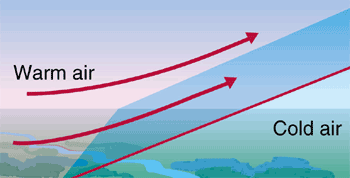
Why does warm air rise above cold air?
Warm air is less dense
Warm air is more dense
Cold air is stronger than warm air


Which statement best explains why weather systems usually move from west to east across the United States?
The jet stream flows from west to east.
Pressure systems form over the Rocky Mountains and move east.
Weather systems originate over the Pacific Ocean and move east.
Clouds absorb some of the heat that is emitted from Earth's surface. How does this process affect the temperature of the Earth's surface?
This process warms Earth's surface.
The temperature on Earth's surface remains unchanged.
This process produces extreme temperatures on Earth's surface.
Ocean currents influence weather. Which ocean current directly affects the weather along the southernmost coast of the eastern United States?
Gulf Stream
North Atlantic Drift
South Pacific Equatorial Current
Which of the following is a tool that can collect weather data at mid-to-upper levels of the atmosphere?
radar
weather balloon
weather map

Look at the direction of the wind in the following diagram.
Which point indicates where the vegetation will be most plentiful?
Point R
Point S
Point T
Surface currents can affect climate and weather. What are surface currents?
water that empties from rivers into the ocean
stream like movements of water that happen near the surface of the ocean
daily changes in the level of ocean water
What causes wind?
condensation in the atmosphere
the uneven heating of the Earth by the sun
differences in elevation
Atmospheric pressure is an important element of weather. What causes atmospheric pressure?
sunlight
the weight of air
Earth's magnetic field
In the Northern Hemisphere, the Coriolis force deflects the wind in which direction?
wind is deflected to the right
wind is deflected to the left
There is no such thing as a Coriolis force

