wayground logo

Free Printable Worksheets

Font size

S
M
L
XL
Worksheets

Tissues of the Body

Total questions: 47

Worksheet time: 30mins

Name
Class
Date
1.

What tissue covers and lines many parts of the body?

a)

connective

b)

epithelial

c)

muscle

d)

nervous

2.

What tissue is can contract and is the movement specialist?

a)

connective

b)

epithelial

c)

muscle

d)

nervous

3.

What tissue specializes in storing energy in the form of lipids (fats)?

a)

areolar

b)

adipose

c)

fibrous

d)

cartilage

4.

What tissue has a hard, calcified matrix that provides support & protection for the body?

a)

bone

b)

cartilage

c)

fibrous

d)

hemopoietic

5.
Which type of muscle tissue would line the intestines?
a)
Smooth
b)
Cardiac
c)
Skeletal
d)
Transitional
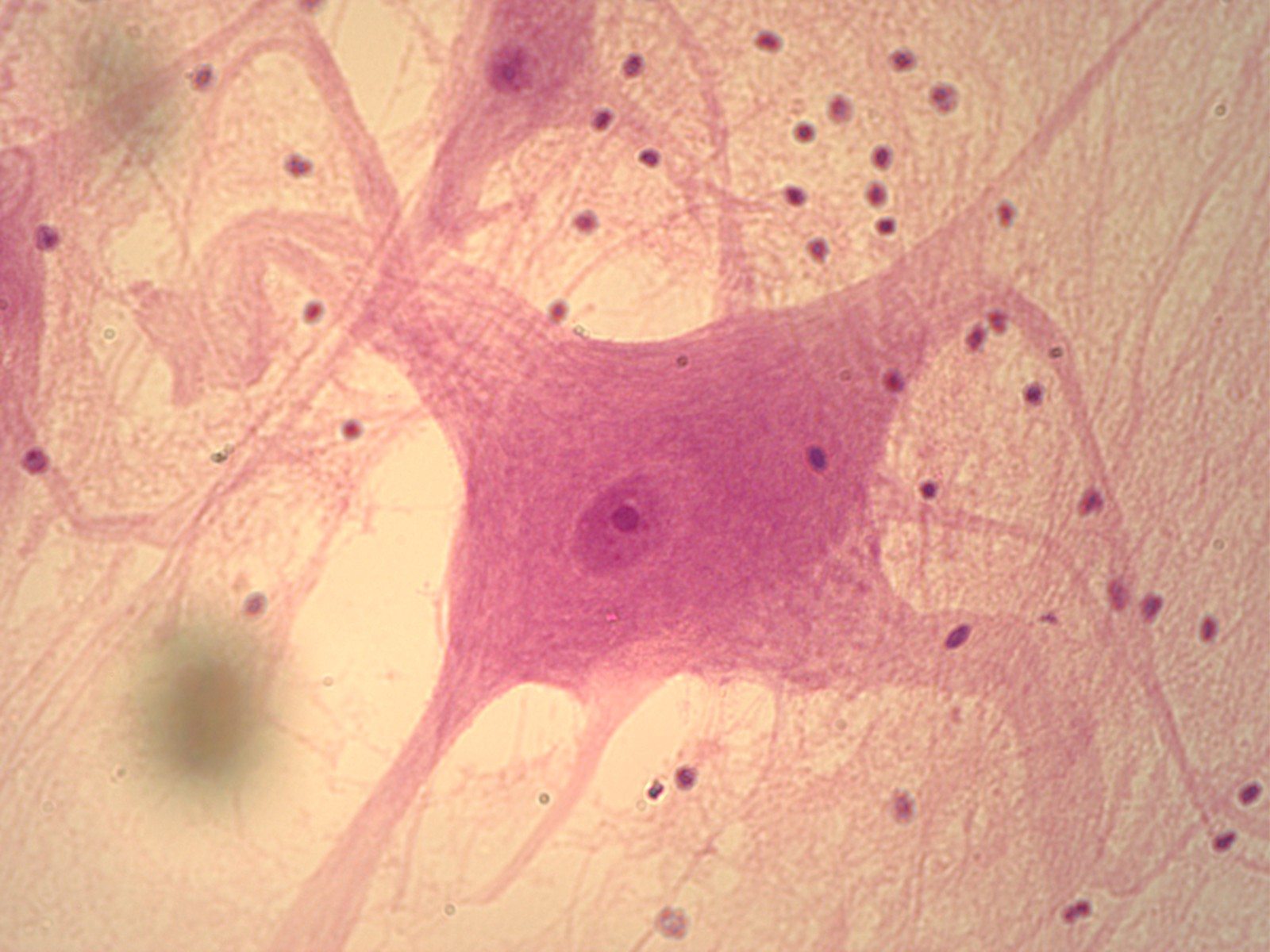
6.
What tissue type is this?
a)
Adipose tissue
b)
Cardiac muscle
c)
Nervous tissue
d)
Skeletal muscle
7.
What tissue type is this?
a)
Nervous tissue
b)
Cardiac muscle
c)
Smooth muscle
d)
Connective tissue proper
8.

Which of the following tissues connects everything together?

a)

Epithelial

b)

Connective

c)

Muscle

d)

Nervous

9.
This type of muscle makes up the majority of the heart.
a)
Cardiac
b)
Skeletal
c)
Smooth
d)
Bumpy
10.
Nervous tissues perform functions of both the sympathetic and parasympathetic nervous systems.
a)
True
b)
False
11.
This type of muscle is responsible for the involuntary movements of the body's internal organs.
a)
Striated
b)
Skeletal 
c)
Cardiac
d)
Smooth
12.
This type of connective tissue contains platelets and is largely involved in transport of materials around the body.
a)
Bone
b)
Adipose
c)
Cartilage
d)
Blood
13.
This types of connective tissue connects bone to bone.
a)
Blood
b)
Ligament
c)
Cartilage
d)
Adipose
14.

Which type of muscle is striated?

a)

skeletal

b)

smooth

c)

cardiac

15.

Which of the following is NOT a function of muscles?

a)

produce movement

b)

produce energy

c)

stabilize joints

d)

generate heat

16.

Myofilaments are made of

a)

fascicles

b)

myosin

c)

myofibrils

d)

actin

17.

Which muscle type is striated?

a)

cardiac

b)

skeletal

c)

smooth

d)

cardiac and skeletal

18.

What type of muscle lines the inside of the stomach?

a)

cardiac

b)

skeletal

c)

smooth

19.

What type of muscle is/are voluntary?

a)

smooth and cardiac

b)

smooth

c)

skeletal and smooth

d)

skeletal

20.

What type of muscle(s) is involuntary?

a)

skeletal and smooth

b)

cardiac and skeletal

c)

smooth and cardiac

d)

skeletal

21.

What type of muscle is not striated?

a)

cardiac

b)

skeletal

c)

smooth

d)

Circumferential

22.

What type of muscle makes up your heart?

a)

Cardiac

b)

Skeletal

c)

Smooth

d)

Canulary

23.
Which muscle tissue is attached to bones?
a)
cardiac
b)
smooth
c)
skeletal
d)
Both A and B
24.

Which muscle tissue is located inside blood vessels?

a)

Cardiac

b)

Smooth

c)

Skeletal

d)

Vestibular

25.

Which muscle tissue would be responsible for chewing food?

a)

Smooth

b)

Skeletal

c)

Cardiac

d)

Vestibular

26.

Which muscle tissue would be responsible for pumping blood to the lungs?

a)

Smooth

b)

Skeletal

c)

Cardiac

d)

Vestibular

27.
Which of the following is NOT a type of connective tissue?
a)
Bone
b)
Cartilage
c)
Skin
d)
Blood
28.
This type of connective tissue forms strong rope like structures such as tendons and ligaments.
a)
Areolar
b)
Dense fibrous 
c)
Cartilage 
d)
Bone
29.
Commonly known as fat. Forms the subcutaneous layer beneath skin.
a)
Blood
b)
Bone
c)
Cartilage
d)
Adipose
30.
This tissue carries nutrients, waste, respiratory gases, and many other substances throughout the body.
a)
Bone
b)
Cartilage
c)
Blood
d)
Adipose
31.
Attach muscles to bones
a)
Tendons
b)
Ligaments
32.
This type of dense connective tissue connects bone to bone at joints 
a)
Tendons
b)
Ligaments
33.

Loose connective tissue is also known as ____?

a)

areolar connective tissue

b)

hyaline

c)

macrophages

d)

adipocytes

34.
Connective tissue is
a)
The tissue that protects, supports, binds together, stores fat, produces blood cells
b)
Tissue that is the lining, covering, and glandular tissue of the body
c)
Tissue that contracts and shortens to produce movement
35.
What is the most common fixed cell that produces the matrix in loose connective tissue? 
a)
Mast Cell
b)
Blast Cell
c)
Fibroblast
36.
The hardest, most dense part of the bone tissue is the
a)
periosteum
b)
spongy bone
c)
osteoblast
d)
compact bone
37.
What are functions of the skeleton?
a)
Protection
b)
Blood cell production
c)
Movement
d)
All of these
38.
Which of these is a long bone?
a)
Femur
b)
Patella
c)
Scapula
d)
Carpal
39.
Which of these is an irregular bone(s)?
a)
Pelvis
b)
Humerus
c)
Phalanges
d)
Tarsals
40.
Which of these is a flat bone?
a)
Vertebra
b)
Tibia
c)
Fibula
d)

Sternum

41.
The primary mineral stored by compact bone is
a)
Calcium
b)
Selenium
c)
Zinc
d)
Magnesium
42.
This type of bone is porous, allowing blood vessels to move through it and containing bone marrow.
a)
Compact Bone
b)
Spongy or Cancellous Bone
43.
What are the 2 types of skeletons?
a)
spongy bone and compact bone
b)
marrow and blood vessels
c)
axial and appendicular
44.

What are the 2 types of bone tissue?

a)

cancellous and compact bone tissue

b)

marrow and blood vessels

c)

axial and appendicular

45.

Bone forming cells:

a)

osteocytes

b)

osteoblasts

c)

osteoclasts

d)

osteomasts

46.

Bone remodelling cells:

a)

osteocytes

b)

osteoblasts

c)

osteomasts

d)

osteoclasts

47.

What are the four types of bones?

a)

Long, short, medium, thin

b)

Regular, long, flat, short

c)

Flat, short, long, Irregular

d)

None of the options