wayground logo

Free Printable Worksheets

Font size

S
M
L
XL
Worksheets

Second Semester - 6 Weeks 1

Total questions: 68

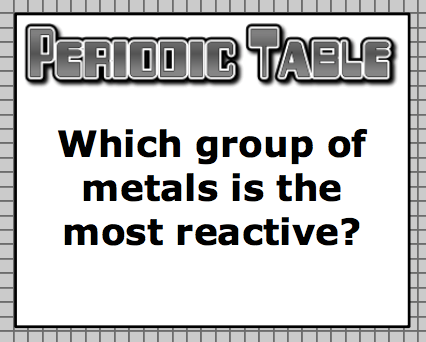
Worksheet time: 17hrs 0mins
Name
Class
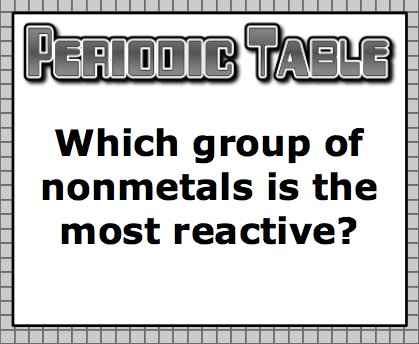
Date
1.
An element's identity is determined by the number of
a)
electrons.
b)
protons.
c)
neutrons.
d)
valence.
2.
The majority of elements on the periodic table are
a)
man made.
b)
nonmetals.
c)
metals.
d)
gases.
3.
Which group of the periodic table is composed of inert (not reactive) gases?
a)
alkali metals
b)
alkaline earth metals
c)
halogens
d)
noble gases
4.
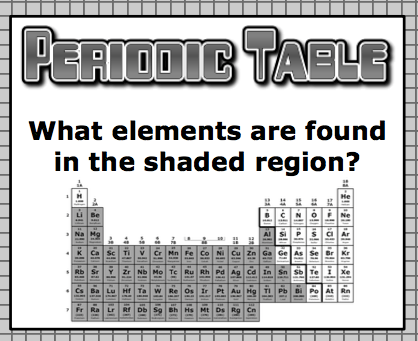
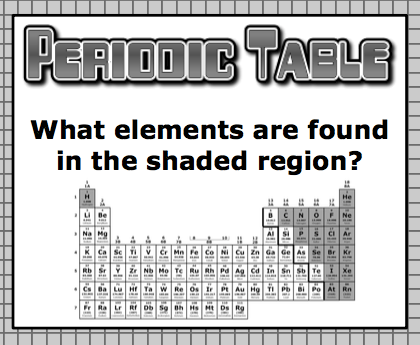
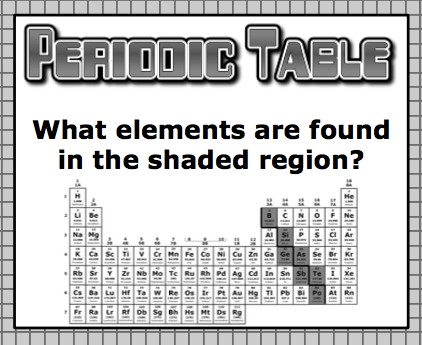
a)
Metals
b)
Nonmetals
c)
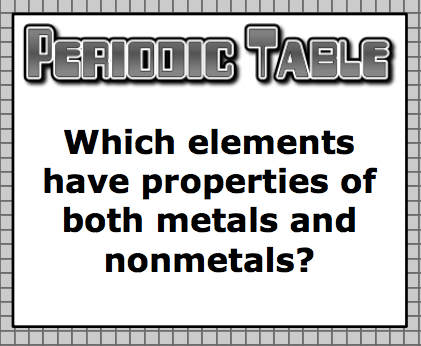
Metalloids
5.
Which particle has a positive charge?
a)
electron
b)
orbital
c)
proton
d)
neutron
6.
Choose the particle that has no charge.
a)
nucleus
b)
neutron
c)
proton
d)
electron
7.
a)
Periods
b)
Groups
8.
a)
Periods
b)
Groups
9.
a)
Same group
b)
Same period
10.
a)
Group 1
b)
Group 17
c)
Group 2
d)
Group 18
11.
a)
Group 1
b)
Group 17
c)
Group 18
d)
Group 2
12.
a)
Group 1
b)
Group 17
c)
Group 18
d)
Group 2
13.
a)
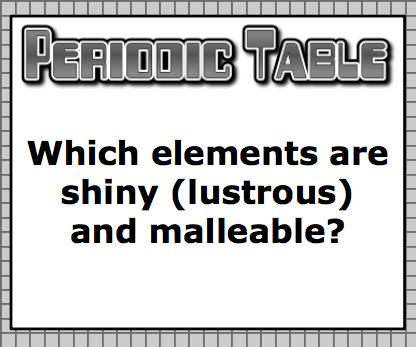
Metals
b)
Nonmetals
c)
Metalloids
14.
a)
Metals
b)
Nonmetals
c)
Metalloids
15.
a)
Metals
b)
Nonmetals
c)
Metalloids
16.
a)
Metals
b)
Nonmetals
c)
Metalloids
17.
Electronegativity is...
a)
how good an atom is at attracting electrons
b)
the ability of an atom to lose electrons
c)
the energy required to remove an electron from a specific atom
d)
how easy it is to make friends. 
18.
What is ionization energy?
a)
Energy needed to destroy an atom
b)
Energy required to remove an electron
c)
Energy needed to split an electron
d)
Energy required to add an electron
19.
a)
metric ruler
b)
Celsius thermometer
c)
graduated cylinders
d)
pan balances
20.

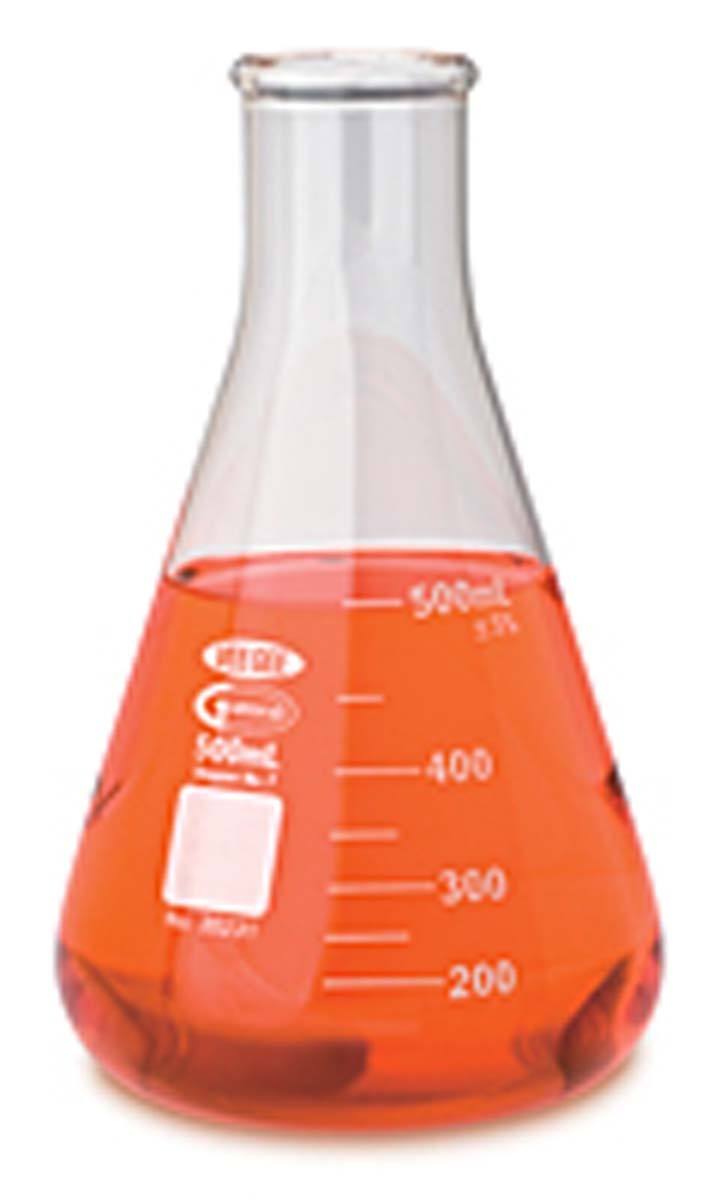
What is used to swirl, mix, or store chemicals?

a)

Beaker

b)

Flask

c)

Test Tube

d)

Graduated Cylinder

21.
This item is used to simply hold or approximately measure a liquid.
a)
beaker
b)
flask
c)
graduated cylinder
d)
test tube
22.

The central region of an atom where its neutrons and protons are is its

a)

nucleus

b)

electron cloud

c)

core

d)

center

23.

The positive particles of an atom are

a)

electrons

b)

positrons

c)

neutrons

d)

protons

24.

Particles in an atom that are neutral and have no charge are

a)

negatrons

b)

electrons

c)

neutrons

d)

protons

25.
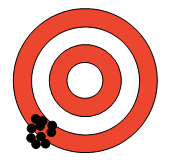
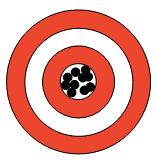
This bullseye demonstrates...
a)
High Accuracy & High Precision
b)
High Accuracy & Low Precision
c)
Low Accuracy & High Precision
d)
Low Accuracy & Low Precision
26.
?
a)
High Accuracy & High Precision
b)
High Accuracy & Low Precision
c)
Low Accuracy & High Precision
d)
Low Accuracy & Low Precision
27.

The actual value is 8 grams but the scientist measure 12.1, 12.4, and 12.25. The scientist is

a)

precise

b)

accurate

c)

accurate and precise

d)

neither

28.

75 meters = ________cm

a)

0.75

b)

7.5

c)

7500

d)

7

29.

1 mole =

a)

6.022 x 10^23

b)

6

c)

14

d)

12.01

30.

602 hexallion is called

a)

Dalton's Postulate

b)

Avogadro's number

c)

Bohr's Model

d)

I don't have a clue

31.

Calculate the molar mass for Al(OH)3

a)

78.0 g/mol

b)

72 g/mol

c)

28 g/mol

d)

25 g/mol

32.

What is the molar mass of ammonium sulfide - (NH4)2S?

a)

68.17 g/mol

b)

40.02 g/mol

c)

114.12 g/mol

d)

82.91 g/mol

33.

Determine the number of moles of AlNO3 that are in 264 g of the compound.

a)

2.97 mol

b)

3.45 mol

c)

2.73 mol

d)

1.86 mol

34.

Determine the amount of moles in CuBr that are in 276.9 g of the compound.

a)

3.2 mol

b)

1.7 mol

c)

2.1 mol

d)

1.9 mol

35.

Determine the amount of moles of BaCl2 that are in 436 g of the compound.

a)

3.5 mol

b)

2.1 mol

c)

4.6 mol

d)

2.7 mol

36.

Find the mass of 5.82 mol of MgCl2. Round to the nearest tenth.

a)

552.9 g

b)

436.8 g

c)

55.2 g

d)

555.9 g

37.

Find the mass of 3.8 mol of H2O. Round to the nearest tenth.

a)

57.9 g

b)

54.8 g

c)

68.4 g

d)

62.3 g

38.

100 in = ______________ ft

a)

1,200

b)

5

c)

8.4

d)

8 ft 4 inches

39.

The backyard is 27 feet wide. How many yards wide is the backyard?

a)

81 yd

b)

30 yd

c)

24 yd

d)

9 yd

40.

Kyle measured the length of his truck and it was 534 centimeters long. How many meters long is his truck? (1 meter = 100 centimeters)

a)

5.34 meters

b)

53.4 meters

c)

5,340 meters

d)

0.0534 meters

41.

Mrs. O'Hare ordered 58 pounds of chocolate to sell at school. How many ounces of chocolate did Mrs. O'Hare order? (1 lb = 16 oz)

a)

3.625 oz

b)

928 oz

42.

The Science lab had 2,300 milligrams of salt to use for a science experiment. How many grams of salt did the Science lab have? (1 g = 1,000 mg)

a)

2,300,000 grams

b)

2.3 grams

c)

23 grams

d)

230 grams

43.

What is the Law of Conservation of Mass?

a)

It states that matter cannot be created or destroyed.

b)

It states that energy cannot be created or destroyed.

c)

It states that matter can be created or destroyed.

d)

It states that sound can be created or destroyed.

44.
What is the little number after an element in a chemical equation called.
Example: H2
a)
Coefficient 
b)
Subscript
c)
Atom
d)
Equation
45.
How many elements are in C6H12O6?
a)
1
b)
2
c)
3
d)
4
46.
Element or compound?
H2O
a)
element
b)
compound
47.
What is the left part of a chemical equation called?
2H2 + O2 --> 2H2O
a)
Reactants
b)
Products 
c)
Yields 
d)
Chemical Equation 
48.

What type of charge does an electron have?

a)

positive

b)

no charge/neutral

c)

negative

49.

How do you find the atomic number?

a)

by the number of electrons

b)

by the number of protons

c)

by the number of neutrons

50.

The number 18 represents the

a)

Atomic number

b)

Neutrons

c)

Element Name

d)

Element symbol

51.
It is a measure of how close measurements come to each other when they are made in the same way
a)
Accuracy
b)
Precision
c)
Error
d)
Extrapolation
52.

How close a measurement is to the accepted value is called..

a)

Accuracy

b)

Precision

c)

Significant

d)

Estimate

53.
This image is an example of...
a)
precision ONLY
b)
accuracy ONLY
c)
BOTH precision and accuracy
d)
NEITHER precision and accuracy 
54.

A mole is a

a)

molecule

b)

602 hexillion, a unit of measurement

c)

a dozen

d)

I was not paying attention

55.

6.02e23 is referred to as

a)

Avogadro's number

b)

6.02 scientific notation

c)

Dalton's Postulate

d)

Mendelev's number

56.

Atoms can be seen with your eye.

a)

True

b)

False

57.

A mole of sulfur atoms weigh

a)

602 hexillion atomic mass units

b)

32 grams

c)

602 hexillion grams

d)

270000 grams

58.

We can look up the weight of a mole using the periodic table.

a)

True

b)

False

c)

Depends on the atoms

59.

If I have 36 grams of carbon and carbon has a molar mass of 12 grams. How many moles are present?

a)

12

b)

36

c)

48

d)

3

60.

If I have 602 hexillion carbon atoms, how many moles are present?

a)

602

b)

1

c)

602 hexillion

d)

I was not paying attention

61.
Francium (Fr) has the lowest ionization energy in Group 1 because - 
a)
it has the smallest number of valence electrons
b)
it has the greatest atomic mass
c)
it has the greatest number of protons, so it attracts its electrons the strongest
d)
its 1 valence electron is very far from the nucleus, so little energy is needed to remove it
62.
How many valence electrons are in an atom of Ar?
a)
2
b)
8
c)
4
d)
1
63.
What is the percent by mass of oxygen in MgO?
a)
20%
b)
40%
c)
50%
d)
60%
64.
What is the percent by mass of magnesium in MgO?
a)
20%
b)
40%
c)
50%
d)
60%
65.
What is the percent composition of Benzene, C6H6?
a)
C = 50%
H = 50%
b)
C = 85.7 %
H = 14.3%
c)
C = 92.2%
H = 7.8%
d)
C = 71.9%
H = 28.1%
66.
What is the empirical formula for the following:
Pb5Cr5O20
a)
Pb2Cr2O10
b)
PbCr2O7
c)
Pb9Cr4O2
d)
PbCrO4
67.

C4H6

a)

CH

b)

CH3

c)

C2H3

d)

C4H6

68.

Br2O6

a)

BrO3

b)

Br6O2

c)

BrO

d)

Br2O6